
Edible
Horse Gram
Macrotyloma uniflorum
Also known as Kulthi, Kollu, Hurali, Madras gram, Muthira
How to grow horse gram, Macrotyloma uniflorum. The pulse that survives when the rain does not come, an Indian staple named for the animals it fed, and one of the oldest crops in south Asia.
At a glance
- Difficulty
- Moderate
- Water
- Almost none. It is grown on residual moisture in India
- Light
- Full sun
- Temperature
- 20-30 deg C, and frost kills it
- Hardiness
- USDA 10-11, RHS H1b, hardy to 5 C
- Type
- Tender annual legume
- Height
- 30-60 cm
- Native to
- India, the Deccan
Drought tolerance is the whole point of it, and it yields on shallow stony ground in a failed monsoon where every other pulse gives nothing. It is short-day and needs 120 to 180 days. Frost ends it, so outside the subtropics it is a curiosity rather than a crop.
Hardiness zones describe winter cold alone. Summer heat, humidity, rainfall and the length of the growing season decide as much, so treat the range as the outer limit rather than as a recommendation.
Edible, with limits
- Safe to eat
- The dried seed, cooked, and sprouts cooked
- Do not eat
- Raw seed
- Harm from
- Eating it
- Affects
- People
Horse gram is safe cooked and is a staple across southern India. The raw seed carries a relatively high load of phenolic compounds, tannins and protease inhibitors compared with other pulses, which is part of why it is traditionally roasted, soaked or sprouted before cooking and why it needs longer boiling than lentils do. Eaten raw it causes digestive upset. Horse gram has a long history in Ayurvedic practice, including use directed at kidney stones, and this site describes the plant and that history rather than making or endorsing any therapeutic claim. It is not one of the 14 named allergens in Britain. The name records its use as a horse and cattle feed, and cooked or processed it is fed to animals routinely.
Sources: Food Standards Agency on the 14 named allergens, Food Standards Agency on food allergy and intolerance
About
Horse gram is the pulse for the year the rain fails. It grows on shallow stony soil with almost no water, matures in three to four months, and produces something where other crops produce nothing. That reliability has kept it in south Indian agriculture for four thousand years.
Its English name records what British colonial officials found it being used for. Horses and cattle were fed on it, and colonial-era sources treat it as a fodder rather than as food, which understates its place in the diet of the Deccan. Kulthi, kollu and hurali are all this plant, eaten as a thick soup, a dry curry, a chutney powder, and sprouted.
It is also one of the more nutritionally dense pulses, high in protein and iron, and it has been named repeatedly in reviews of underused crops worth developing. As a food it needs longer cooking than most pulses, which is part of why it has stayed regional.
Appearance and character
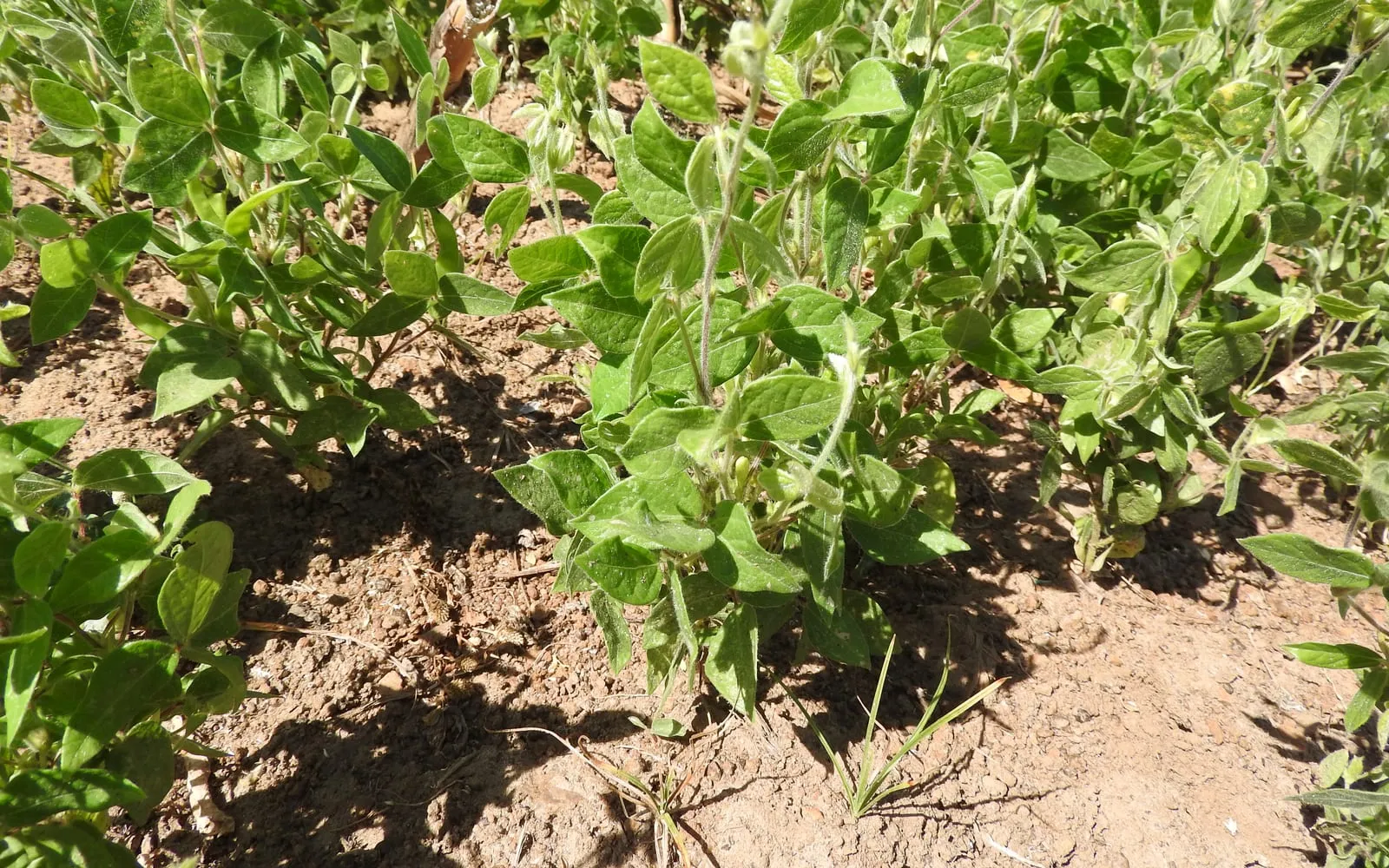
The plant is low and spreading, rarely above knee height, with slender trailing or semi-erect stems and trifoliate leaves whose leaflets are oval and covered in soft hairs. It looks unassuming, which suits a crop grown on ground nobody else wants.
The flowers are small pea flowers, 5 to 8 mm, pale yellow with a greenish tinge, carried in twos and threes at the leaf joints. They self-pollinate.
The pods are flat, curved, 3 to 6 cm long, hairy, and slightly hooked at the tip, carrying five to eight seeds. The seed is small, flattened and squarish, and comes in a range of colours from pale fawn through red-brown to mottled black, which is unusually variable for a single crop.
Where it is from
Horse gram was domesticated in India, and the archaeological record from Deccan sites places cultivation from around 2000 BC and possibly earlier. It is among the oldest crops of peninsular India.
The wild relatives grow across India and into Africa, and the taxonomy has moved about, with the species previously placed in Dolichos. Some accounts propose an African origin with domestication in India.
It remains a regional crop rather than a national one, grown in Karnataka, Tamil Nadu, Andhra Pradesh and Odisha on dry land, and it has spread to parts of Africa, Australia and the Caribbean as a forage.
How it grows
Horse gram germinates in warm soil and grows quickly into a low spreading plant, with a deep taproot relative to its size.
Nodules form and fix nitrogen readily. The crop is often grown as the second sowing of a season, taking what nitrogen and moisture the first crop left, and it improves the soil while doing so.
Flowering starts about eight weeks in, and pods form and ripen in sequence over several weeks. Ripe pods shatter, splitting and throwing seed, so the harvest is picked over rather than taken in one go.
Its short season and low water demand are the whole basis of its role. Three to four months from a warm sowing is enough, and the plant will finish on stored soil moisture with no rain at all.
Through the seasons
Sow indoors in April in modules, or outdoors from late May once the soil is above 15 deg C. Plant out or thin to 15 cm apart in rows 40 cm apart.
The plant spreads through June and July, flowering from late July. Pods form through August.
Harvest in September as pods brown, picking them over rather than waiting for the whole plant, since they shatter. Dry them thoroughly and thresh by beating them in a bag. A polytunnel gives a much more reliable crop than open ground.
Care difficulty
Easy in warmth and unproductive without it. Horse gram asks for nothing beyond heat and drainage, tolerating drought, poor soil and neglect better than almost any pulse.
The difficulty in a cool climate is the season rather than the plant. Three to four months of warmth from a late May start takes you to the end of September, which works in a good summer and fails in a poor one.
The seed is small and the yield per plant is modest, so a bed of it produces a demonstration rather than a store cupboard. Grow it for interest, or under cover where the heat makes it worthwhile.
Watering
Water at sowing and then stop. Horse gram is grown on residual soil moisture across the Deccan and it is one of the most drought tolerant pulses in cultivation.
There is no stage at which an outdoor crop in a temperate climate needs watering. In a container it will, because the taproot cannot go anywhere.
Waterlogging is fatal. The plant belongs on shallow stony free-draining ground, and heavy wet soil produces root rot within weeks.
Warning signs, diseases and pests
Powdery mildew is the commonest problem on a crop grown under glass, appearing as a white dusty coating on the leaves late in the season, particularly under glass.
Root rot follows wet ground and shows as yellowing plants that lift with brown roots. Free drainage prevents it.
Aphids gather on the growing tips and flowers. Slugs take the seedlings in a cool damp start, which is the usual early setback here.
Pod shattering is the harvest loss. Ripe pods split and throw their seed, so pick them over as they brown rather than waiting for the plant to finish.
Growing environment
Full sun and warmth, on the poorest free-draining ground available. Horse gram performs on shallow stony soil that would give most crops nothing.
The pH range runs from about 5 to 8. Fertility is unnecessary and rich ground produces leaf rather than pods.
Frost ends the plant, and cool weather stalls it, which sets a cool-climate season from the end of May to the end of September. A polytunnel widens that window at both ends.
Feeding
Feed nothing. The plant fixes its own nitrogen and is chosen precisely because it produces on soil with no fertility to speak of.
Adding nitrogen suppresses the nodules and gives a leafy plant with fewer pods, which is the opposite of what a short season needs.
Cut at the base at harvest and leave the roots in the ground. Horse gram is used as a green manure and a rotation crop in India, and the same benefit applies in a garden bed.
Troubleshooting
Why is it called horse gram? Colonial-era British sources recorded it as a feed for horses and cattle, and the name stuck in English. In southern India it has always been human food as well.
Is it the same as kulthi? Yes. Kulthi, kollu, hurali and muthira all name this species in different Indian languages.
Why does it take so long to cook? The seed coat is hard and the seed carries more phenolic compounds and protease inhibitors than most pulses. Soaking overnight, or roasting before cooking, shortens it considerably.
Can I sprout it? Yes, and sprouting is a traditional preparation that softens the seed and reduces the compounds that make it slow to cook. Cook the sprouts rather than eating them raw.
Can I grow it in a cool climate? Under cover, or outdoors in a hot summer in a sheltered spot. It needs three to four months of warmth and it tolerates everything else.
Why are my pods bursting? Ripe horse gram pods shatter and throw their seed. Pick pods as they brown rather than waiting for the whole plant.
Is it used medicinally? It has a long history in Ayurvedic practice, including use directed at kidney stones. This page describes that history rather than recommending anything.
Horse Gram problem guides
Not sure what is wrong? See the common vegetable pests guide.