
Edible
Lemon balm
Melissa officinalis
Also known as Balm, Melissa, Bee balm
How to grow lemon balm, Melissa officinalis. Cutting it back before it seeds, why it takes over a bed, and drying the leaves for tea.
At a glance
- Difficulty
- Easy
- Water
- In dry spells during the growing season
- Light
- Full sun to partial shade, and light shade keeps the leaves better
- Temperature
- Fully hardy through any temperate winter
- Hardiness
- USDA 4-9, RHS H6, hardy to -25 C
- Type
- Herbaceous perennial, long lived and dying back each winter
- Height
- 60-90 cm
- Native to
- Southern Europe, the Mediterranean and central Asia
- Best month
- June in the Northern Hemisphere, December in the Southern Hemisphere
It seeds itself with enthusiasm and is listed as an invasive species in parts of North America and New Zealand, so cutting it hard after flowering is worth doing wherever it is grown. Cold does not trouble it. The citral that gives the lemon scent fades fast in drying, which is why the fresh leaf is worth so much more than the dried.
Hardiness zones describe winter cold alone. Summer heat, humidity, rainfall and the length of the growing season decide as much, so treat the range as the outer limit rather than as a recommendation.
Every month named in this guide is for the temperate Northern Hemisphere. If you garden in the Southern Hemisphere, shift each one by six months, so June becomes December. Closer to the equator the wet and dry seasons matter more than the calendar, and the shift stops being a useful guide.
Not known to be toxic
Lemon balm is a culinary and herbal plant and carries no toxicity concern in normal use. It is not listed by the RHS as a potentially harmful garden plant, and the ASPCA does not list Melissa officinalis as toxic to cats, dogs or horses. The leaves are used fresh and dried for tea, in cooking and in cordials, and it has one of the longest records of safe herbal use in Europe. Two points are worth recording for anyone using it medicinally rather than culinarily. Concentrated lemon balm extracts have a mild sedative effect and may add to the effect of sedative medication, and there is some evidence of an effect on thyroid function at high supplement doses, which is a reason to raise it with a doctor if you have a thyroid condition and are taking it as a supplement. Neither applies to a cup of tea from the garden. Where a plant is unlisted by both sources rather than positively assessed, read that as no hazard recorded.
Sources: RHS potentially harmful garden plants, ASPCA toxic and non-toxic plants
About
Lemon balm is one of the easiest herbs to grow and one of the hardest to be rid of.
It seeds itself with enthusiasm. A single plant left to flower produces seedlings across a border, in paving joints, in the gravel and in every neighbouring pot, and within three years you are weeding it out of places you never planted it.
The clump also expands sideways from the roots, so an established plant becomes a metre across.
Both problems have the same answer, which is to cut it back hard before it flowers. Shear the whole plant to 10 cm in June as the flower buds form, and it regrows a fresh clump of clean young leaves, sets no seed, and stays where you put it. Do it again in August if it tries to flower a second time.
That cutting also gives better leaves. Lemon balm foliage goes coarse, spotted and tired once the plant flowers, and the young regrowth is what you want for tea.
The scent is the reason to grow it. Crushed leaves smell sharply of lemon with a hint of mint, and a plant beside a path releases it every time somebody brushes past.
Grow it in a pot, or in a corner where it can do what it likes, rather than in a mixed border.
Appearance and character
A herbaceous perennial reaching 60 to 90 cm, forming a spreading clump that dies back to the ground each winter.
Stems are square in cross section, which is the mint family signature, upright and branching.
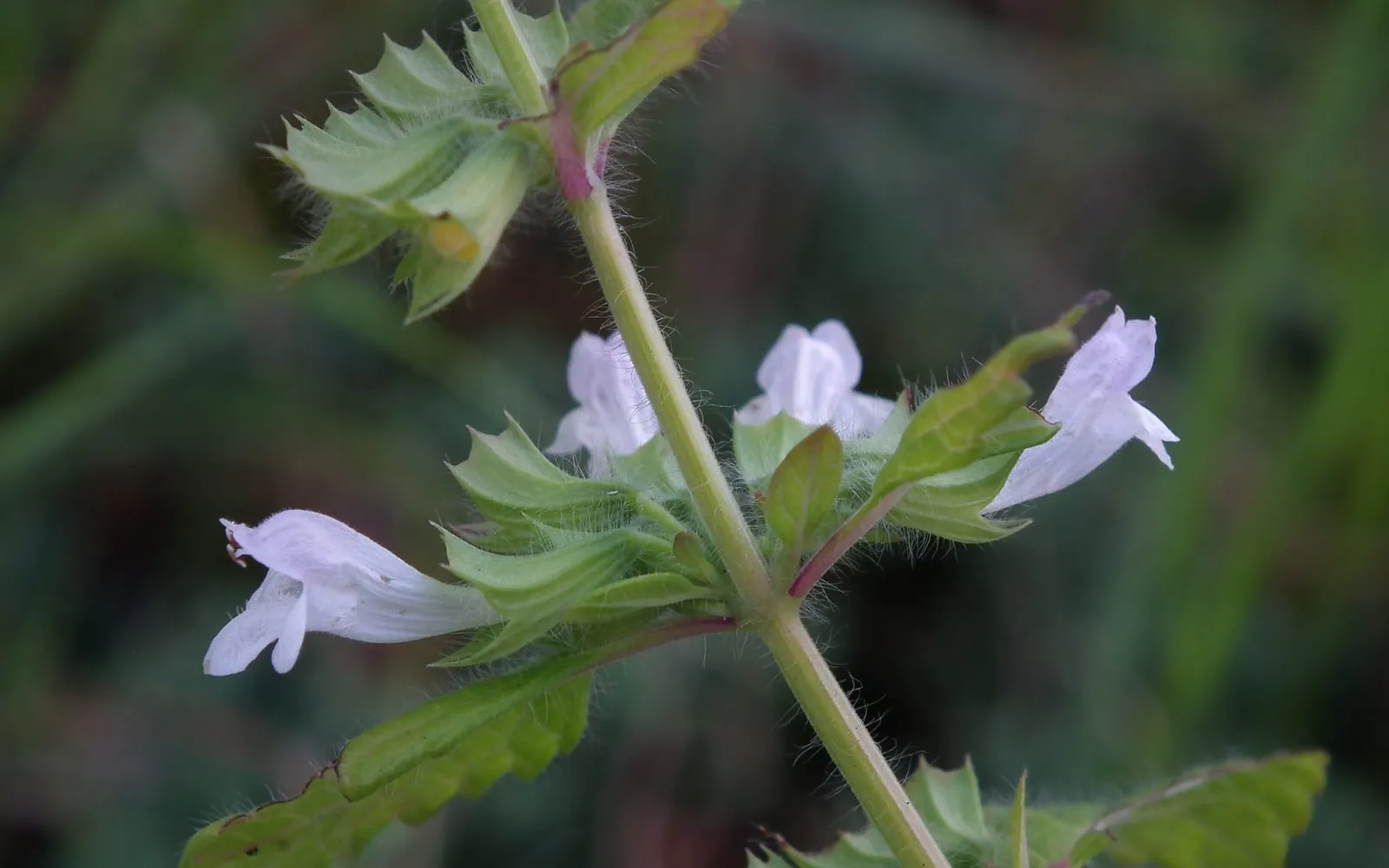
Leaves are oval to heart-shaped, 2 to 8 cm long, held in opposite pairs, bright green, wrinkled and puckered between the veins, with a scalloped toothed edge.
Crushed foliage smells strongly of lemon with a mint undertone, from citronellal and citral in the leaf oils.
Flowers open from June to September, small, 1 cm, two-lipped, white or pale yellow, in clusters in the leaf axils. They are inconspicuous and bees work them constantly.
Seed follows abundantly and germinates readily wherever it falls.
‘All Gold’ has entirely golden-yellow foliage and ‘Aurea’ is variegated gold and green, both less vigorous than the plain species and both scorching in full sun.
The plant looks tired and spotted by late summer if it is not cut back.
Where it is from
Southern Europe, the Mediterranean and central Asia, growing on woodland edges, in scrub and on waste ground.
It reached Britain by the middle ages and naturalised widely, and it is common on roadsides and waste ground in southern England as a garden escape.
The name Melissa is Greek for honeybee, and the association is ancient. Beekeepers rubbed lemon balm inside a new hive to encourage a swarm to settle, a practice recorded by Pliny and still occasionally used.
It has one of the longest records of medicinal use in Europe. Dioscorides described it, medieval monastic gardens grew it, and it was a principal ingredient of Carmelite water, a seventeenth-century preparation still sold in parts of Europe.
The traditional uses were for anxiety, sleeplessness and digestion, and modern research has focused on the same areas.
It is in Lamiaceae alongside mint, sage, thyme, rosemary and basil, and it shares the square stems, opposite leaves and aromatic oils of the family.
Lemon balm oil is used in perfumery and is expensive, since the yield from the leaves is very low.
How it grows
Plant in spring or autumn in sun or partial shade, in any reasonable soil.
Light shade suits it better than full sun in a hot dry position, where the leaves scorch and the plant runs to flower faster. The golden cultivars in particular need shade.
Poor to moderate soil gives a stronger scent than rich ground.
Grow it in a container or a confined space if you do not want it spreading. A large pot, a bed edged with paving, or a corner where it can do as it likes.
Water in dry spells while it establishes and afterwards in drought.
Cut the whole plant back to 10 cm in June, as the flower buds form and before any seed sets. This is the single most useful job with the plant. It prevents self-seeding, keeps the clump in bounds, and produces a fresh flush of clean young leaves.
Cut it back again in August if it flowers a second time.
Deadhead rather than shearing if you want to leave some flowers for the bees, cutting the flowering stems out at the base and leaving a portion of the clump.
Cut the whole plant to the ground in late autumn once it has died back.
Divide every three or four years in spring or autumn, which is easy and produces plenty of plants.
Weed out seedlings while they are small, since the taproot makes larger ones harder to pull.
Propagate by division, by softwood cuttings in early summer, or by transplanting a seedling. It roots very readily.
Harvest the young leaves before flowering, in the morning after the dew has dried, which is when the oil content is highest.
Use it fresh for the best flavour. Lemon balm loses a great deal of its scent when dried, more than most herbs, so dry it quickly in a warm airy dark place and store it in an airtight jar.
Through the seasons
Winter it dies back completely and the ground is bare.
Spring shoots come through in March and April, and the young leaves are at their best.
Summer flowers from June, which is when to cut the whole plant back, and it regrows within a few weeks.
Autumn may give a second flush after an August cut, and the plant is cut down once it dies back.
Care difficulty
Easy. Lemon balm grows in almost any conditions and needs no attention to survive.
The difficulty is containment, and it is entirely solved by cutting the plant back before it seeds.
There are very few pests. Insects largely leave it alone, which is one of the useful things about it, and powdery mildew in a dry summer is the only common complaint.
It needs no feeding, no staking and no winter protection.
Choosing where to put it is the decision that matters, and a mixed border is the wrong place.
Watering
Water in dry spells during the growing season, particularly in the first year.
Established plants manage on rainfall in a temperate climate and wilt visibly in a drought, recovering when watered.
Water after cutting back in June, which speeds the regrowth.
Container-grown plants need regular watering through the summer.
Mulch in spring to conserve moisture, which also reduces mildew.
Warning signs, diseases and pests
Seedlings appearing all over the garden is self-seeding, which is the standard problem. Cut the whole plant back to 10 cm in June before any seed sets.
The clump expanding into a large patch is root spread. Divide it, or grow it in a container.
Leaves going coarse, spotted and tired by midsummer is normal after flowering. Cut the plant back hard and it produces fresh young growth.
White powdery coating on the leaves in a dry summer is powdery mildew, which follows dry roots and crowded growth. Cut the plant back, water and mulch.
Scorched pale foliage on the golden cultivars is sun damage. Move them into partial shade.
Brown spots on the leaves in wet weather is a fungal leaf spot and is cosmetic.
Very few insect pests attack it, and this is one of the plant’s virtues.
Weak growth with poor scent is usually too much shade or soil that is too rich.
Growing environment
Full sun to partial shade. Light shade gives better leaves in a hot dry garden, and the golden cultivars need it.
Any reasonable soil, preferring moist ground. Poor to moderate fertility gives a stronger scent than rich soil.
Fully hardy through any temperate winter.
Allow 60 cm of spread and expect it to want more.
It suits a herb garden, a large container, a corner where it can spread, a path edge where people brush past it, or a wild patch.
Do not plant it in a mixed border with anything delicate, since it seeds and spreads into everything.
Grow it in a pot on a terrace, where the scent is released when you touch it and where the seeding is contained.
Its wildlife value is high. Bees of many kinds work the small flowers constantly through summer, which is where the name comes from, and leaving a portion of the clump to flower while cutting the rest is a reasonable compromise.
Grow the golden cultivar ‘All Gold’ for foliage colour in a shady spot, accepting that it is less vigorous and scorches in sun.
Feeding
None needed, and feeding reduces the scent.
Lemon balm produces its best aromatic oils on poor to moderate soil, and rich ground gives lush leafy growth with a weaker smell.
Mulch in spring with compost to conserve moisture rather than to feed.
Feed container-grown plants lightly with a balanced liquid feed every few weeks, since pot compost is exhausted within a season.
Avoid high-nitrogen feeds entirely.
Troubleshooting
It has seeded itself everywhere. The standard lemon balm problem. Cut the whole plant back to 10 cm in June as the flower buds form, before any seed sets, and it will not spread. Cut it again in August if it tries to flower a second time.
When should I cut it back? In June, before flowering. That prevents seeding, keeps it in bounds and gives you a fresh flush of clean young leaves for tea.
The leaves are coarse and spotted. Normal once the plant has flowered. Cut it back hard and the regrowth is clean.
Should I grow it in a pot? Yes, if you do not want it spreading. A large container controls both the seeding and the root spread and puts the scent somewhere you will touch it.
Does it dry well? Less well than most herbs. Lemon balm loses a great deal of its scent on drying, so dry it fast in a warm airy dark place and store it airtight, and use it fresh where you can.
When are the leaves best? Young growth before flowering, picked in the morning once the dew has dried, which is when the oil content is highest.
The golden one has scorched. ‘All Gold’ and ‘Aurea’ both burn in full sun. Move them into partial shade.
Will it grow in shade? Yes, in partial shade, which suits it better than a hot dry position in most temperate gardens. Deep shade gives weak growth and poor scent.
Is it the same as bee balm? The name is used for both. Monarda didyma is the North American bee balm or bergamot, with showy red flowers. Lemon balm is Melissa officinalis and its flowers are insignificant.