
Edible
Globe Artichoke
Cynara scolymus
Also known as Artichoke, French artichoke, Green artichoke
How to grow globe artichokes, Cynara scolymus. Growing from offsets rather than seed, cutting the king head first, and protecting the crown through a wet winter.
At a glance
- Difficulty
- Moderate
- Water
- Weekly through summer while the heads form
- Light
- Full sun
- Temperature
- Hardy to about -10 deg C, and winter wet kills more than cold
- Hardiness
- USDA 7-11, RHS H4, hardy to -10 C
- Type
- Hardy perennial, productive for four or five years
- Height
- 1.5-2 m in flower
- Native to
- The Mediterranean, from cultivated cardoon stock
- Best month
- June in the Northern Hemisphere, December in the Southern Hemisphere
A cool period is needed before the plant will produce heads, so seed-raised plants often give nothing in their first year and offsets from an established crown are the shortcut. Winter wet rots the crown faster than frost kills it. In a frost-free Mediterranean climate it crops for years and is cut back hard in summer instead.
Hardiness zones describe winter cold alone. Summer heat, humidity, rainfall and the length of the growing season decide as much, so treat the range as the outer limit rather than as a recommendation.
Every month named in this guide is for the temperate Northern Hemisphere. If you garden in the Southern Hemisphere, shift each one by six months, so June becomes December. Closer to the equator the wet and dry seasons matter more than the calendar, and the shift stops being a useful guide.
Skin irritant
- Safe to eat
- The fleshy scale bases and the heart of the unopened flower bud
- Harm from
- Handling it
- Affects
- People
Globe artichoke is a food crop eaten across the Mediterranean and carries no meaningful toxicity concern. The RHS does not list Cynara scolymus among plants harmful if eaten and the ASPCA does not list it as toxic to cats and dogs. The minor cautions are handling and choking. The leaves and stems carry sesquiterpene lactones, chiefly cynaropicrin, which is what makes the foliage bitter and which causes contact dermatitis in a small number of people who handle the plant regularly. Wear gloves when cutting back a large clump if you are prone to it. Second, artichoke contains cynarin, which temporarily alters how sweetness is perceived and makes water taste sweet for a few minutes after eating. That is a curiosity rather than a hazard. The choke, the hairy immature florets at the centre of a mature head, is inedible because it is fibrous rather than because it is harmful, and it is absent in a head cut young.
Sources: RHS potentially harmful garden plants, ASPCA toxic and non-toxic plants
About
A globe artichoke is an unopened thistle flower, and everything about growing it follows from that. The plant is large, architectural and handsome enough to earn a place in a border, and the crop is a bud cut before it opens.
Two things decide whether a planting succeeds in a cool damp climate. Grow from offsets rather than seed, because seed-raised plants are variable and many produce small spiny heads. And get the drainage right, because winter wet kills far more artichokes than cold does.
A well-sited clump crops for four or five years and then declines, so the routine is to take offsets from the best plants each spring and start a replacement bed before the old one gives out.
Appearance and character
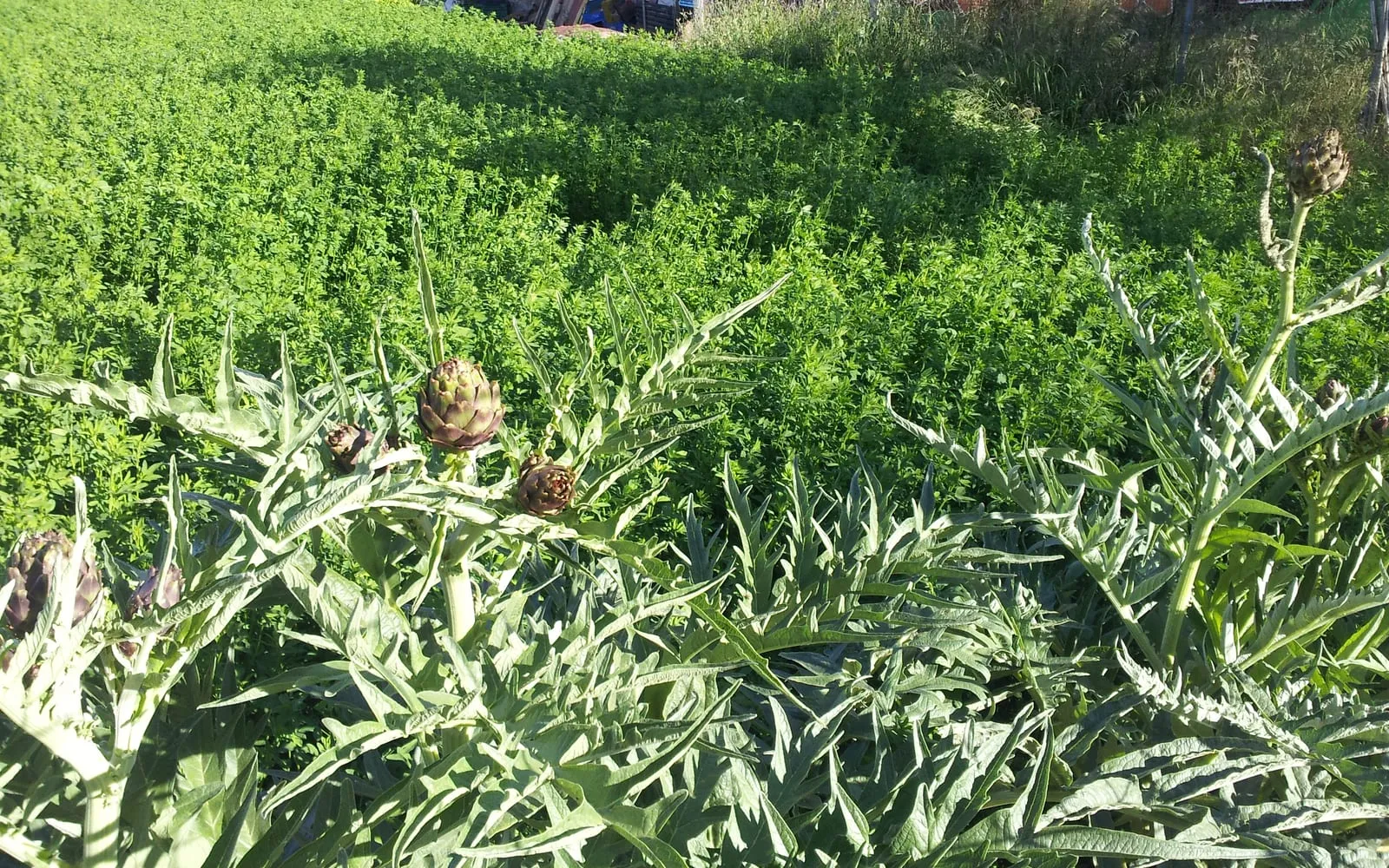
A large clump of arching, deeply divided, silver-grey leaves, each up to 80 cm long, forming a mound a metre across.
Flower stems rise to 1.5 or 2 m in summer, thick and grooved, branching to carry one large terminal head and several smaller ones below it.
The head is a tight globe of overlapping fleshy scales, green in most varieties and deep purple in ‘Violetta di Chioggia’ and its relatives.
An unpicked head opens into a startling violet-blue thistle flower 15 cm across, which bees work heavily and which dries well for the house.
The heart beneath the scales is the best of the crop, and the fibrous choke sits above it in a mature head.
Where it is from
The globe artichoke is a cultivated form of the cardoon, Cynara cardunculus, selected for a large fleshy flower bud rather than for its leaf stalks. Wild cardoon still grows around the Mediterranean.
Greeks and Romans ate cardoon, and the artichoke form appears clearly in the mediaeval Islamic world. Arab agricultural writers in Spain describe it by the twelfth century, and the English word comes through Italian articiocco from Arabic al-kharshuf.
Italy took it up most enthusiastically and remains the largest producer, with regional varieties from Chioggia, Rome and Sardinia.
It reached England in the sixteenth century and was a Tudor kitchen garden staple. Henry VIII is often credited with introducing it, on evidence no better than most such claims.
Modern taxonomy usually treats it as Cynara cardunculus var. scolymus, with Cynara scolymus retained as a widely used name.
How it grows
Plant offsets rather than sowing seed. An offset is a rooted side shoot taken from an established plant in April, cut away with a spade with some root attached and 20 cm of leaf.
Plant offsets 90 cm apart in rows 1.2 m apart, into ground dug with plenty of well-rotted manure.
Water well through the first summer and remove any flower heads in the first year, which builds the crown for the years that follow.
Cut the king head, the large terminal one, first, while the scales are still tight and before any sign of opening. The smaller side heads follow over the next few weeks.
Cut with 5 cm of stem. Leaving a stub encourages secondary heads.
Cut the stems down to 30 cm in autumn after cropping and mulch the crown heavily.
Take offsets in April from the best plants and start a new bed every four years.
Through the seasons
Early spring is for planting offsets and for taking them from established clumps. Feed established plants with a balanced fertiliser in March and clear the winter mulch off the crowns.
Late spring brings the flower stems up. Watch for blackfly on the stems and buds.
Summer is the harvest, from June to August. Water weekly, cut the king head first, and keep cutting as the side heads reach size.
Autumn finishes the crop. Cut the stems down to 30 cm, remove any remaining heads, and mulch the crown with 15 cm of compost or bracken.
Winter is when plants are lost. Keep the crown mulched and the drainage sharp. A wet winter on heavy soil is the commonest cause of death.
Care difficulty
Moderate, and the two decisions that matter are made before planting.
Offsets rather than seed is the first. Seed-raised plants vary widely and a proportion produce small spiny heads that are not worth the ground.
Drainage is the second and it is the difference between a plant that lives five years and one that dies in February. Artichokes tolerate cold and rot in wet. Plant on a ridge or a raised bed on heavy soil.
Removing the first year’s heads is the discipline that builds a productive crown.
Cutting at the right stage is straightforward. Tight scales and no sign of the flower colouring.
Renewing the bed every four or five years keeps yields up.
Watering
Water weekly through summer while the heads are forming, around 15 litres per plant in dry weather.
A dry spell in June gives small tough heads, and this is the period when watering makes the most difference.
Water new offsets generously through their first summer.
Mulch after the spring feed to hold moisture.
Stop watering in autumn and keep winter water off the crown as far as possible, since waterlogging rather than frost is what kills the plant.
Container growing is possible in a very large pot of 45 litres or more, and a plant in the ground is far better.
Warning signs, diseases and pests
Blackfly cluster densely on the flower stems and around the developing buds in early summer. Wash them off with a jet of water, squash them, and leave ladybirds and hoverfly larvae to the rest.
Slugs graze the emerging spring shoots. Patrol on damp evenings while the growth is soft.
Root and crown rot follow winter waterlogging and kill the plant outright. Plant on a ridge or a raised bed on heavy ground and keep the mulch loose rather than packed against the crown.
Petal blight browns the scale tips in a wet summer and spoils the appearance more than the eating. Remove affected heads.
Powdery mildew coats the leaves in a dry late summer and arrives too late to matter.
Small tough heads mean drought, a crowded old clump, or a seed-raised plant of poor quality.
Declining yields after four or five years are normal. Start a new bed from offsets.
Growing environment
Full sun. Artichokes are Mediterranean plants and need the light.
Deep, rich, free-draining soil. Dig in plenty of well-rotted manure before planting.
Neutral to slightly alkaline, pH 6.5 to 7.5.
Sharp drainage in winter, which on heavy soil means a raised bed or a ridge. This is the single most important siting decision.
Shelter from strong wind, which snaps the tall flower stems.
Space at 90 cm each way. The plants are large and crowding reduces the crop.
A permanent position outside the rotation, since the bed stays for four or five years.
Feeding
Dig in plenty of well-rotted manure before planting.
Feed with a balanced general fertiliser in March at 70 g per square metre.
Mulch with compost or well-rotted manure in autumn after cutting down, which feeds the plant and protects the crown at once.
Avoid heavy nitrogen in late summer, which gives soft growth going into winter.
A liquid feed in June while the heads are forming helps on poor ground.
Troubleshooting
Small, spiny, tough heads. A seed-raised plant of poor quality, or drought. Grow from offsets taken from a known good plant, and water weekly in June.
The plant died over winter. Waterlogging rather than cold. Artichokes take -10 deg C and rot in wet ground. Plant on a ridge or a raised bed.
Dense blackfly all over the stems. Wash them off with a jet of water and squash the rest. The predators usually catch up within a fortnight.
The head opened into a flower before I cut it. Cut earlier, while the scales are still tight and closed. An open head is inedible and worth leaving for the bees.
Yields have fallen off after four years. Normal. Take offsets in April from the best plants and start a replacement bed.
Brown patches on the scales. Petal blight in a wet summer. Remove affected heads. It spoils the look more than the eating.
Should I grow from seed? Only if you cannot get offsets. Seed-raised plants vary and a proportion give small spiny heads. Offsets come true to the parent.
Should I let it flower? Not on a plant you are cropping, since it exhausts the crown. On a spare plant the violet-blue thistle flower is one of the best things in a summer garden.
Globe Artichoke problem guides
Not sure what is wrong? See the common vegetable pests guide.