
Edible
Notoginseng
Panax notoginseng
Also known as Tianqi, Sanqi, Pseudoginseng
Practical guidance for growing notoginseng, Panax notoginseng, including deep shade, root rot prevention, slow root maturity, mild climate needs, and its use as a dried herbal root.
At a glance
- Difficulty
- Difficult
- Water
- Consistent, even moisture; never allowed to dry out fully
- Light
- Deep, dappled shade; direct sun scorches the leaves
- Temperature
- Prefers a mild climate with no hard freeze or intense heat
- Humidity
- Consistently humid air, echoing a forest understorey
- Hardiness
- USDA 8-10, RHS H3, hardy to -5 C
- Type
- Shade-loving herbaceous perennial
- Height
- 30-60 cm
- Native to
- southern China
Grown commercially at elevation in Yunnan and Guangxi under dense shade cloth that mimics a forest canopy, in a mild, humid highland climate without a hard freeze or a punishing summer. It tolerates a light frost once established but neither a severe winter nor a hot, dry summer suits it, and both drought and waterlogging damage the root it is grown for.
Hardiness zones describe winter cold alone. Summer heat, humidity, rainfall and the length of the growing season decide as much, so treat the range as the outer limit rather than as a recommendation.
Not known to be toxic
- Safe to eat
- The root, dried and powdered, used in cooking, tonics and herbal preparations
Notoginseng is not listed as harmful by the RHS or the ASPCA. Its root, known as tianqi or sanqi, is one of the most widely used roots in Chinese herbal medicine and also appears as an ingredient in some foods and drinks, generally dried and ground rather than eaten fresh. As with many saponin-containing roots, eating a large raw quantity can cause mild stomach upset, a matter of quantity rather than a documented poisoning risk, and this is far more a concern for a concentrated supplement than for the root as it grows in a garden.
Sources: RHS potentially harmful garden plants, ASPCA toxic and non-toxic plants
About
Notoginseng is a slow-growing woodland herb from southern China, grown almost entirely for its root, one of the most valued in Chinese herbal medicine. It is a close relative of ginseng and shares the family’s defining difficulty: deep shade, constant moisture and sharp drainage all have to be met at once, and getting any one of them wrong tends to show up in the root rather than the leaves.
Commercial growers meet these conditions with dense shade cloth strung over raised, carefully drained beds, a setup worth copying at garden scale for anyone growing it outside its native highland climate.
Appearance and character
A single upright stem carries a whorl of palmate compound leaves at its top, each leaflet toothed and pointed, giving the whole plant a neat, umbrella-like silhouette close to the ground. It is a modest, unshowy plant above ground, nothing like the size or presence of the root it produces underground.
Small greenish-white flowers cluster at the top of a mature plant in a tight, rounded head, followed by small red berries once pollinated. Most growers remove the flower head before it sets fruit, since letting the plant put energy into flowering and berries diverts growth away from the root.
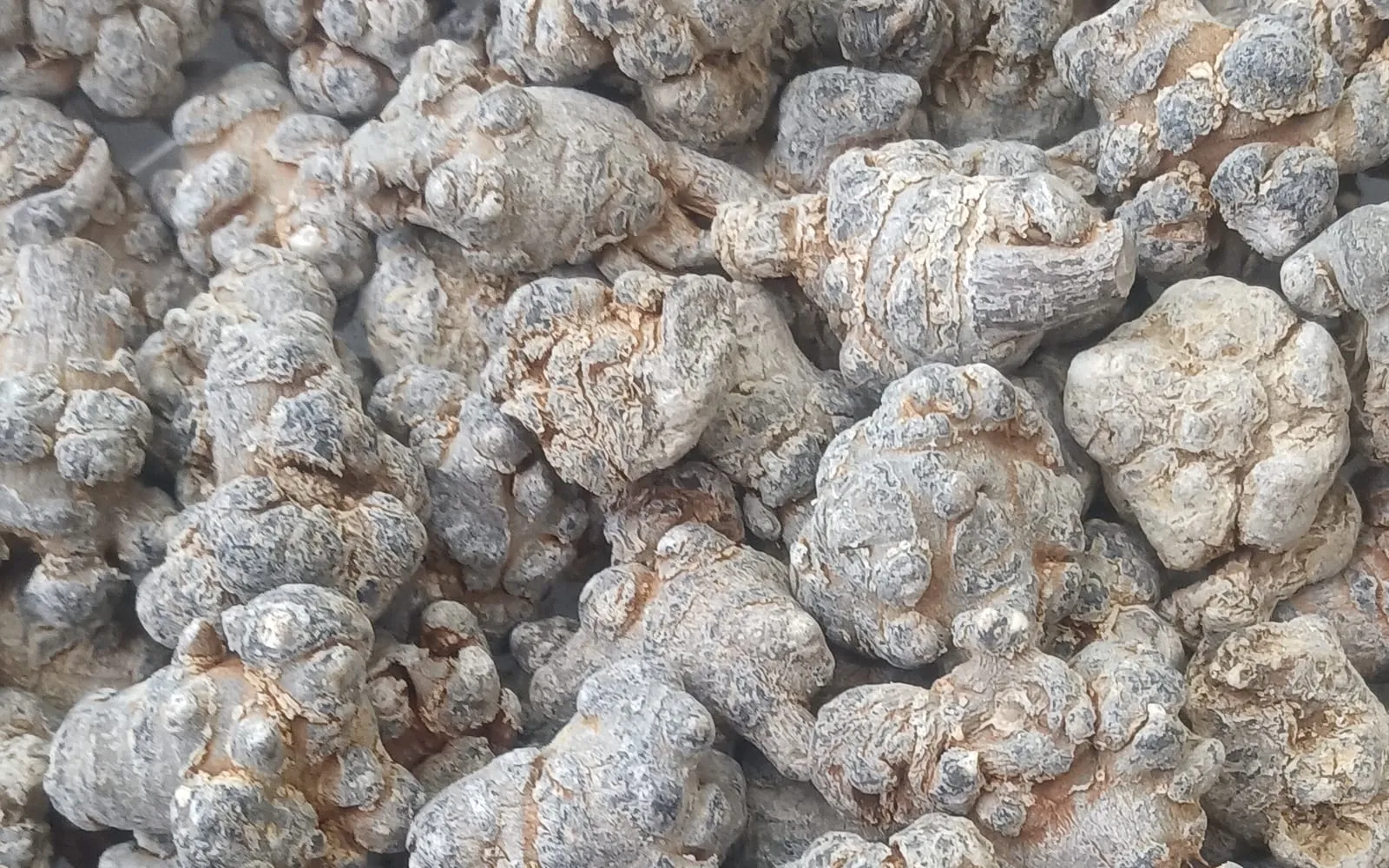
Below ground, the root is thick, somewhat knobbly and pale, growing larger and denser each year the plant is left in the ground, which is exactly why a harvestable root takes several years to develop.
Where it is from
Panax notoginseng is native to a limited area of southern China, centred on Yunnan and neighbouring Guangxi, growing wild in humid, shaded mountain forest at moderate to high elevation.
That narrow native range sits behind most of what makes the species demanding elsewhere. The climate there is mild rather than either severely cold or intensely hot, humid throughout the growing season, and shaded by forest canopy for most of the day, three conditions that have to be reproduced together rather than substituted one for another.
How it grows
Plant in rich, moisture-retentive soil that still drains very freely, raised beds or heavily amended ground rather than flat, heavy soil, since standing water around the root is the single fastest way to lose this plant. Deep, dappled shade is essential; direct sun scorches the leaves and stresses the whole plant even where soil conditions are otherwise good.
Sow seed in autumn, since it needs a period of cold before it will germinate the following spring, or start from root divisions where available, which establish faster than seed-grown plants.
Most growers remove the flower head as it forms, redirecting the plant’s energy into the root rather than into seed production, unless seed is specifically wanted for propagation.
Harvest typically comes after three to seven years in the ground, depending on the size of root wanted, since this is a slow-maturing crop rather than one grown and lifted within a season or two.
Through the seasons
Spring brings new growth from the dormant root, with the single stem and leaf whorl expanding through the season.
Summer is the main growing period, with flowering on mature plants if the flower head is not removed, and the root continuing to bulk up below ground.
Autumn slows growth as temperatures drop, and is a suitable time to sow fresh seed for cold stratification over winter.
Winter brings dormancy above ground in cooler parts of its range, with the root surviving a light frost provided it is not sitting in wet, waterlogged soil.
Care difficulty
Difficult. The challenge is balancing moisture and drainage at the same time, in shade, over several years without a break. None of the individual requirements are unusual on their own, but all of them have to hold steady together for a long stretch for the root to develop well.
A grower without a naturally mild, humid, shaded site usually needs to build one, whether that is a shaded raised bed, a shade house or a sheltered spot under established trees, rather than relying on ordinary open garden conditions.
Watering
Water little and often, keeping the soil consistently and lightly moist rather than alternating between dry and saturated. A deep, infrequent soak suits many garden plants but works against this one, since the root sits close enough to the surface to dry out between widely spaced waterings while still risking rot from a single heavy soak on poorly drained ground.
Reduce watering somewhat in winter dormancy, though never let the soil dry out completely, since the root remains sensitive to prolonged drought even while the top growth is resting.
Warning signs, diseases and pests
Root rot is the single biggest risk to this crop, following soil that stays wet without draining freely, and it can destroy years of growth on a root close to harvest size. Sharp drainage from the outset, rather than any treatment after the fact, is the real defence.
Damping off affects seedlings sown into wet, poorly ventilated compost, collapsing them at soil level before they establish. Sow thinly, keep young seedlings in good airflow, and avoid overwatering a seed tray.
Powdery mildew coats leaves in a pale, dusty film in humid, still conditions with poor air movement, which is a real risk given how much this plant already depends on humidity. Improving airflow around plants without sacrificing shade or moisture helps prevent it.
Slugs and snails target soft new growth, particularly in the damp, shaded conditions this plant is grown in, which happen to suit slugs just as well. Barriers or torchlight collection protect young plants without disturbing the humid microclimate they need.
Growing environment
Deep, dappled shade is close to non-negotiable; a position in direct sun for more than brief periods scorches the leaves and stresses root development even when watering is otherwise well managed.
Rich but very free-draining soil, often built up in a raised bed with generous grit or coarse organic matter worked in, supports both the constant moisture and the drainage this plant needs simultaneously.
Consistently humid air matters alongside soil moisture. A shaded but dry-aired position still falls short of the forest-floor conditions this species needs.
Feeding
A light, balanced organic feed through the growing season supports slow, steady root development without pushing soft, disease-prone top growth.
Avoid heavy nitrogen feeding in particular, which encourages leafy growth at the expense of the root and can also make the plant more vulnerable to the fungal problems that already trouble it in humid shade.
Troubleshooting
The plant collapsed suddenly after several good years of growth. Root rot is the most likely cause, especially after a wet spell or in soil that does not drain as freely as it should. Lift and inspect the root; if only part of it has rotted, cutting away the affected tissue and replanting in better-drained soil can sometimes save what remains.
Seedlings keep dying at soil level shortly after germinating. Damping off, caused by wet, poorly ventilated conditions around young seedlings. Sow more thinly, improve airflow and let the surface of the compost dry slightly between waterings while seedlings establish.
The leaves are scorched and crisped at the edges. Too much direct sun is the near-certain cause. Move the plant into deeper shade, or add shade cloth over an open bed, and damaged leaves should be replaced by healthier new growth once light levels are corrected.
How long before the root is worth harvesting? Several years at a minimum, commonly three to seven depending on the size of root wanted. This is a slow crop by any garden standard, closer in patience required to a tree than to most herbs.
Can I grow this in an ordinary sunny herb bed? No, not successfully. It needs deep shade and constant, well-drained moisture that a typical open, sunny herb bed cannot provide, and the root is unlikely to develop well without conditions closer to a shaded woodland floor.