
Houseplant
Dragon Tree
Dracaena marginata
Also known as Madagascar dragon tree, Red-edged dracaena, Dracaena
How to grow Dracaena marginata. Why tap water browns the tips, cutting a leggy cane to make it branch, and the saponins that affect cats.
At a glance
- Difficulty
- Easy
- Water
- When the top half of the compost is dry
- Light
- Bright indirect light. Tolerates medium light slowly
- Temperature
- 15-27 deg C. Avoid anything below 12
- Humidity
- Average room air is acceptable. Prefers a little more
- Hardiness
- USDA 10-12, RHS H1b, hardy to 13 C
- Type
- Evergreen shrub, slow-growing and long-lived
- Height
- 2-3 m indoors over many years
- Native to
- Madagascar
- Best month
- November in the Northern Hemisphere, May in the Southern Hemisphere
Madagascar. It tolerates low light, drought and neglect, and it is sensitive to fluoride in tap water, which shows as brown tips. Outdoors year round in USDA 10 and warmer.
Hardiness zones describe winter cold alone. Summer heat, humidity, rainfall and the length of the growing season decide as much, so treat the range as the outer limit rather than as a recommendation.
Every month named in this guide is for the temperate Northern Hemisphere. If you garden in the Southern Hemisphere, shift each one by six months, so November becomes May. Closer to the equator the wet and dry seasons matter more than the calendar, and the shift stops being a useful guide.
Toxic to cats and dogs if eaten
- Do not eat
- Leaves and stems
- Harm from
- Eating it
- Affects
- Cats and dogs
The ASPCA lists Dracaena as toxic to dogs and cats through saponins, with vomiting sometimes containing blood, depression, loss of appetite, excessive drooling, and dilated pupils in cats specifically. Dracaena does not appear on the RHS list of potentially harmful garden plants, and it is not listed as toxic to horses. The dilated pupils are the sign that separates this from an ordinary stomach upset, and it is reported in cats often enough to be diagnostic. Cases are rarely fatal and usually resolve with veterinary supportive care, though the vomiting can be severe. The practical problem is the plant's shape. Long narrow arching leaves at cat height are close to irresistible to a cat that chews, and this species is bothered by animals considerably more often than a plant with tough leaves would be. Place it out of reach, or choose something else for a house with a determined chewer.
Sources: ASPCA (Dracaena species), RHS potentially harmful garden plants
About
The dragon tree is the architectural houseplant for people who kill things. It tolerates low light, forgives missed watering, grows slowly enough to stay in proportion for years, and asks for very little.
It has one quirk that catches people out, and it comes from the tap. Dracaenas are unusually sensitive to fluoride, and fluoridated tap water produces brown crispy leaf tips that no amount of misting or feeding will fix. Switching to rainwater or filtered water solves a problem most owners spend months blaming on humidity.
The dragon name is shared with Dracaena draco, a Canary Islands relative that bleeds a red resin known as dragon’s blood. This species is Madagascan and does not.
Appearance and character
Slender woody canes, usually several to a pot, each topped with a dense tuft of long narrow leaves that arch outward and downward.
Leaves reach 20 to 40 cm, are strap-shaped and pointed, and carry a fine red or purple margin down each edge, which is where the botanical name comes from. Variegated cultivars such as ‘Tricolor’ add cream stripes and ‘Colorama’ is mostly pink.
The canes are the plant’s structure. As it grows, lower leaves drop and the cane below is left bare and marked with the old leaf scars, giving the plant its distinctive palm-like silhouette. This is normal growth rather than decline.
Canes lean towards the light and take on curves over years, and mature specimens often have two or three canes of different heights in one pot.
Flowers are white, small and heavily scented, and they appear so rarely indoors that most owners never see them.
Where it is from
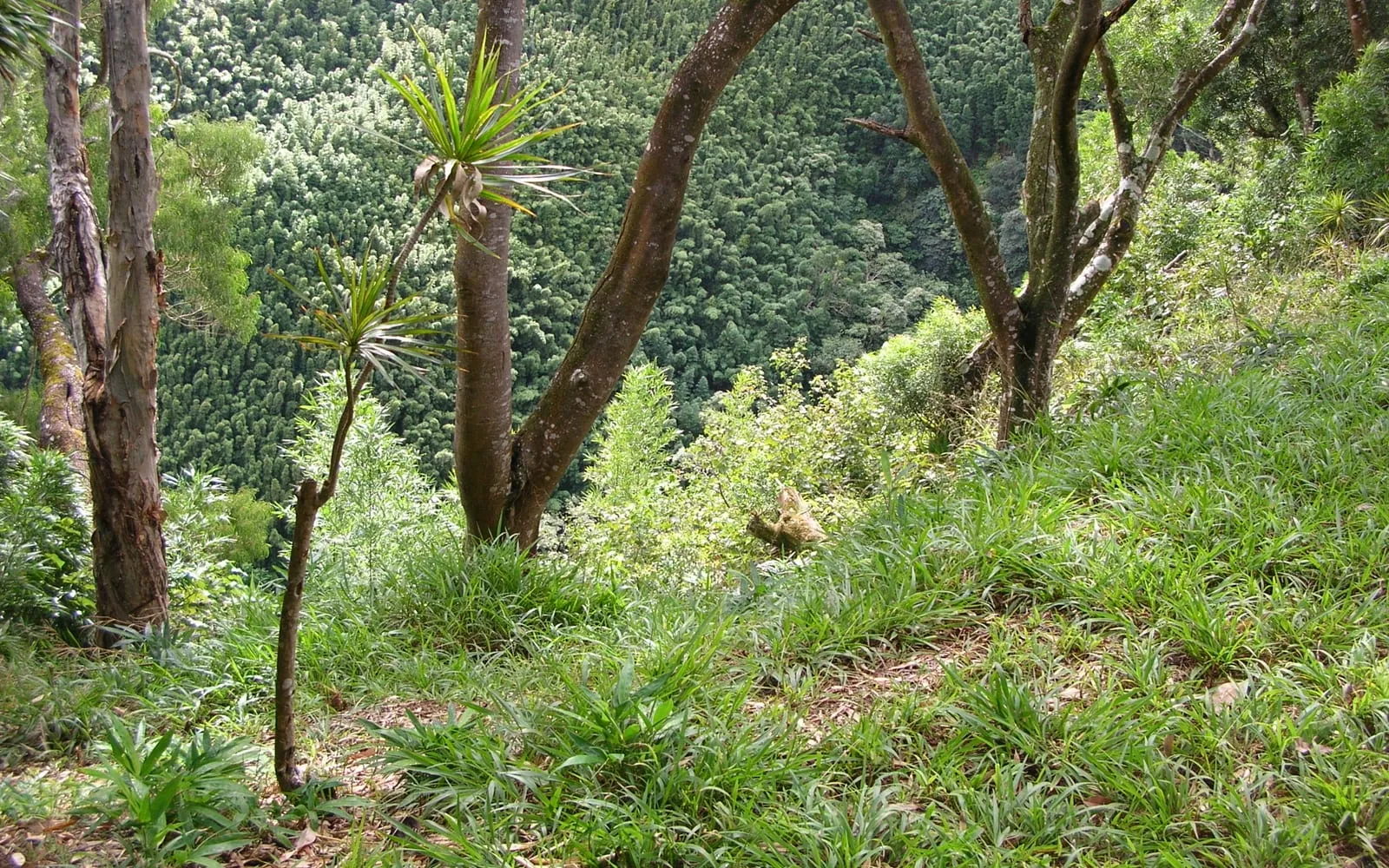
Madagascar, growing in dry woodland and scrub as an understorey shrub or small tree.
Madagascan dry forest is bright but filtered, warm all year and seasonally dry. The plant is adapted to periods without rain, which is the origin of its tolerance for erratic watering, and it has no experience of cold.
Understorey light explains why it survives medium indoor light while growing best in bright indirect conditions.
Nothing in that environment involves fluoride. The sensitivity is an accident of evolution meeting municipal water treatment.
How it grows
An evergreen shrub, slow-growing and very long-lived. A plant can put on 15 to 30 cm in a good year and stay attractive for decades.
Growth is from the tip of each cane. Removing that tip triggers dormant buds lower down, which is how a single bare cane is turned into a branched plant.
Cut a cane cleanly at the height you want in spring, and within a few weeks two or three new shoots usually emerge just below the cut. The severed top can be rooted as a cutting, and even the bare middle section of cane will root if laid horizontally on damp compost.
Lower leaf drop is continuous and normal. Each cane sheds its oldest leaves as it adds new ones at the tip.
Repot every two or three years in spring into a pot one size larger. The roots are orange and fleshy, and seeing them is no cause for alarm.
Through the seasons
Spring is the time for anything structural. Cut back leggy canes now, repot if needed, take cuttings, and start feeding in April.
Summer is the main growing season. Water when the top half of the compost is dry, feed monthly, and rotate the pot so the canes do not all lean one way.
Autumn slows it down. Stop feeding at the end of September and reduce watering.
Winter is a rest with almost no growth. Water every two or three weeks at most. Keep the plant away from cold draughts and from radiators, and expect a little leaf loss. Low light matters more now, so a plant that coped in a corner in July may want moving nearer a window.
Care difficulty
Easy, and among the most forgiving plants in these guides.
The commonest mistake is overwatering, which shows as yellowing leaves and a cane that goes soft at the base. Let the top half of the compost dry before watering.
The commonest complaint is brown leaf tips, and it is a water quality problem rather than a care failure. Use rainwater or filtered water.
Poor light does not kill it. It slows growth to a standstill and fades the red edges, which is a cosmetic cost.
Watering
Water when the top half of the compost is dry, which in a warm room is roughly every ten days in summer and every two or three weeks in winter.
Use filtered water, rainwater or distilled water. Fluoride in tap water accumulates in the leaf tips and burns them, and this species is among the most sensitive houseplants to it. Letting tap water stand overnight removes chlorine and does nothing for fluoride.
Water thoroughly until it drains from the base, then empty the saucer.
This plant tolerates drought far better than wet compost. When in doubt, wait.
Drooping leaves with dry compost mean underwatering. Yellowing lower leaves with wet compost mean the opposite.
Warning signs, diseases and pests
Brown crispy leaf tips are the signature problem. Fluoride in tap water is the usual cause, low humidity the second, and underwatering the third. Switch to filtered or rain water first. Trim the brown tips off with scissors following the natural leaf shape, and judge progress by the new growth, since damaged tissue does not recover.
Root rot from overwatering shows as yellowing leaves, a soft dark cane base, and compost that stays wet. Unpot, cut away black mushy roots, and repot into fresh free-draining compost. Take a cutting from the healthy top as insurance.
Spider mites are common in dry heated rooms, stippling the leaves and leaving fine webbing between them. Rinse the plant thoroughly and raise the humidity.
Scale insects appear as small brown bumps along the leaf undersides and stems, with sticky honeydew.
Mealybugs show as white cottony fluff where the leaves meet the cane.
Shedding lower leaves is normal growth, and it is how the plant builds its bare cane structure.
A cane leaning heavily has grown towards the light. Rotate the pot regularly, or cut it back and start again.
Growing environment
Bright indirect light gives the best growth and the strongest red leaf margins. It tolerates medium light with very slow growth. Direct afternoon sun scorches the narrow leaves.
Warmth of 15 to 27 deg C. Below 12 deg C causes damage, so keep it off cold windowsills and away from draughty doors in winter.
Average room humidity is acceptable, and a little more is better. A pebble tray or grouping with other plants helps in a centrally heated room, though this is not a plant that demands a humidifier.
Compost should be free-draining. A peat-free houseplant compost with added perlite works well.
Use a pot only slightly larger than the rootball. Dracaenas prefer being somewhat snug, and a large pot holds water the roots cannot use.
Rotate the pot a quarter turn each month, since the canes lean towards light persistently.
Feeding
A balanced liquid houseplant feed at half strength, monthly from April to September.
Stop entirely from October to March.
Choose a fertiliser without superphosphate where possible, since superphosphate carries fluoride and adds to the leaf tip problem this plant already has.
Over-feeding causes brown leaf margins and a white crust on the compost. Flush the pot through with plain filtered water if this appears.
Feed at half strength for a couple of months after repotting.
Troubleshooting
Brown crispy leaf tips. Fluoride in tap water, most likely. Switch to filtered water or rainwater. Low humidity and underwatering are the other two causes. Trim the tips to shape and watch the new growth.
Yellowing lower leaves with wet compost. Overwatering. Let it dry to halfway down before watering again.
Lower leaves dropping steadily. Normal. New leaves appear at the top while old ones fall, and this is how the bare cane forms.
Tall bare cane with a small tuft at the top. Natural growth plus low light. Cut the cane at the height you want in spring, and new shoots break below the cut. Root the top as a cutting.
Red leaf edges have faded. Not enough light. Move it nearer a window.
Fine webbing and speckled leaves. Spider mites from dry heated air. Rinse the plant and raise the humidity.
Cane soft and dark at the base. Root rot. Take a cutting from healthy growth now.
Nothing has grown for months. Winter dormancy, or medium light. Both are normal for this species and neither needs correcting with extra water or feed.
Dragon Tree problem guides
Not sure what is wrong? See the common houseplant pests guide.