
Houseplant
Azure Halopegia
Halopegia azurea
Also known as Azure Prayer Plant
How to grow Halopegia azurea, the azure halopegia, a tall prayer-plant relative with rare blue flowers that needs wet soil and warm, humid air.
At a glance
- Difficulty
- Moderate
- Water
- Keep constantly moist to wet
- Light
- Bright indirect light to light shade
- Temperature
- Warm, 18 to 28 deg C; keep above 15 deg C
- Humidity
- High
- Hardiness
- USDA 11-12, RHS H1a, hardy to 15 C
- Type
- Evergreen marsh perennial
- Height
- 1 to 2 m
- Native to
- West and West-Central Tropical Africa
A tall marsh plant from the warm wetlands of West and West-Central Africa, growing in ground that stays wet and air that stays humid. Frost kills it and it stalls in the cold, so it needs steady warmth above about 15 deg C. Unlike most houseplants it tolerates wet roots, so drying out is a bigger risk to it than overwatering.
Hardiness zones describe winter cold alone. Summer heat, humidity, rainfall and the length of the growing season decide as much, so treat the range as the outer limit rather than as a recommendation.
Not known to be toxic
Like the calatheas and prayer plants it is related to, azure halopegia belongs to the arrowroot family and is not recorded as toxic to people or pets. A chewed leaf would be unlikely to cause harm. It is a safe plant for a home with cats, dogs or children, grown for its foliage and blue flowers instead of for anything edible.
Sources: ASPCA toxic and non-toxic plants, RHS potentially harmful garden plants
About
Azure halopegia is a tall, leafy relative of the prayer plants, but one that grows in marshes instead of on the forest floor. It sends up a clump of upright stalks topped with large, paddle-shaped leaves, and where its low-growing cousins spread sideways, this one reaches for height, standing a metre or two tall in good conditions.
It shares the arrowroot family’s habit of folding and raising its leaves at dusk, the movement that gives the prayer plants their name, and it is grown for that large foliage. Its blue-violet flowers, which give it the name azurea, are a bonus that appears only on a well-settled plant.
The big difference from a prayer plant or a calathea at home is its need for wet ground. It is a marginal, marsh plant, so it needs soil that never dries out and will even grow in shallow standing water.
Appearance and character
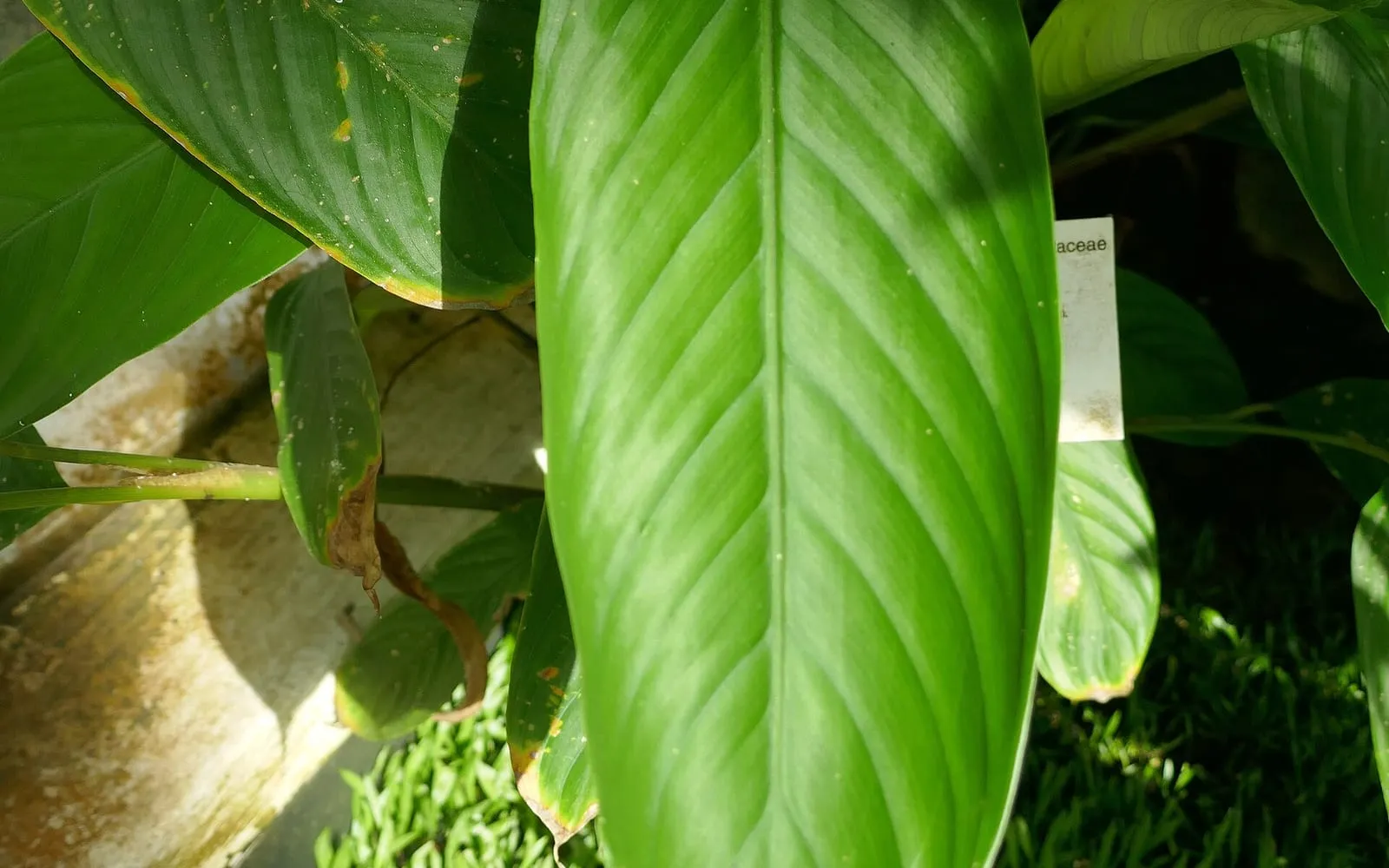
Leaves are large, oval to paddle-shaped and glossy green, held upright on long stalks, and they lift and fold at night in the manner of the prayer plant family.
The habit is tall and upright, a clump of leafy stalks reaching one to two metres, far taller than the low calatheas, and spreading slowly from a creeping rhizome.
Flowers are small and an unusual blue to violet, carried in short spikes among the leaves, and they appear only on a mature plant in good conditions, so they are seldom seen indoors.
New growth rises from the spreading rhizome, and the plant is increased by division of that rhizome in spring.
Where it is from
Halopegia azurea grows in the warm wetlands of West and West-Central tropical Africa, in marshes, swamps and the margins of slow water, in constant warmth and high humidity. Wet feet and damp air are its normal conditions.
That marshy habitat explains the care. It needs rich, wet soil, warmth and humid air, and it does not suffer from the soggy roots that harm most houseplants. Drying out, cold and dry air are what it cannot cope with.
How it grows
It grows tall and leafy in warmth and wet, spreading from its rhizome, and slows in cooler or drier conditions. Given a warm, humid, wet setting it grows vigorously.
Pot it in a rich, moisture-retentive mix, and keep the compost wet, standing the pot in a saucer of water or growing it at a pond margin in a heated conservatory if you can. It is one of the few houseplants that tolerates boggy soil.
Keep it warm, above about 15 deg C, humid and in bright indirect light or light shade. A warm, humid room, a large plant case or a heated pool margin suits its size and its need for moisture.
Divide the rhizome in spring to make new plants or to keep a large clump in bounds, since it can grow tall and spread with age.
Through the seasons
Spring brings vigorous new growth as warmth and light return, the best time to divide and repot and to resume feeding.
Summer is the main growing season. Keep the soil wet and the air humid, and feed regularly as it puts on height.
Autumn slows growth as the light drops. Ease off feeding but keep the soil moist, and hold the warmth as heating dries the air.
Winter is a rest period. Keep it warm, above about 15 deg C, humid and moist, and out of cold draughts.
Care difficulty
Moderate, and unusual in wanting to be kept wet. Given warmth, humidity and constantly moist to boggy soil it grows tall and strong with little trouble. Its problems are cold, dry air and drying out, the opposite of most houseplants. Treat it as a warm marsh plant and it should grow well.
Watering
Keep the compost constantly moist to wet, standing the pot in a saucer of water if that helps, since this is a marsh plant that never wants to dry out. Drying out browns the leaves and checks the growth.
Use rainwater or filtered water where the tap water is hard, as with its calathea relatives, to keep the leaf edges clean. Keep it wet even in winter, easing off only the feeding.
Warning signs, diseases and pests
Spider mites appear in warm, dry air, stippling the leaves pale with fine webbing. Raise the humidity, wipe the leaves, and treat early, since dry air brings them on despite the plant’s need for wet soil.
Brown, crisp leaf edges usually mean dry air or hard water. Raise the humidity, switch to rainwater or filtered water, and keep the soil wet.
Curling or fading leaves point to cold or to too much direct sun. Keep the plant warm and in bright indirect light instead of a baking window.
Growing environment
Bright, indirect light or light shade suits it, matching the dappled light of its wetland margins. Direct sun scorches and fades the leaves, and deep shade thins the plant.
Warmth and humidity are essential, above about 15 deg C in a humid spot. Unusually, it also needs wet soil, so it suits a heated conservatory pool margin, a bog planter or a large pot stood in water.
Give it a rich, moisture-retentive mix and plenty of room for its height, in a warm, humid, brightly lit position out of cold draughts.
Feeding
Feed monthly through the growing season with a dilute balanced feed, to support its tall, leafy growth. Feed at half strength and flush the pot occasionally to clear any build-up.
Ease off in autumn and stop in winter while growth slows, though the soil should stay wet throughout.
Troubleshooting
The leaf edges are browning. Dry air, hard water, or the soil drying out. Raise the humidity, water with rainwater or filtered water, and keep the compost wet, since this is a marsh plant.
Can I really keep it that wet? Yes. Unlike most houseplants it grows in marshes and tolerates boggy soil and even shallow standing water, so keeping it wet is right rather than risky.
The leaves are stippled and dull. Spider mites, from warm, dry air. Raise the humidity, wipe the leaves, and treat early.
It is getting very tall. Normal for this species, which reaches one to two metres. Divide the rhizome in spring to keep a clump in bounds and to make new plants.
Is it safe around pets? Yes. As a member of the arrowroot family it is not recorded as toxic to cats or dogs, so it is a safe plant for a home with animals.
Azure Halopegia problem guides
Not sure what is wrong? See the common houseplant pests guide.