
Houseplant
Cylindrical Snake Plant
Dracaena angolensis
Also known as African Spear, Cylindrical Sansevieria, Sansevieria cylindrica
How to grow Dracaena angolensis, the cylindrical snake plant, with stiff round spear-like leaves that thrive on neglect but rot if overwatered.
At a glance
- Difficulty
- Easy
- Water
- Sparingly; let the mix dry out fully between waterings
- Light
- Bright indirect light to full sun; tolerates low light
- Temperature
- Warm; keep above 10 deg C
- Humidity
- Undemanding; tolerates dry air
- Hardiness
- USDA 10-12, RHS H1b, hardy to 10 C
- Type
- Evergreen succulent perennial
- Height
- 60 to 150 cm
- Native to
- South-central Africa
A drought-hardy succulent from the dry country of south-central Africa, grown as a tough houseplant. It has no frost tolerance and should be kept above about 10 deg C, but it copes with dry air, low light and long gaps between waterings. Its one real weakness is cold, wet compost, which rots the roots, so it is treated like a succulent instead of a leafy tropical.
Hardiness zones describe winter cold alone. Summer heat, humidity, rainfall and the length of the growing season decide as much, so treat the range as the outer limit rather than as a recommendation.
Harmful if eaten
- Do not eat
- The leaves, which contain saponins
- Harm from
- Eating it
- Affects
- Cats, dogs and people
Like other snake plants, the cylindrical snake plant contains saponins, and the ASPCA lists Dracaena, which now includes the former Sansevieria, as toxic to cats and dogs. Chewing the leaves causes drooling, nausea, vomiting and diarrhoea in pets, and mild mouth and stomach upset in people. It is not among the dangerous houseplants, but the stiff spears can tempt a chewing pet, so keep it out of reach of animals that nibble plants.
Sources: ASPCA toxic and non-toxic plants, RHS potentially harmful garden plants
About
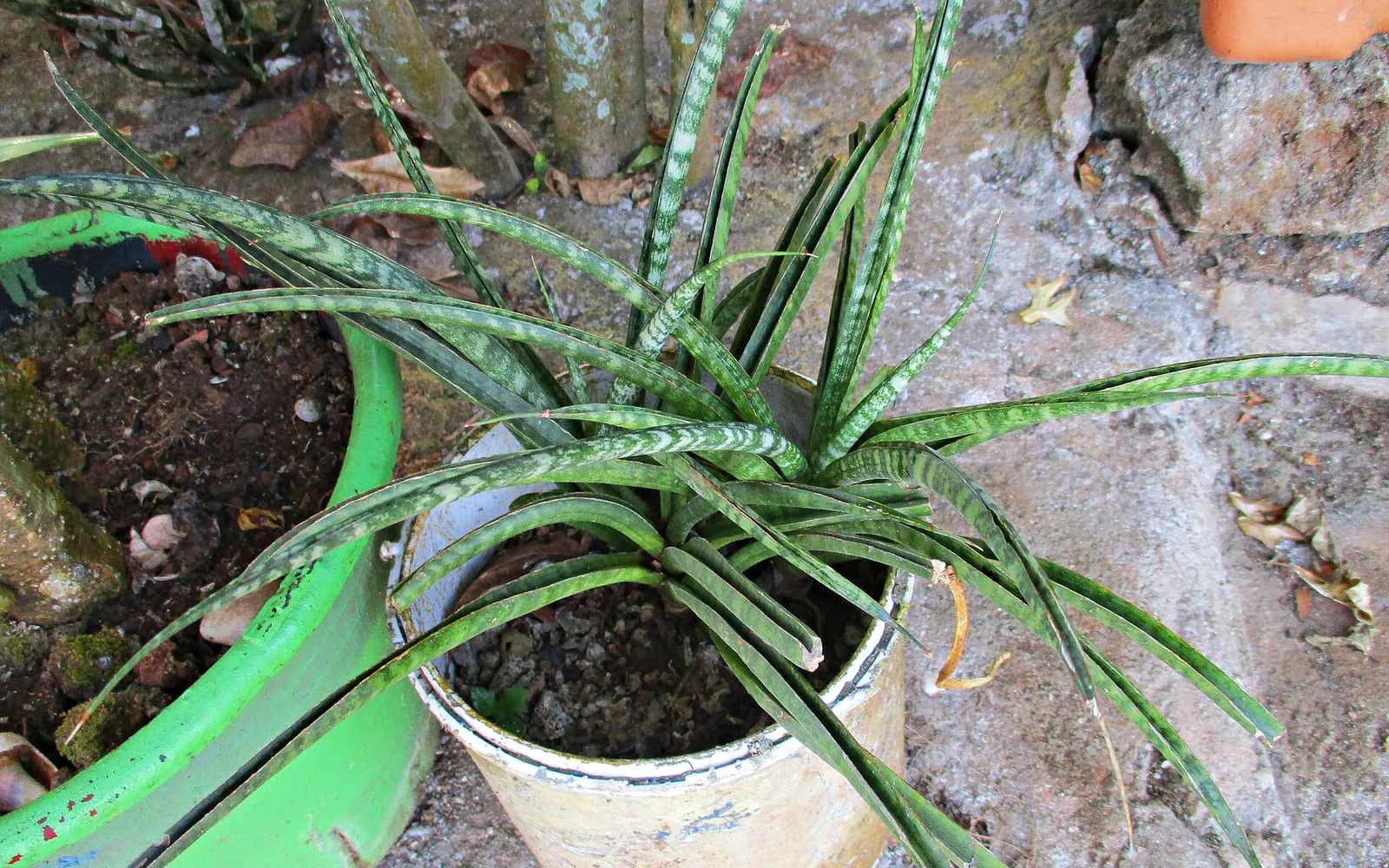
Cylindrical snake plant grows stiff, round, spear-like leaves that rise straight out of the compost like a cluster of dark green spikes. Each leaf is smooth and cylindrical, faintly banded in grey-green, and tapers to a sharp point, which gives the plant its other name, African spear.
It is a close relative of the flat-leaved snake plant, and until recently both sat in the genus Sansevieria before being moved into Dracaena. It shares that plant’s tolerance of neglect, and the same weakness: it rots if it is overwatered.
The spears are sometimes sold braided or fanned into shapes, but left alone the plant forms an upright, spreading clump. It is one of the easiest of all houseplants for a bright, warm spot and a forgetful waterer.
Appearance and character
The leaves provide almost all the display, round in cross-section, smooth, stiff and upright, dark green with faint grey-green banding, tapering to a hard point. They rise directly from the compost in a spreading cluster.
The habit is upright and clump-forming, spreading slowly by underground runners that push up new spears around the parent, building over time into a broad, stiff stand.
Flowers are occasionally produced on a mature plant, a tall spike of small, tubular, pale flowers, lightly scented, though the plant is grown for its architectural leaves instead of for bloom.
New spears emerge as pointed shoots from the compost, growing tall and firm, and a healthy plant sends them up steadily through the warm months.
Where it is from
Dracaena angolensis is native to the dry, open country of south-central Africa, including Angola, where it grows in hot, arid conditions on poor, free-draining ground. It is adapted to drought and strong light.
That origin makes it a true succulent in cultivation. It stores water in its thick spears, copes with long dry spells, poor soil and bright sun, and asks only to be kept warm and never left cold and wet. Watering it like a leafy tropical is the usual way to kill it.
How it grows
It grows slowly and steadily in warmth and good light, sending up new spears from the base and spreading into a clump over the years. It needs no special care and tolerates being left alone for long stretches.
Pot it in a very free-draining, gritty or cactus mix in a snug pot, and give it a drink only once the mix has dried right through. Because it is slow, it pushes its runners out gradually and seldom needs moving on more than every few years, usually when the clump of spears has filled the pot to the rim.
Keep it warm, above about 10 deg C, in bright light for the best growth, though it tolerates lower light better than most succulents. The main rule is to underwater instead of overwater, especially in winter.
Propagate by division of the clump, or by cuttings of the spears, which root readily, though cuttings of variegated forms lose their colour.
Through the seasons
Spring brings renewed growth as light increases, the time to repot or divide if needed and to resume occasional feeding.
Summer is the main growing season. Water when the mix dries fully and give bright light, and the plant sends up new spears.
Autumn growth slows as light falls. Reduce watering further as the season turns.
Winter the plant rests. Keep it warm and water very little, since cold, wet compost in low light is the quickest way to rot it.
Care difficulty
Easy, and one of the most forgiving of all houseplants. It tolerates low light, dry air and long gaps between waterings, and only needs warmth and sharp drainage. The single common mistake is overwatering, which rots the roots and softens the spears. Treat it as a succulent and it is very hard to kill.
Watering
Let the gritty mix dry out to the bottom of the pot, then water it thoroughly and pour off whatever drains through. Give barely any over winter, when the clump has stopped growing and a cold, sodden mix rots the spears from the base.
Each thick spear is a water store, so the plant weathers a forgotten month far better than a wet week. If you are unsure whether to water, wait, and always tip out the saucer once the pot has drained.
Warning signs, diseases and pests
Root rot from overwatering is the main problem, showing as soft, yellowing or mushy spears and a wobbly plant. Cut back watering sharply, improve the drainage, and if the base has rotted, take healthy spear cuttings to start again.
Mealybugs sometimes hide low down where the spears rise from the compost, showing as small white woolly tufts. Wipe them away with an alcohol-dipped cotton bud, or drench a bad case with horticultural oil.
Soft, floppy or creased spears usually mean too much water or cold, wet compost instead of too little. The remedy is nearly always to water less and keep the plant warmer.
Growing environment
Bright, indirect light or even some direct sun gives the best, firmest growth, though the plant tolerates lower light better than most succulents, growing more slowly there. It suits a bright windowsill or a well-lit room.
Warmth matters more than humidity. Keep it above about 10 deg C, and the plant is untroubled by the dry air that bothers leafy tropicals. It needs no misting or humidity tray.
Give it a gritty, free-draining mix and a snug pot, and keep it out of cold, wet conditions. It is an ideal plant for a bright, warm, low-maintenance spot.
Feeding
Feed lightly, a couple of times over spring and summer, with a cactus fertiliser or a dilute balanced feed. The plant grows slowly and needs little, and heavy feeding does more harm than good.
Hold off feeding through autumn and winter while the clump is resting. A repot into fresh gritty mix keeps the spears supplied for the first few months without any liquid feed at all.
Troubleshooting
The spears are going soft and mushy. Overwatering, almost always. Cut back watering hard, improve the drainage, and take healthy spear cuttings if the base has rotted. This is the one common way to kill the plant.
It is not growing. Often low light or a cool, dark winter, which is normal. The plant is slow by nature. Give it brighter light and warmth in spring and it will resume, but do not compensate with extra water.
Can I grow it in low light? Yes, better than most succulents, though it grows more slowly and needs even less water there. Reduce watering to match the lower light so it does not rot.
Is it safe around pets? It is mildly toxic. The ASPCA lists it as toxic to cats and dogs, causing drooling and stomach upset if chewed, so keep it away from pets that nibble plants, as with the flat-leaved snake plant.
How do I make more plants? Divide the clump in spring, or take spear cuttings, which root readily in a gritty mix. Note that cuttings of variegated forms revert to plain green.
Cylindrical Snake Plant problem guides
Not sure what is wrong? See the common houseplant pests guide.