
Edible
White Turmeric
Curcuma zedoaria
Also known as Zedoary, Kachur, Temu putih, White ginger
How to grow zedoary, Curcuma zedoaria. The bitter white turmeric of Indonesian and Thai cooking, its purple-veined leaves, and growing the rhizome under glass.
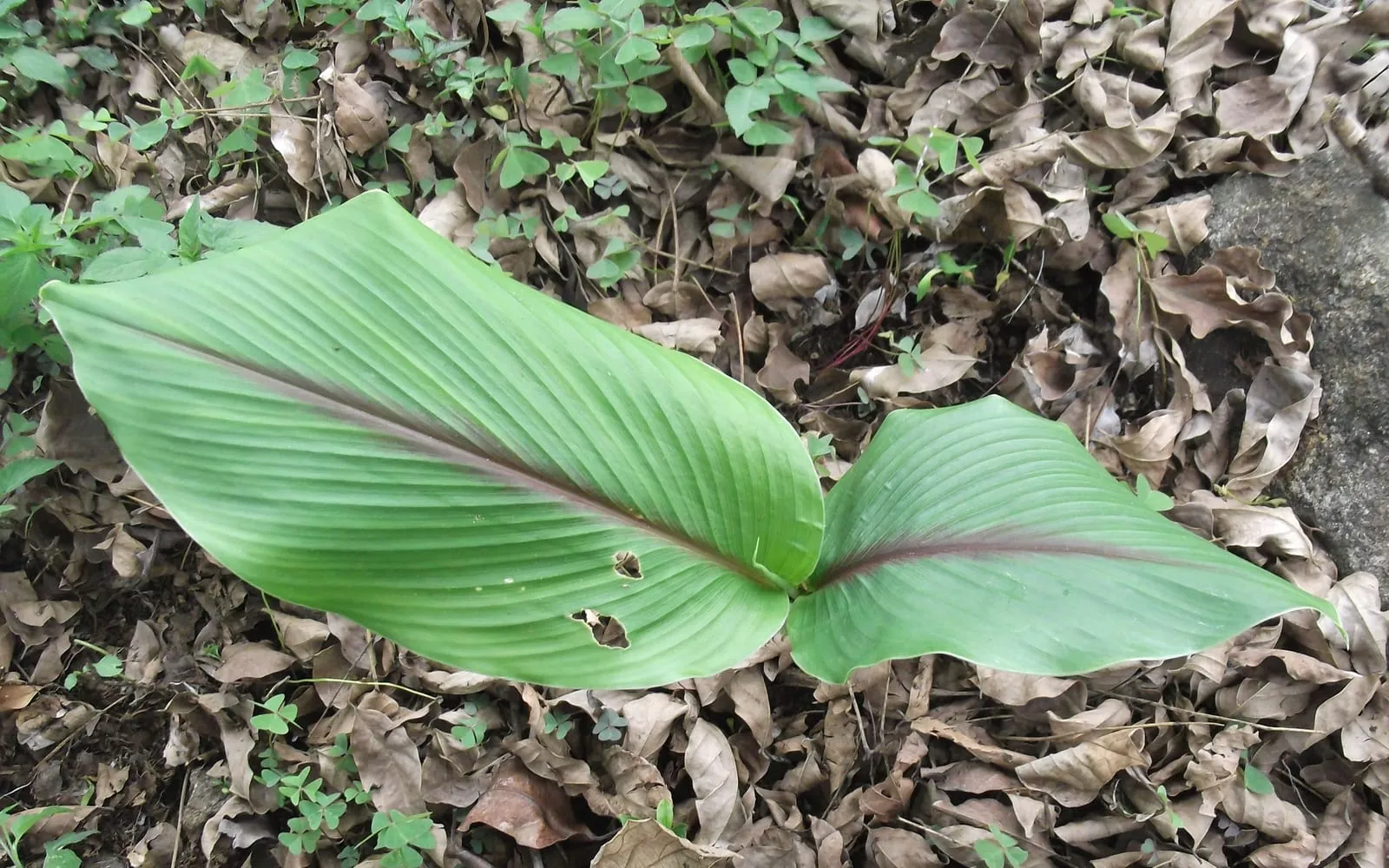
At a glance
- Difficulty
- Moderate
- Water
- Two or three times a week in growth, none when dormant
- Light
- Bright light with shade from the hottest sun
- Temperature
- Growing above 18 deg C. Dormant and dry below that
- Humidity
- Moderate to high
- Hardiness
- USDA 9-11, RHS H1c, hardy to 10 C
- Type
- Tender herbaceous perennial, dormant in winter
- Height
- 60-120 cm
- Native to
- South and Southeast Asia
- Best month
- April and October in the Northern Hemisphere, October and April in the Southern Hemisphere
Wet forest of India and Indonesia. It follows the same dieback rhythm as turmeric and wants more shade, and the rhizome is bitter and camphorous rather than earthy.
Hardiness zones describe winter cold alone. Summer heat, humidity, rainfall and the length of the growing season decide as much, so treat the range as the outer limit rather than as a recommendation.
Every month named in this guide is for the temperate Northern Hemisphere. If you garden in the Southern Hemisphere, shift each one by six months, so April becomes October. Closer to the equator the wet and dry seasons matter more than the calendar, and the shift stops being a useful guide.
Edible, with limits
- Safe to eat
- The rhizome, in the small quantities used in cooking
- Do not eat
- Large medicinal doses, which are advised against in pregnancy
- Harm from
- Eating it
- Affects
- People
Zedoary is used in cooking across south-east Asia and it appears on neither the RHS list of potentially harmful garden plants nor the ASPCA list. It is intensely bitter, which limits how much anyone eats of it. The caution in the herbal literature applies to medicinal doses rather than culinary ones: zedoary is used in Ayurvedic and Jamu preparations, it is traditionally regarded as an emmenagogue, and standard references advise against those preparations in pregnancy. The rhizome in a curry paste is a different proposition from a concentrated extract.
Sources: RHS potentially harmful garden plants, ASPCA toxic and non-toxic plants
About
Zedoary is turmeric’s bitter relative. The rhizome is pale yellow to white inside rather than orange, the flavour is sharp and bitter with a mango-like note, and it is used in small quantities where turmeric is used freely.
Indonesian and Thai cooking use it most. It goes into jamu, the Indonesian herbal drink tradition, into some curry pastes, and it is eaten raw as part of a plate of bitter leaves and roots in parts of Indonesia.
The plant is handsome in its own right. The leaves carry a deep purple-red flush along the midrib, and the flower cone is one of the better sights among the gingers, with green bracts below and bright pink ones on top.
Growing it follows the same annual cycle as turmeric. Plant the rhizome in spring, grow it through the summer under glass, let it dry off in autumn and harvest late in the year.
Appearance and character
A clump of large upright leaves 60 cm to 1.2 m tall, from a thick fleshy rhizome.
Leaves are large and broad, up to 60 cm long, mid green with a distinctive deep purple-red flush running along the midrib. That marking is the quickest way to tell it from turmeric.
Flowers rise on a separate stalk from the base, often before or with the leaves, in a cone of pale green bracts with a crown of bright pink ones above, and small yellow flowers between them.
The rhizome is thick, fleshy and rounded, brown outside and pale yellow to almost white inside, with slender finger-like offshoots.
The scent is camphorous and sharp, closer to ginger than to turmeric, with a mango note.
The taste is intensely bitter, which is what governs how it is used.
Where it is from
Zedoary is native to India and Indonesia and it has been cultivated across south and south-east Asia for a very long time.
India uses it as kachur, in some regional cooking and in Ayurvedic medicine.
Indonesia uses it as temu putih, and it is one of the ingredients in jamu, the traditional herbal drink prepared and sold across the country.
Thailand eats the young rhizome raw, sliced into the plate of raw vegetables served with nam phrik.
It reached medieval Europe as a spice and was reasonably well known there in the sixteenth century, then disappeared from European cooking almost entirely, displaced by ginger and by cheaper spices.
It is now grown mostly in India, Indonesia and Thailand, largely for local use and for the herbal trade rather than for export as a culinary spice.
How it grows
Start with dormant rhizome in spring, from a grocer stocking South East Asian produce or from a specialist. Reject anything shrivelled or soft, and look for the swollen buds standing proud of the surface.
Split it so each piece keeps two or three of those buds, and leave the cuts exposed overnight to callus.
Set them a knuckle deep in rich open compost, in a pot at least 30 cm across.
Nothing below 20 deg C while it is starting. Four to eight weeks of bare compost is normal and nothing is wrong.
Under glass, or a bright warm windowsill, shaded from the sun at its highest.
Feed and water generously all the time the leaves are up.
Watch for the flower spike. It pushes straight out of the ground on its own stem, ahead of or alongside the leaves, in a cone of pink bracts with small yellow flowers tucked between them.
Let it go in autumn. As the leaves yellow, stop watering and allow the whole plant to die back to bare compost.
Tip the pot out in late autumn, keep the best pieces for replanting and store them dry and frost free until spring.
Use it fresh or sliced and dried. Young rhizome smells of green mango and turns bitter and camphorous as it ages, so a very little is enough.
Through the seasons
Winter is dormancy. Keep the rhizome dry and above 10 deg C.
Spring is planting, from March in warmth, and flowering sometimes precedes the leaves.
Early summer is when growth accelerates.
Midsummer is peak growth, and the plant is at its most striking with the purple-marked leaves.
Late summer is the last of the growth.
Autumn brings yellowing and dormancy. Stop watering and harvest in late autumn.
Care difficulty
Moderate, and much the same job as turmeric.
Warmth while growing is the requirement. Below 18 deg C it does very little.
Watering a dormant rhizome is the commonest way to lose it. Once the leaves die down, keep it dry.
Sprouting is slow, taking four to eight weeks, which is longer than turmeric and tests patience further.
It is hungry and thirsty while in growth.
Given a warm greenhouse and a spring start it produces a worthwhile rhizome by late autumn, and the plant is handsome enough to justify the pot on its own.
Watering
Barely damp compost until a shoot shows. A cut rhizome in wet compost rots where it was cut.
Heavily once the leaves are up, two or three times a week and daily under hot glass, with the compost never drying between.
Tail off through September as the foliage yellows, and take the yellowing as instruction rather than as a problem to correct.
Nothing at all once the leaves have gone over. The rhizome spends the winter dry, and a pot watered out of habit in January is the usual way one is lost.
Water at room temperature, poured onto the compost rather than into the crown, which holds moisture and rots in cool weather.
Warning signs, diseases and pests
A rhizome that rots before sprouting was kept too wet or too cold.
Rot during dormancy is the main loss, caused by watering a plant that has died down. Keep it dry.
Spider mite appears in dry heated air, showing as fine stippling and webbing.
Scale insects sit on the leaf undersides as brown limpets.
Leaf spot marks the foliage in cold damp conditions. Improve warmth and airflow.
Slow sprouting for the first month or more is normal.
Small rhizomes at harvest mean too little heat, water or food, or lifting too early.
Growing environment
A greenhouse, conservatory or warm bright windowsill.
Minimum 18 deg C for growth and 25 deg C or more is better.
Bright light with shade from the hottest sun, which scorches the large leaves.
Rich, moisture-retentive, free-draining compost in a wide pot.
pH from 5.5 to 7.
Moderate to high humidity while growing.
Feeding
Feed a balanced liquid feed fortnightly from May to August, or use a controlled-release fertiliser at planting.
Potash in late summer helps the rhizome bulk up.
Stop feeding in September.
Give nothing during dormancy.
Use fresh compost each year rather than replanting into exhausted material.
Troubleshooting
How is it different from turmeric? The rhizome is pale yellow to white rather than orange, the flavour is sharply bitter with a mango note rather than earthy, and it is used in far smaller quantities. The leaves also carry a purple-red flush along the midrib, which turmeric does not.
It tastes horribly bitter. That is the plant. Use small amounts, or use it the way Thai cooking does, sliced raw alongside strongly flavoured dips.
Nothing sprouted for six weeks. Normal. Zedoary is slower than turmeric to start. Keep the compost barely damp and the temperature above 20 deg C.
The rhizome rotted over winter. It was watered while dormant. Once the leaves die down, keep it completely dry until spring.
The flowers came before the leaves. Normal for this species. The flower spike often rises from the base ahead of or alongside the foliage.
How long until harvest? Eight to ten months, so a March planting is lifted in November or December.
Where do I buy the rhizome? An Asian grocer, particularly one stocking Indonesian or Thai ingredients, or a specialist supplier. It is sold as temu putih or kachur as often as zedoary.