
Houseplant
Cretan brake
Pteris cretica
Also known as Table fern, Ribbon fern, Cretan brake fern
How to care for Pteris cretica. The variegated table fern that outlives the rest of a mixed bowl, why the two frond types look like different plants, and how it seeds itself.
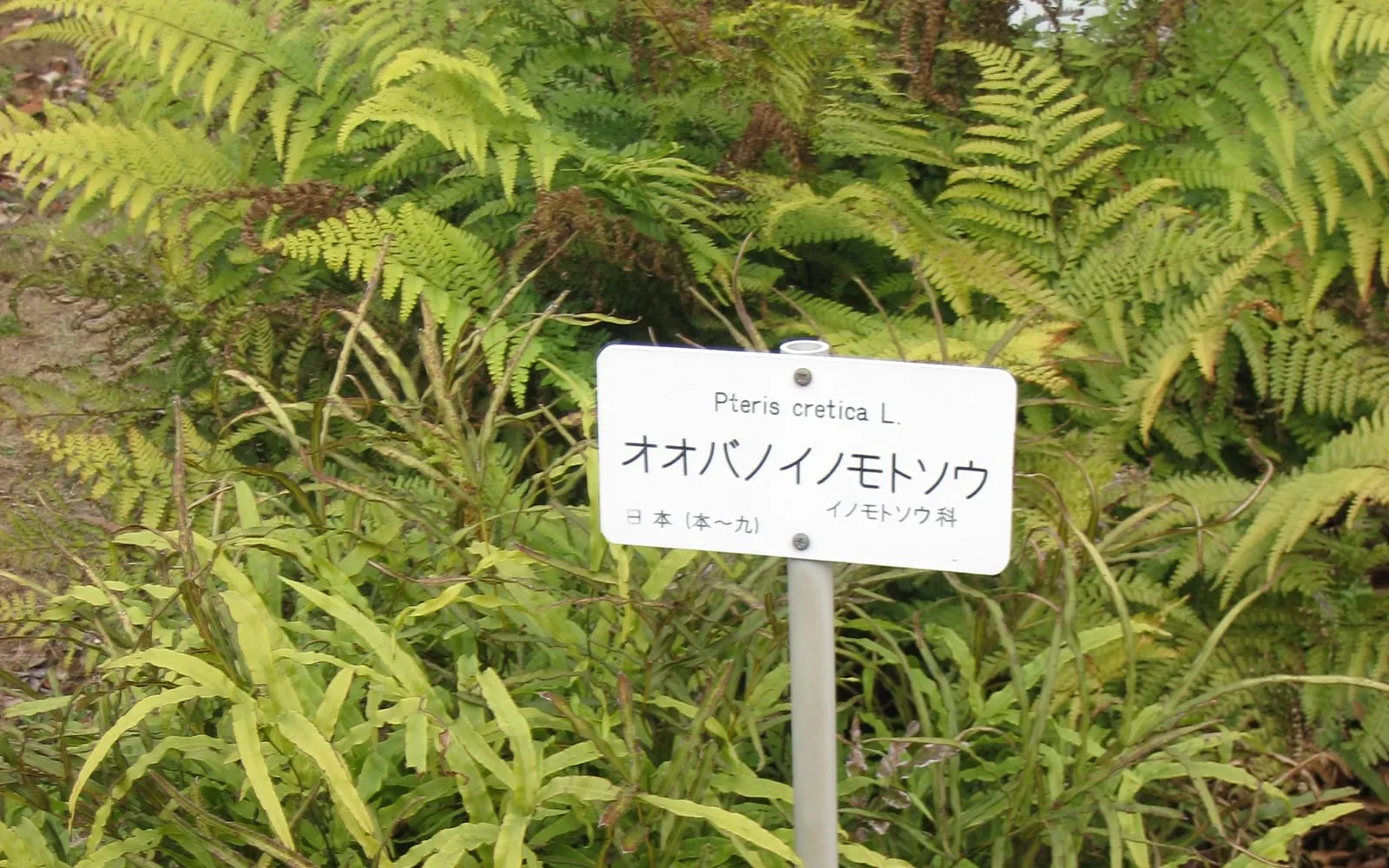
At a glance
- Difficulty
- Easy
- Water
- When the surface has just dried, keeping the compost steadily moist
- Light
- Medium indirect light or light shade. Variegated forms want a little more
- Temperature
- 13-24 deg C, and never below 7 deg C
- Humidity
- Moderate to high. It suffers in dry heated air
- Hardiness
- USDA 8-11, RHS H3, hardy to -5 C
- Type
- Evergreen perennial fern, clump-forming
- Height
- 30-60 cm
- Native to
- Europe, Asia and Africa
Widely spread across warm temperate and subtropical Europe, Asia and Africa, growing on shaded limestone rocks, walls and banks in humid conditions with mild winters. Its broad natural range is why populations vary in hardiness, with plants from the temperate end surviving around -5 deg C on a sheltered wall. It wants shade, steady moisture and lime rather than acid conditions, and it will not take a hot dry position anywhere.
Hardiness zones describe winter cold alone. Summer heat, humidity, rainfall and the length of the growing season decide as much, so treat the range as the outer limit rather than as a recommendation.
Not known to be toxic
Non-toxic. The ASPCA lists Pteris cretica among plants that are not harmful to cats, dogs or horses, and it appears on no RHS list of potentially harmful garden plants. There is no irritant sap and no hazard from handling the fronds. This is a small fern often used in mixed planted bowls and terrariums placed on low tables, which puts it within easy reach of animals, so the safety is practical rather than theoretical. The narrow brown lines running along the rolled-under margins of the fertile fronds are spore structures and are harmless, though they are frequently taken for scale insects or for scorch damage.
Sources: ASPCA (Cretan Brake, Pteris cretica), RHS potentially harmful garden plants
About
The Cretan brake is the fern that turns up in mixed planted bowls, in terrariums and in the pot of something else entirely, and it is usually the plant still alive when the rest of the arrangement has gone. It is undemanding by fern standards, tolerates a dim position, and grows fast enough to fill a gap in a season.
It carries two quite different frond shapes on one plant, which confuses people who assume they have two ferns. Sterile fronds are broader with wider divisions. Fertile fronds are noticeably narrower, taller and more upright, with the margins rolled under to protect the spores beneath. Both are normal, and a healthy plant produces a mixture.
It also self-seeds. Spores drift into neighbouring pots and germinate wherever the compost stays damp, so a Cretan brake in a collection of houseplants quietly distributes itself around the room.
Appearance and character
An upright evergreen fern forming a dense clump of fronds on thin wiry stalks, usually a pale straw colour, rising from a short creeping rhizome.
Fronds are once-divided and unusually simple for a fern, carrying three to five pairs of long narrow strap-shaped segments with a longer terminal one, giving a distinctive fan or hand outline rather than a lacy triangle.
Sterile fronds are shorter and broader with toothed margins. Fertile fronds are taller, narrower and smooth-edged, with the margin rolled under into a continuous brown line where the spores sit.
Colour is mid green in the plain species. ‘Albolineata’ carries a broad creamy white central stripe along each segment and is the most widely sold form. ‘Mayii’ is crested and ruffled at the tips.
Growth is moderate to fast, and a plant reaches 30 to 60 cm and fills a small pot within a year or two.
Where it is from
An unusually wide natural range spanning southern Europe, much of Asia and parts of Africa, growing on shaded limestone rocks, old walls, banks and ravines.
This fern favours alkaline limestone conditions rather than the acid leaf litter most ferns grow in, which means ordinary houseplant compost suits it and it does not need the ericaceous mix some ferns prefer.
Its range takes in both warm temperate and subtropical climates, and populations differ in hardiness accordingly, which is why some plants survive a mild winter outdoors and others do not.
The species has naturalised well outside its range, including on walls in cities far from where it grows wild, spread by spores that travel easily on air currents.
The genus Pteris contains around three hundred species, and several others are grown as table ferns, including the silver brake and the trembling fern.
How it grows
Give it medium indirect light or light shade. The variegated forms want a little more light to hold the white striping.
Keep it out of direct sun, which scorches the thin fronds.
Keep the compost steadily moist. Water when the surface has just dried rather than letting the pot dry out, since this fern browns whole fronds after a single lapse.
Raise the humidity where the room is dry. A bathroom, a terrarium or a gravel tray all suit it, and dry heated air is its main enemy indoors.
Keep it above 7 deg C and ideally between 13 and 24 deg C.
Feed every six to eight weeks at quarter strength through the growing season.
Cut old and browned fronds out at the base rather than trimming them, since a cut frond browns from the wound.
Repot every year or two in spring, since it grows faster than most ferns.
Divide the clump in spring to propagate, separating rooted sections with a clean knife.
Through the seasons
Spring brings the main flush of fronds. Resume feeding, and repot or divide now.
Summer is active growth. Keep the compost moist, feed every six to eight weeks, and watch for spider mite in warm dry rooms.
Autumn slows it. Reduce feeding from October and watch the watering as the room cools.
Winter is the difficult season because of heating. Keep the plant away from radiators, maintain humidity, and never let it dry out.
Care difficulty
Easy for a fern, and among the more forgiving of the group.
Drying out is the main risk. Whole fronds brown after a single missed watering in a warm room, and they do not recover.
Dry heated air is the second, browning frond tips through winter and bringing red spider mite with it.
Everything else about the plant is tolerant. It takes a dim position, ordinary compost, cool rooms and a degree of neglect that would finish a maidenhair.
Self-seeding is a minor nuisance where a tidy collection matters, since seedlings appear in every pot that stays damp.
Watering
Keep the compost steadily moist, watering when the surface has just dried.
Water thoroughly until it drains, then empty the saucer. Steadily moist is not waterlogged.
Check twice weekly in summer. This fern gives little warning before losing fronds.
Use rainwater or filtered water where the supply is hard, though it is less sensitive than the prayer plant family.
Underwatering shows as whole fronds browning and crisping, and the affected fronds must be cut out at the base.
Overwatering shows as yellowing fronds, a blackening crown and a sour compost smell.
Warning signs, diseases and pests
Whole fronds browning is drought. Cut them out at the base and water more regularly.
Brown crisp tips are dry air. Raise the humidity.
Continuous narrow brown lines along the rolled-under margins of the narrower fronds are spores. They appear only on the fertile fronds and are normal.
Two different frond shapes on one plant is also normal. The taller narrower ones are fertile and the shorter broader ones are sterile.
Fine pale stippling with webbing is red spider mite, which follows dry heated air.
Small brown discs on the wiry stalks are scale insects.
White cottony fluff at the base of the clump is mealybug.
Loss of the white striping on a variegated form means insufficient light.
Small ferns appearing in other pots are seedlings from this plant’s spores.
Growing environment
Medium indirect light or light shade, with a little more for variegated forms.
Never direct sun.
Cool to average, 13 to 24 deg C, with 7 deg C as the floor.
Moderate to high humidity. A bathroom or terrarium suits it well.
Free-draining peat-free compost kept steadily moist, in a pot with drainage holes. Ordinary compost is fine, since this fern favours limestone rather than acid conditions.
Outdoors on a shaded sheltered wall in USDA 8 and warmer, where some forms take around -5 deg C.
Avoid radiators, dry heated rooms, direct sun and compost that dries out completely.
Feeding
Feed every six to eight weeks from spring to early autumn with a balanced liquid houseplant fertiliser at quarter strength.
Stop feeding from mid-autumn to early spring.
Feed weakly. Ferns burn easily and show it as brown frond tips.
Repot every year or two in spring, since this fern grows faster than most.
Flush the compost occasionally with plain water to clear salts.
Troubleshooting
It seems to have two different kinds of frond. Normal. The taller, narrower, smooth-edged fronds are fertile and carry the spores. The shorter, broader, toothed ones are sterile. A healthy plant produces both.
There are brown lines along the edges of some fronds. Spores, sitting under the rolled-under margins of the fertile fronds. They are not scale insects and not scorch.
A whole frond has gone brown. It dried out. Cut the frond out at the base and water more regularly, keeping the compost steadily moist rather than letting it dry.
Little ferns are coming up in my other pots. Seedlings from this plant’s spores, which travel on air currents and germinate wherever compost stays damp.
Is it safe with pets? Yes. The ASPCA lists it as non-toxic to cats, dogs and horses.
The white stripe has faded. Not enough light for a variegated form. Move it somewhere brighter, still out of direct sun.
What compost does it need? Ordinary free-draining houseplant compost. This fern grows on limestone in the wild and does not want an acid mix.
Can I trim the brown tips off? Cut whole fronds out at the base instead. A trimmed frond browns back from the cut and looks worse.
Cretan brake problem guides
Not sure what is wrong? See the common houseplant pests guide.