
Houseplant
Silver Lace Fern
Pteris ensiformis
Also known as Pteris ensiformis, Slender Brake, Sword Brake Fern
How to grow Pteris ensiformis, the silver lace fern, a compact variegated brake fern with slender fronds banded down the centre in silvery white.
At a glance
- Difficulty
- Easy
- Water
- Keep evenly moist; never dry out or waterlog
- Light
- Bright indirect light to part shade
- Temperature
- Warm; keep above about 12 deg C
- Humidity
- High
- Hardiness
- USDA 9-11, RHS H2, hardy to 8 C
- Type
- Evergreen tufted fern
- Height
- 30 to 50 cm
- Native to
- Tropical Asia, Australia
A pretty variegated fern from the forests of tropical Asia and Australia, growing in shaded, humid, moist ground. It needs warmth, humidity and even moisture, with bright but filtered light, and cannot take frost. It is safest above about 12 deg C, and dry air or a dry root ball brown its slender fronds, though it is more forgiving than a maidenhair.
Hardiness zones describe winter cold alone. Summer heat, humidity, rainfall and the length of the growing season decide as much, so treat the range as the outer limit rather than as a recommendation.
Not known to be toxic
A safe plant to keep around pets and children. The brake ferns, Pteris, are not listed as toxic by the ASPCA or the RHS, and no harmful compound is recorded in Pteris ensiformis. A pet or child that chewed a frond would be unlikely to come to serious harm, so this variegated fern can sit within reach in a home with animals.
Sources: ASPCA toxic and non-toxic plants, RHS potentially harmful garden plants
About
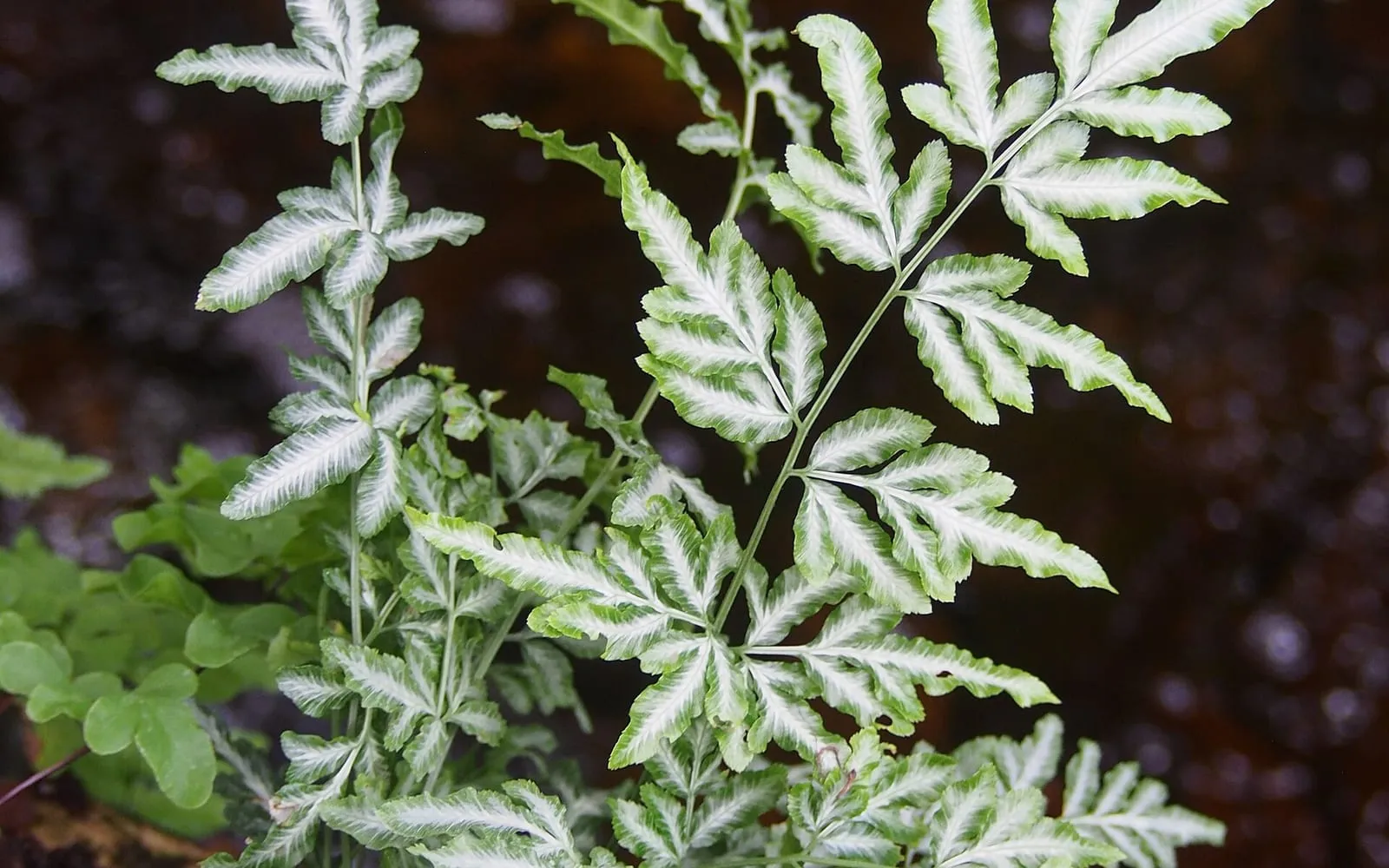
Silver lace fern is grown for its colour. A broad stripe of silvery white runs up the middle of each slender green frond, brightest in the cultivars selected for it. The result is a fresh, banded, two-tone fern rather than the plain green of most ferns. The fronds themselves are narrow and finely cut into strappy divisions, and the plant stays small and neat, so it works well as a table fern.
It is a brake fern, a member of the genus Pteris, native to the forests of tropical Asia and Australia, where it grows on shaded, humid, moist ground and along stream banks. That background means it wants warmth, a moist atmosphere and bright but filtered light. It is noticeably easier than a maidenhair and will cope with ordinary room conditions as long as it is not left to dry.
Compact and forgiving, it suits a bright bathroom, a terrarium or a grouped humid corner, and it ranks among the simplest variegated ferns to keep. Warmth, damp air, steady moisture and soft water are enough. With those in place, it makes a tidy, silver-banded tuft that needs little beyond protection from drought and chill.
Appearance and character
The fronds are slender and finely divided into narrow, strappy segments, fresh green with a broad band of silvery white running down the centre of each segment in the variegated forms.
They stand upright when young and arch outward as they lengthen, gathering into a neat, compact tuft instead of a large or spreading plant.
The silver banding is the plant’s chief feature, brightest in good light, and it is what separates it from plain green brake ferns and most other ferns.
It carries two kinds of frond: broader, shorter sterile ones and taller, narrower fertile ones, the latter bearing spores in lines along their rolled-under margins.
Where it is from
Pteris ensiformis grows in the forests of tropical Asia and Australia, on shaded, humid, moist ground and along stream banks, a plant of warmth, damp and even moisture rather than dry or exposed places.
Give it warmth, a moist atmosphere and even moisture, under bright but filtered light. It takes no frost, and dry air or a dried root ball brown the slender fronds, though it tolerates ordinary rooms better than fussier maidenhairs.
How it grows
Fresh silver-banded fronds come through the warm months and the plant slows a little in winter. Warmth, a humid atmosphere and even moisture keep it growing and well marked; dry air, a dried root ball or a chill brown the fronds.
Pot it into a light, peat-free mix that drains yet holds moisture, in a container matched to its size, and keep the mix evenly moist, never dry and never sodden, using rainwater or filtered water. Move it up a pot size once the roots fill their space.
Give it bright but filtered light, which keeps the silver banding vivid, warmth above about 12 deg C, and a humid atmosphere. Keep it off cold draughts and away from dry radiator heat, and trim off any tired, browned fronds. Propagate it by dividing the crown in spring, or from spores.
Through the seasons
Spring brings fresh, silver-banded growth. Divide the crown if you want more, resume feeding, and keep the mix evenly moist and the air humid.
Summer is the main growing season. Keep the mix evenly moist, hold the air humid, feed each month, and keep it out of scorching sun.
Autumn slows growth as the light fades. Cut the feeding back but keep the humidity up against the drying effect of heating.
Winter is a slower period. Keep it above about 12 deg C, humid and lightly moist, away from cold draughts and dry heat.
Care difficulty
This is one of the easier variegated ferns. Warmth, a humid atmosphere, even moisture and filtered light give a tidy, compact, silver-banded tuft. It goes wrong mainly when the air is dry, the root ball dries out, or it is chilled, all of which brown the slender fronds. It tolerates ordinary rooms better than a maidenhair, but it still wants humidity and steady moisture.
Watering
Keep the mix evenly moist, watering as the surface starts to dry instead of letting it parch, and use rainwater or filtered water, since it dislikes the salts in hard tap water. A dried root ball browns the slender fronds and dulls the silver.
Guard equally against standing water, since the roots rot in a sodden mix. Steady, even moisture is the aim. It takes a little less in winter but should not be allowed to dry right out.
Warning signs, diseases and pests
Brown frond tips and edges usually mean dry air, a dried root ball or hard water. Raise the humidity, hold the mix evenly moist, water with rainwater or filtered water, and trim off the badly browned fronds.
Warm, dry air also brings spider mites, which stipple the fronds; raise the humidity and treat early. Scale insects may settle on the fronds and be wiped off and treated with horticultural oil.
Loss of the silver banding, with the fronds greening over, usually means too little light. Move it into brighter, filtered light to bring the silver back.
Growing environment
Bright but filtered light keeps the silver banding vivid and the plant compact. Direct sun scorches the fronds, and deep shade dulls the variegation and thins the plant, so choose a bright spot out of the sun.
Warmth above about 12 deg C and a humid atmosphere suit it because it comes from humid forest. Keep it off cold draughts and away from dry radiator heat, and lift the humidity in a dry room.
Grow it in a light, peat-free, moisture-holding mix, standing it in a warm, humid, softly lit spot such as a bathroom, a terrarium or a grouped corner.
Feeding
Feed monthly through the growing season with a weak, balanced liquid. It is a light feeder and dislikes strong fertiliser, which can scorch the slender fronds.
Ease off through autumn and feed little over winter. An occasional flush of plain water clears any salts.
Troubleshooting
The frond tips and edges are browning. Dry air, a dried root ball or hard water. Raise the humidity, hold the mix evenly moist, water with rainwater or filtered water, and trim off the badly browned fronds.
The silver banding is fading and the fronds are greening. Too little light. Move it into brighter, filtered light to bring the silver back.
The fronds look dull and speckled. Spider mites, from warm, dry air. Raise the humidity and treat early.
Is it easier than a maidenhair? Yes, somewhat. It tolerates ordinary rooms better than the fussy maidenhairs, though it still wants humidity, warmth and steady moisture and dislikes drying out.
Is it safe around pets? Yes. The brake ferns are not listed as toxic, so this variegated fern is safe alongside cats, dogs and children.
Silver Lace Fern problem guides
Not sure what is wrong? See the common houseplant pests guide.