
Houseplant
Creeping fig
Ficus pumila
Also known as Climbing fig, Creeping rubber plant, Ficus repens
How to care for Ficus pumila. The one ficus that takes real shade, why it climbs walls without support, and the adult growth phase that turns a neat green sheet into a coarse shrub.
At a glance
- Difficulty
- Moderate
- Water
- When the surface has just dried, keeping the compost steadily moist
- Light
- Bright indirect light to moderate shade. It takes more shade than any other ficus
- Temperature
- 10-24 deg C, and never below 5 deg C
- Humidity
- Moderate to high. Dry air is the usual cause of failure
- Hardiness
- USDA 8b-11, RHS H3, hardy to -7 C
- Type
- Evergreen perennial climber, long-lived and self-clinging
- Height
- 4-5 m climbing, indefinite as ground cover
- Native to
- Eastern Asia
Warm temperate to subtropical eastern Asia, growing on rocks, trunks and walls in humid shaded conditions with cool winters and occasional light frost. That cool-winter ancestry makes it the hardiest ficus in common cultivation, with established plants outdoors surviving around -7 deg C on a sheltered wall. It wants humidity above all, and a dry atmosphere kills it faster than cold does. It is invasive in parts of the southeastern United States, Australia and New Zealand.
Hardiness zones describe winter cold alone. Summer heat, humidity, rainfall and the length of the growing season decide as much, so treat the range as the outer limit rather than as a recommendation.
Harmful if eaten
- Do not eat
- The milky sap in every part
- Harm from
- Eating it and handling it
- Affects
- People, cats and dogs
Like all figs, this plant carries a milky latex sap. The ASPCA lists Ficus pumila as toxic to cats and dogs, with ingestion causing vomiting, drooling and irritation of the mouth. The more common problem in practice is the skin. Ficus latex is a well-documented contact irritant and sensitiser, and repeated handling of a plant that needs regular trimming can produce dermatitis in susceptible people, with the sap becoming more irritant in sunlight. Wear gloves when cutting it back and wash the sap off promptly. People with a latex allergy should be particularly careful, since the fig latex proteins cross-react in some cases. The small figs produced by mature plants are not edible.
Sources: ASPCA (Creeping Fig, Ficus pumila), RHS potentially harmful garden plants
About
Almost every ficus sold as a houseplant wants a bright spot and complains when it does not get one. Creeping fig is the exception. It grows in shade on rocks and tree trunks in the wild, and indoors it holds a position several steps darker than a rubber plant or a weeping fig would accept.
What it will not tolerate is drying out. This is the reverse of the usual houseplant problem, and it catches out people used to being told that overwatering kills more plants than underwatering. A creeping fig left dry for a few days in a warm room browns and dies along whole lengths of stem, and the dead sections do not regrow.
It has a second life stage that surprises people. A mature plant stops creeping and produces a coarse, shrubby, larger-leaved adult form on stiff horizontal branches, and once a shoot has made that change it will not go back.
Appearance and character
A self-clinging evergreen climber with wiry stems and small leaves, forming a dense flat sheet over any surface it can grip.
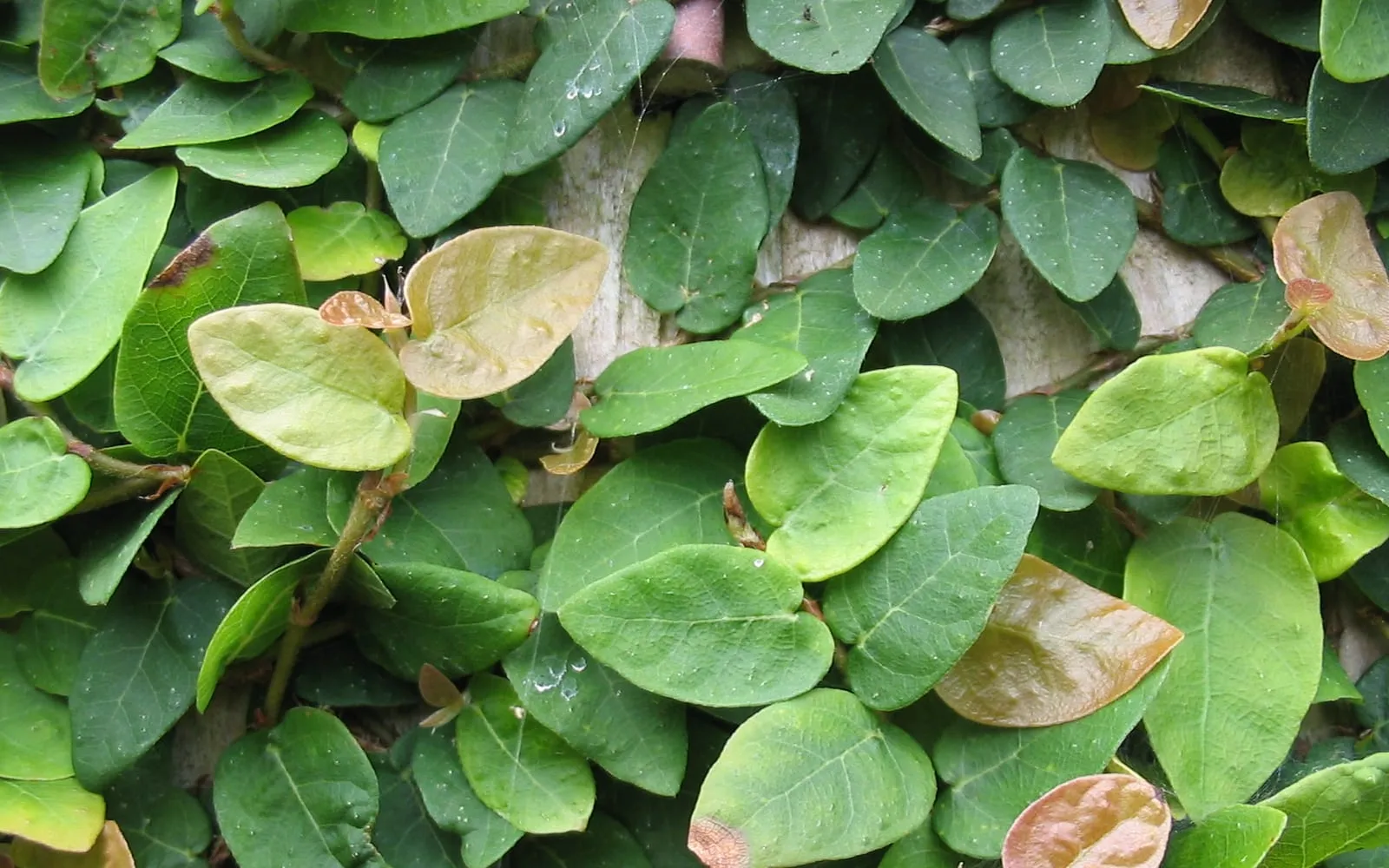
Juvenile leaves, which is what almost everyone grows, are small heart-shaped ovals 2 to 3 cm long, thin, matt mid green, closely spaced and neatly overlapping against the surface. The habit is tidy and even.
The stems produce fine adhesive rootlets along their length that stick fast to brick, stone, bark and plaster.
Adult growth is a different plant to look at. Leaves become thick, leathery and 5 to 10 cm long, held on stiff branches that stand out from the wall, and figs follow. It appears on old, well-established, well-lit plants.
Variegated cultivars carry white or cream margins and are slower and more demanding about humidity. ‘Quercifolia’ has small lobed oak-like leaves and stays miniature.
Growth is fast once established, and a plant covers a wall or fills a hanging basket in a season or two.
Where it is from
Japan, southern China, Taiwan and Vietnam, growing on rocks, cliffs, tree trunks and walls in humid shaded conditions.
Growing flat against a shaded rock face explains most of the plant. The clinging rootlets, the small closely overlapping leaves and the shade tolerance are all adaptations to that surface, and so is the need for constant moisture, since a thin leaf pressed against stone has no water reserve.
Its warm temperate range makes it the hardiest ficus in general cultivation, and in mild climates it is grown outdoors on shaded walls where no other fig would survive the winter.
It has become invasive where conditions suit it, smothering native vegetation and climbing structures in parts of the southeastern United States, eastern Australia and northern New Zealand.
A related plant, Ficus pumila var. awkeotsang, is grown in Taiwan for its figs, which yield the pectin used to set the jelly drink aiyu.
How it grows
Give it bright indirect light or moderate shade. Variegated forms want the brighter end.
Keep it out of direct sun, which scorches the thin leaves quickly.
Keep the compost steadily moist. Water when the surface has just dried rather than letting the pot dry out, and check it more often than you would any other ficus.
Raise the humidity. This is the single most important thing after watering, and a bathroom, a terrarium or a gravel tray all help. Dry heated air is what kills it in winter.
Keep it between 10 and 24 deg C. It tolerates cool conditions well and dislikes sitting above a radiator.
Give it a surface to climb if you want it to cover something. Cork bark, a moss pole, a rough wall or a mossed frame all work, and it needs no tying in.
Feed monthly at half strength through the growing season.
Trim it regularly. Cutting back keeps the plant in its juvenile creeping phase, keeps the growth dense, and stops the adult shrubby form taking over.
Repot every year or two in spring, since it fills a pot quickly.
Through the seasons
Spring is the main growth period. Resume feeding, repot, and cut back hard to shape the plant for the year.
Summer is fast growth. Keep the compost moist, feed monthly, and trim as often as needed.
Autumn slows it. Reduce feeding from October and watch the watering, since a cooler room needs less.
Winter is the dangerous season, not because of cold but because of dry air. Keep the plant away from radiators, maintain humidity and do not let it dry out.
Care difficulty
Moderate, and the difficulty is entirely about water and air.
Drying out is the way it dies. Whole sections of stem brown and crisp within days of a missed watering in a warm room, and the dead growth does not recover.
Dry air compounds it. A creeping fig in a centrally heated room with no humidity provision browns steadily from the tips through winter.
Wall damage is a practical consideration indoors. The clinging rootlets adhere strongly and pull paint and soft plaster away when removed.
The adult phase is the last surprise. An old plant sends out coarse horizontal shoots with large leathery leaves that ruin the neat sheet, and pruning them out is the only remedy.
Watering
Keep the compost steadily moist, watering when the surface has just dried rather than when the pot is light.
Water thoroughly until it drains, then empty the saucer. Steadily moist is not the same as waterlogged.
Check twice a week in summer and weekly in winter. This plant needs more attention than any other ficus.
Raise humidity alongside watering, since root moisture alone will not protect thin leaves from dry air.
Underwatering causes rapid browning and crisping of whole stems, and it is irreversible for the affected growth.
Overwatering is possible but much less common, showing as yellowing leaves and a sour compost.
Warning signs, diseases and pests
Whole stems browning and crisping is drying out, either at the root or from dry air. Cut the dead growth away, water more often and raise the humidity.
Leaf drop from the interior of the plant is usually dry air combined with low light.
Fine pale stippling and webbing is red spider mite, which thrives in the warm dry conditions this plant hates.
Small brown discs along the stems are scale insects, easily missed among dense foliage.
White cottony fluff at the stem joints is mealybug.
Coarse, larger, leathery leaves on stiff shoots standing out from the surface is the adult growth phase. Cut those shoots out at the base to keep the juvenile habit.
Loss of variegation is insufficient light.
Bleached or scorched patches are sun damage.
Growing environment
Bright indirect light to moderate shade, and it takes more shade than any other ficus in cultivation.
Never direct sun.
Cool to average, 10 to 24 deg C, and it is happier cool than hot.
Moderate to high humidity, which is the decisive condition. A bathroom, kitchen or terrarium suits it far better than a heated living room.
Free-draining peat-free compost kept steadily moist, in a pot with drainage holes.
A rough surface to climb if you want coverage, or a hanging pot if you want it to trail.
Outdoors on a shaded sheltered wall in USDA 8b and warmer, where an established plant takes around -7 deg C. Check invasive status first in the southeastern United States, eastern Australia and northern New Zealand.
Feeding
Feed monthly from spring to early autumn with a balanced liquid houseplant fertiliser at half strength.
Stop feeding from mid-autumn to early spring.
Feed variegated forms sparingly, since rich feeding pushes green growth.
Repot every one or two years in spring, since a vigorous plant fills a pot quickly.
Flush the compost occasionally with plain water to clear accumulated salts, which show as brown leaf margins.
Troubleshooting
Whole sections have gone brown and crisp. It dried out, at the root or in the air. The dead growth will not recover, so cut it away, water more often and raise the humidity. This plant is far less forgiving of drought than other figs.
Is it really a fig? Yes, Ficus pumila, in the same genus as the rubber plant and the edible fig. It is the shade-tolerant, cool-tolerant, moisture-loving one.
Big leathery leaves have appeared on stiff branches. The adult growth phase, which appears on mature plants. Cut those shoots out at the base if you want the neat juvenile sheet.
Will it damage my wall? Indoors, yes. The clinging rootlets stick hard to plaster and paint and pull the surface away when removed. Grow it on cork, a moss pole or a frame instead.
Is it safe with pets? The ASPCA lists it as toxic to cats and dogs, causing vomiting and mouth irritation. The sap is also a skin irritant for people, so wear gloves when trimming.
How much light does it need? Less than any other ficus. Bright indirect suits it best, and it holds moderate shade well.
It keeps browning in winter. Dry heated air. Move it off the radiator shelf, raise humidity with a gravel tray or a group of plants, and keep the compost moist.
Can I grow it outside? On a sheltered shaded wall in USDA 8b and warmer, where established plants take around -7 deg C. Check local invasive status first.
Creeping fig problem guides
Not sure what is wrong? See the common houseplant pests guide.