
Houseplant
Balloon Cactus
Parodia magnifica
Also known as Notocactus magnificus, Blue balloon cactus
How to grow balloon cactus as a houseplant. Its dense golden spines, ring of yellow spring flowers, and how it clusters as it ages.
At a glance
- Difficulty
- Easy
- Water
- Regular watering in summer, minimal in winter
- Light
- Bright light, some direct sun
- Temperature
- 10-28 deg C; tolerates a cool, dry winter rest
- Hardiness
- USDA 9-11, RHS H2, hardy to 2 C
- Type
- Evergreen perennial cactus
- Height
- 10-20 cm per stem
- Native to
- Southern Brazil
Tolerant of a light chill but not real frost, and grown as a container plant across most temperate climates. A cool, dry winter rest supports stronger spring flowering than being kept warm year round, and this species tolerates a somewhat less intense summer sun than many other flowering cacti without a noticeable drop in vigour.
Hardiness zones describe winter cold alone. Summer heat, humidity, rainfall and the length of the growing season decide as much, so treat the range as the outer limit rather than as a recommendation.
Not known to be toxic
Balloon cactus has no toxicity listing from the RHS or the ASPCA and is considered safe around pets and children in terms of chemical toxicity. Its golden spines, though relatively slender, are still sharp enough to scratch skin on contact, so handling with care remains worthwhile despite the plant's soft, rounded appearance.
Source: RHS
About
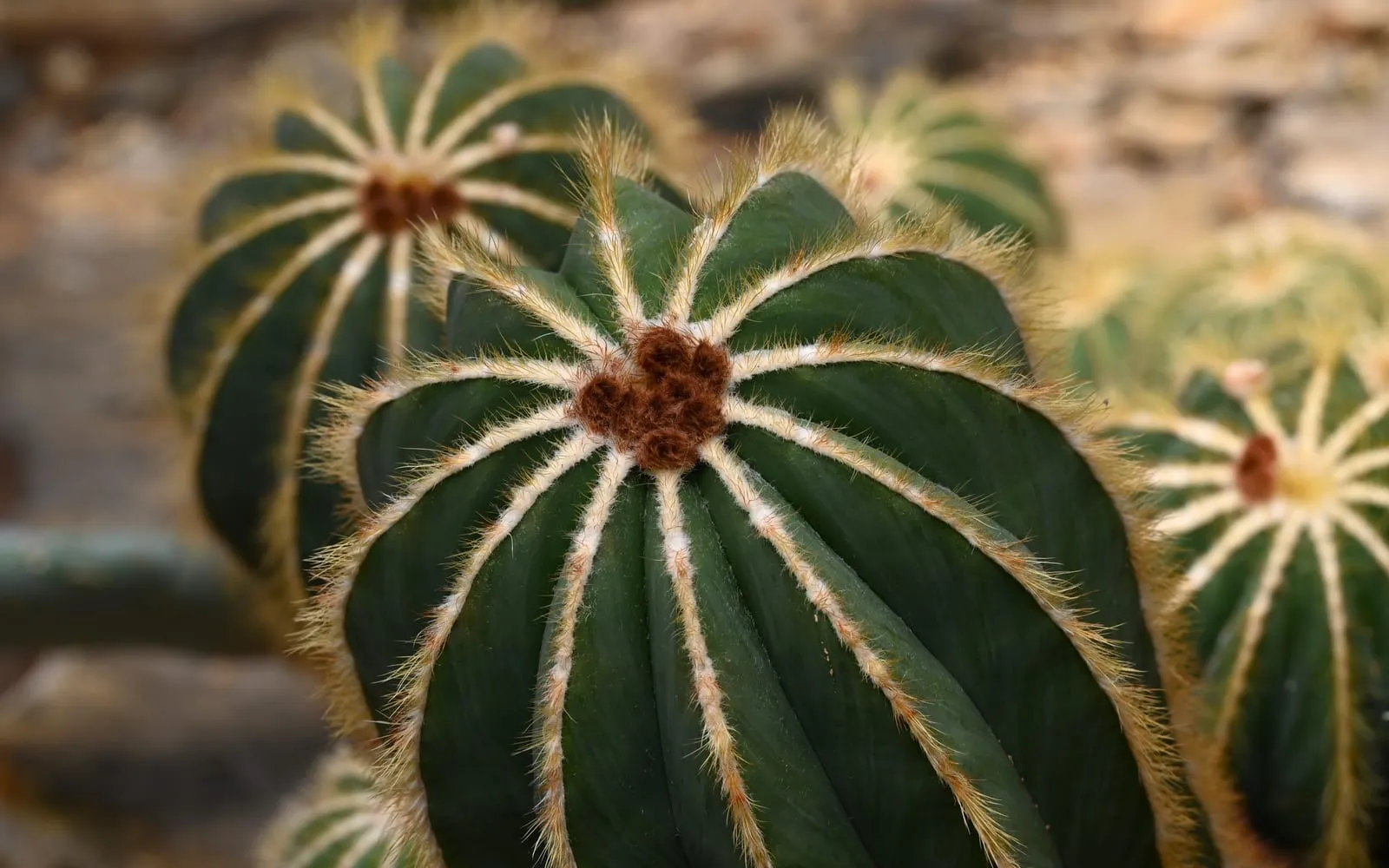
The balloon cactus is a distinctive, strongly ribbed, blue-green stem covered in dense, symmetrical rows of fine golden-yellow spines that catch the light attractively, particularly on a well-grown specimen kept in strong sun. It is a popular beginner’s cactus thanks to its tolerance of a range of conditions and its reliable production of bright yellow flowers in a ring around the crown each spring, even on a comparatively young plant.
Older specimens gradually produce offsets around the base, developing over time from a single rounded stem into a clustered, multi-headed group, each new head eventually capable of flowering once it reaches sufficient size.
Appearance and character
A rounded, distinctly ribbed stem, typically eight to twelve ribs, bears neat, closely spaced clusters of fine, golden-yellow spines along each rib, giving the plant an even, almost woven texture across its whole surface. The blue-green body colour beneath the spines is most visible on new growth near the crown.
Flowers open in a ring around the crown in spring, a clear, bright yellow, each one relatively small compared with some other flowering cacti but often appearing in a fairly dense cluster that circles the whole top of a mature stem, followed by small, woolly seed capsules later in the season.
Where it is from
Rocky grassland and scrubby hillsides in southern Brazil, in a subtropical climate with a defined cooler season and generally reliable rainfall compared with some of the more arid desert habitats other cacti come from.
That relatively less arid, subtropical origin is part of why this species tolerates somewhat more regular watering during the growing season than a true desert cactus, and why it copes reasonably well with the more humid summers found in some temperate gardens, provided drainage stays sharp.
How it grows
The ribs lengthen from the crown downward, adding fresh spine clusters as the stem gains height, while the base starts budding the small offsets that will eventually surround it. A stem generally needs to reach a hand’s width or so before it flowers for the first time, after which most well-fed plants bloom every spring without fail.
Two speeds define this cactus’s year. It pushes on steadily whenever the weather is warm and the compost has moisture in it, then all but stops once the winter rest sets in, holding its ribs and colour rather than adding to them until spring calls it back into growth.
Through the seasons
Spring: Crown flowers open, a tight ring of gold circling the top of every stem old enough to bloom, opening as the plant comes back into growth.
Summer is the main growing season. Keep the compost evenly moist and work in a feed once or twice as the season runs its course.
Autumn: Growth slows and any late offsets finish sizing up before the cold sets in.
Winter hold back on water almost entirely and let the plant sit cool; skipping this rest is the single most common reason a balloon cactus flowers poorly the following spring.
Care difficulty
Easy, and forgiving in a way some flowering cacti are not: a slightly missed watering or a spell of weaker light rarely sets it back for long. Give it a proper cold season and it usually handles the flowering on its own.
Watering
Soak the compost right through each time, then leave it alone until it has dried out completely, a cycle this species tolerates a touch more often than a strict desert cactus without complaint. Cut that back hard once autumn arrives; a wet pot through winter does more damage than a dry one ever will.
Warning signs, diseases and pests
Check the crevices where offsets meet the parent stem for mealybug, since that junction is where a colony most often gets started unnoticed. If a plant has stopped growing with no visible cause, tip it from its pot and look over the roots for aphids feeding out of sight below the surface.
A stem that has begun spacing its spine clusters further apart than usual is stretching for light rather than suffering a pest problem; a brighter spot fixes new growth, though the stretched section itself stays as it is. A base that has gone soft and discoloured is rot, almost always tied to compost that stayed wet, and calls for cutting back to clean tissue and rethinking both the mix and the watering schedule.
Growing environment
A spot with plenty of light and a few hours of direct sun keeps the ribs tight and the colour strong, though this species copes with slightly duller conditions than many of its desert relatives before it starts to suffer. Compost has to drain fast regardless of how much light is on offer, and this plant grows best in the coolest, driest corner available over winter.
Feeding
A low-nitrogen cactus fertiliser, applied once or twice through the growing season, supports steady growth and good flowering. Stop feeding entirely once the plant enters its winter rest.
Troubleshooting
No flowers despite a healthy-looking plant. Usually insufficient light or a winter rest that was not cool or dry enough. Move the plant to a brighter spot and provide a more distinct seasonal contrast the following year.
Growth looks stretched and pale. Too little light is the most common cause. Move the plant to a brighter spot; new growth will be more compact.
The base of the stem is soft and discoloured. Suspect rot from overwatering. Cut back to healthy tissue, let it callus, and repot into fresh, sharply draining compost.
Offsets have appeared around the base of an older plant. This is normal for a maturing specimen. They can be left to form a cluster or carefully removed once a reasonable size, allowed to callus, and potted separately to grow on as new plants.
You are unsure whether a plant is old enough to flower yet. A stem generally needs to reach close to its full mature width before it buds for the first time, so a small, recently potted plant that has not flowered has often not reached that point yet rather than being cared for incorrectly. Consistent light and a proper winter rest each year bring it to flowering size as fast as the plant is able to manage.
Balloon Cactus problem guides
Not sure what is wrong? See the common houseplant pests guide.