
Houseplant
Triangle Fig
Ficus triangularis
Also known as Triangle Ficus, Sweetheart Ficus
How to grow Ficus triangularis, the triangle fig, a compact African fig with wedge-shaped glossy leaves that it drops in a draught.
At a glance
- Difficulty
- Easy
- Water
- When the top few centimetres of compost have dried
- Light
- Bright indirect light, with some direct sun tolerated
- Temperature
- Warm, 16 to 27 deg C; keep above 12 deg C
- Humidity
- Average to high
- Hardiness
- USDA 10-12, RHS H1b, hardy to 12 C
- Type
- Evergreen shrub or small tree
- Height
- Up to 8 m in the wild, around 1 m indoors
- Native to
- Tropical Africa
A tender African fig grown as a houseplant, with no frost tolerance. It needs a warm, stable, bright spot above about 12 deg C and dislikes cold draughts and sudden changes, which make it drop leaves like other figs. It has no need of a cold rest and grows through the year in a warm room.
Hardiness zones describe winter cold alone. Summer heat, humidity, rainfall and the length of the growing season decide as much, so treat the range as the outer limit rather than as a recommendation.
Harmful if eaten
- Do not eat
- The milky sap in all parts
- Harm from
- Eating it and handling it
- Affects
- People, cats and dogs
Like other figs, the triangle fig bleeds a milky white sap when cut, and that latex can irritate skin and, in sensitive people, cause a rash. Eaten, it causes mild mouth and stomach irritation, and the ASPCA lists Ficus as toxic to cats and dogs, mainly as a skin and digestive irritant instead of a serious poison. Wear gloves if you prune a lot of it, keep the sap off your skin and eyes, and keep pets from chewing the leaves.
Sources: ASPCA toxic and non-toxic plants, RHS potentially harmful garden plants
About
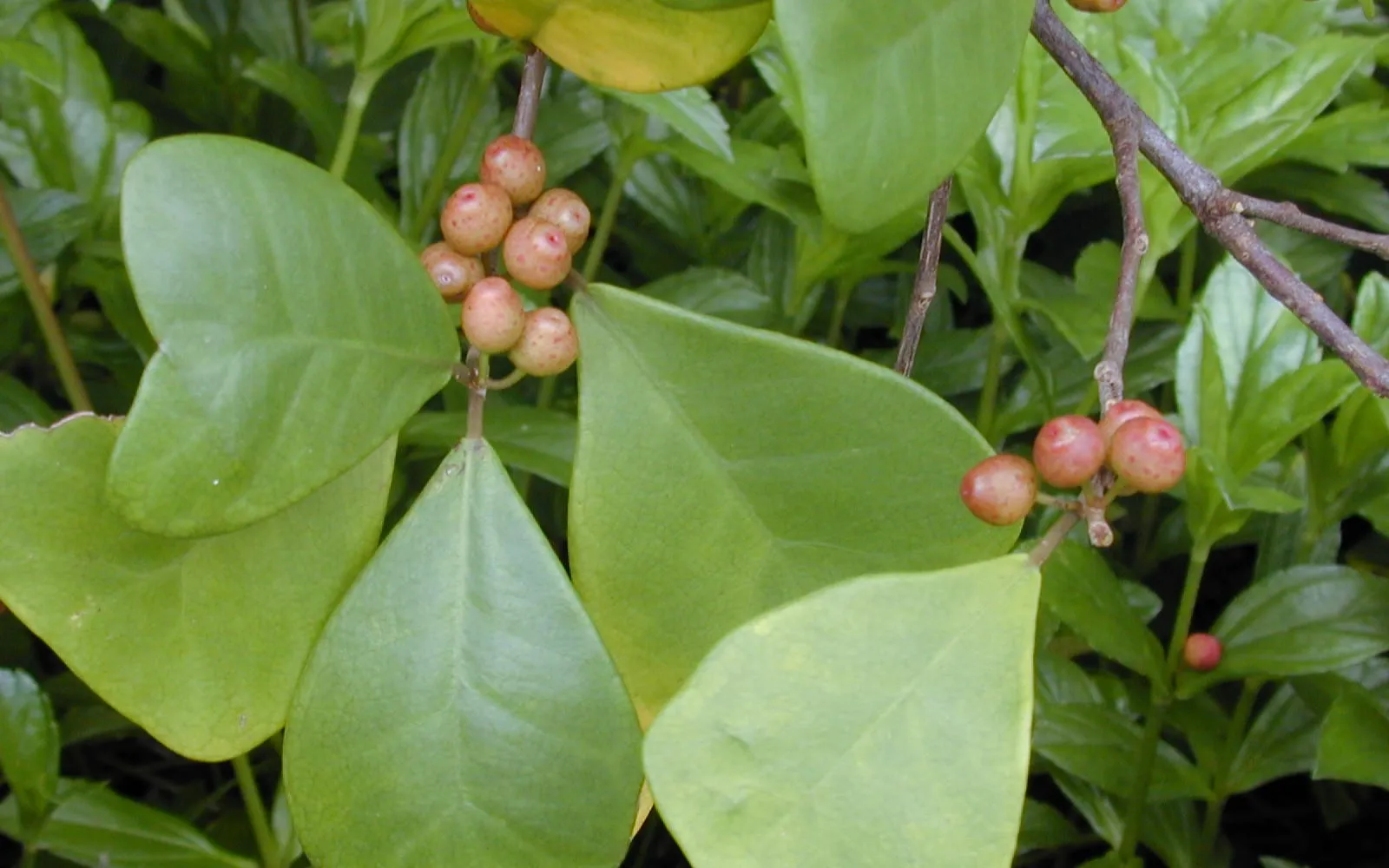
Triangle fig is grown for its unusual leaves, which are shaped like small, rounded triangles or wedges, broad and flat at the tip and tapering to the stalk. They are thick, leathery and glossy, and the neat geometric shape sets the plant apart from the oval-leaved figs.
It is a compact, bushy African fig, far smaller and slower than its giant relatives in the wild, and it makes an easy, upright houseplant that stays a manageable size. A variegated form with cream-edged leaves is also common.
It belongs to the same genus as the rubber plant, weeping fig and fiddle-leaf fig, and it shares their milky sap and their habit of dropping leaves when moved or chilled. Most of the care is avoiding the changes that trigger that leaf drop.
Appearance and character
Leaves are the distinctive feature, thick and leathery, glossy dark green, and shaped like rounded triangles or wedges, broadest and often slightly notched at the tip. They are held on short stalks up bushy stems.
The plant is upright and well-branched, building slowly into a small bushy shrub of around a metre indoors, though it can be kept smaller by pruning or grown on into a small standard.
Tiny fig fruits may appear on a mature, happy plant, small and reddish, though they are incidental and the plant is grown for its foliage and form.
All parts carry the milky white latex of the fig genus, which bleeds from any cut and is the plant’s most obvious shared family trait.
Where it is from
Ficus triangularis is native to tropical Africa, where it grows as a shrub or small tree in warm, frost-free conditions. It is used to steady warmth and bright light instead of to any cold season.
Give it warmth, good light and a stable position, and it reacts to cold draughts and abrupt changes by dropping leaves, in the way figs generally do.
How it grows
It grows steadily in a warm, bright spot, branching into a compact bush, and keeps its leaves year-round instead of taking a winter rest. Growth is slow to moderate instead of fast.
Pot it in a free-draining houseplant compost and water when the top few centimetres have dried, easing off a little in winter. Figs dislike both drought and soggy roots, so aim for the middle.
Keep it in a stable, warm, bright position and resist moving it around, since a change of light or a cold draught is the usual trigger for leaf drop. Turn it occasionally for even growth, but otherwise leave it be.
Prune in spring to shape it or keep it compact, wearing gloves and keeping the milky sap off your skin. It branches well after pruning and can be trained into a neat bush or small standard.
Through the seasons
Spring brings renewed growth as light increases, the best time to prune, repot and resume feeding.
Summer is the main growing season in warmth and good light. Water and feed regularly and watch for pests in dry air.
Autumn growth slows as light falls. Reduce feeding and let the compost dry a little more between waterings.
Winter the plant rests in lower light. Keep it warm, out of draughts, and on the drier side, and expect little new growth until spring.
Care difficulty
Easy, provided it is kept warm and left in one place. Given a stable, bright, warm spot it is undemanding and holds its glossy leaves well. The main frustration is leaf drop, which is almost always a response to being moved, chilled or over-watered rather than a disease. Settle it in one good position and it usually holds its leaves.
Watering
Water when the top few centimetres of compost have dried, giving enough to moisten the whole root ball and letting the excess drain away. Let it dry a little more between waterings in winter when growth slows.
Avoid both extremes. Soggy compost rots the roots and causes leaf drop, and letting the plant dry out hard does the same, so steady, moderate watering suits it best. Empty any saucer after watering.
Warning signs, diseases and pests
Leaf drop is the commonest complaint and is usually a reaction to a move, a cold draught, or a change in watering instead of a pest. Settle the plant in a stable, warm, bright spot and keep watering even, and it should stop.
Scale insects settle on stems and leaf undersides as small brown bumps with sticky honeydew, and spider mites stipple the leaves in warm, dry air. Treat both early with horticultural oil and raise the humidity to discourage mites.
The milky sap irritates skin and is mildly toxic if eaten, so handle pruning with gloves and keep pets and children from chewing the leaves.
Growing environment
Bright, indirect light suits it best, and it tolerates some direct sun, particularly gentler morning sun. Too little light gives sparse, leggy growth and more leaf drop.
Keep it warm and stable, above about 12 deg C, away from cold draughts, radiators and doorways. Average room humidity is usually fine, though it appreciates a little extra and stays freer of spider mites in humid air.
Give it a free-draining compost and a stable position, and avoid moving it once it is settled and growing well. Consistency matters more to a fig than to most houseplants.
Feeding
Feed monthly through spring and summer with a balanced liquid houseplant fertiliser at the usual strength, to support steady leafy growth. Ease off in autumn and stop in winter while growth slows.
A plant in fresh compost needs little feeding for the first couple of months, and one that is not growing needs none, so match the feeding to the season and the plant’s activity.
Troubleshooting
It keeps dropping leaves. The classic fig response to change. A move, a cold draught, a dry or soggy spell, or lower winter light can all cause it. Settle the plant in one warm, bright, stable spot and keep watering even, and it should recover.
There are small brown bumps and sticky patches on the stems. Scale insects. Wipe them off and treat with horticultural oil, and clean up the sticky honeydew they leave, which can grow sooty mould.
The leaves are dull and finely stippled. Spider mites in dry air. Raise the humidity, wipe the leaves top and bottom, and treat early before they spread.
The sap made my skin itch. The milky fig latex can irritate skin. Wear gloves when pruning, wash off any sap, and keep it out of your eyes. Keep pets from chewing the plant, since it is mildly toxic to them.
How big will it get indoors? Usually around a metre, slowly, and easily kept smaller by pruning in spring. It is far more compact indoors than the large tree it can become in the wild.
Triangle Fig problem guides
Not sure what is wrong? See the common houseplant pests guide.