
Edible
Costa Rican Guava
Psidium friedrichsthalianum
Also known as Cas, Wild guava, Sour guava
How to grow Costa Rican guava, Psidium friedrichsthalianum. The sour guava that makes the drink rather than the dessert, how it differs from the common guava, and why Central America grows it as a hedge.
At a glance
- Difficulty
- Moderate
- Water
- Weekly in growth, sparingly in winter
- Light
- Full sun
- Temperature
- Minimum 5 deg C. Slightly hardier than common guava
- Humidity
- Moderate
- Hardiness
- USDA 10-11, RHS H1b, hardy to 5 C
- Type
- Tender evergreen shrub or small tree
- Height
- 3-8 m in the open, 1.5 m in a pot
- Native to
- southern Mexico, Central America
- Best month
- June and September in the Northern Hemisphere, December and March in the Southern Hemisphere
Central American lowland forest. It is more cold-sensitive than common guava and less inclined to escape cultivation.
Hardiness zones describe winter cold alone. Summer heat, humidity, rainfall and the length of the growing season decide as much, so treat the range as the outer limit rather than as a recommendation.
Every month named in this guide is for the temperate Northern Hemisphere. If you garden in the Southern Hemisphere, shift each one by six months, so June becomes December. Closer to the equator the wet and dry seasons matter more than the calendar, and the shift stops being a useful guide.
Not known to be toxic
- Safe to eat
- The whole fruit, though it is too acid to eat raw in quantity
Costa Rican guava is not toxic and nothing in the plant is listed as harmful to people or to cats and dogs. The fruit is sharply acid rather than dangerous, which is why it goes into drinks and preserves rather than onto a plate. Anyone with sensitive teeth or reflux will notice the acidity of a raw one. Like other guavas it seeds freely and birds spread it, so it should be kept in a pot rather than planted out in any frost-free climate where it could escape.
Sources: ASPCA toxic and non-toxic plants, RHS potentially harmful garden plants
About
Costa Rican guava is grown for the glass rather than the fruit bowl. The fruit is too sharp to eat raw in any quantity, and it is blended with water and sugar into the refresco de cas that is on the table in every Costa Rican soda.
The tree is narrower and more upright than a common guava, the leaves are glossier, and the fruit is round, thin-skinned and pale, closer to a small green apple than to the pink-fleshed guava of the supermarket.
Central American gardens use it as a boundary hedge as much as an orchard tree, because it takes hard cutting, thickens up well and fruits on the regrowth.
Appearance and character
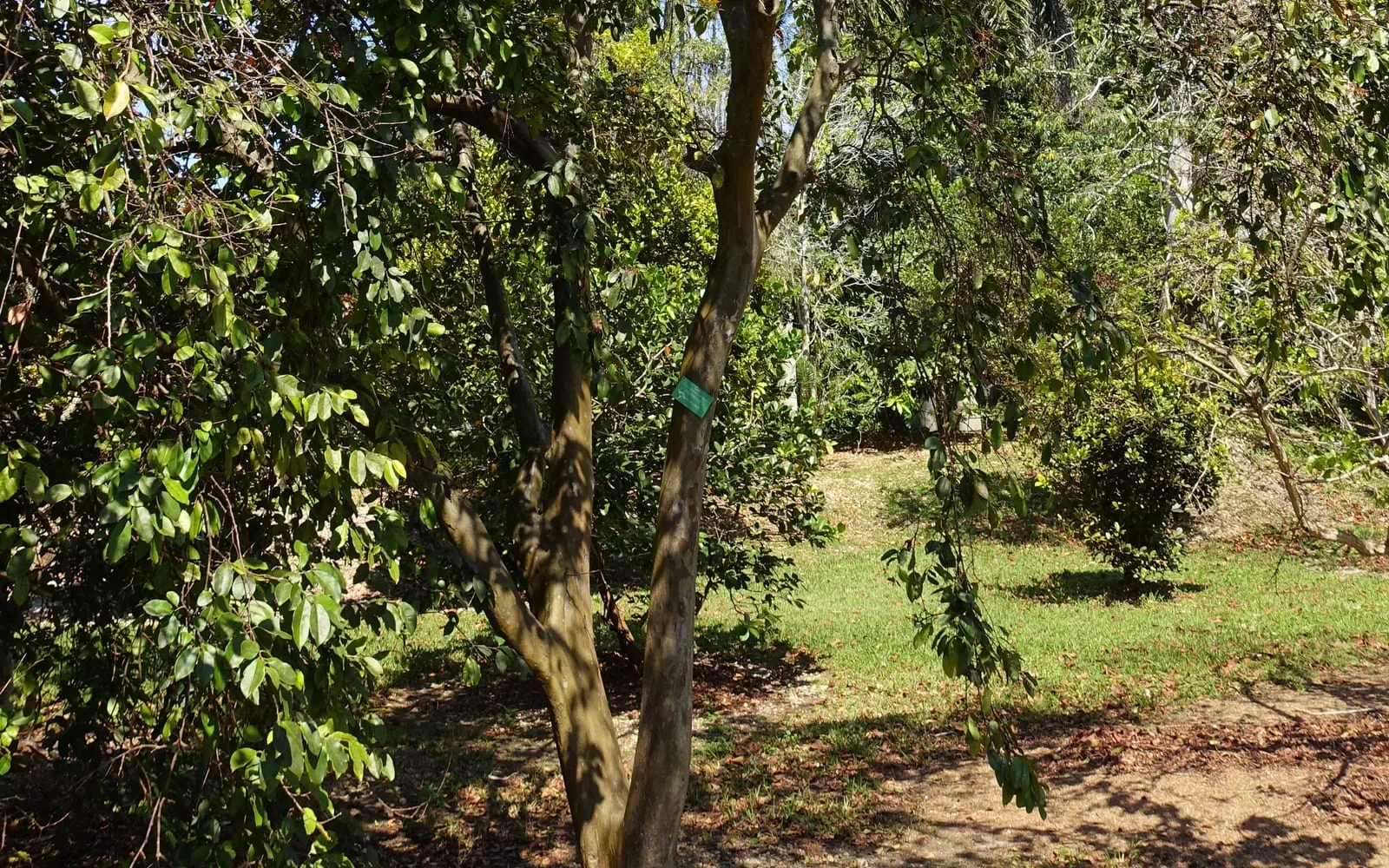
An upright evergreen shrub or small tree, 3 to 8 m, narrower in outline than the common guava and branching low.
Bark is smooth, pale brown to grey, flaking in thin plates to leave a mottled surface.
Leaves are opposite, elliptic, 5 to 12 cm, glossier and thinner than the common guava’s, with the veins less deeply impressed so the quilted look is absent.
Flowers are white with a boss of stamens, about 2 cm across, borne singly or in small groups in the leaf axils.
Fruit is round to slightly flattened, 3 to 6 cm, with a thin pale yellow-green skin that stays greenish even when ripe.
Flesh is white, juicy and very acid, with a small central mass of hard seeds. The acidity is the identifying character.
The scent of a ripe one is guava-like but sharper and cleaner, without the musk of the common guava.
Where it is from
Costa Rican guava is native to a range running from southern Mexico through Guatemala, Honduras and Nicaragua into Costa Rica and Panama, where it grows in lowland and mid-elevation forest.
Costa Rica is where it became a national habit. Cas is the standard fruit refresco, sold alongside tamarind and blackberry in every roadside soda, and the frozen pulp is exported to Costa Rican communities abroad.
It has been carried to other tropical countries as a fruit tree and a hedge, though never on the scale of the common guava, and it has not become the invasive problem its relatives have.
Nicaragua and Panama use it in the same way, in drinks, ices and preserves.
Temperate markets see the frozen pulp in Latin American food shops and almost never the fresh fruit, which does not travel.
How it grows
Sow seed from a ripe fruit. It germinates freely and keeps for some months.
Sow at 20 to 25 deg C on free-draining compost, covered lightly. Germination takes three to six weeks.
Pot on into ordinary free-draining compost with added grit.
Grow in full sun at a minimum of 10 to 15 deg C for growth, keeping it above 5 deg C in winter.
Water weekly in growth, sparingly in winter.
Feed monthly from April to September.
Prune in late winter. Like the common guava it fruits on new wood, and it takes hard cutting without complaint.
Expect fruit in three to four years from seed.
Keep it in a pot rather than planting it out in a warm climate.
Through the seasons
Winter is a cool rest above 5 deg C, watered sparingly and unfed.
Late winter is the pruning point, since fruit comes on the current season’s growth.
Spring brings the growth flush and the first flowers.
Early summer is flowering and setting.
Midsummer is fruit swell, and the time to move to a high-potash feed.
Late summer to autumn is harvest, spread over several weeks.
Autumn is when to stop feeding and cut watering back.
Care difficulty
Moderate, and much the same as the common guava with a little more cold tolerance.
Frost-free winter quarters are all it needs rather than heat.
Soil is undemanding, provided it drains.
Pruning is the main skill and it is simple. Cut back in late winter for fruit on new wood.
Fruit comes in three to four years from seed, which is quick.
The acidity means the crop is a raw material rather than a dessert, so a small plant giving a handful of fruit will disappoint anyone expecting to eat them out of hand.
Under glass it is trouble free, and it takes hard cutting to stay in bounds.
Watering
Water weekly in growth, giving a good soak and letting the surface dry.
Reduce in winter to keep the compost barely damp.
Water steadily during fruit swell, since irregular watering causes drop.
Drain fully.
Tap water is acceptable, as this species is not sensitive to hardness.
Mulch a pot in summer to steady the moisture.
Watch a pot standing outdoors in a wet temperate summer.
Warning signs, diseases and pests
Brown limpets on stems and leaf undersides are scale.
White fluff in the leaf axils is mealybug.
Sunken dark spots on fruit in humid still air are anthracnose. Improve airflow.
Blackened shoot tips after a cold night are frost damage. Cut to live wood in spring.
Wilting in wet compost is root rot.
Yellowing between the veins is iron shortage on alkaline compost.
Fruit dropping small and green is usually irregular watering.
Some leaf drop in a cool dark winter is normal.
Growing environment
A frost-free greenhouse or conservatory, standing outside for the summer.
Minimum 5 deg C, with 15 to 30 deg C for growth.
Full sun.
Moderate humidity.
Free-draining compost with added grit.
pH from 5.0 to 7.0.
A pot of 30 to 40 cm for a fruiting plant.
Shelter from cold wind.
Feeding
Feed monthly from April to September with a balanced liquid feed.
Move to a high-potash feed as fruit swells.
Stop feeding at the end of September.
Give nothing through winter.
Top-dress or repot each spring.
Add magnesium if older leaves yellow between the veins.
Avoid heavy nitrogen late in the year.
Troubleshooting
Can I eat it raw? You can, and few people want to. It is sharply acid, which is why Costa Rica turns it into refresco with water and sugar rather than eating it out of hand.
How is it different from a common guava? More upright and narrower, with glossier thinner leaves, pale green fruit that stays greenish when ripe, white flesh, and far more acid. The common guava is musky and sweet.
What is cas? The Costa Rican name for this fruit and for the drink made from it. The frozen pulp is the form it is usually sold in.
When do I prune? Late winter, because fruit comes on the current season’s growth. It takes hard cutting and is grown as a hedge in Central America.
Will it fruit in a pot? Yes, in three to four years from seed, in a pot of 30 cm or more.
Is it invasive like the strawberry guava? Less so, and it has not caused the problems its relatives have. Keep it in a pot in any frost-free climate as a precaution.
The fruit dropped before it ripened. Irregular watering during swell. Keep the compost evenly damp from setting to harvest.
Costa Rican Guava problem guides
Not sure what is wrong? See the common vegetable pests guide.