
Edible
Citron
Citrus medica
Also known as Etrog, Buddha's hand, Cedro, Fingered citron
How to grow citron, Citrus medica. An ancestral citrus that is mostly rind and pith, grown for candied peel, ritual use and the fingered Buddha's hand form.
At a glance
- Difficulty
- Difficult
- Water
- When the top few centimetres dry, so twice weekly in summer and monthly in winter
- Light
- Full sun, with bright light all year
- Temperature
- Minimum 10 deg C, and it is among the more tender citrus
- Humidity
- Moderate to high
- Hardiness
- USDA 10-11, RHS H1b, hardy to 0 C
- Type
- Evergreen shrub or small tree, long-lived
- Height
- 1.5-3 m in a container
- Native to
- Northern India, Myanmar
- Best month
- November, December and January in the Northern Hemisphere, May, June and July in the Southern Hemisphere
The foothills of north-east India, and one of the three ancestral citrus species behind almost every other. It is thin-fleshed and grown for the thick peel, and it is among the most frost-sensitive of the genus.
Hardiness zones describe winter cold alone. Summer heat, humidity, rainfall and the length of the growing season decide as much, so treat the range as the outer limit rather than as a recommendation.
Every month named in this guide is for the temperate Northern Hemisphere. If you garden in the Southern Hemisphere, shift each one by six months, so November becomes May. Closer to the equator the wet and dry seasons matter more than the calendar, and the shift stops being a useful guide.
Skin irritant
- Safe to eat
- The rind and pith, usually candied
- Do not eat
- Peel oils and leaves, for pets
- Harm from
- Eating it and handling it
- Affects
- Cats, dogs and horses
The fruit is food. The entry that matters is the veterinary one. The ASPCA lists citrus as toxic to cats, dogs and horses, on the strength of the essential oils and psoralens concentrated in the peel, the pith and the leaves rather than anything in the flesh. A pet that chews peel or foliage may vomit or develop a skin reaction, and citrus oil products marketed as pet deterrents have caused poisoning at concentrated doses. Sap and leaves can also irritate human skin, and the psoralens they carry are phototoxic, so a scratch from a thorn followed by strong sunlight sometimes produces a burn out of proportion to the wound. Wear sleeves when pruning a thorny plant on a bright day.
Sources: RHS potentially harmful garden plants, ASPCA toxic and non-toxic plants
About
Citron is the odd one of the family. Cut one open and there is almost no juice and barely any flesh, just a thick fragrant rind over a deep white pith. That pith is the crop, candied for cakes and confectionery.
It is one of the three ancestral citrus species, and the first to reach the Mediterranean, arriving with Alexander’s armies around 300 BC and predating every other citrus in Europe by a thousand years.
Two forms are grown for very different reasons. The etrog is used in the Jewish festival of Sukkot and is inspected for perfection before purchase. Buddha’s hand splits into finger-like segments and is grown for scent and for ritual offering across east Asia.
It needs warmth. A minimum of 10 deg C puts it in the same class as a key lime, so this is a heated conservatory plant.
Appearance and character
A straggling open shrub with stout stiff thorns and brittle branches that need support as the fruit develops.
New growth is often flushed purple, which is characteristic of the species.
Leaves are large, 8 to 18 cm, oblong with a blunt tip and toothed edges, pale to mid-green, with no wing on the leaf stalk.
Flowers are large, 3 to 4 cm, white with a purple flush on the outside of the petals, and strongly scented.
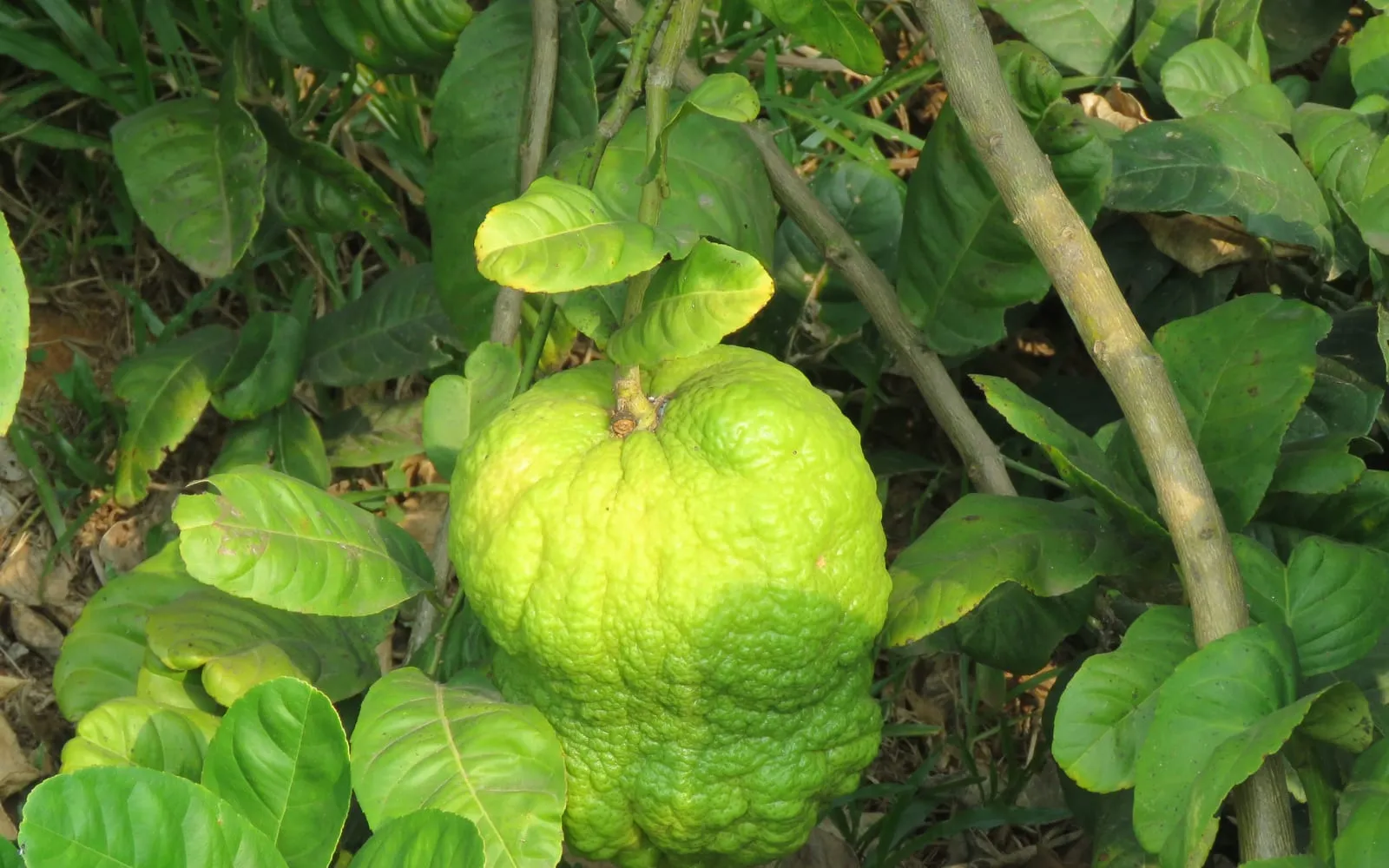
Fruit is large and heavily ribbed or knobbly, 10 to 25 cm long, yellow when ripe, with a very thick rind and pith and little pulp. The Buddha’s hand form splits into separate finger-like lobes and contains almost no flesh at all.
Where it is from
Citrus medica is native to northern India and Myanmar and is one of the three founding citrus species, alongside pomelo and mandarin.
It travelled west earlier than any other citrus, reaching Persia and then the Mediterranean by around 300 BC, which is why the Romans knew citron and not oranges.
Its ritual role is ancient. The etrog is one of the four species used during Sukkot, and specialist growers in Israel, Italy and Morocco produce fruit to exacting standards for that market.
The Buddha’s hand form is grown across China and Japan for its scent, placed as an offering in temples and used to perfume rooms.
Corsica, Sicily and Calabria grow it commercially for candied peel, which is the main food use worldwide.
How it grows
Grow it in a heated conservatory or greenhouse. A winter minimum of 10 deg C is needed, which rules out an unheated porch.
Buy a grafted plant of the form you want, since etrog and Buddha’s hand are different in habit and use.
Pot into free-draining citrus compost, and support the branches, which are brittle and break under the weight of large fruit.
Water thoroughly and allow the compost to dry down between waterings.
Feed fortnightly with summer citrus feed through the growing season.
Prune lightly in spring to keep the straggling growth in order, and wear gloves for the thorns.
Through the seasons
Flowering happens through much of the year in warm conditions, with the heaviest flush in spring.
Fruit develops slowly over several months and the plant often carries flowers and fruit at different stages together.
Move it outside only in high summer, from mid-June to early September, and only in a sheltered sunny position.
Support developing fruit, since a single citron is heavy enough to snap a branch.
Fruit ripens from November through January, turning from green to a deep yellow and becoming intensely fragrant.
Through winter keep the plant warm and bright, water sparingly and feed monthly with winter citrus feed.
Care difficulty
Difficult. The heat requirement and the brittle habit both work against easy cultivation.
Ten degrees minimum through a cool winter means heated glass, which is the main barrier.
The plant is less tidy than other citrus, growing in a straggling way that needs support and regular pruning.
Fruit is heavy and branches snap, so tying in and propping is part of the routine.
Given warmth it fruits readily and the scent alone justifies the effort for many growers.
Watering
Water thoroughly and let the top few centimetres dry before watering again.
The plant stays in growth through winter in a warm conservatory, so watering is reduced rather than nearly stopped.
Never leave the pot standing in water.
Use rainwater where possible, since hard water causes yellowing between the veins.
Mist the foliage in dry indoor air, which helps against red spider mite.
Warning signs, diseases and pests
Leaves yellowing and dropping in winter. Too cold. This species needs 10 deg C and declines below it.
Branches snapping under fruit. Brittle wood and heavy fruit. Tie in and support developing fruit early.
Fine speckling with webbing. Red spider mite in warm dry air. Mist and use a biological control.
Brown limpet bumps along stems. Scale insects. Scrub off with soapy water.
White waxy fluff in leaf joints. Mealybug. Treat with horticultural soap.
Fruit small and misshapen. Underfeeding or insufficient light, though citron fruit is knobbly by nature.
Blotchy yellow leaves with small, lopsided, bitter fruit that stays green at the base. Citrus greening, the world’s most destructive citrus disease and incurable once a tree is infected. Not established in Europe, Australia or New Zealand, where a sighting is reportable. Buy trees only from a certified, disease-free nursery.
Growing environment
Full sun and bright light all year, in a heated conservatory or greenhouse.
A winter minimum of 10 deg C, higher than most citrus require.
Free-draining citrus compost at pH 6 to 6.5.
Moderate to high humidity, since dry air brings mite problems on this species readily.
A pot of 40 to 50 cm suits a mature plant, with canes or a framework to support the straggling branches and heavy fruit.
Feeding
Feed fortnightly with summer citrus feed from March to October.
Continue with winter citrus feed monthly, since a plant kept at 10 deg C or above keeps growing.
Avoid heavy nitrogen, which lengthens the already straggling growth.
Sequestered iron corrects hard-water yellowing.
Repot every two or three years in spring and top-dress between times.
Troubleshooting
Fruit with almost no juice. Correct for the species. Citron is grown for rind and pith rather than juice.
Buddha’s hand fruit not splitting into fingers. Some fruit on the same plant splits and some does not, which is normal variation.
Branches breaking. Support the fruit as it develops, since the wood is brittle.
Leaf drop in a cool room. Insufficient warmth. This plant needs 10 deg C minimum.
Straggly untidy growth. The natural habit. Prune in spring and tie in the main branches.
Fruit failing to colour. Insufficient light and heat over the long ripening period.
Citron problem guides
Not sure what is wrong? See the common vegetable pests guide.
- Scale insects on stems and leaf ribs
- Mealybug in the leaf joints
- Red spider mite in dry winter air
- Sooty mould growing on the honeydew those pests leave
- Leaf drop from cold draughts, overwatering or a sudden move
- Root rot from standing in water, which kills more citrus than cold
- Citrus greening, absent from Europe, Australia and New Zealand but present across much of the Americas and Asia