
Edible
Key lime
Citrus aurantiifolia
Also known as Mexican lime, West Indian lime, Bartender's lime, Omani lime
How to grow key lime, Citrus aurantiifolia. The most tender citrus of the group, thorny and small-fruited, and one that needs real winter warmth.
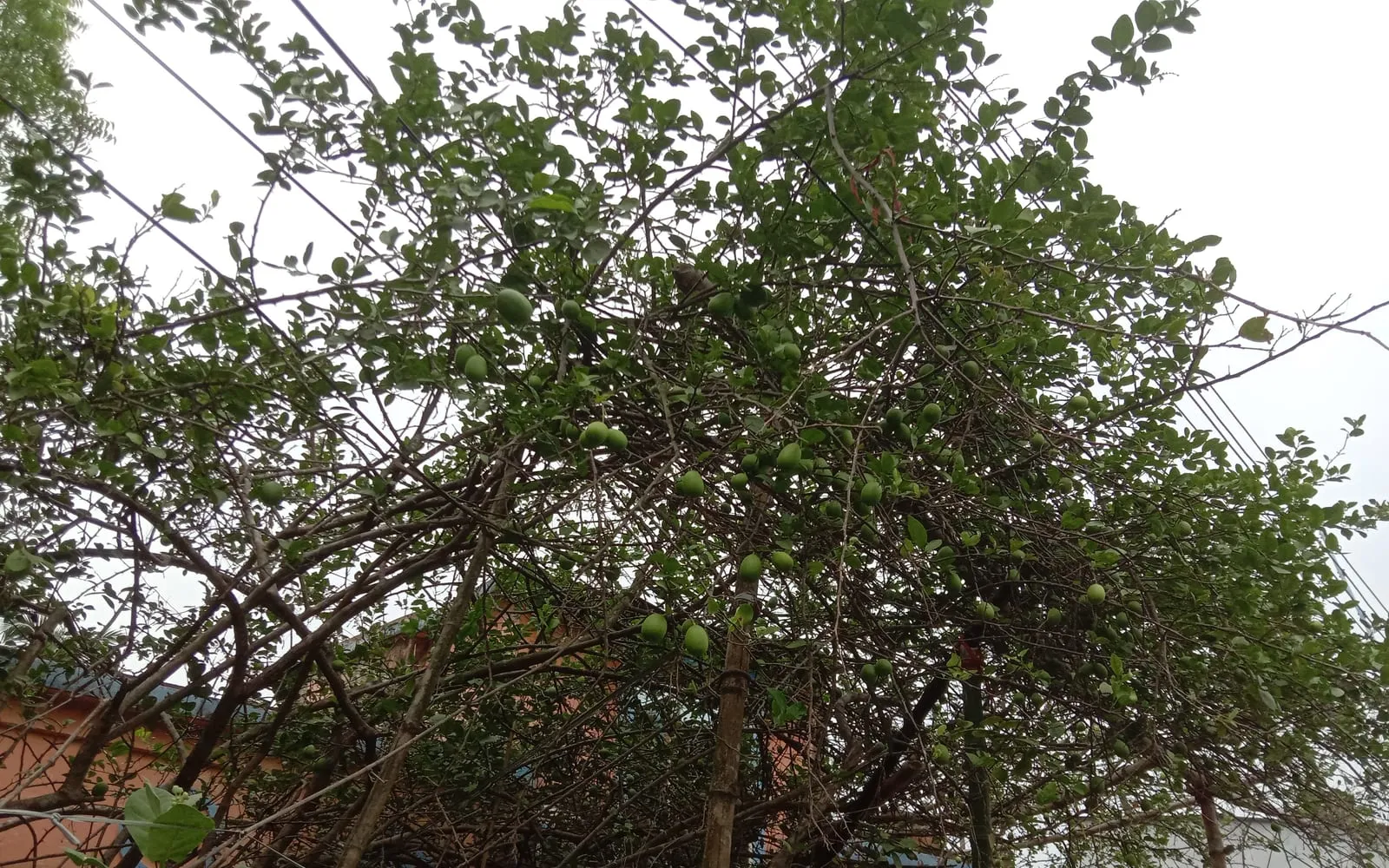
At a glance
- Difficulty
- Difficult
- Water
- When the top few centimetres dry, so twice weekly in summer and monthly in winter
- Light
- Full sun, and the brightest winter position available
- Temperature
- Minimum 10-13 deg C, which is higher than other citrus
- Humidity
- Moderate to high, and it dislikes dry air
- Hardiness
- USDA 10-11, RHS H1b, hardy to 2 C
- Type
- Evergreen shrub, long-lived
- Height
- 1.5-2 m in a container
- Native to
- South-east Asia, Northern India
- Best month
- September, October, November and December in the Northern Hemisphere, March, April, May and June in the Southern Hemisphere
Tropical south-east Asia, and the most cold-sensitive citrus in common cultivation, damaged at temperatures a lemon shrugs off. It flowers and fruits year round in constant warmth.
Hardiness zones describe winter cold alone. Summer heat, humidity, rainfall and the length of the growing season decide as much, so treat the range as the outer limit rather than as a recommendation.
Every month named in this guide is for the temperate Northern Hemisphere. If you garden in the Southern Hemisphere, shift each one by six months, so September becomes March. Closer to the equator the wet and dry seasons matter more than the calendar, and the shift stops being a useful guide.
Skin irritant
- Safe to eat
- The juice and the zest
- Do not eat
- Peel oils, pith and leaves, for pets
- Harm from
- Eating it and handling it
- Affects
- Cats, dogs and horses
The fruit is food. The entry that matters is the veterinary one. The ASPCA lists citrus as toxic to cats, dogs and horses, on the strength of the essential oils and psoralens concentrated in the peel, the pith and the leaves rather than anything in the flesh. A pet that chews peel or foliage may vomit or develop a skin reaction, and citrus oil products marketed as pet deterrents have caused poisoning at concentrated doses. Sap and leaves can also irritate human skin, and the psoralens they carry are phototoxic, so a scratch from a thorn followed by strong sunlight sometimes produces a burn out of proportion to the wound. Wear sleeves when pruning a thorny plant on a bright day.
Sources: RHS potentially harmful garden plants, ASPCA toxic and non-toxic plants
About
Key lime is the small, thin-skinned, intensely aromatic lime behind key lime pie and the caipirinha, and it is a different plant from the larger Persian lime sold in supermarkets.
It is also the most cold-sensitive citrus in common cultivation. Where a satsuma tolerates a touch of frost and an orange wants 5 deg C, this one wants a winter minimum nearer 10 to 13 deg C and sulks below that.
The plant is small, dense and viciously thorny, which suits a container and makes pruning a job for gauntlets.
Grown in a heated conservatory it flowers and fruits almost continuously, and a mature plant carries flowers, green fruit and ripe fruit at the same time.
Appearance and character
A small dense evergreen shrub with slender twiggy growth and numerous sharp thorns along the stems.
Leaves are small, 4 to 8 cm, oval, pale to mid-green rather than the dark glossy green of an orange, with a narrowly winged stalk.
Flowers are small, 2 cm, white, often flushed with a hint of purple in bud, and carried in small clusters through much of the year.
Fruit is round to slightly oval, 3 to 5 cm, thin-skinned, ripening from deep green to pale yellow, with greenish-yellow flesh and a strong perfumed acidity.
The fruit is usually picked green, which is when the aroma is strongest.
Where it is from
Citrus aurantiifolia originates in south-east Asia and northern India, and it is a hybrid of citron and a wild lime relative.
Arab traders carried it west, and it reached the Mediterranean by the medieval period and the Caribbean with Spanish colonists.
It naturalised in the Florida Keys, where the fruit gave key lime pie its name, though a hurricane in 1926 destroyed the commercial groves there.
Mexico, India and Egypt are the main producers today, and much of the crop is dried whole in the Gulf, where black limes are a staple seasoning.
The plant’s tropical origin is the reason for its cold sensitivity, since it comes from a climate with no cool season at all.
How it grows
Grow it under glass or in a heated conservatory outside the subtropics. A cool porch that suits an orange will not suit this plant.
Buy a grafted plant and pot it into free-draining citrus compost.
Keep the winter minimum at 10 to 13 deg C. Below that the leaves yellow and drop and the plant declines.
Stand it outside in high summer only, from mid-June to early September, in the sunniest sheltered position, and bring it back in before nights cool.
Water thoroughly and let the compost dry down between waterings, and keep humidity up in a dry conservatory.
Prune in spring to keep the shape open, wearing thick gloves.
Through the seasons
Flowering can happen at almost any time of year in warm conditions, with the heaviest flush in spring.
Fruit follows about six months later, so the plant carries both together for much of the year.
Move outside only in high summer, from mid-June, and only where nights stay mild.
Feed fortnightly with summer citrus feed from March to October.
Bring it back under cover in early September, well before an orange or a mandarin would need to come in.
Through winter, keep it bright and warm, water sparingly and feed monthly with winter citrus feed.
Care difficulty
Difficult because of the heat requirement rather than any fussiness in the plant.
Ten to thirteen degrees through a cool winter means a heated greenhouse or a warm bright conservatory, and that is a real cost.
Given the warmth it is productive and fast, flowering repeatedly and fruiting heavily for its size.
Thorns make handling awkward. Prune with gauntlets and long sleeves.
Dry conservatory air brings red spider mite, which this plant suffers from more than most citrus.
Watering
Water thoroughly and allow the top few centimetres to dry before watering again.
The plant wants more consistent moisture than a hardier citrus, and dries out faster because of its small dense root system.
Reduce watering in winter, but less drastically than for an orange, since the plant stays in growth in a warm conservatory.
Never leave it standing in water.
Mist the foliage regularly in dry indoor air, which helps against red spider mite as much as it helps the plant.
Warning signs, diseases and pests
Leaves yellowing and dropping in winter. Too cold. This species needs 10 to 13 deg C, higher than any other citrus in common cultivation.
Fine mottling with webbing under the leaves. Red spider mite, which thrives in warm dry air. Mist, raise humidity, and use a biological control.
Brown bumps along stems. Scale insects. Scrub off with soapy water.
White waxy fluff in leaf joints. Mealybug. Dab with horticultural soap.
Black film over the leaves. Sooty mould on pest honeydew. Treat the insects and wipe the foliage.
Sudden leaf drop after moving outdoors. Shock from a temperature or light change. Move the plant out gradually over a week.
Blotchy yellow leaves with small, lopsided, bitter fruit that stays green at the base. Citrus greening, the world’s most destructive citrus disease and incurable once a tree is infected. Not established in Europe, Australia or New Zealand, where a sighting is reportable. Buy trees only from a certified, disease-free nursery.
Growing environment
Full sun, with a winter minimum of 10 to 13 deg C, which means heated glass outside the subtropics.
Bright light all year. This plant does badly in the low light of a cool winter without a good conservatory position.
Free-draining citrus compost at pH 6 to 6.5.
Humidity matters more than for other citrus, and dry air is the main trigger for mite problems.
A pot of 30 to 40 cm suits it, since the plant stays smaller than an orange or a grapefruit.
Feeding
Feed fortnightly with summer citrus feed from March to October.
Continue with winter citrus feed monthly through the colder months, since a plant kept at 13 deg C keeps growing rather than resting.
Avoid overfeeding with nitrogen, which produces soft growth that mites and scale colonise.
Sequestered iron corrects yellowing between the veins caused by hard water.
Top-dress with fresh compost each spring, and repot every two or three years.
Troubleshooting
Leaves dropping in a cool room. Too cold. Move it somewhere warmer and brighter.
Flowers but no fruit. Poor pollination indoors. Brush between flowers with a soft brush.
Fruit staying green. Normal. Key limes are usually picked green, and they turn pale yellow only when fully ripe.
Plant covered in mites every winter. Dry air. Mist daily, group plants together and consider a humidity tray.
Very thorny growth swamping the pot. Natural habit. Prune in spring and wear gauntlets.
Slow decline over a second winter. Almost always insufficient warmth compounded by overwatering in cold compost.
Key lime problem guides
Not sure what is wrong? See the common vegetable pests guide.
- Scale insects on stems and leaf ribs
- Mealybug in the leaf joints
- Red spider mite in dry winter air
- Sooty mould growing on the honeydew those pests leave
- Leaf drop from cold draughts, overwatering or a sudden move
- Root rot from standing in water, which kills more citrus than cold
- Citrus greening, absent from Europe, Australia and New Zealand but present across much of the Americas and Asia