
Edible
Galangal
Alpinia galanga
Also known as Greater galangal, Thai ginger, Kha, Laos root
How to grow galangal, Alpinia galanga. The hard peppery rhizome of Thai curry paste, why it is not a substitute for ginger, and starting it from a supermarket root.
At a glance
- Difficulty
- Moderate
- Water
- Two or three times a week in growth, sparingly in winter
- Light
- Bright light with shade from the hottest sun
- Temperature
- Growing above 18 deg C. Damaged below 10 deg C
- Humidity
- Moderate to high
- Hardiness
- USDA 9-12, RHS H1c, hardy to 10 C
- Type
- Tender evergreen perennial
- Height
- 100-200 cm
- Native to
- Southeast Asia
- Best month
- April and October in the Northern Hemisphere, October and April in the Southern Hemisphere
Wet tropical south-east Asia. The rhizome survives cooler conditions than the foliage, so a plant cut down by cold reshoots if the soil stays above about 10 deg C. Harvest from the second year.
Hardiness zones describe winter cold alone. Summer heat, humidity, rainfall and the length of the growing season decide as much, so treat the range as the outer limit rather than as a recommendation.
Every month named in this guide is for the temperate Northern Hemisphere. If you garden in the Southern Hemisphere, shift each one by six months, so April becomes October. Closer to the equator the wet and dry seasons matter more than the calendar, and the shift stops being a useful guide.
Not known to be toxic
- Safe to eat
- The rhizome, and the young shoots and flowers in some cooking
Non-toxic. Galangal is a culinary spice used in quantity across south-east Asia and it appears on neither the RHS list of potentially harmful garden plants nor the ASPCA list. The rhizome is the part used, and the young shoots and the flower buds are eaten in Thai and Indonesian cooking. The rhizome is woody and fibrous rather than harmful, which is why it is sliced and infused or pounded into a paste rather than eaten in pieces. The essential oil is a concentrated product and carries the usual caution applying to any essential oil.
Sources: RHS potentially harmful garden plants, ASPCA toxic and non-toxic plants
About
Galangal is what gives Thai curry paste and tom kha its particular sharpness, and swapping ginger in produces a different dish. The flavour is peppery, piney and faintly medicinal, with a citrus edge, where ginger is sweet and hot.
The rhizome is also physically different. Galangal is pale, hard and woody with distinct rings, and it will not grate the way ginger does. It gets sliced thinly and infused, or pounded into a paste with the other aromatics.
Growing it outside the tropics is much like growing ginger, with more heat required. A firm rhizome from an Asian grocer, potted in spring and kept warm, makes a substantial clump by autumn. It is evergreen rather than fully dormant, so it wants a frost-free winter rather than a dry one.
Appearance and character
A tall upright clump of leafy stems, 1 to 2 m, arising from a thick branching rhizome that spreads sideways.
Leaves are long and lance-shaped, 25 to 50 cm, mid green and smooth, arranged alternately up the stem in two ranks.
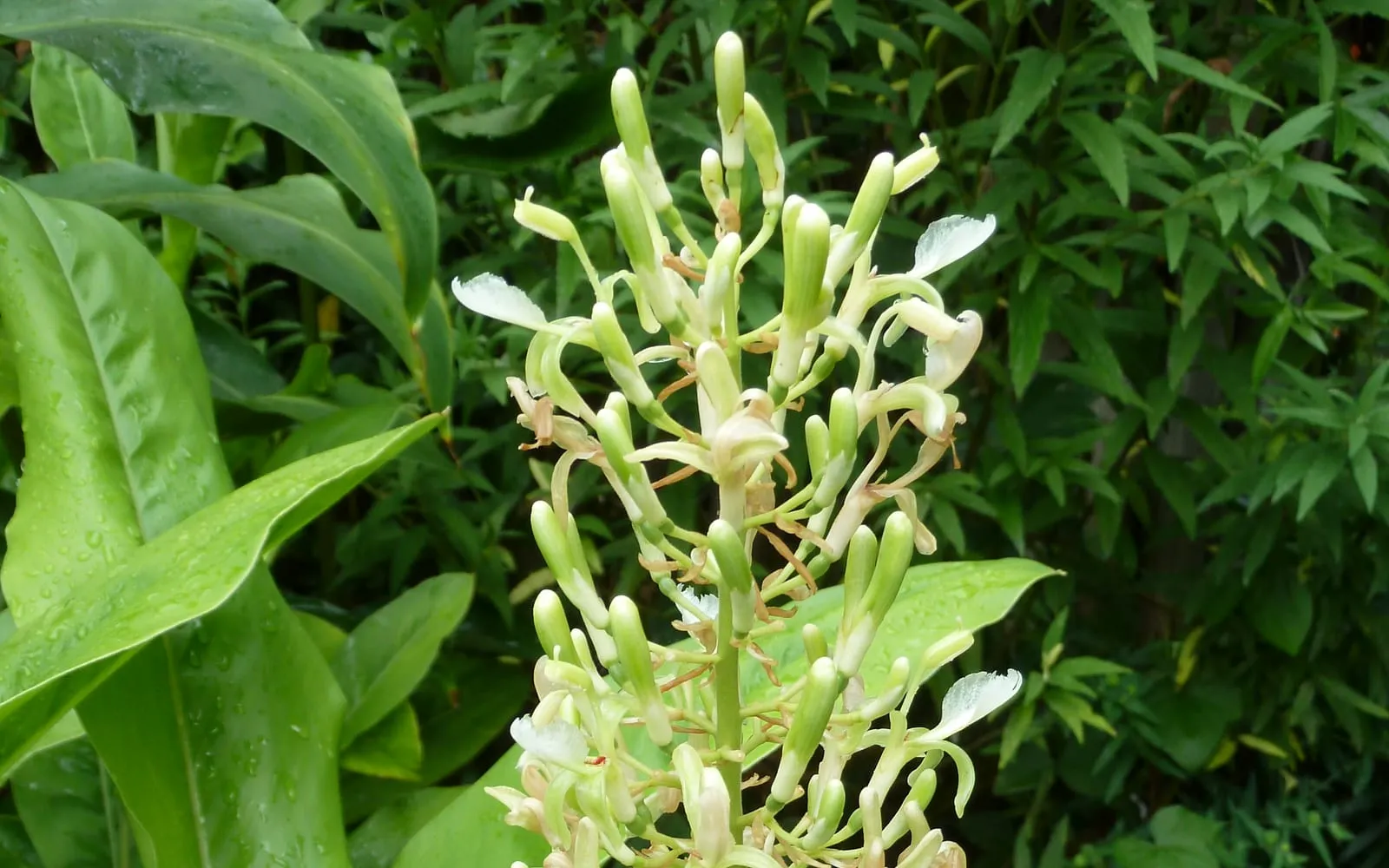
Flowers appear at the top of the leafy stems on a mature plant, in loose spikes of greenish-white blooms marked with red on the lip.
Fruit is a small orange-red capsule, rarely seen in cultivation.
The rhizome is the crop. Pale cream to orange-brown with distinct dark rings, much harder and paler than ginger, and it does not soften with age.
The scent when cut is sharp, piney and peppery, closer to pine resin and pepper than to ginger.
Where it is from
Galangal is native to south-east Asia, probably southern China and Indonesia, and it has been cultivated across the region for many centuries.
Thai cooking depends on it. Galangal, called kha, is one of the three aromatics alongside lemongrass and kaffir lime that define tom yam and tom kha, and it goes into most curry pastes.
Indonesian and Malaysian cooking use it as lengkuas, and Vietnamese cooking uses it with certain meats.
It reached medieval Europe as a valued spice. Hildegard of Bingen wrote about it in the twelfth century, English medieval recipes call for galingale, and it appears in Chaucer. European use faded when cheaper spices arrived.
The name Laos root comes from the Indonesian and Dutch name laos rather than from the country, which is a common misunderstanding.
How it grows
Buy a firm rhizome from an Asian grocer in spring. Choose plump pieces with visible buds and no soft spots.
Break the rhizome into pieces carrying two or three buds apiece and leave the cut faces open to the air overnight, so they seal before they go into compost.
Bury them a knuckle deep in rich open compost. The pot matters more than most, since the rhizome runs sideways rather than down, so start at 30 cm across and expect to move up.
Hold it above 22 deg C to start. Four to eight weeks can pass with nothing showing, and the temptation to dig one up and check is what kills most of them.
Bright light under glass, with shade off the middle of the day.
Feed and water hard once it is away, because the plant is building two metres of cane in a single season.
Above 10 deg C through the winter, watered lightly. It never shuts down completely the way ginger and turmeric do, so the compost should not be allowed to go dry.
Tip the whole pot out in autumn, break rhizome off the outside of the clump and put the centre back. The outer pieces are the young ones and the middle is what makes next year’s shoots.
Leave it a second summer before taking much. First-year rhizome is thin and hot, and the thick pale pieces with clear dark rings that a kitchen wants take two seasons to build.
Through the seasons
Winter is survival under glass above 10 deg C, watered sparingly. The plant holds its leaves rather than dying down.
Spring brings new shoots from the rhizome. Divide, repot and start feeding.
Early summer is when growth accelerates.
Midsummer is peak growth, and the plant needs generous water and food.
Late summer is when the rhizome thickens.
Autumn is harvest, tipping the pot out and taking what you need before reducing watering for winter.
Care difficulty
Moderate, and slightly harder than ginger because it wants more heat and does not go dormant.
Warmth is the requirement. Minimum 10 deg C in winter and above 22 deg C for real growth.
The evergreen habit matters. Ginger and turmeric are stored dry over winter and galangal is not, so it needs a frost-free space with occasional watering rather than a shelf in a shed.
Overwatering in winter is what rots the rhizome, and it is a fine line against letting it dry out.
Sprouting is slow. Four to eight weeks looks like failure and is normal.
Size is worth planning for. A two-metre clump under glass takes real space.
Watering
Barely damp until the first shoot breaks the surface. A newly divided rhizome sitting in wet compost rots before it can root.
Once the canes are away it drinks heavily, two or three times a week and every day in a glasshouse that gets hot, and the compost should stay evenly damp right through.
Ease off through September as growth slows.
Through winter, light watering and never a dry rhizome. This is where galangal parts company with turmeric, which wants its pot kept bone dry until spring and rots if you treat it the same way.
Water at room temperature in the cold months.
Warning signs, diseases and pests
Soft rot at the rhizome is the main loss and it comes from cold wet compost in winter.
A rhizome that fails to sprout was too cold, too wet, or was not viable when bought.
Spider mite shows as fine stippling with webbing in dry heated air.
Scale insects sit on the leaf undersides as brown limpets with sticky honeydew.
Mealybug hides at the shoot bases as white waxy fluff.
Brown leaf tips mean dry air.
Yellowing and collapse mean cold.
Thin small rhizomes at harvest mean the plant did not get enough heat or food, or was lifted in its first year.
Growing environment
A heated glasshouse or conservatory, since nothing outside the tropics will carry it through a winter in the open.
A floor of 10 deg C, and 22 deg C or better before it does anything worth calling growth.
Bright light, shaded off the fiercest part of the day.
Rich compost that holds water and still drains, in a pot wider than it is deep. The rhizome travels outwards and a deep narrow pot wastes most of its volume.
Anywhere from pH 5.5 to 7.
Headroom, which is easy to forget when a rhizome the size of a fist goes into the pot. This is a two-metre plant with canes and long leaves, and a crowded bench turns it into a leaning nuisance.
Feeding
A balanced liquid feed every fortnight from May through August, or controlled-release granules mixed in at potting if you would rather forget about it.
High potash from late summer, which is what thickens the rhizome rather than lengthening the cane.
Nothing from September onwards, and nothing at all over winter. The plant is ticking over rather than growing, and feed it cannot use turns the compost salty.
Repot into fresh compost each spring, dividing at the same time.
Rich compost matters more than fertiliser for a plant grown for its rhizome.
Troubleshooting
Can I use ginger instead? Not without changing the dish. Galangal is peppery, piney and citrus where ginger is sweet and hot, and Thai and Indonesian recipes depend on the difference.
Why will it not grate? The rhizome is hard and woody. Slice it thinly across the grain and infuse it, or pound it into a paste with the other aromatics.
Nothing sprouted for six weeks. Normal. Galangal is slow. Keep the compost barely damp and the temperature above 22 deg C.
Where do I buy the rhizome? An Asian grocer, particularly one stocking Thai ingredients. Choose firm plump pieces with visible buds.
Should I dry it off for winter? No, and this is the difference from ginger and turmeric. Galangal is evergreen and wants to be kept frost free and slightly damp rather than stored dry.
Is Laos root the same thing? Yes. The name comes from the Indonesian and Dutch lengkuas and laos rather than from the country.
How is greater galangal different from lesser? Greater galangal is larger, milder and the one Thai cooking uses. Lesser galangal is smaller, hotter and more pungent, and it belongs to Chinese cooking and to the herbal trade.