
Disease
Citrus greening
Candidatus Liberibacter asiaticus
Also called Huanglongbing, HLB, Yellow dragon disease
Citrus greening causes blotchy yellow leaves, small bitter fruit and decline that cannot be cured once a tree is infected. The disease is spread by psyllids, so keeping the vector out is the main defence.
At a glance
- Type
- Disease
- Cause
- Bacterium
- Severity
- Can kill the plant
- Affects
- Herbs and edibles
- Active
- All year
- Established in
- Asia, North America, Central and South America and Africa
What you are seeing
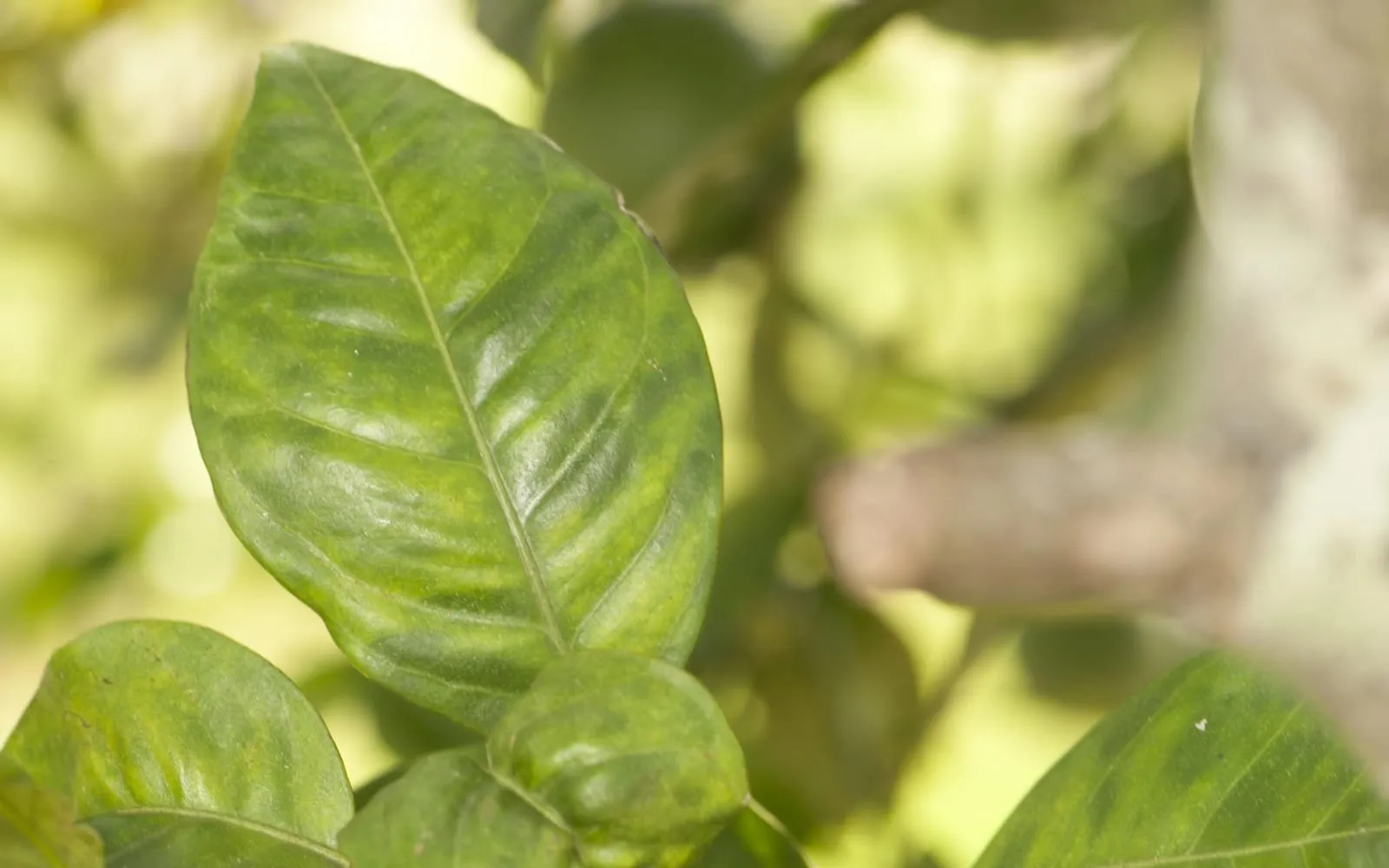
- Blotchy, asymmetric yellowing on leaves that does not mirror the leaf's midrib, unlike a nutrient deficiency which usually yellows symmetrically
- Small, misshapen, lopsided fruit that stays partly green at the base even when the rest has coloured, giving the disease its common name
- Fruit with a bitter, salty taste and small, dark, aborted seeds
- Twig dieback and thinning canopy progressing over several years
- Yellow shoots appearing randomly through the canopy rather than in one area
- Tiny mottled brown-and-white insects about 3 to 4 mm long, the psyllid vector, feeding on new shoot growth with wings held tent-like over the body
- Overall tree decline and reduced fruiting building steadily over years once infected, with no recovery
Before you treat anything
The bacterium affects the tree rather than making fruit unsafe to eat, though affected fruit is usually too bitter and misshapen to want to.
What you are looking at
Leaves with blotchy, asymmetric yellow patches that do not mirror across the midrib the way a nutrient deficiency usually does. Fruit from an infected tree is small, misshapen and lopsided, often staying partly green at the base even once the rest has coloured up, which is where the common name comes from; cut one open and the flesh tastes bitter and salty, with small, dark, underdeveloped seeds. Over several years an infected tree declines steadily: twigs die back, the canopy thins, and yellow shoots appear at random through it rather than in one identifiable area.
The insect responsible for spreading it is easy to overlook: a mottled brown-and-white psyllid only 3 to 4 mm long, found feeding on new shoot growth with its wings held tent-like over its body. It picks up the bacterium from an infected tree while feeding and carries it to the next healthy one it visits.
The world’s most destructive citrus disease
This bacterium is native to Asia and has no cure once a tree is infected, which is the fact that shapes every control strategy against it. It reached Florida in the early 2000s and devastated the state’s citrus industry within a decade, an outcome now treated as the cautionary case study everywhere else growing citrus commercially. It has since established across the southern United States, much of Central America, the Caribbean and parts of South America, and a related pathogen spread by a different vector, the African citrus psyllid, causes a similar disease across much of sub-Saharan Africa.
Europe has so far avoided the disease itself, though its insect vector was recorded for the first time in the European Union in Cyprus in 2023, and a biological control programme against the psyllid there began the following year aimed specifically at preventing the disease from following it in. Australia and New Zealand remain free of both the vector and the disease and treat keeping it that way as one of their highest-priority citrus biosecurity goals, given what happened to Florida’s industry once it arrived there.
What to do about it
Buy citrus trees only from a certified, disease-free nursery, since infected budwood and young trees are a primary route the disease travels by.
Where the vector is present, monitor new shoot growth regularly for the psyllid, since keeping the insect off healthy trees is the only real defence available once the bacterium is in a region. Support parasitic wasp release where a regional programme runs one, and reserve insecticide for a confirmed local psyllid population rather than a preventive schedule, given how much a single infected tree threatens the trees around it.
Remove and destroy a tree with a confirmed infection rather than attempting to treat it; there is no cure, and a standing infected tree is a continuing source of infection for every other citrus tree nearby.
Screen young or high-value trees with fine insect mesh in an affected region.
Outside the established range, report a tiny mottled psyllid on new growth, or fruit matching the lopsided, partly green pattern described here, to the national plant health authority rather than treating it as routine.
What it gets mistaken for
Nutrient deficiencies, particularly zinc and manganese shortage, cause similar-looking yellow mottling, but the pattern is symmetrical either side of the leaf’s midrib and the fruit is normal. This disease produces asymmetric blotching that ignores the midrib entirely and comes paired with fruit that stays lopsided and partly green no matter how the tree is fed.
Not established in Europe, Australia and New Zealand
Do not prune, spray or otherwise treat a suspected case. Doing so risks spreading an organism the country has kept out, and it disturbs the evidence needed to identify it. Photograph what you can see, leave the plant alone, and contact your national or state plant health authority. The control advice further down this page is written for regions where this problem is already established.
The bacterium is native to Asia and spread through Florida from the early 2000s, devastating the state's citrus industry within a decade and since establishing across the southern United States, much of Central America, the Caribbean and parts of South America. A related pathogen carried by a different vector, the African citrus psyllid, causes a similar disease across much of sub-Saharan Africa. Its insect vector, the Asian citrus psyllid, was first recorded in the European Union in Cyprus in 2023, though the disease itself has not been found there and a biological control programme against the psyllid began the following year specifically to stop it gaining a foothold. Australia and New Zealand remain free of both the psyllid and the disease and treat either as one of their highest-priority citrus biosecurity threats, since an industry the size of Australia's citrus sector would face losses on the Florida scale if huanglongbing established there.
What to do, in order
The steps below apply where this problem is already established.
Nothing available to a gardener will cure this once a plant has it. The steps below are about limiting the spread and deciding what to plant in its place.
Start here
Prevention, and the changes that stop the problem returning. Most of these pages should end at this tier.
- Buy citrus only from a certified, disease-free nursery
- Infected budwood and young trees are one of the main ways this disease spreads into new areas. A tree bought from an uncertified or informal source, or grown from cuttings taken somewhere the disease is present, carries a real risk of introducing it to a garden or region that is currently free of it.
- Remove and destroy a confirmed infected tree
- There is no cure once a tree is infected, and an infected tree left standing becomes a continuing source of bacteria for the psyllid to spread to every other citrus tree nearby. Removal, not treatment, is the standard response wherever the disease is confirmed.
- Report a suspected psyllid or symptom outside the established range
- Anywhere the disease is not yet established, including Europe, Australia and New Zealand, a tiny mottled psyllid on new citrus growth or fruit matching the lopsided, partly green pattern described here should be reported to the national plant health authority immediately rather than treated at home. Early detection is the only thing that has ever stopped this disease establishing in a new region.
Then reach for a barrier
Netting, hand removal and water. Nothing here harms anything except the target.
- Monitor new shoot growth for the psyllid and respond to a confirmed find without delay
- Since there is no cure for an infected tree, every practical control effort in an affected region goes into keeping the insect vector off healthy trees. Regular monitoring, backed by parasitic wasp release where a regional programme runs one, is the sustainable core of that effort; insecticide is reserved for a confirmed local population rather than applied preventively, since the bacterium cannot spread from tree to tree without the psyllid to carry it.
- Screen young trees and high-value plantings with fine mesh
- Insect-proof mesh over young or particularly valuable trees, in a region where the vector is present, physically excludes the psyllid during the years a tree is most vulnerable to establishing infection.
Then bring in the predators
Encourage what already lives in the garden, and buy predators in where the problem is under glass and nothing will arrive on its own.
- Support parasitic wasps targeting the psyllid where established
- These wasps parasitise psyllid nymphs and can meaningfully reduce vector populations over time as part of a coordinated regional programme, though they do not eliminate the risk from a single infected tree entirely on their own.Tamarixia radiata and related parasitoids are used in classical biological control programmes across parts of the Americas and Asia, and a programme against the psyllid began in Cyprus in 2024. Not something a home gardener buys or releases independently.
Biological controls are live organisms and their sale and release are regulated country by country. An agent sold freely in one place may be unapproved in another, so buy from a licensed supplier where you live and never import or move one yourself.
Plants affected
Guides that name it among the problems to watch for. The list is the plants it is characteristic of rather than everything it will feed on.