
Outdoor plant
Blunt-Leaved Bog Moss
Sphagnum palustre
Also known as Blunt-leaved sphagnum, Prairie sphagnum
How to grow blunt-leaved bog moss, Sphagnum palustre, in a bog garden or for carnivorous plant compost. Water quality, light, and why tap water kills it.
At a glance
- Difficulty
- Moderate
- Water
- Kept permanently saturated with soft, acidic water
- Light
- Bright, indirect light to partial shade
- Hardiness
- USDA 3-8, RHS H7, hardy to -30 C
- Type
- Perennial moss
- Height
- 5-20 cm
- Native to
- Northern Hemisphere temperate and boreal regions
Very hardy, tolerating hard frost across its boreal and northern temperate range without protection. Water chemistry limits it far more than temperature: it needs consistently acidic, mineral-poor water and struggles wherever tap water, with its dissolved calcium and chlorine, is used instead of rainwater.
Hardiness zones describe winter cold alone. Summer heat, humidity, rainfall and the length of the growing season decide as much, so treat the range as the outer limit rather than as a recommendation.
Not known to be toxic
Sphagnum moss has no toxicity listing from the RHS or the ASPCA and poses no direct hazard to people or pets. The one documented health concern with handling dried sphagnum in bulk is a rare fungal skin infection called sporotrichosis, linked in a small number of cases to the mould that can grow on dried sphagnum bales rather than to the living moss itself; wearing gloves when handling large quantities of dried material is a sensible precaution.
Source: RHS
About
Blunt-leaved bog moss is one of the most useful of the sphagnum mosses to a gardener, grown deliberately in bog gardens, carnivorous plant collections and orchid compost mixes for its ability to hold many times its own weight in water while staying open and airy enough not to suffocate the roots growing through it. Living sphagnum forms soft, dense hummocks in the acidic wetlands where it occurs naturally, and the same plant, dried and compressed, is the sphagnum moss sold commercially for potting and horticultural use.
Sphagnum mosses more broadly are also the primary builders of peat bogs, since their remains accumulate faster than they decompose in the acidic, waterlogged, oxygen-poor conditions they create, locking up carbon over thousands of years in a process now recognised as ecologically significant well beyond horticulture.
Appearance and character
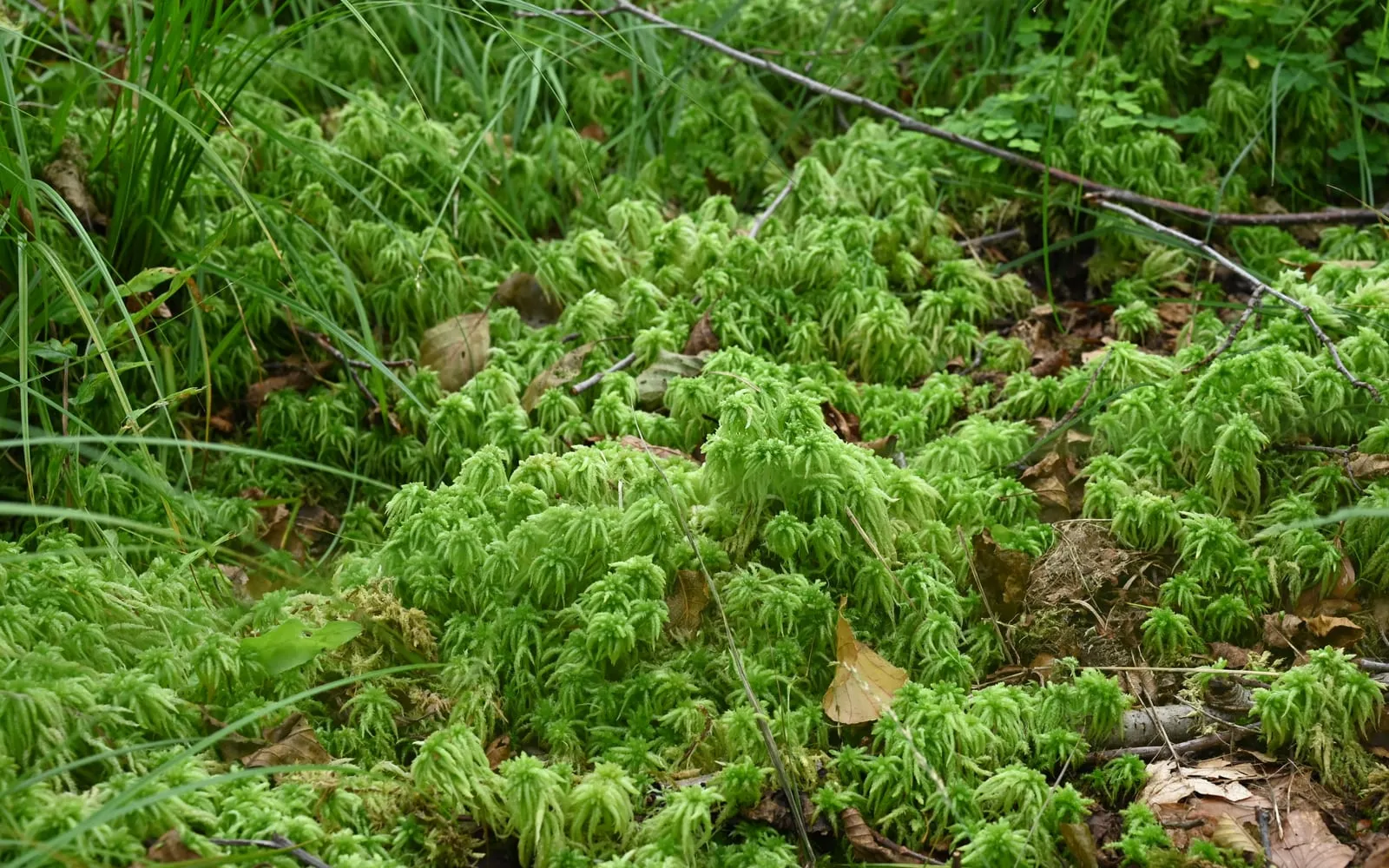
Soft, densely packed stems bear tightly spaced branches in clusters, giving the moss a spongy, almost velvety texture and a pale green to yellowish colour that can flush pink or red in strong light. Individual leaves are tiny and contain large, empty, water-storing cells alongside narrower living cells, which is the microscopic structure behind the moss’s famous capacity to hold enormous quantities of water relative to its size.
A healthy hummock grows in a loose dome shape, with the oldest growth at the base gradually dying back and compacting while the growing tips at the surface continue extending upward, a process that, given enough undisturbed time, is what slowly builds a peat bog from the ground up.
Where it is from
Acidic bogs, fens and wet heathland across the temperate and boreal Northern Hemisphere, always in permanently saturated, mineral-poor, strongly acidic water, often forming extensive hummocks alongside other sphagnum species in undisturbed peatland.
That combination of constant saturation and very low mineral content is central to how it survives: sphagnum actively acidifies the water around it and outcompetes most other plants in a habitat few things can tolerate, which is why peat bogs support such a distinctive and limited range of specially adapted plants.
How it grows
A perennial moss that grows continuously from its branch tips while older growth below gradually dies back, compacts and, in an undisturbed wild bog, eventually becomes peat over centuries. In cultivation this cycle is much faster and less complete, with a healthy hummock extending steadily outward and upward as long as conditions remain suitable.
Because it has no true roots and takes up water and nutrients across its whole surface, its growth rate is governed almost entirely by water chemistry and quality rather than by anything resembling a normal feeding regime.
Through the seasons
Spring growth resumes as temperatures rise, with fresh green growth visible at the tips of the hummock.
Summer is the main growing period, provided the moss is kept permanently wet with suitable water.
Autumn growth slows as temperatures drop, though the moss remains fully hydrated rather than dying back the way many other plants do.
Winter the moss persists through frost with little visible change, protected somewhat by the insulating effect of its own water content.
Care difficulty
Moderate. The moss itself is undemanding once the one critical condition, water quality, is met, but that single condition is strict and unforgiving: ordinary tap water, with its dissolved minerals and chlorine, will weaken and eventually kill a planting that would otherwise thrive indefinitely on rainwater alone.
Watering
Only rainwater or distilled water should be used; hard tap water introduces calcium and other minerals this acid-loving moss cannot tolerate, and even occasional use can cause a visible decline over a period of weeks. Keep the moss permanently saturated rather than allowing it to dry between waterings, standing a bog garden tray or pot in a shallow reservoir of rainwater where practical.
Warning signs, diseases and pests
There are few pests specific to sphagnum moss. The main competitive threat is algae, which can establish in the same nutrient-rich, wet conditions and smother young moss growth if water quality is poor or light levels are too low relative to nutrient availability.
Browning, drying patches within an otherwise healthy hummock most often indicate the moss has dried out at some point, or that tap water has been used inadvertently, introducing minerals that damage the delicate water-storing cells. Switching to rainwater and keeping the affected area consistently wet usually allows fresh growth to resume from unaffected parts of the hummock.
Growing environment
Bright, indirect light or partial shade suits it best; strong, direct sun can dry the surface too quickly even when the moss is otherwise kept wet, while very deep shade slows growth and favours algae instead. Consistently acidic, saturated, low-nutrient conditions are the core requirement, closely mirroring the wild bog habitat this moss builds for itself.
Feeding
None is appropriate. Sphagnum is adapted to extremely nutrient-poor conditions and is, if anything, harmed by the addition of fertiliser, which tends to favour algae and other competing growth over the moss itself.
Troubleshooting
The moss has turned brown and dry in patches. Check whether it has been allowed to dry out, or whether tap water has been used by mistake. Switch to rainwater or distilled water and keep the affected area consistently saturated going forward.
Algae is smothering the moss surface. Usually a sign of too much nutrient input or too little light relative to the water’s fertility. Remove visible algae by hand and check that only low-nutrient rainwater is being used.
Growth has stalled despite apparently correct watering. Confirm the water source is free of minerals; even a small proportion of tap water mixed in over time can be enough to check growth in a sensitive planting.
You want to start a new patch from a small amount of moss. Spread it thinly across the surface of consistently wet, acidic growing medium rather than burying it, since sphagnum grows from its exposed tips and needs light reaching the surface to establish.
A carnivorous plant potted into fresh sphagnum is struggling rather than thriving. Check that the moss itself has not been allowed to dry out or compact too densely around the roots, since either can cause more harm than the growing medium a less specialised compost would provide. Living sphagnum used fresh, rather than the dried and compressed product sold for general potting, generally suits moisture-loving carnivorous plants particularly well once it settles in.