
Disease
Fireblight
Erwinia amylovora
Also called Fire blight, Blossom blight
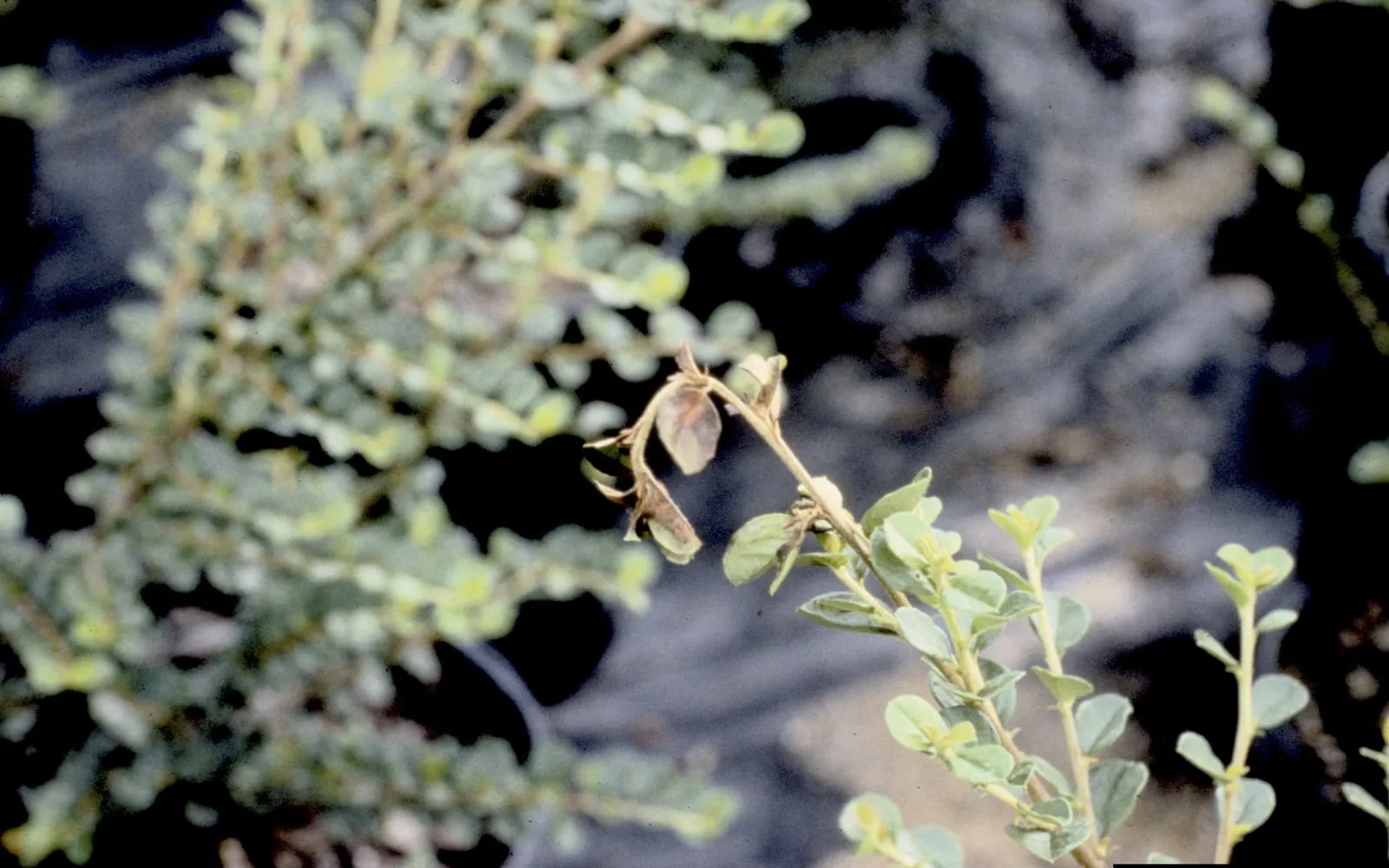
Fireblight browns blossom overnight, hooks shoot tips and leaves blackened leaves attached to the stem. Cut well below infection in dry weather and check whether the host is in the rose family.
At a glance
- Type
- Disease
- Cause
- Bacterium
- Severity
- Can kill the plant
- Affects
- Herbs and edibles, Garden plants
- Active
- April to September
- Established in
- Europe, North America, Asia, New Zealand and Africa
What you are seeing
- Blossom wilting and turning brown or black within a day or two of opening
- Shoot tips wilting and curling over into a hook, like a shepherd's crook
- Leaves going brown to black and staying firmly attached, as though scorched
- Sunken cankers on branches with a sharp margin between live and dead bark
- Amber or milky droplets of ooze on shoots and cankers in warm humid weather
- Red-brown streaking in the wood when the bark is pared back at the edge of the damage
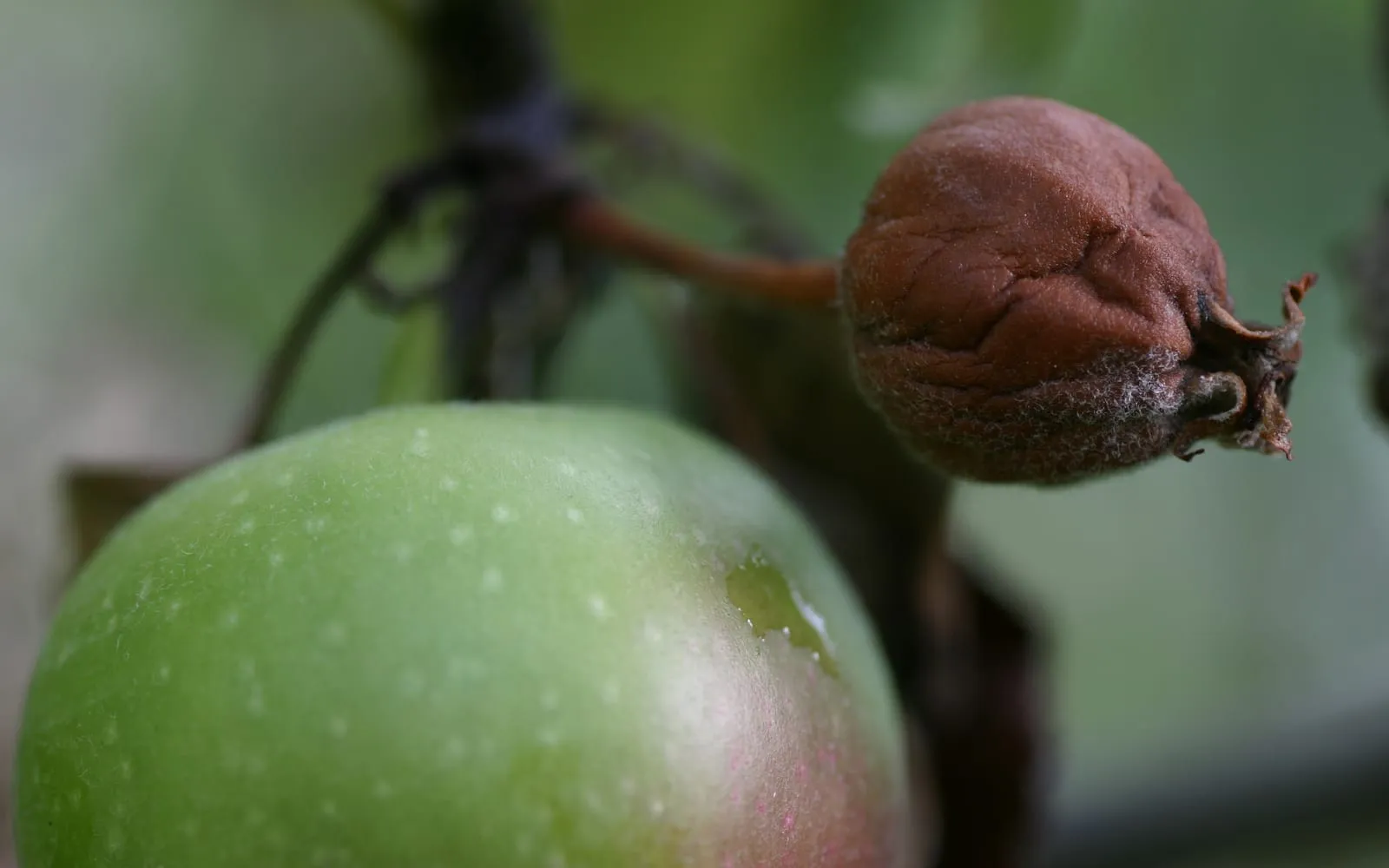
- Fruitlets shrivelling to hard brown mummies on a dead spur
Before you treat anything
Harmless to people and animals. Fruit from an unaffected branch is safe to eat. Take the usual care with a saw and a ladder when cutting out high cankers, and consider a tree surgeon for anything above head height.
What you are looking at
Blossom that opened two days ago is brown and hanging. The shoot behind it darkens, wilts, and the growing tip bends over into a tight hook that gardeners have called a shepherd’s crook for two centuries.
The leaves go brown or black and stay on. That is the detail worth learning, because almost everything else that kills a shoot drops the foliage. A branch hung with black leaves in July looks as though someone has run a blowtorch along it, and the disease is named for exactly that.
Pare the bark back with a knife at the edge of the dead area. Healthy tissue is green and moist. Infected tissue is streaked red-brown, and it extends well beyond anything visible from outside.
In warm humid weather, look for droplets of amber or milky ooze on the shoots and along the edges of cankers. That is bacteria in suspension, and it is how the disease travels.
Which plants can get it
Fireblight is restricted to one subfamily of the rose family, and knowing the list saves most of the worry.
Apple, pear, quince and medlar can all get it, and so can hawthorn, cotoneaster, pyracantha, rowan and the rest of the sorbus group, amelanchier, photinia and chaenomeles.
Plum, cherry, peach, apricot and almond cannot, and neither can anything outside the family. A dying cherry is not this.
Pears suffer worse than apples. Among ornamentals, cotoneaster and pyracantha are the two that most often bring people here, and a hawthorn hedge is the commonest reservoir in the wider landscape.
How it gets in
The bacterium enters through open blossom and through wounds. Bees and other pollinators move it from flower to flower, rain splashes it, wind drives it into damaged tissue, and a pair of secateurs carries it from one branch to the next.
Warm wet weather during blossom is the risk window. So is a second flush of flowers in midsummer, which opens in conditions that favour the bacterium far more than April, and which is worth rubbing off wherever it appears.
Once inside, it spreads through the shoot into the branch and towards the trunk. Cankers form where it stops for the winter, and they start oozing again the following spring.
What to do about it
Nothing sold to gardeners treats this, so cutting it out ahead of the spread is the whole of it.
Cut at least 30 cm below the lowest visible damage on a small branch and 60 cm on a main limb. Look at the cut face. Streaked wood means going further back.
Disinfect the saw or the secateurs between every single cut.
Work in dry settled weather, in late summer or winter rather than in a wet spring.
Burn or bin what comes off and keep it away from susceptible plants.
Rub off late summer blossom.
Feed at the stated rate and avoid pushing soft growth.
Take out a tree that is cankered into the trunk or the graft union, because there is nothing left to cut back to and it is a source for every apple and pear a bee can reach.
What it gets mistaken for
Blossom wilt browns the flowers and the short spur behind them, and it grows rings of buff pustules on fruit later in the year. It does not blacken a shoot for 30 cm or hook the tip over.
Bacterial canker sinks bark and weeps amber gum on plums and cherries, which fireblight cannot infect.
Frost at blossom time browns open flowers and the tips of soft growth, and it stops there. Fireblight keeps moving down the shoot for weeks.
Apple scab marks leaves and fruit with dark blotches and corky patches and never kills a branch.
Potato and tomato blight shares nothing with this beyond the word. It is an oomycete on entirely different plants.
Not established in Australia
Do not prune, spray or otherwise treat a suspected case. Doing so risks spreading an organism the country has kept out, and it disturbs the evidence needed to identify it. Photograph what you can see, leave the plant alone, and contact your national or state plant health authority. The control advice further down this page is written for regions where this problem is already established.
Fire blight originated in eastern North America and has spread through Europe, western and eastern Asia, North Africa and New Zealand, which has had it since 1919. Australia is the significant exception. It has kept Erwinia amylovora out, treats it as a top-priority exotic plant pest, and the freedom is valuable enough that it has been the subject of a long-running trade dispute over apple imports. A suspected finding in Australia goes to the state agriculture department or the national exotic plant pest hotline. Japan and parts of South America remain free of it too.
What to do, in order
The steps below apply where this problem is already established.
Start here
Prevention, and the changes that stop the problem returning. Most of these pages should end at this tier.
- Learn which plants it cannot touch
- Fireblight is confined to one part of the rose family. Apple, pear, quince, medlar, hawthorn, cotoneaster, pyracantha, rowan, amelanchier and photinia are all at risk. Plums, cherries, peaches and almonds are not, and neither is anything outside the family. That alone rules out most of what gets brought to it.
- Cut out late blossom
- A second flush of flowers in midsummer, on a pear or a pyracantha, opens in exactly the warm humid weather the bacterium multiplies in and is a common way it gets into a tree. Rub those flowers off when you see them.
- Go easy on nitrogen
- Soft sappy growth from a heavy feed or hard pruning is the tissue this infects most readily. Feed at the stated rate and avoid cutting a tree back hard where the disease is known in the area.
- Watch the hedge as well as the tree
- Hawthorn hedges carry it across whole districts and are the reservoir most orchard cases come from. Cut infected sections out of a hedge on the same terms as a fruit tree.
- Plant with the risk in mind
- Pears are hit harder than apples, and among ornamentals cotoneaster and pyracantha are the ones that suffer most. Where fireblight is established locally, replace a lost pyracantha with something outside the family rather than with another one.
Then reach for a barrier
Netting, hand removal and water. Nothing here harms anything except the target.
- Cut at least 30 cm below the lowest visible damage
- The bacteria run well ahead of the browning, so a cut made at the edge of what you can see leaves the infection in the tree. Take 30 cm into clean wood on a small branch and 60 cm on a main limb, and check the cut face. Any red-brown streaking in the wood means going further back still.
- Disinfect the saw between every cut
- The blade carries the bacteria to the next cut and to the next tree. Wipe and disinfect each time, and do not lend the tool without cleaning it.
- Prune in dry settled weather
- Rain and humidity are what move this around. Cutting out a canker on a dry day in late summer or in winter, when the bacteria are least active, is far safer than doing it in a wet spring.
- Burn or bin what comes out
- Do not compost it and do not stack it near a susceptible plant. Ooze on an infected prunings pile is a source of infection for the rest of the season.
- Take out a tree that is infected in the trunk
- Where the cankers have reached the main stem or the graft union, there is nothing left to cut back to. Removing the tree protects everything else within flying distance of a bee.
In pictures
Plants affected
Guides that name it among the problems to watch for. The list is the plants it is characteristic of rather than everything it will feed on.