
Houseplant
Areca palm
Dypsis lutescens
Also known as Golden cane palm, Butterfly palm, Yellow palm
How to care for Dypsis lutescens. Watering a palm sold as a clump of seedlings, why the tips go brown, treating spider mite, and never cutting the growing point.
At a glance
- Difficulty
- Moderate
- Water
- When the top 3-5 cm of compost has dried
- Light
- Bright indirect light, with a little direct morning sun
- Temperature
- 18-24 deg C. Never below 12 deg C
- Humidity
- High. Dry air is what browns the tips
- Hardiness
- USDA 10-11, RHS H1b, hardy to 10 C
- Type
- Evergreen clumping palm, moderately long-lived indoors
- Height
- 1.5-2.5 m indoors
- Native to
- Madagascar, where it is endangered in the wild
- Best month
- January in the Northern Hemisphere, July in the Southern Hemisphere
Endangered in the wild and known from a handful of Madagascan populations, while being one of the most widely sold palms on earth. Outdoors year round in USDA 10 and 11. It burns in direct sun despite the reputation palms have for wanting it.
Hardiness zones describe winter cold alone. Summer heat, humidity, rainfall and the length of the growing season decide as much, so treat the range as the outer limit rather than as a recommendation.
Every month named in this guide is for the temperate Northern Hemisphere. If you garden in the Southern Hemisphere, shift each one by six months, so January becomes July. Closer to the equator the wet and dry seasons matter more than the calendar, and the shift stops being a useful guide.
Not known to be toxic
Non-toxic. The ASPCA lists Dypsis lutescens, under its older name Chrysalidocarpus lutescens, among plants that are not harmful to cats, dogs or horses, and the RHS does not include it in its list of potentially harmful garden plants. This makes the areca one of the safest large houseplants available and a sound choice for a home with animals or small children. A cat that chews a frond may be sick from the fibre in the same way it would be after eating grass, and there is no poisoning involved. The confusion worth clearing up concerns the word palm, which is attached to several plants that are not palms and are dangerous. Sago palm, Cycas revoluta, is a cycad and causes fatal liver failure in dogs. Cardboard palm, Zamia furfuracea, is another cycad and equally serious. Neither looks much like an areca, which has slender yellow-green canes and long arching feathered fronds, and both are sold under names containing the word palm. Check the botanical name on the label rather than the common name.
Sources: ASPCA (Areca Palm, Chrysalidocarpus lutescens), RHS potentially harmful garden plants
About
The areca is the palm most people own and the palm most people kill, and the two facts are connected. It is sold cheaply, in a pot crammed with a dozen or more seedlings to make it look full, and that arrangement is far more vulnerable to overwatering than a single plant would be.
It is also a magnet for red spider mite. Dry centrally heated air suits the mite and stresses the palm at the same time, and by the time the webbing is obvious the plant is usually beyond easy rescue.
Get the humidity up and check the fronds weekly, and an areca is a graceful, fast-growing plant that fills a corner in a couple of years. It is also entirely safe around pets, which is not true of everything sold as a palm.
Appearance and character
An evergreen clumping palm, 1.5 to 2.5 m indoors, growing considerably taller outdoors in the tropics.
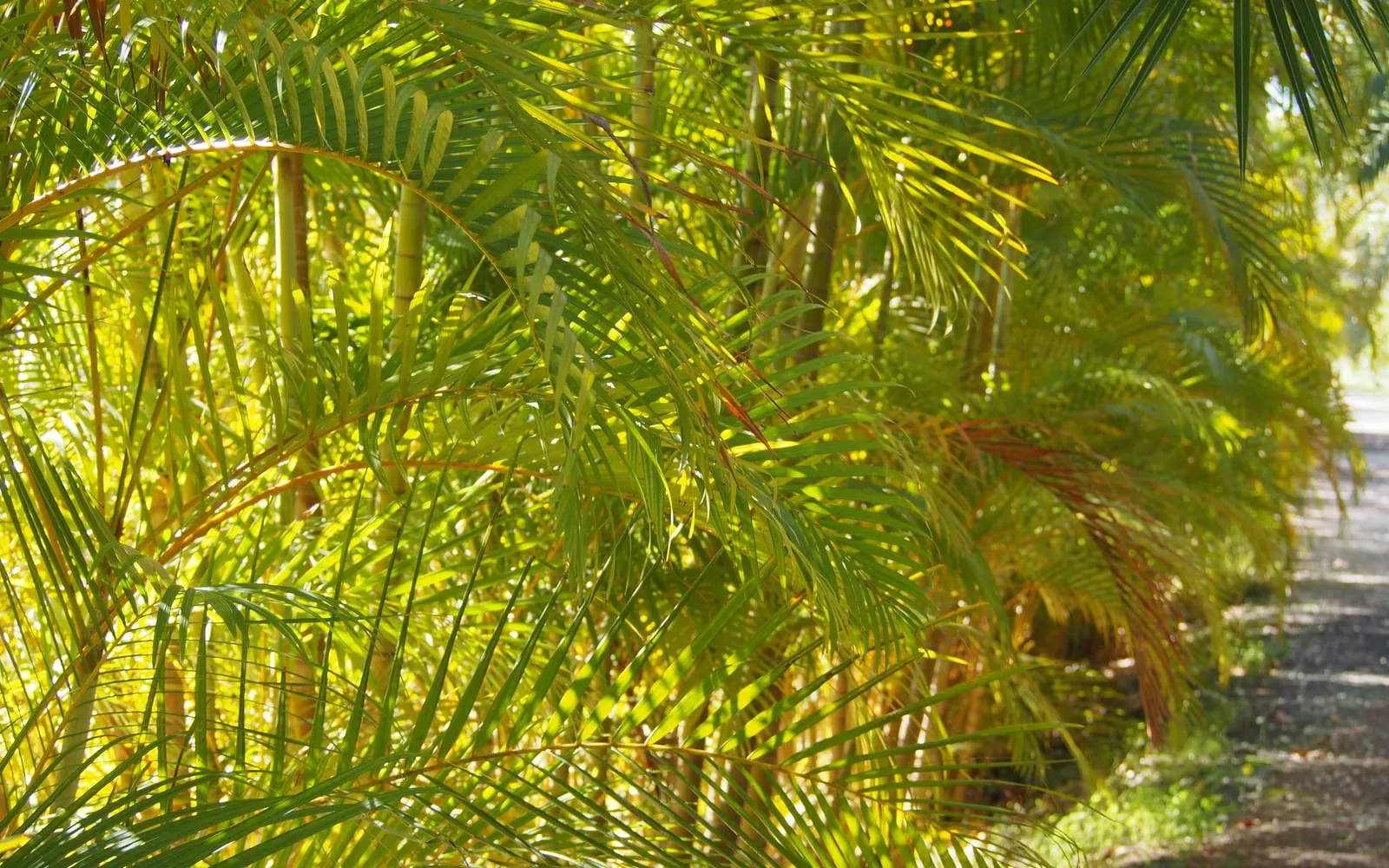
Canes are the distinguishing feature. Slender, ringed and a clear yellow-green, often golden in good light, and produced in clumps from the base by suckering.
Fronds are pinnate, meaning feathered, 1 to 2 m long on a mature plant, arching gracefully outward with 40 to 60 pairs of narrow leaflets held in a shallow V.
The leaflets and stalks flush yellow in bright light, which is where the names golden cane and yellow palm come from.
Each cane has one growing point at its tip. Cutting it kills that cane permanently, since a palm cannot branch or reshoot.
The plant suckers from the base, which means an areca thickens over time, unlike a kentia.
Flowers and fruit are rare indoors. Outdoors it produces sprays of small yellow flowers followed by yellow fruit that ripens near-black.
Plants are usually sold as many seedlings in one pot rather than as a single clump, and separating them is possible and rarely worth the disturbance.
Where it is from
Madagascar, where it grows in a small area of the eastern coastal forest and is classed as endangered in the wild.
The contrast is striking. Dypsis lutescens is one of the most widely propagated houseplants on earth and one of the more threatened palms in its natural range, with wild populations reduced to a few hundred mature individuals.
Its natural habitat is warm, humid coastal forest with high rainfall, which sets the requirement for humidity and warmth.
It grows in bright open positions rather than deep shade, which is why an areca wants more light than a kentia and will take some direct morning sun.
Its clumping, suckering habit is a forest-margin strategy and is what lets an indoor plant thicken rather than only grow taller.
The species has been shuffled between genera and appears in older books and on some labels as Chrysalidocarpus lutescens.
How it grows
Position it in bright indirect light with an hour of direct morning sun. An east-facing window suits it well, and deep shade produces thin drawn growth.
Keep it warm, 18 to 24 deg C, and never below 12 deg C.
Raise the humidity. It helps the plant look better and also suppresses plant and against spider mite. A humidifier, a pebble tray, grouping plants or a weekly shower all help.
Water when the top 3 to 5 cm of compost has dried, checking with a finger pushed well in rather than by looking at the surface.
Water thoroughly until it drains, then empty the saucer. A pot packed with seedlings holds a great deal of compost and stays wet at the bottom for a long time.
Reduce watering considerably from November.
Feed monthly from April to September at half strength. Palms burn easily at full strength.
Shower the fronds every few weeks in the bath or under a shower head. It removes dust, raises humidity briefly, and knocks off spider mite before it establishes.
Repot every two or three years in spring, moving up one pot size. Arecas are happy slightly snug.
Never cut the top off a cane. Trim only fully browned fronds, cutting the stalk close to the cane, and cut brown tips following the natural taper of the leaflet.
Remove any cane that has died entirely at the base. The clump carries on.
Through the seasons
Winter is the difficult season. Heating dries the air, light is scarce and spider mite thrives. Raise the humidity, water sparingly, stop feeding, and keep the plant away from radiators.
Spring is the restart. Repot if needed, resume feeding, and increase watering as growth begins.
Summer is the growing season and the fastest period. Water when the top few centimetres dry, feed monthly, shower the fronds, and shade from harsh midday sun.
Autumn is the wind-down. Reduce watering and feeding from October, and move the plant away from cold glass.
Care difficulty
Moderate. Nothing about an areca is complicated and two things go wrong reliably.
Red spider mite is the main killer indoors, and it is very hard to clear once established on a plant with this many fine leaflets.
Overwatering is the other, made worse by the pot full of seedlings that most plants are sold as.
Brown tips are close to universal and are cosmetic rather than dangerous.
The plant grows quickly when suited, suckers to thicken the clump, and is entirely pet-safe.
Watering
Water when the top 3 to 5 cm of compost has dried, which in summer usually means weekly.
Push a finger well into the compost rather than judging by the surface, since a crowded pot dries unevenly.
Water thoroughly until it runs from the drainage holes, then drain fully. Never leave the pot standing in water.
Reduce watering considerably in winter, perhaps to every two or three weeks.
Use rainwater or filtered water where the tap water is hard. Palms are sensitive to fluoride and salts and show it as brown tips.
Drooping fronds with dry compost mean thirst. Yellowing fronds with wet compost mean the opposite and are more serious.
Warning signs, diseases and pests
Red spider mite is what kills most indoor arecas. Look for fine pale stippling on the leaflets, a dull greyish cast to the whole plant, and fine webbing between the leaflets and along the stalks. It multiplies extremely fast in warm dry air. Shower the plant thoroughly, raise the humidity permanently, isolate it, and treat repeatedly over several weeks. Check weekly through winter, because catching it early is the only thing that reliably works.
Brown tips on the fronds are almost universal indoors. The causes are dry air, hard tap water, accumulated fertiliser salts and letting the plant dry out. Raise the humidity, switch to rainwater, flush the compost occasionally, and trim the brown part following the shape of the leaflet.
Whole fronds yellowing usually means overwatering. Check the drainage and let the compost dry further between waterings.
Yellowing of the oldest lower fronds one at a time is normal ageing. Cut them off at the base.
Scorched pale patches mean direct summer sun on a plant not used to it.
Scale insects appear as brown discs on the stalks and leaflet undersides with sticky honeydew below.
A cane that has had its top cut off will not regrow. Palms have one growing point per cane.
Red palm weevil is an outdoor risk in warm climates, hollowing out a cane from within until it collapses. It is native to Asia and has since spread across North Africa and the Mediterranean, and has never established in most of North America, Australia or New Zealand.
Growing environment
Bright indirect light with an hour or two of direct morning sun. It wants more light than a kentia palm.
Never harsh direct midday sun in summer, which scorches the fronds.
Warmth of 18 to 24 deg C, and never below 12 deg C.
High humidity, which is the requirement that decides how the plant looks. A humidifier is the reliable answer.
Free-draining loam-based compost with added grit or perlite, in a pot with drainage holes.
Away from radiators, draughts, external doors and cold glass.
Give the fronds room to arch without touching walls or furniture, since damaged leaflets never repair.
It is a good choice for a household with pets, being non-toxic and large enough to be worth the floor space.
Feeding
Feed monthly from April to September with a balanced liquid houseplant fertiliser at half the stated strength.
Stop feeding from October to March.
Repot every two or three years in spring, or top-dress a large plant by replacing the top few centimetres of compost.
Flush the compost through with plain water occasionally to clear fertiliser salts, which contribute to brown tips.
Avoid feeding a plant that is stressed, dried out or infested. Deal with the problem first.
Troubleshooting
The tips of the leaves have gone brown. Dry air, hard tap water or fertiliser salts. Raise the humidity, use rainwater, flush the compost, and trim the brown part following the taper of the leaflet.
Fine grey speckling and webbing between the leaflets. Red spider mite, which is the commonest reason an areca dies indoors. Shower the plant, raise the humidity, isolate it, and treat repeatedly.
Whole fronds are turning yellow. Usually overwatering. A pot packed with seedlings holds a lot of wet compost. Let the top few centimetres dry between waterings.
Why are there so many stems in one pot? They are separate seedlings planted together to make the plant look full. Unlike a kentia, an areca also suckers, so the clump does thicken over time.
Can I cut it back to keep it smaller? No. Each cane has one growing point and cutting it kills that cane. Remove whole dead canes at the base instead.
Should I separate the seedlings? You can, and the disturbance sets them back for a season. Most people leave them.
How do I stop spider mite coming back? Raise the humidity permanently and shower the fronds every few weeks. Dry warm air is what the mite needs.
Is it safe for cats and dogs? Yes. The areca is non-toxic. Do not confuse it with sago palm, which is a cycad and causes fatal liver failure in dogs.
Areca palm problem guides
Not sure what is wrong? See the common houseplant pests guide.