
Outdoor plant
Green Chiretta
Andrographis paniculata
Also known as King of bitters, Kalmegh, Chuan xin lian, Andrographis
How to grow Andrographis paniculata, the king of bitters. A fast summer annual for a greenhouse, the most bitter leaf in this collection, and how to save seed.
At a glance
- Difficulty
- Moderate
- Water
- Regularly through the growing season
- Light
- Bright light, with shade from the fiercest midday sun
- Temperature
- Tender. Above 15 deg C, and it grows best at 25 to 30
- Humidity
- Moderate to high
- Hardiness
- USDA 10-11, RHS H1b, hardy to 8 C
- Type
- Tender annual
- Height
- 30-100 cm
- Native to
- southern India, Sri Lanka, south-east Asia
A tropical annual that wants 25 to 30 deg C and stops below 15, so outside the tropics it is a glasshouse crop sown in early spring. Andrographolide content peaks just before flowering. Rich soil gives a leafy plant with less of it, which is the pattern across most medicinal herbs.
Hardiness zones describe winter cold alone. Summer heat, humidity, rainfall and the length of the growing season decide as much, so treat the range as the outer limit rather than as a recommendation.
Harmful if eaten
- Do not eat
- None identified. The leaf is intensely bitter rather than harmful
- Harm from
- Eating it
- Affects
- People
The leaf is used across southern and eastern Asia and is sold in the West as a food supplement. The plant does not appear on the RHS list of potentially harmful garden plants, and the ASPCA does not list it among plants toxic to dogs, cats or horses. The plant's own defence is its bitterness, which is extreme enough that accidental over-consumption is unlikely: a small piece of leaf is unpleasant for a long time afterwards. Two documented cautions attach to preparations rather than to the growing plant. Allergic reactions including rash and, rarely, anaphylaxis have been reported with andrographis products, and the herb is traditionally avoided in pregnancy on the basis of animal studies. Anyone taking it alongside prescribed medication should mention it to their GP, which the NHS advises for herbal products generally.
Sources: NHS on herbal medicines, RHS potentially harmful garden plants, ASPCA toxic and non-toxic plants, LiverTox, Chinese and other Asian herbal medicines
About
King of bitters is not an exaggeration. Andrographis paniculata contains andrographolide at a concentration that makes a fragment of leaf the most bitter thing most people have put in their mouth, and the bitterness sits on the tongue for several minutes afterwards. Nothing else in this collection comes close.
The plant is a fast annual from southern India and south-east Asia, and it is one of the most used herbs across that region under the names kalmegh in India and chuan xin lian in China. It appears in Thai and Indonesian practice as well, and it is among the herbs the Indian government has promoted for cultivation.
Outside the tropics it is a greenhouse annual with a short season. Sow in February or March with heat, grow it on under glass, cut it as it comes into flower in late summer, and save seed for the following year. It will grow outdoors in a warm summer and will not thrive.
Appearance and character
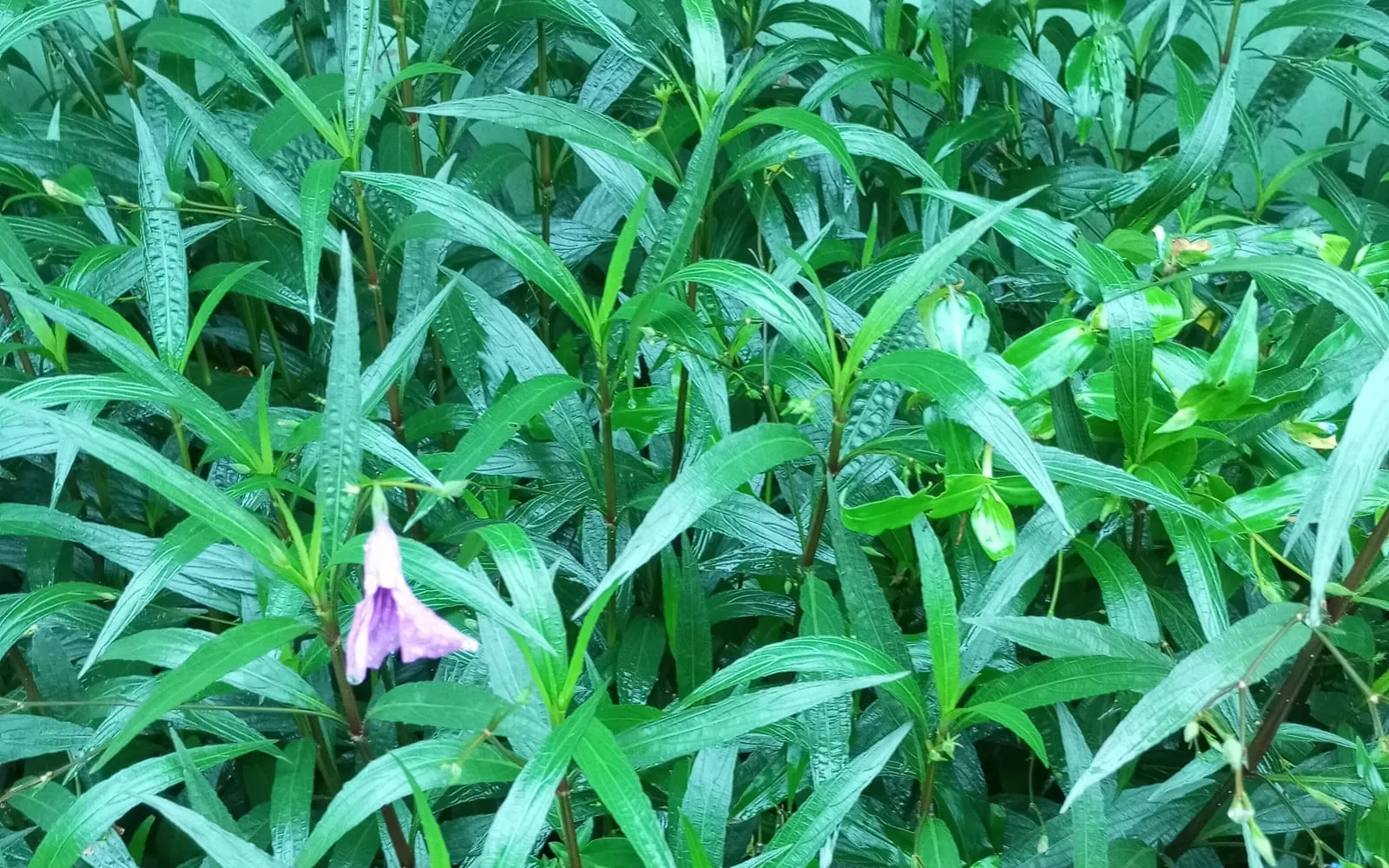
The plant is upright and much branched, with stems that are square in cross section and often slightly winged at the angles. It reaches 30 cm in a pot and up to a metre in a greenhouse border.
Leaves are opposite, lance-shaped, 4 to 8 cm long, dark green, smooth-edged and pointed at both ends, on very short stalks. They are thin, soft and unremarkable to look at, which is a poor guide to what happens when you taste one.
Flowers appear from midsummer in loose spreading sprays at the stem tips and in the leaf axils. Each is about 1 cm long, white, with the lower lip marked in purple or rose blotches. The fruit is a slender capsule 1 to 2 cm long that splits explosively when ripe and dry, throwing the small seeds a surprising distance.
Where it is from
The species is native to southern India and Sri Lanka and grows through much of south-east Asia, in open ground, scrub, roadsides and cultivated field margins. It behaves as a weed of disturbed places, which explains how quickly it grows in the right conditions.
It is cultivated in India, China, Thailand and Indonesia, mostly as a rainy season crop sown with the monsoon and cut fifteen to twenty weeks later as the plants come into flower. Whole plants are dried and the leaf is stripped.
Its natural climate is warm and humid year round, and the plant has no cold tolerance. It sets seed within one season, which is why it works as a summer annual in a British greenhouse.
How it grows
The whole life cycle takes four to five months in warmth. Seed germinates in one to three weeks at 25 deg C, the plant branches through the first two months, and flowering starts about ninety days from sowing.
Harvest for the herb trade is timed to flowering, when the andrographolide content in the leaf is at its highest. After that the plant puts its energy into capsules and the leaf quality falls.
Seed shed is explosive. Ripe capsules split with force and scatter seed across a greenhouse bench, so anyone wanting to save seed collects the capsules as they turn brown rather than waiting for them to be ready.
Through the seasons
Sow in February or March in a heated propagator at 25 deg C, in trays, and cover the seed lightly. Prick out into small pots when large enough to handle and keep them warm, since a cold check at this stage stalls the plants for weeks.
Pot on through spring and grow on under glass. Water regularly, feed fortnightly from June, and pinch the tips once to encourage branching if you want a bushier plant.
Flowering starts in July or August. Cut whole plants at the base as flowering begins if you want the leaf, and leave one or two plants to ripen capsules for seed. Collect the capsules as they brown and dry them in a paper bag so the seed is caught when they split.
Care difficulty
Straightforward given heat, and impossible without it. The plant needs 25 deg C to germinate and warmth all the way through, and a cold March in an unheated greenhouse produces nothing.
The commonest failure is sowing too early or too cold. Seedlings that sit in cold compost damp off or stall, and a stalled plant rarely catches up in a short season.
Beyond warmth it is undemanding. Ordinary compost, regular water, occasional feeding and no pruning beyond one pinch, and the plant does the rest.
Watering
Keep the compost evenly moist through the growing season. This is a monsoon plant and it grows fastest with steady water rather than a wet and dry cycle.
Avoid waterlogging, which the free-draining compost is there to prevent. A plant sitting in a saucer of water in a cool greenhouse rots at the base.
Water in the morning rather than the evening, so the foliage is dry overnight. That keeps grey mould off a plant growing densely under glass.
Warning signs, diseases and pests
Aphids gather on the soft growing tips and multiply fast under glass. Squash them by hand while numbers are small, since a heavy infestation distorts the tips that carry the flowers.
Whitefly and red spider mite both take hold in a warm greenhouse. Damping down the floor reduces mite pressure, and yellow sticky traps monitor whitefly.
Damping off kills seedlings sown into cold or overwet compost. Use fresh compost, sow thinly, give the propagator its 25 deg C, and water from below.
Growing environment
Bright light with shade from the fiercest midday sun in July, which scorches thin leaves under glass. Full shade produces a drawn plant with little leaf.
Temperature should stay above 15 deg C at all times and sit between 25 and 30 for proper growth. That means a heated greenhouse in spring and a normal unheated one through high summer.
Compost should be free-draining and moderately fertile. A loam-based compost with grit works well, in pots of two or three litres, or in a greenhouse border.
Feeding
A balanced liquid feed fortnightly from June to August supports the fast growth this plant makes in its short season.
Avoid high-nitrogen feeds. They produce a large soft plant that flops and offer nothing in return, since the point of the crop is leaf quality rather than volume.
Stop feeding once flowering begins if you intend to cut the plant, and continue feeding lightly if you are growing it on for seed.
Troubleshooting
How bitter is it? More bitter than anything else here. A fragment of leaf produces an intense bitterness that persists for several minutes, which is where king of bitters comes from.
Can I grow it outdoors in a cool climate? It will grow in a warm summer in a sheltered sunny spot and it will not do well. Below 15 deg C it stops, and it needs a long warm season to flower. A greenhouse is the sensible place for it.
Why did my seedlings collapse? Damping off, from sowing into cold or overwet compost. The seed needs 25 deg C and the seedlings need warmth to keep moving.
When do I harvest? As flowering begins, about ninety days from sowing, which is when the leaf is at its strongest. Cut the whole plant at the base and dry it under cover.
How do I save seed? Collect capsules as they turn brown and put them in a paper bag to finish drying. They split explosively when ripe, so leaving them on the plant scatters the seed across the greenhouse.
Is it related to anything I would recognise? It is in the Acanthaceae, alongside the ornamental Acanthus, the shrimp plant and Justicia. The square stems and two-lipped flowers are family characters.
My plant is tall and spindly with few leaves. Not enough light, or too much nitrogen. Move it to the brightest spot in the greenhouse and pinch the tip to force branching.