
Outdoor plant
Chinese Goldthread
Coptis chinensis
Also known as Huang Lian, Chinese Coptis
How to grow Chinese goldthread, Coptis chinensis, a low evergreen woodlander with a bright yellow, intensely bitter root that needs cool moist shade.
At a glance
- Difficulty
- Moderate
- Water
- Keep the soil moist at all times
- Light
- Partial to full shade
- Temperature
- Hardy; evergreen in mild winters
- Hardiness
- USDA 6-8, RHS H5-H6, hardy to -15 C
- Type
- Low evergreen perennial from a yellow rhizome
- Height
- 10 to 20 cm
- Native to
- China
A woodland perennial of cool, humid Chinese mountains, hardy to about minus 15 deg C and evergreen where winters are mild. It needs cool, moist, shaded conditions and an acidic, humus-rich soil, and it suffers in heat, drought and strong sun. Damp, cool summers suit it far better than hot, dry ones, which is the main reason it is hard to grow away from a climate like its own.
Hardiness zones describe winter cold alone. Summer heat, humidity, rainfall and the length of the growing season decide as much, so treat the range as the outer limit rather than as a recommendation.
Harmful if eaten
- Do not eat
- The rhizome, which is rich in berberine
- Harm from
- Eating it
- Affects
- People
The bright yellow rhizome is intensely bitter and rich in berberine, the alkaloid that colours it, and it is the part used in traditional Chinese medicine under the name huang lian. Berberine is a strong compound that can cause stomach upset in quantity and is of particular concern in pregnancy and for newborn infants, so the rhizome is not something to eat, and any medicinal use is a matter for a qualified practitioner. The foliage is not a recognised hazard and the plant is safe to grow and handle. This guide covers growing it instead of using it.
Sources: RHS potentially harmful garden plants, North Carolina Extension plant toxicity database
About
Chinese goldthread is a low, evergreen woodland perennial from the cool mountains of China, grown for a turmeric-coloured root that is intensely bitter. Break the rhizome and it is a vivid golden yellow inside, the colour of the berberine in it, and it is this root that has made the plant one of the mainstays of Chinese herbal medicine under the name huang lian.
Above ground it is modest, a low carpet of glossy, divided, evergreen leaves, spangled in early spring with small greenish-white flowers on thin stalks. It looks like a neat woodland ground cover instead of a showy plant.
It is not an easy plant to grow away from a climate like its own. It needs cool, humid, shaded conditions and does badly in heat and drought, so it is a plant for a damp, shady, temperate garden and a grower willing to meet those needs. This guide covers growing it, not using it medicinally.
Appearance and character
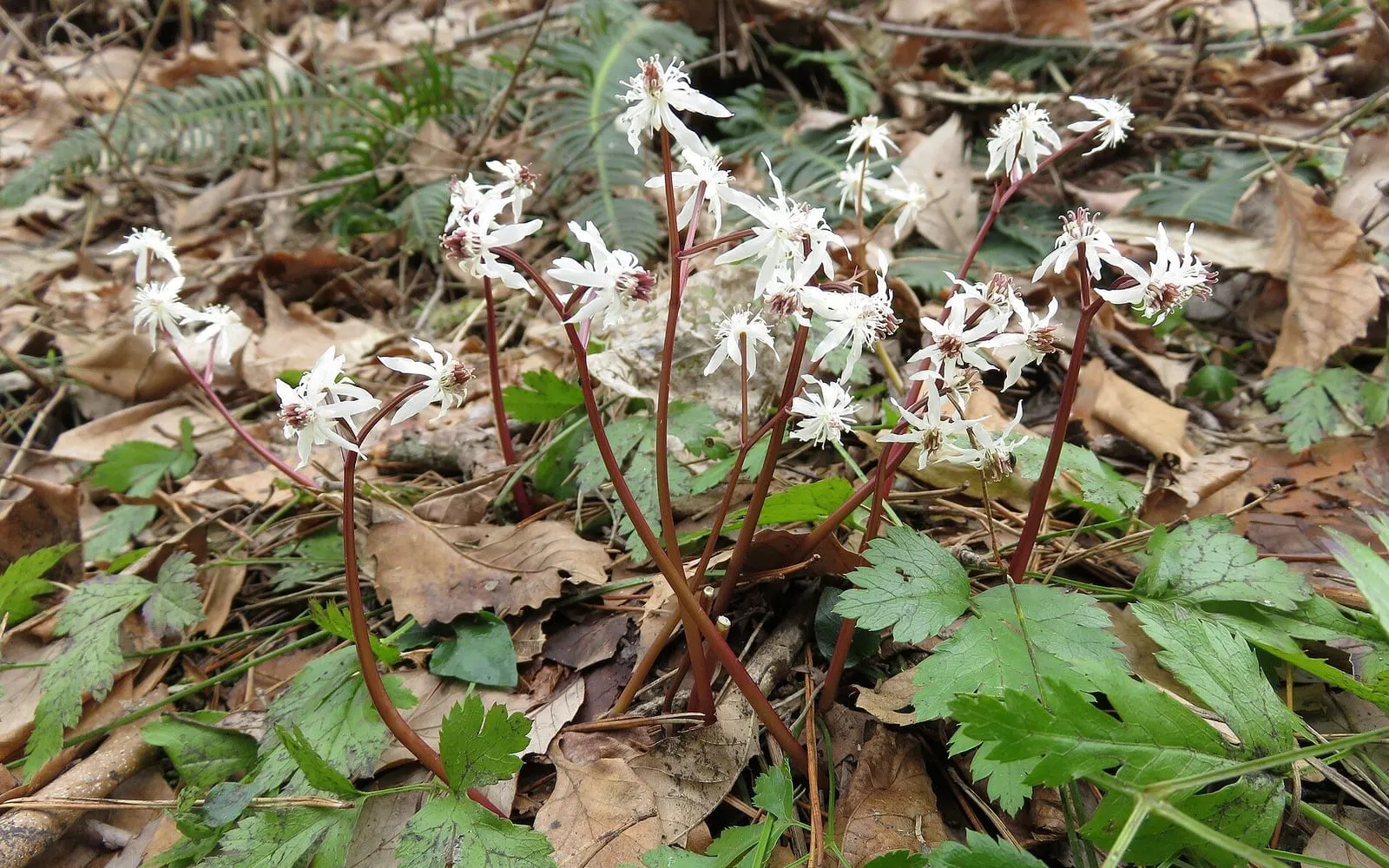
The photograph at the top of this page is Coptis japonica, the Japanese goldthread, because no picture of C. chinensis exists under an open licence. The two are close enough to have been treated as one species at times, and it shows the divided evergreen leaves and small white star-shaped flowers the genus shares.
Leaves are glossy, dark green and divided into three toothed leaflets, held on slender stalks close to the ground, and they stay through the year as an evergreen in mild winters.
The rhizome is the part used medicinally, a slender creeping root that is bright golden yellow inside and fiercely bitter. It is the source of both the plant’s name and its medicinal reputation.
Flowers are small, greenish-white to pale yellow, carried a little above the leaves on thin stems in early spring, delicate and easily missed against the foliage.
The habit is low and slowly spreading, with the creeping rhizome building a modest patch of evergreen leaves a hand’s width tall, in the manner of a woodland ground cover.
Where it is from
Coptis chinensis grows in cool, humid mountain woodland in China, in the shade of trees on moist, acidic, humus-rich soils. It is a plant of damp, shaded, temperate forest rather than open or warm ground.
Those conditions make it difficult elsewhere. It needs cool summers, constant moisture, shade and an acid, leafy soil, and it declines in heat, drought or strong sun. Where a garden can offer cool, moist, shaded woodland conditions it can be grown; where it cannot, the plant struggles.
How it grows
It grows slowly from its creeping yellow rhizome, spreading gently into a low evergreen patch in cool, moist, shaded ground, and flowering in early spring. It is long-lived and undemanding where the conditions suit, and difficult where they do not.
Plant it in partial to full shade in a cool, moist, humus-rich, acidic soil, improved with leaf mould, such as a woodland bed or a shaded, damp corner. Keep it moist at all times, since it will not tolerate drying out.
Leave it undisturbed to build up slowly, and mulch each year with leaf mould to feed it gently and keep the soil cool and moist. It can be divided carefully in spring where it has spread, though it is slow to re-establish.
Do not expect fast results or easy growth in a hot, dry climate. This is a plant for cool, shaded, humid gardens, and patience is part of growing it well.
Through the seasons
Early spring brings the small greenish flowers among the evergreen leaves, the plant’s brief flowering season.
Late spring and summer are for slow leafy growth and spread, when keeping the soil cool and moist matters most, especially in warm weather.
Autumn growth slows as the season cools, and a leaf-mould mulch laid now feeds the plant and protects the roots.
Winter is when the plant holds its glossy leaves in mild areas, dying back further only where winters are hard, and rests until spring.
Care difficulty
Moderate, and demanding in the wrong climate. Given cool, moist, shaded, acidic woodland conditions it is hardy and steady, if slow, and needs little beyond a yearly mulch and constant moisture. Heat, drought, sun and disturbance all defeat it, so the challenge is providing a cool, damp, shaded position instead of any day-to-day fuss.
Watering
Keep the soil moist at all times, since the plant comes from humid mountain woodland and has no drought tolerance. Drying out, especially in warm weather, is the quickest way to lose it.
A leaf-mould mulch helps hold moisture and keep the roots cool, and a naturally damp, shaded spot needs less hand watering than an exposed one. In a dry summer, water regularly to keep the ground from drying.
Warning signs, diseases and pests
Slugs graze the low evergreen foliage and can damage a small plant, so protect it where slugs are a problem, particularly the fresh spring growth.
Heat and drought are more serious threats than any pest. A plant that yellows, scorches or collapses in summer is usually too hot, too dry or too sunny, and the answer is cooler, moister shade instead of any treatment.
The bright yellow rhizome is bitter and should not be eaten because of its berberine, though the plant is safe to grow and handle and poses no hazard in the garden otherwise.
Growing environment
Partial to full shade suits it, matching the forest floor it comes from. Strong sun scorches it, and it needs the cool, dappled or open shade of trees or a north-facing bed.
The soil should be cool, moist, humus-rich, acidic and free-draining, improved with leaf mould. Hot, dry, limy or heavy soils all cause problems, and constant moisture in a shaded, leafy soil is the target.
A cool woodland bed, a shaded rock garden or a damp, north-facing corner suit it, among other cool-loving, acid-soil woodlanders. It is a plant for a cool, humid, shaded position.
Feeding
Feed with leaf mould instead of fertiliser. An annual mulch of leaf mould or leafy compost supplies gentle woodland fertility and keeps the soil cool and moist at the same time.
Heavy feeding is unnecessary and unhelpful for so slow and modest a plant. Use gentle mulching rather than strong fertiliser.
Troubleshooting
Why is the root bright yellow? That is natural and comes from the berberine in it, the same compound that makes the root so bitter and that gives the plant its medicinal reputation. The golden colour is a normal feature.
It scorched and collapsed in summer. Too hot, too dry or too sunny. This is a cool-woodland plant with no drought tolerance. Move it to cooler, moister, deeper shade and keep the soil damp, and mulch well with leaf mould.
Can I use the root as huang lian? The rhizome is the huang lian of Chinese medicine, but preparing and using it is a matter for a qualified practitioner. The root is very bitter and its berberine calls for caution, so it should not be eaten casually.
Why is it growing so slowly? Slow growth is normal for this plant, which spreads gently from a creeping rhizome. Given cool, moist shade and a yearly mulch it will build up over time, but it will never be fast.
Will it grow in a warm climate? Not easily. It needs cool, humid, shaded conditions and suffers in heat and drought, so in a warm climate it is a difficult plant, best attempted only in the coolest, dampest, shadiest spot available.