
Edible
Aromatic Ginger
Kaempferia galanga
Also known as Kencur, Sand ginger, Cekur, Pro hom
How to grow aromatic ginger, Kaempferia galanga. The flat-leaved kencur of Indonesian cooking, its camphorous rhizome, and growing it as a pot plant under glass.
At a glance
- Difficulty
- Moderate
- Water
- Two or three times a week in growth, none when dormant
- Light
- Bright indirect light or dappled shade
- Temperature
- Growing above 20 deg C. Dormant and dry below that
- Humidity
- Moderate to high
- Hardiness
- USDA 10-12, RHS H1b, hardy to 12 C
- Type
- Tender herbaceous perennial, dormant in winter
- Height
- 10-20 cm
- Native to
- Southeast Asia
- Best month
- April and October in the Northern Hemisphere, October and April in the Southern Hemisphere
Wet tropical Indonesia and Malaysia. It dies back completely in the dry season and reshoots with the rains, so a dormant pot is resting rather than dead. Keep it barely moist through that rest.
Hardiness zones describe winter cold alone. Summer heat, humidity, rainfall and the length of the growing season decide as much, so treat the range as the outer limit rather than as a recommendation.
Every month named in this guide is for the temperate Northern Hemisphere. If you garden in the Southern Hemisphere, shift each one by six months, so April becomes October. Closer to the equator the wet and dry seasons matter more than the calendar, and the shift stops being a useful guide.
Not known to be toxic
- Safe to eat
- The rhizome, and the young leaves in some cooking
Non-toxic. Aromatic ginger is a culinary and medicinal plant used across south-east Asia, and it appears on neither the RHS list of potentially harmful garden plants nor the ASPCA list. The rhizome is used fresh and dried, and the young leaves are eaten in parts of Indonesia and Malaysia. It is used in jamu, the Indonesian herbal drink tradition, in preparations more concentrated than culinary amounts, and the usual advice about not improvising with medicinal doses applies. The flavour is strong and camphorous, which naturally limits how much anyone uses.
Sources: RHS potentially harmful garden plants, ASPCA toxic and non-toxic plants
About
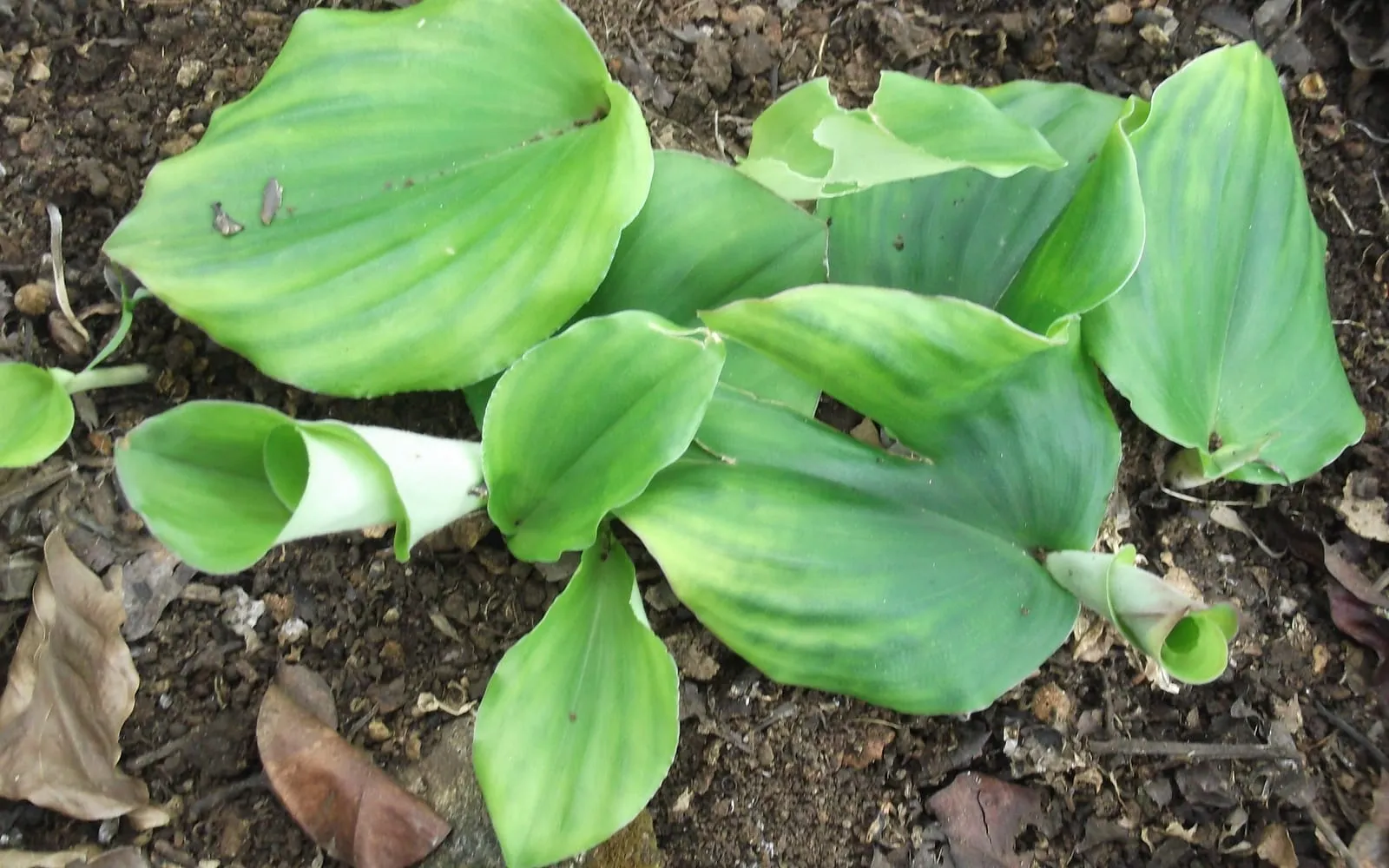
Aromatic ginger is the odd one among the culinary gingers. It grows as a rosette of flat rounded leaves pressed to the ground rather than as an upright leafy stem, and the flowers open at soil level between them, so the plant looks nothing like ginger or turmeric.
Its flavour is distinctive and strongly camphorous, sharper and more medicinal than ginger, and it is used in small quantities. Indonesian cooking uses it as kencur, in pecel sauce and in jamu, and Malaysian and Thai cooking use it too.
It is a manageable pot plant for a warm greenhouse. Smaller than the other gingers here, with a clear dormant season, and the flat rosettes are attractive enough that people grow it as an ornamental in the tropics.
Appearance and character
A low spreading rosette, 10 to 20 cm high, of flat rounded leaves lying almost horizontally on the soil surface.
Leaves are broad and nearly circular, 8 to 15 cm across, mid green with a slightly wavy edge, often with a faint reddish margin, and they lie flat.
Flowers open at ground level between the leaves, white with a violet blotch on the lip, delicate and fragrant, each lasting a day.
The rhizome is small, rounded and knobbly, pale brown outside and white inside, with fleshy roots below.
The scent is the identifying feature. Sharply camphorous with a note of pine, quite unlike ginger or turmeric.
The whole plant dies down completely in autumn and reappears in late spring.
Where it is from
Aromatic ginger is native to south-east Asia, probably India and southern China, and it is cultivated across the region.
Indonesian use is the most extensive. As kencur it goes into sambal pecel, into the rice dish nasi kencur, and into jamu, particularly the version called beras kencur made with rice.
Malaysia uses it as cekur, Thailand as pro hom, and southern China as sand ginger, where it appears in braises and in some Cantonese dishes.
It has a long place in traditional medicine across the region, used for coughs and digestive complaints.
It is not widely traded outside Asia, and outside Asia it is found in Indonesian and Malaysian grocers rather than in general supermarkets.
How it grows
Buy a firm rhizome from an Indonesian or Malaysian grocer in spring, or from a specialist supplier.
Cut into pieces with a bud each and let the cuts dry for a day.
Plant 3 cm deep in free-draining sandy compost in a wide shallow pot, since the plant spreads sideways and roots shallowly.
Start it warm, above 22 deg C. Sprouting is slow, sometimes taking two months.
Grow it under glass in bright indirect light or dappled shade. The flat leaves scorch in direct sun through glass.
Water and feed moderately through the growing season.
Stop watering in autumn as the leaves yellow, and let it go dormant.
Keep the dormant rhizome dry and above 12 deg C over winter.
Harvest in late autumn as the plant dies down, saving pieces to replant.
Through the seasons
Winter is dormancy. Keep the rhizome dry and above 12 deg C.
Spring is planting, from April in warmth. Sprouting is slow.
Early summer is when the leaves unfold and lie flat.
Midsummer is peak growth and flowering, with the blooms sitting at ground level between the leaves.
Late summer is when the rhizome bulks.
Autumn brings yellowing and dormancy. Stop watering and harvest in late autumn.
Care difficulty
Moderate, and easier to accommodate than the larger gingers because the plant is small.
Warmth is the requirement. Above 20 deg C for growth, and a dry dormancy above 12 deg C.
Sprouting is very slow, sometimes two months, which is the main test of patience.
Watering a dormant rhizome rots it, as with turmeric.
Light needs care. The flat leaves scorch in direct sun through glass, so dappled light suits it better than a sunny bench.
Sourcing the rhizome is the practical difficulty. It is sold in Indonesian and Malaysian shops rather than in general grocers.
Watering
Water sparingly until shoots appear, keeping the compost barely damp.
Water two or three times a week once growing, keeping the compost evenly damp without saturating it.
Reduce watering from September as the leaves yellow.
Stop entirely once the foliage has died down, and keep the rhizome dry all winter.
Use tepid water and avoid splashing the flat leaves, which mark.
Water at the compost surface rather than over the rosette.
Warning signs, diseases and pests
Rot during dormancy is the main loss and it comes from watering a plant that has died down.
A rhizome that never sprouts was too cold, too wet, or not viable.
Slugs eat the flat leaves quickly if the pot is stood outside.
Spider mite produces fine stippling in dry heated air.
Scale insects sit on the leaves as brown limpets.
Scorched pale patches on the leaves mean direct sun through glass.
Very slow sprouting is normal and not a fault.
Small rhizomes at harvest mean too little heat or a season that was too short.
Growing environment
A heated greenhouse or conservatory, or a warm bright windowsill out of direct sun.
Above 20 deg C for growth, and a dry winter above 12 deg C.
Bright indirect light or dappled shade. Direct sun scorches the flat leaves.
Free-draining sandy compost in a wide shallow pot.
pH from 5.5 to 7.
Moderate to high humidity while growing. The plant is small and fits easily on a greenhouse bench.
Feeding
Feed a balanced liquid feed monthly from May to August. It is a smaller plant than the other gingers and needs less.
Potash in late summer helps the rhizome bulk.
Stop feeding in September.
Give nothing during dormancy.
Use fresh compost each year rather than replanting into exhausted material.
Troubleshooting
Is it the same as galangal? No. Aromatic ginger is Kaempferia galanga, a low flat-leaved plant with a camphorous rhizome. Galangal is Alpinia, a tall leafy clump. The names overlap because both carry galanga in the botanical name.
Nothing sprouted for eight weeks. Normal. This is the slowest of the gingers to start. Keep the compost barely damp and the temperature above 22 deg C.
The leaves went pale and patchy. Sun scorch through glass. Move it into dappled light.
The rhizome rotted over winter. It was watered during dormancy. Keep it completely dry once the leaves die down.
Where do I buy it? An Indonesian or Malaysian grocer, sold as kencur, or a specialist rhizome supplier.
How is it used? In small quantities, ground into pastes and sauces. Indonesian pecel sauce and the jamu drink beras kencur are the classic uses, and the flavour is strong and camphorous.
Can I eat the leaves? The young leaves are eaten in parts of Indonesia and Malaysia. The rhizome is the main crop.