
Edible
Turmeric
Curcuma longa
Also known as Haldi, Indian saffron, Curcuma
How to grow turmeric, Curcuma longa. Starting it from a supermarket rhizome, growing it in a pot under glass, and harvesting and curing your own.
At a glance
- Difficulty
- Moderate
- Water
- Two or three times a week in growth, none when dormant
- Light
- Bright light with shade from the hottest sun
- Temperature
- Growing above 18 deg C. The rhizome rots below 10 deg C if wet
- Humidity
- Moderate to high
- Hardiness
- USDA 8-11, RHS H1c, hardy to 10 C
- Type
- Tender herbaceous perennial, dormant in winter
- Height
- 60-100 cm
- Native to
- South Asia
- Best month
- April and October in the Northern Hemisphere, October and April in the Southern Hemisphere
Monsoon India, on a wet and dry cycle. The foliage dies back for a dormant season and the rhizome survives cool soil, so it can be lifted and stored dry through a cold winter and replanted in spring. It needs eight to ten warm months to bulk up.
Hardiness zones describe winter cold alone. Summer heat, humidity, rainfall and the length of the growing season decide as much, so treat the range as the outer limit rather than as a recommendation.
Every month named in this guide is for the temperate Northern Hemisphere. If you garden in the Southern Hemisphere, shift each one by six months, so April becomes October. Closer to the equator the wet and dry seasons matter more than the calendar, and the shift stops being a useful guide.
Not known to be toxic
- Safe to eat
- The rhizome, and the leaves as a wrapper in some cooking
Non-toxic. Turmeric is eaten in enormous quantity across south Asia and it appears on neither the RHS list of potentially harmful garden plants nor the ASPCA list. The rhizome is the part used, and the leaves are used in parts of India to wrap food for steaming. Two practical notes rather than toxicological ones. Turmeric stains everything it touches, including hands, work surfaces and clothing, and the stain is difficult to remove. Separately, imported ground turmeric has repeatedly been found adulterated with lead chromate, added to brighten the colour, which is a genuine source of lead exposure and a good reason to buy from a reputable supplier or grow your own.
Sources: RHS potentially harmful garden plants, ASPCA toxic and non-toxic plants
About
Turmeric is one of the easier tropical spices to grow outside the tropics, because it follows a clear annual cycle. It grows through the summer, dies down in autumn, sits dormant and dry through the winter, and starts again in spring. A pot in a greenhouse produces a usable harvest in one season.
Starting it is straightforward. A firm rhizome from a supermarket or Asian grocer, planted in a pot in spring, sprouts within a few weeks in warmth.
The plant is a large leafy relative of ginger with broad paddle-shaped leaves and, on a well-grown clump, a cone of white bracts tipped with pink. Fresh turmeric tastes markedly different from the dried powder, being brighter, earthier and more citrus, which is a reason to grow it beyond the novelty.
Appearance and character
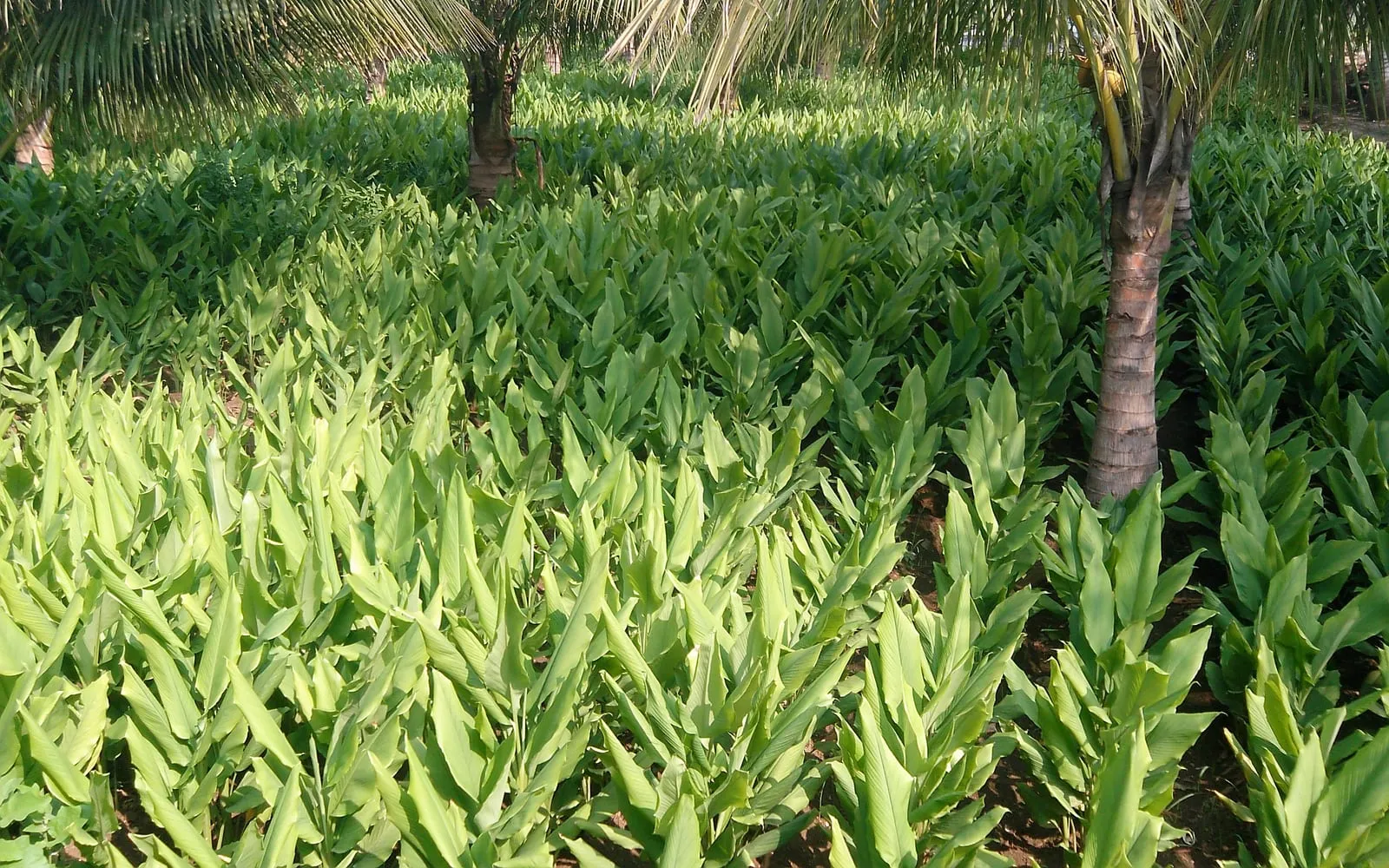
A clump of upright leaves 60 cm to 1 m tall, arising from a branching rhizome just below the surface.
Leaves are large, broad and paddle-shaped, up to 45 cm long, bright green with a prominent midrib, held on long sheathing stalks.
Flowers appear on a well-grown mature clump as a dense cone of pale green bracts tipped with pink or white, with small yellow flowers pushing out between them. The cone rises from the centre of the plant.
The rhizome is the crop. Branching, fingered, brown-skinned outside and brilliant orange inside, and the colour is startling when the first one is cut.
The scent of the fresh rhizome is earthy, peppery and slightly citrus, quite different from the dried powder.
The whole plant dies down completely in autumn and disappears until spring.
Where it is from
Turmeric is native to south Asia, probably southern India, and it has been cultivated for at least four thousand years.
It is sterile and does not set seed, so the entire cultivated population is propagated by rhizome division. That makes every plant a clone and explains why the species has no wild population.
Indian use is old and comprehensive. Turmeric is central to cooking, to Ayurvedic medicine, to Hindu ritual and to weddings, where a turmeric paste is applied to the bride and groom.
It reached south-east Asia and China early and travelled west along the same routes as other spices, though Europe never took to it as it took to pepper.
India grows and consumes the overwhelming majority of the world crop, with Erode in Tamil Nadu the historic trading centre.
Its western popularity is recent and driven by interest in curcumin, the yellow compound responsible for the colour, which is the subject of a great deal of research and a great many exaggerated claims.
How it grows
Buy fresh rhizomes in early spring, from a supermarket, an Asian grocer or a specialist supplier. Choose firm plump pieces with visible buds.
Cut the rhizome into pieces with two or three buds each, and let the cut surfaces dry for a day.
Plant 5 cm deep in rich free-draining compost, in a wide pot at least 30 cm across, since the rhizome branches sideways.
Start it in warmth, above 20 deg C. Sprouting takes three to six weeks and is slow to begin.
Grow it under glass or on a warm bright windowsill, in bright light with shade from the hottest sun.
Water and feed generously through the growing season. This is a hungry thirsty plant.
Stop watering in autumn when the leaves yellow, and let the plant die down completely.
Harvest by tipping the pot out in late autumn, eight to ten months after planting. Save a few pieces to replant.
Cure the harvest by boiling the rhizomes for 30 to 45 minutes, drying them thoroughly, then grinding. Fresh rhizome can also be used straight away or frozen.
Store dormant rhizomes dry and frost free over winter.
Through the seasons
Winter is dormancy. Keep the rhizome dry and above 10 deg C, either left in its pot unwatered or lifted and stored in dry sand.
Spring is planting, from March in warmth. Sprouting is slow.
Early summer is when growth accelerates as the temperature rises.
Midsummer is peak growth, and the plant needs generous water and feeding.
Late summer may bring the flower cone on a mature clump.
Autumn is when the leaves yellow and die down. Stop watering and harvest in late autumn.
Care difficulty
Moderate, and easier than most tropical spices because the plant has a dormant season.
Warmth is the main requirement while growing. Below 18 deg C it does very little, which means a greenhouse or a warm bright windowsill rather than a temperate border.
Watering during dormancy is the commonest way to lose one. Once the leaves die down the rhizome wants to be dry, and a wet pot in a cool winter rots it.
Patience at the start is needed. Sprouting takes three to six weeks and looks like failure for the first month.
The plant is hungry and thirsty while growing, unlike most of the herbs in this wave.
Given a warm summer under glass, a rhizome planted in March produces a worthwhile harvest by November.
Watering
Water sparingly until the shoots appear, keeping the compost barely damp. A wet unsprouted rhizome rots.
Water generously once growing, two or three times a week and daily in a warm greenhouse in July.
Keep the compost evenly damp through the growing season.
Reduce watering from September as the leaves start to yellow.
Stop watering entirely once the foliage dies down, and keep the rhizome dry all winter.
Use tepid water and avoid wetting the crown in cool conditions.
Warning signs, diseases and pests
A rhizome that rots before sprouting has been kept too wet or too cold. Keep the compost barely damp until shoots appear.
Rot during dormancy is the main loss and the cause is watering a dormant plant. Keep it dry.
Spider mite appears in dry heated air, producing fine stippling and webbing.
Scale insects sit on the leaf undersides as brown limpets.
Leaf spot marks the foliage in cold damp conditions. Improve the warmth and airflow.
Slow or no sprouting for the first month is normal. Wait.
Small rhizomes at harvest mean the plant did not get enough heat, water or food, or was lifted too early.
Growing environment
A greenhouse, conservatory or warm bright windowsill. Turmeric will grow outdoors in a temperate summer in a pot and it will produce very little.
Minimum 18 deg C for growth, and 25 to 30 deg C is better.
Bright light with shade from the hottest midday sun, which scorches the large soft leaves.
Rich, moisture-retentive, free-draining compost in a wide pot.
pH from 5.5 to 7.
Moderate to high humidity while growing.
Feeding
Feed generously while growing, which is unusual in this collection. A balanced liquid feed fortnightly from May to August, or a controlled-release fertiliser worked into the compost at planting.
Potash in late summer helps the rhizome bulk up.
Stop feeding in September as the plant winds down.
Give nothing at all during dormancy.
Use fresh compost each year rather than replanting into exhausted material.
Troubleshooting
Can I grow it from a supermarket rhizome? Yes, and it is the usual way. Choose firm plump pieces with visible buds, cut them into sections with two or three buds each, and plant them 5 cm deep in warm compost in spring.
Nothing has come up after three weeks. Normal. Sprouting takes three to six weeks and needs warmth above 20 deg C. Keep the compost barely damp until it does.
The leaves died in autumn. That is the plant going dormant. Stop watering, keep the rhizome dry and frost free, and harvest or replant in spring.
How long until harvest? Eight to ten months from planting, so a March planting is lifted in November or December.
How do I make the powder? Boil the rhizomes for 30 to 45 minutes, dry them thoroughly until brittle, then grind. Alternatively use the fresh rhizome directly, which tastes brighter than the powder.
It stained everything. Turmeric stains hands, boards and clothing and the marks are hard to remove. Use gloves and a dedicated board.
Is bought turmeric safe? Buy from a reputable supplier. Imported ground turmeric has repeatedly been found adulterated with lead chromate added to brighten the colour, which is a genuine source of lead exposure.
Turmeric problem guides
Not sure what is wrong? See the common vegetable pests guide.