
Houseplant
Zebra Alocasia
Alocasia zebrina
Also known as Zebra Plant, Tiger Alocasia
Practical guidance for growing zebra alocasia, Alocasia zebrina, including striped petioles, arrow-shaped leaves, humidity, watering, winter dormancy, mild toxicity, and pest control.
At a glance
- Difficulty
- Difficult
- Water
- When the top few centimetres of mix dry out, more often in summer
- Light
- Bright indirect light; no direct midday sun
- Temperature
- 18-27 deg C, never below 13 deg C
- Humidity
- 60% or higher; dry air browns the leaf edges
- Hardiness
- USDA 10b-11, RHS H1b, hardy to 12 C
- Type
- Evergreen or seasonally dormant rhizomatous perennial
- Height
- Leaves to 40 cm on petioles up to 60-90 cm
- Native to
- the Philippines
A forest-floor aroid from the Philippines, growing in the dappled light and constant warmth beneath a tropical canopy. The zone range is almost beside the point for a plant nobody grows outdoors year round; what determines whether it thrives is steady warmth above about 18 deg C and humidity well above what a heated room holds by default. It has no frost tolerance and stalls well before temperatures reach freezing.
Hardiness zones describe winter cold alone. Summer heat, humidity, rainfall and the length of the growing season decide as much, so treat the range as the outer limit rather than as a recommendation.
Toxic if eaten
- Do not eat
- Every part, especially the leaves and stem
- Harm from
- Eating it and handling it
- Affects
- People, cats and dogs
Like other aroids, every part of Alocasia zebrina contains insoluble calcium oxalate crystals. The ASPCA's general toxic-plants listing covers the wider elephant ear group, and chewing any part causes immediate oral irritation in cats and dogs, with drooling, pawing at the mouth, vomiting and difficulty swallowing. People react the same way, and the sap can irritate skin on contact during repotting or pruning. The sharp, burning taste means an animal rarely manages more than one bite, which keeps most cases mild, but a determined chew or a large ingestion warrants a call to a vet or doctor. Wash hands after handling cut foliage and keep the plant out of reach of a chewing pet.
Sources: ASPCA toxic and non-toxic plants, RHS potentially harmful garden plants
About
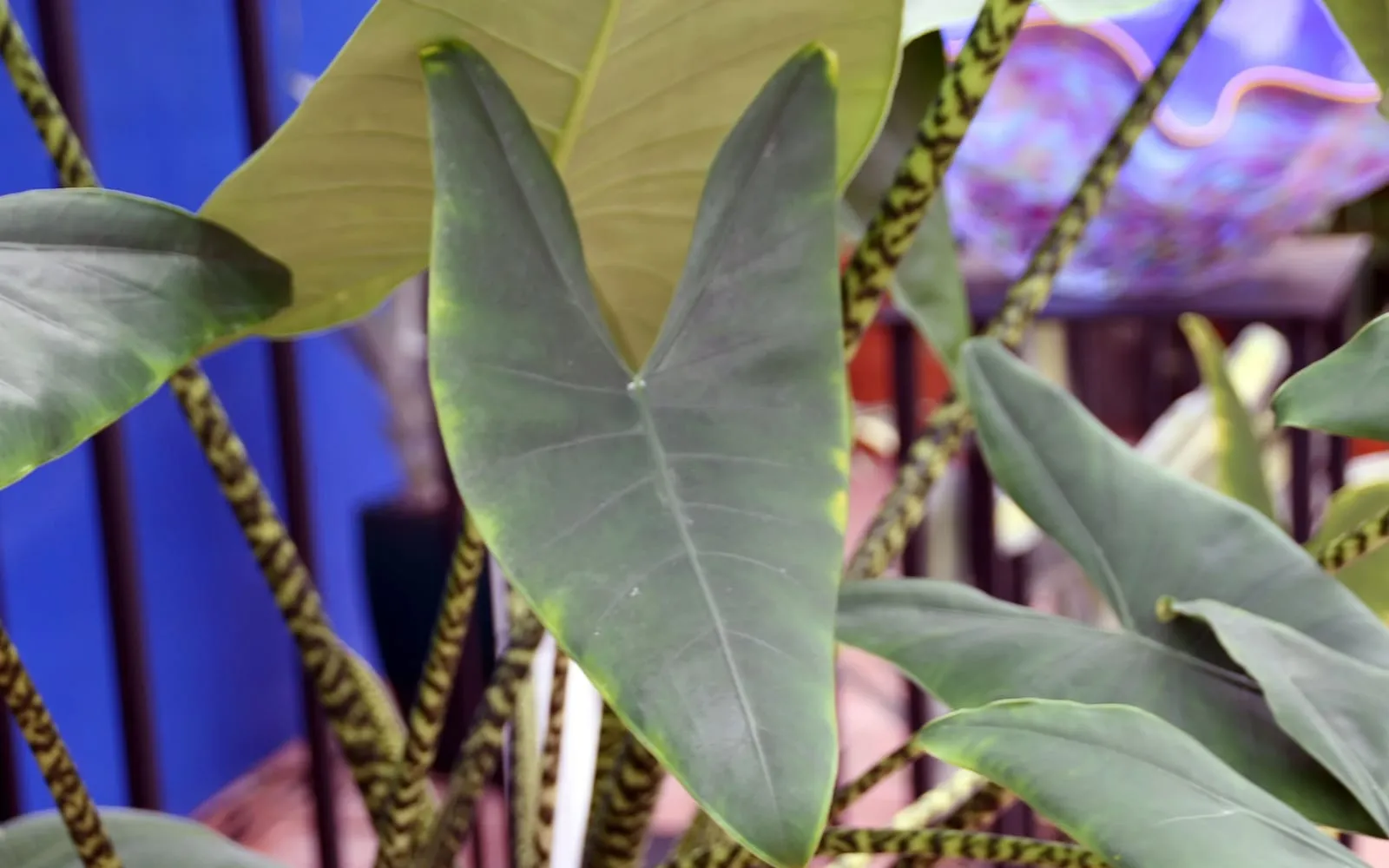
Zebra alocasia is grown for its stems rather than only its leaves. Tall, pale petioles marked with dark green to near-black bands, the pattern the plant is named for, carry a smaller number of arrow-shaped leaves held well clear of the compost. The plant looks sculptural rather than lush, with more bare stem and petiole on show than a typical leafy houseplant.
It is also one of the fussier alocasias to keep looking good indoors. It needs steady warmth, high humidity and a mix that drains fast. If any one of those conditions slips for long, it may drop leaves or go dormant.
Appearance and character
Leaves are arrow or shield-shaped, matte deep green above and paler below, with a slightly wavy margin, held singly at the top of each striped petiole rather than clustered the way many houseplants carry their foliage.
The petioles are the plant’s defining feature: pale grey-green to cream, banded with irregular dark blotches that run around the whole stem like a snake’s markings, giving the common name its point. Petioles can reach 60 to 90 cm on a well-grown, mature plant, holding the leaf blade well above the rest of the pot.
A mature plant carries relatively few leaves at any one time, usually somewhere between four and eight, with older leaves yellowing and dying back as new ones unfurl from the centre. That turnover is normal rather than a sign of decline.
Where it is from
Alocasia zebrina is native to the Philippines, growing on the forest floor and along its margins in warm, humid, lowland conditions with dappled light rather than open sun.
Its forest-floor habitat points to the indoor conditions it needs. Light filtered through a canopy overhead is bright but never direct. Strong midday sun scorches the leaves, while too little light produces weak, floppy petioles that cannot hold the foliage upright.
Humidity in that habitat sits high and constant, a sharp contrast with a heated room in winter, which is the single most common reason a zebra alocasia struggles indoors. Some populations experience a drier season and respond by slowing growth or dying back to the rhizome, a habit that can show up as apparent winter dormancy even in an indoor plant kept at stable temperature.
How it grows
Pot it in a chunky, free-draining aroid mix of bark, perlite and coir, avoiding dense, water-retentive compost that keeps the rhizome and roots too wet.
Give it bright, indirect light. A spot a metre or so back from a south-facing window, or close to an east or west-facing one, usually strikes the right balance between growth and leaf scorch.
Provide humidity well above typical room levels, ideally 60% or more. Grouping it with other plants, running a humidifier nearby, or growing it in an enclosed cabinet all help more reliably than misting, which raises humidity only briefly.
The rhizome can produce offsets at its base over time, which are the easiest way to propagate a mature plant once they have a few roots and leaves of their own. Division at repotting is more reliable than leaf or stem cuttings, which this genus does not root readily from.
If the plant dies back to a bare rhizome, most often over a cool or low-light winter, keep the mix barely moist rather than bone dry and resist the urge to discard it. New growth commonly resumes once warmth and light improve.
Through the seasons
Spring brings the return of active growth after any winter slowdown. Resume monthly feeding, increase watering gradually, and repot if the mix has broken down.
Summer is the main growing season, with the fastest leaf production and the best tolerance for slightly more frequent watering.
Autumn slows growth. Reduce feeding and start easing off on watering as light levels drop.
Winter is often a partial or full dormancy, with the plant producing few or no new leaves and sometimes dying back to the rhizome. Water sparingly, keep it warm, and do not feed until new growth resumes.
Care difficulty
Difficult. Humidity, warmth, light and watering all have to sit in a fairly narrow band at the same time for the plant to look its best. Getting one wrong tends to mask or worsen the effect of getting another wrong too.
A cool room slows the roots’ ability to take up water, so a watering schedule that would suit a warm summer can rot the roots in a cold winter even without any change in how much water is given. Dry air on top of that combination browns leaf edges regardless of how carefully the watering is managed.
Watering
Water when the top few centimetres of mix have dried out, checking with a finger rather than by the calendar, since the interval shifts considerably with temperature and light.
Water thoroughly until it drains from the pot, then let the mix approach dryness again before the next watering. A mix kept constantly damp, rather than cycling between moist and nearly dry, is the most common route to root and rhizome rot in this species.
Cut back watering noticeably in a cool room or during a winter dormancy, since roots take up far less water at lower temperatures and a wet mix at that point is doing active harm rather than sitting idle.
Warning signs, diseases and pests
Spider mite thrives in hot, dry indoor air, showing as fine pale speckling on the leaves with faint webbing in bad cases. Raising humidity and wiping the leaves down regularly helps prevent it.
Mealybug settles into the leaf joints and along the striped petioles, appearing as small white, cottony tufts. Remove them with a cotton bud dipped in surgical spirit.
Root rot follows a mix kept too wet, especially in a cool spell, showing as a plant that wilts or yellows despite damp compost. Unpot it, trim away soft brown roots, and repot into fresh, free-draining mix, watering more cautiously afterwards.
Bacterial soft rot spreads fast through the rhizome in warm, waterlogged conditions, turning it mushy and foul-smelling within days. There is no cure once it has taken hold through the rhizome’s core; cut away everything soft back to firm, healthy tissue and hope enough remains to regrow, or discard the plant if the rot has reached the centre.
Growing environment
Bright indirect light suits it best. Direct midday sun scorches the leaves, while deep shade produces weak, floppy petioles that cannot hold the foliage upright.
Keep the room between 18 and 27 deg C. Growth stalls below about 13 deg C, and a cold spell combined with wet compost is the fastest way to lose the plant to rot.
Humidity of 60% or more is close to essential for good-looking foliage. Dry indoor air browns the leaf edges even when watering and light are otherwise right.
A chunky, fast-draining aroid mix and a pot only slightly larger than the root ball both help keep the rhizome from sitting in excess moisture.
Feeding
Feed monthly through spring and summer with a balanced liquid houseplant feed, diluted to the strength stated on the label.
Stop feeding entirely once the plant slows down or drops into a winter dormancy, since a resting rhizome takes up almost nothing and unused fertiliser only accumulates as salts in the mix.
Flush the pot with plain water every couple of months during the growing season to clear any salt build-up, which shows up as scorched leaf tips if left unchecked.
Troubleshooting
All the leaves have died back and I am left with a bare stump. Likely a winter dormancy rather than a dead plant. Keep the rhizome barely moist, warm, and in reasonable light, and give it several weeks to months before giving up; new growth often resumes once conditions improve.
The leaf edges are turning brown and crispy. Low humidity, almost always. Raise it with a humidifier, a grouping of plants, or an enclosed space, since misting alone rarely raises humidity for long enough to help.
The petiole has gone soft and the leaf collapsed. Rot, most likely bacterial, especially if there is a bad smell. Cut back to firm tissue straight away and repot into fresh, dry mix, and check whether the rhizome itself has been affected.
Growth has stalled even though it is spring. Check the temperature first. A room that drops below about 18 deg C overnight can keep the plant in a holding pattern even once the calendar says growth should resume.
Is it safe to keep with a cat that likes to chew houseplants? No. Every part contains calcium oxalate crystals that cause immediate mouth irritation if chewed, so keep it well out of reach of a pet that samples foliage.
Zebra Alocasia problem guides
Not sure what is wrong? See the common houseplant pests guide.