
Houseplant
Black Velvet
Alocasia reginula
Also known as Black Velvet Alocasia, Jewel Alocasia
How to grow Alocasia reginula, the Black Velvet alocasia, with near-black velvety leaves and silver veins, and how to keep it from rotting or going dormant.
At a glance
- Difficulty
- Easy
- Water
- Keep lightly moist; let the top few centimetres dry between waterings
- Light
- Bright indirect light
- Temperature
- Warm, ideally 18 to 27 deg C; keep above 15 deg C
- Humidity
- High, above 60 per cent if you can
- Hardiness
- USDA 10-12, RHS H1b, hardy to 15 C
- Type
- Evergreen rhizomatous perennial
- Height
- 30 to 50 cm
- Native to
- Borneo
A tender tropical from the forest floor of Borneo, grown as a houseplant almost everywhere. It has no frost tolerance and dislikes cold, so it needs a steady warm room above about 15 deg C and high humidity. Below that it tends to stop growing and drop leaves, retreating to its rhizome, and cold, wet compost rots it quickly.
Hardiness zones describe winter cold alone. Summer heat, humidity, rainfall and the length of the growing season decide as much, so treat the range as the outer limit rather than as a recommendation.
Toxic if eaten
- Do not eat
- All parts, which contain calcium oxalate crystals
- Harm from
- Eating it, handling it and sap in the eyes
- Affects
- People, cats and dogs
Like other aroids, black velvet alocasia contains insoluble calcium oxalate crystals throughout, and chewing any part causes intense burning and swelling of the mouth, lips and throat, with drooling and vomiting. The sap can also irritate skin and eyes. It is rarely life-threatening because the immediate burning stops most people and pets eating much, but it is painful, so keep the plant away from young children and pets and wash off any sap. The ASPCA lists Alocasia as toxic to cats and dogs.
Sources: ASPCA toxic and non-toxic plants, RHS potentially harmful garden plants
About
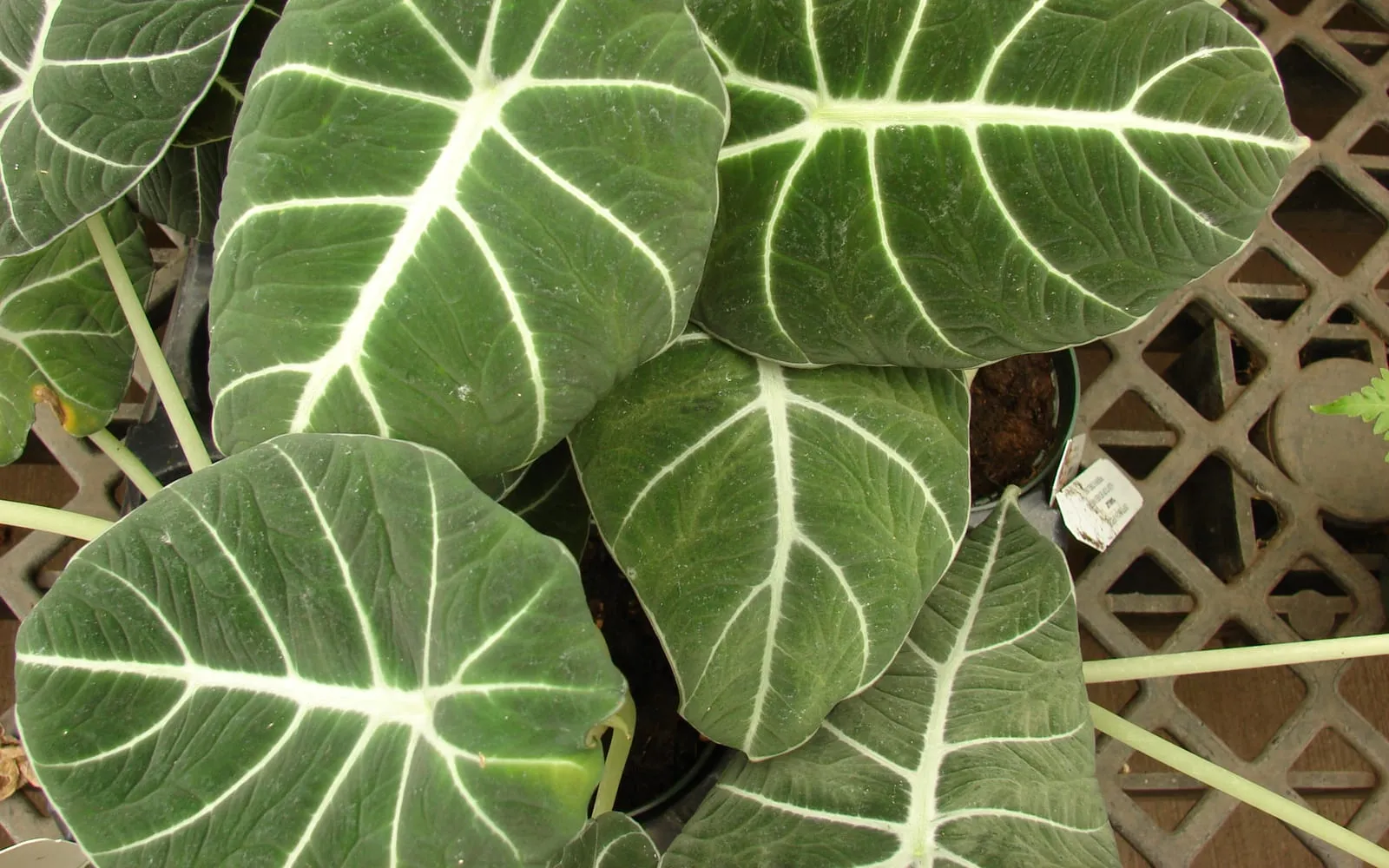
Black velvet alocasia is a compact jewel alocasia grown for leaves that look and feel like dark velvet. Each thick, heart-shaped leaf is a deep, almost black green with a matte, velvety surface, cut through by bright silver-white veins, and the plant stays small enough for a windowsill or a shelf.
It is one of the more manageable alocasias for the home, since it stays compact and does not produce the huge leaves of the elephant ears. What it shares with the rest of the group is a need for warmth and humidity and a strong dislike of cold, wet roots.
It grows from a rhizome, and in poor conditions it will drop its leaves and survive as that rhizome instead of dying outright. A bare pot is often a resting plant instead of a dead one, which is worth knowing before you throw it out.
Appearance and character
The plant is grown for its leaves. They are thick, stiff and ovate to heart-shaped, held more or less upright on short stalks, a deep blackish green with a velvety, light-absorbing surface and contrasting silver-white veins.
The plant is small and clump-forming, rarely more than thirty to fifty centimetres tall, growing from a compact underground rhizome that stores energy and water.
Flowers are the modest greenish spathe-and-spadix of the arum family, and they are unremarkable. The plant is grown entirely for its foliage, and many growers remove the flowers to save the plant’s energy.
New leaves unfurl from tight cigars at the centre of the clump. A healthy plant produces them steadily through the warm months.
Where it is from
Alocasia reginula comes from Borneo, from the warm, humid, shaded forest floor, where the light is low and dappled and the air stays moist and warm year-round. It is a plant of constant warmth and humidity.
Grow it warm, humid and shaded, close to its forest-floor conditions. It also needs an airy, fast-draining root run, because cold, wet compost causes rot.
How it grows
It grows in flushes through the warm months, unfurling new velvety leaves from the centre of the clump, and slows or stops when the light and warmth drop in winter. Given steady warmth it can grow year-round.
Pot it in a very free-draining, airy mix, such as a blend of houseplant compost with orchid bark, perlite and a little coir, since the roots rot in dense, wet compost. A snug pot suits it better than a large one that stays soggy.
Keep it warm, humid and out of cold draughts, in bright but indirect light. Water when the top few centimetres have dried, and never leave it standing in water. The compost should stay slightly moist but still hold plenty of air.
If it drops its leaves after a cold or dry spell, keep the rhizome barely moist and warm and wait, since it often reshoots when conditions improve instead of having died.
Through the seasons
Spring brings renewed growth as light and warmth increase, the best time to repot or divide and to resume regular feeding.
Summer is the main growing season, with new leaves unfurling steadily in warmth and humidity. Water and feed regularly.
Autumn growth slows as light falls. Ease off feeding and let the compost dry a little more between waterings.
Winter the plant rests, and may drop leaves if the room is cool. Keep it warm and on the dry side, and do not overwater a resting plant.
Care difficulty
Easy for an alocasia, and moderate as houseplants go. Given warmth, humidity, gentle light and an airy mix it grows steadily. The main problems are cold, wet roots, which rot it, and dry air, which brings spider mites and crisp leaf edges. Match the warmth and humidity and it is one of the more forgiving jewel alocasias.
Watering
Keep the compost lightly moist during active growth, watering when the top few centimetres have dried, and let it dry a little more in winter when growth slows. The plant needs moisture at the roots but never a waterlogged pot.
Use tepid water, and empty any saucer after watering, since standing water rots the rhizome. In hard-water areas, rainwater or filtered water keeps the leaves cleaner, though it is less fussy about this than a calathea.
Warning signs, diseases and pests
Spider mites are the commonest pest, thriving in warm, dry air and stippling the leaves pale with fine webbing on the undersides. Raise the humidity, wipe the leaves and treat early, since they build up fast on a stressed plant.
Rot at the roots or rhizome follows cold, wet compost, showing as yellowing, collapsing leaves and a soft base. Improve drainage, water less, and keep the plant warm. It is much easier to prevent rot than to rescue a rhizome once it has turned soft.
Sudden leaf drop usually means cold, draughts or a dry shock instead of death. Keep the warm rhizome barely moist and wait for it to reshoot.
Growing environment
Bright, indirect light suits it, matching the dappled shade of the forest floor. Direct sun scorches the dark velvety leaves, and deep shade slows it and dulls the foliage.
Warmth and humidity are the two things it cannot do without. Keep it above about 15 deg C, ideally in the low twenties, and raise the humidity with a pebble tray, a humidifier or a grouping of plants. Dry room air and cold are the two main indoor problems.
Give it an airy, free-draining mix and a snug pot, and keep it out of cold draughts from doors and windows. A warm, humid, bright bathroom or kitchen often suits it better than an exposed living room.
Feeding
Feed monthly through spring and summer with a balanced liquid houseplant fertiliser at half the usual strength, since the plant is compact and easily over-fed. Strong feed can scorch the roots and leaf edges.
Stop feeding in autumn and winter while growth slows or stops, and resume in spring as new leaves appear. A plant that is resting needs no feed at all.
Troubleshooting
It dropped all its leaves. Usually cold, draughts or a dry or root shock instead of death. Keep the rhizome warm and barely moist and wait; it often pushes up fresh leaves when warmth and light return. Check the rhizome is still firm.
The leaves are stippled and dull with fine webbing. Spider mites, from warm, dry air. Raise the humidity, wipe the leaves top and bottom, and treat promptly, since they spread fast.
The base is soft and leaves are yellowing and collapsing. Rot from cold, wet compost. Reduce watering, improve the drainage, keep it warm, and remove any mushy tissue. Prevent it with an airy mix and careful watering.
Is it safe around pets and children? No. Like other aroids such as monstera, it contains calcium oxalate crystals that burn the mouth and throat if chewed, so keep it out of reach and wash off any sap.
The leaf edges are crisping. Usually dry air, and sometimes underwatering or salt build-up. Raise the humidity, keep the compost evenly moist in growth, and flush the pot occasionally to clear fertiliser salts.
Black Velvet problem guides
Not sure what is wrong? See the common houseplant pests guide.