
Houseplant
Star Sansevieria
Dracaena kirkii
Also known as Star Snake Plant, Sansevieria kirkii
How to grow Dracaena kirkii, the star sansevieria, a low starry rosette of mottled, wavy-edged leaves that thrives on neglect and rots if overwatered.
At a glance
- Difficulty
- Easy
- Water
- Only once the mix has gone bone dry
- Light
- Bright indirect light to full sun; tolerates lower light
- Temperature
- Warm; keep above 10 deg C
- Humidity
- Undemanding; tolerates dry air
- Hardiness
- USDA 10-12, RHS H1b, hardy to 10 C
- Type
- Evergreen succulent perennial
- Height
- 15 to 30 cm
- Native to
- Eastern Africa
A drought-hardy snake plant from the dry bush of eastern Africa, grown indoors for its unusual low rosette. Frost is fatal, so it needs a warm room above about 10 deg C, but it tolerates dry air, dim corners and weeks without water. The single thing it cannot survive is a cold, waterlogged pot, which turns the fat leaves to mush.
Hardiness zones describe winter cold alone. Summer heat, humidity, rainfall and the length of the growing season decide as much, so treat the range as the outer limit rather than as a recommendation.
Harmful if eaten
- Do not eat
- The leaves, which hold saponins
- Harm from
- Eating it
- Affects
- Cats, dogs and people
The leaves hold saponins, and the ASPCA lists Dracaena, the genus that now takes in the old Sansevieria, as toxic to cats and dogs. A pet that chews a leaf may drool, retch and be sick, and a person who tastes one gets a sore mouth and an upset stomach. The harm is usually mild, but any pet that gnaws houseplants is best kept away from it.
Sources: ASPCA toxic and non-toxic plants, RHS potentially harmful garden plants
About
Star sansevieria looks different from the usual snake plants. Instead of tall upright spears it opens a low, flat rosette of broad leaves that lean outward from the centre, so the plant looks like a green star pressed against the pot. The leaves are marbled in grey-green and finished with a thin, wavy, reddish-brown edge.
Botanists now file it under Dracaena, having folded the old genus Sansevieria into it, so the plant a grower still calls a snake plant is technically a dracaena. The name matters less than the habit, which is the same easy, very tough one the group is known for.
Set beside the tall snake plant and the round-speared cylindrical snake plant, its low starry shape makes a change, and it grows by exactly the same forgiving rules.
Appearance and character
The leaves are broad, thick and shallowly channelled, splaying out low instead of standing tall, and mottled in bands of grey and green. A fine reddish-brown margin, minutely toothed, runs around each one.
Growth stays low and wide, between fifteen and thirty centimetres tall, the rosette broadening as short runners push up fresh rosettes around the parent.
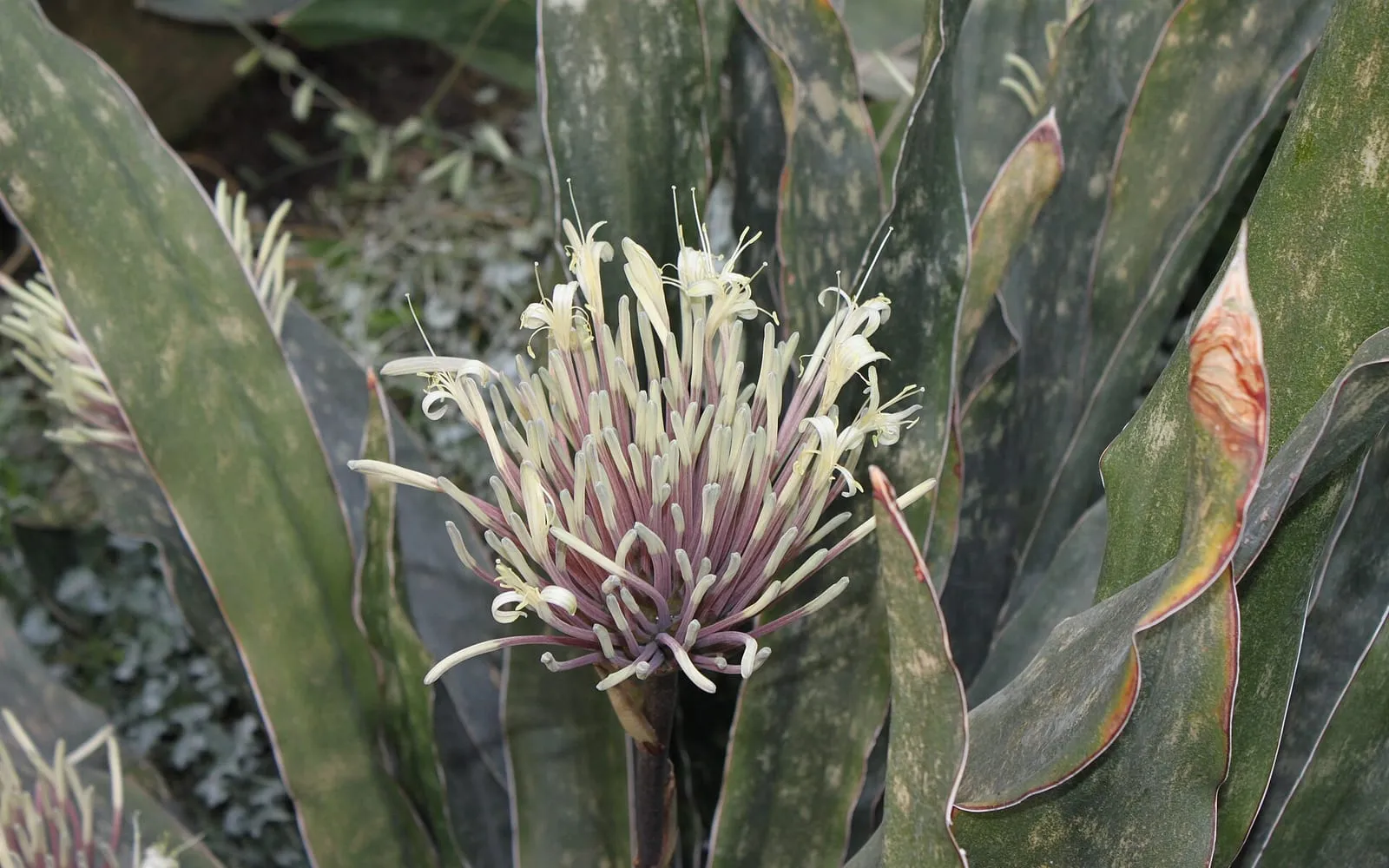
On a settled, mature plant a flower spike may rise, carrying small tubular blooms in cream or pale brown that often release a scent after dark. Most people grow the plant for the rosette and treat any flowers as a bonus.
New rosettes appear on those runners a little way from the parent, and once they have rooted they lift away easily to start new plants.
Where it is from
Dracaena kirkii comes from the hot, dry bushland of eastern Africa, where it roots in thin, stony ground under strong light and goes long stretches without rain. Heat, glare and drought are its normal weather.
Those conditions explain the care. The leaves are a water store, so the plant expects to be dry far more often than wet, and it takes bright light or shade with equal ease. Frost and standing water are the two things it cannot survive.
How it grows
Growth is slow and steady in a warm, bright spot, the rosette widening season by season and sending runners out sideways. Left alone for weeks at a time, it carries on.
Use a gritty, open mix made for cacti, and choose a pot only a little larger than the roots, since a big pot holds damp compost the plant dislikes. Repotting every few years, mainly to lift off crowded runners, is usually enough.
Warmth above about 10 deg C and bright light suit it best, though it holds up in a dimmer corner better than almost any other succulent, growing slower there. Whatever the light, the guiding rule is to keep it on the dry side.
To increase it, detach a rooted runner, or cut a leaf into sections and stand them in gritty mix to root, remembering that a variegated plant grown from a leaf comes back plain green.
Through the seasons
Spring wakes the plant as the days lengthen. This is the moment to lift off rooted runners and repot a crowded plant.
Summer is when most of the year’s growth happens. Water once the mix has dried right out, and give it the brightest position you can.
Autumn slows things down. Stretch the gaps between waterings as the light fades.
Winter is a rest. Keep the plant warm and almost completely dry, because a chilly, damp pot in the dark months is what rots it.
Care difficulty
Among the easiest houseplants there is. It tolerates dim light, dry air and a forgetful owner, and needs neither misting nor fussing. Only one habit kills it, and that is a heavy hand with the watering can. The main skill is doing less, not more.
Watering
Wait until the gritty mix has dried out completely, then water it through and tip away whatever drains into the saucer. Through winter, when growth stops, give it only the occasional splash to stop the leaves shrivelling.
Because the leaves store their own water, the plant would far rather be left thirsty than kept damp. If you are unsure whether to water, leave it another week.
Warning signs, diseases and pests
A plant kept too wet rots at the roots, and the first sign is leaves that soften, yellow and crease near the base. Stop watering at once, tip the plant out to check the roots, and if the base has gone, root a few firm leaf sections to begin again.
Mealybugs sometimes settle deep between the leaves as little cotton-wool specks. Lift them off with a cotton bud or wipe the plant with horticultural oil, searching right down into the rosette.
Soft, folded or leaning leaves nearly always mean too much water or a cold, wet pot, not too little, so water less and warm the plant up.
Growing environment
Strong light, up to direct sun, gives the firmest, best-marked leaves, yet the plant also copes in shade better than most succulents, which is part of why it suits so many rooms. Match the watering to the light, watering even less in a dim spot.
Warmth matters more than humidity here. Hold it above about 10 deg C and it never minds dry air, central heating or the absence of a humidity tray.
Plant it in an open, gritty mix in a snug pot and stand it somewhere warm and out of cold draughts. A bright windowsill flatters it, but a shelf across the room will do.
Feeding
A little feeding goes a long way. Once or twice across spring and summer, water in a cactus feed or a weak general fertiliser, and that is plenty for so slow a grower.
Skip feeding entirely from autumn through winter while the plant rests, and rely on fresh mix to carry a newly potted plant for its first season.
Troubleshooting
The leaves have turned soft and mushy. Too much water. Stop watering, check the roots, and root healthy leaf sections in gritty mix if the base has rotted. This is almost the only way the plant dies.
Nothing seems to be growing. Often just a dim spot or a cool winter, both normal. Move it into better light in spring for faster growth, but do not water it more to compensate.
Will it manage in a shady room? Yes, more happily than most succulents, though it grows slowly and needs even less water there. Cut back the watering to match the lower light.
Is it safe for cats and dogs? Only fairly. The ASPCA lists it as toxic to both, causing drooling and stomach upset if chewed, so keep it clear of pets that nibble leaves, as with the upright snake plant.
How do I get more plants? Wait for a runner to root, then detach it, or cut a leaf into pieces and root them in gritty mix. Variegated forms should be divided, since leaf cuttings lose the pattern.
Star Sansevieria problem guides
Not sure what is wrong? See the common houseplant pests guide.