
Houseplant
Wendland's Gasteranthus
Gasteranthus wendlandianus
Also known as Gasteranthus
How to grow Gasteranthus wendlandianus, a bushy Central American gesneriad with hooded yellow flowers spotted red that needs warm, humid, shaded conditions indoors.
At a glance
- Difficulty
- Moderate
- Water
- Keep evenly moist; never dry out or waterlog
- Light
- Bright indirect light to light shade
- Temperature
- Warm, 18 to 27 deg C; keep above 15 deg C
- Humidity
- High
- Hardiness
- USDA 11-12, RHS H1a, hardy to 15 C
- Type
- Evergreen bushy perennial
- Height
- 30 to 60 cm
- Native to
- Central America
A tender gesneriad from the warm, wet forests of Central America, at home only in steady warmth and damp air. Frost is out of the question, and it stalls below about 15 deg C, so it belongs in a warm room, a case or a heated conservatory. Dry, cool air is the fastest way to spoil it.
Hardiness zones describe winter cold alone. Summer heat, humidity, rainfall and the length of the growing season decide as much, so treat the range as the outer limit rather than as a recommendation.
Not known to be toxic
Gasteranthus belongs to the gesneriad family, alongside the African violet and the goldfish plant, none of which are recorded as toxic to people or pets. A chewed leaf would do no harm. It is a safe plant for a home with animals or children, grown for its glossy foliage and pouched flowers instead of anything edible.
Sources: ASPCA toxic and non-toxic plants, RHS potentially harmful garden plants
About
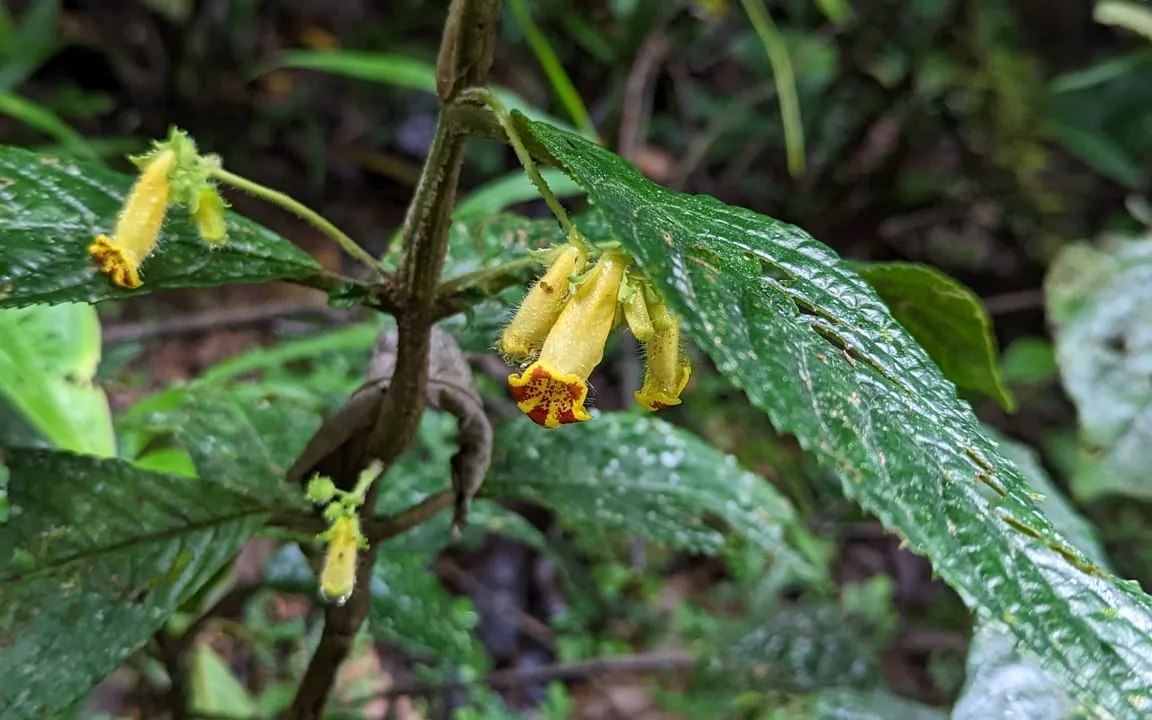
Wendland’s gasteranthus is a bushy tropical gesneriad grown for its glossy leaves and pouched flowers, which hang beneath the foliage in yellow spotted with red, swollen at the throat. It is more of a collector’s plant than a common garden-centre houseplant, and is related to the goldfish plant and the far better known African violet.
It makes an upright, leafy plant instead of a trailer, branching into a small bush of soft, veined leaves that set off the bright flowers. Given warmth and damp air it flowers on and off through the warmer months.
Its needs come from its rainforest home: warmth, humidity and shelter from harsh light. Meet them and it flowers well. If it gets too cold or dry, it drops leaves and stops growing.
Appearance and character
Leaves are glossy, oval and softly veined, mid to deep green, carried on branching upright stems that build into a small bush. They give the plant a lush, leafy look between flushes of flower.
The flowers are tubular and pouched, swollen at the base and narrowing to a small mouth, in yellow spotted with red, hanging beneath the leaves through the warm season.
The habit is upright and bushy, thirty to sixty centimetres tall, denser and fuller if the growing tips are pinched now and then.
The plant roots readily from stem cuttings, which is the usual way it is passed around and increased among growers.
Where it is from
Gasteranthus wendlandianus grows in the warm, wet forests of Central America, in the humid, shaded understorey where the air stays damp and the temperature even. It has no experience of cold or drought.
Give it warmth, high humidity and filtered light. Cold or dry air makes it drop leaves and stop growing. A warm, humid, shaded spot suits it best.
How it grows
It grows steadily in warmth and humidity, branching into a leafy bush and flowering in flushes through the warmer months. Cool or dry conditions bring it to a halt.
Pot it in a light, free-draining, humus-rich mix, and keep the compost evenly moist with tepid water, never letting it dry out hard or sit waterlogged. Pinch the tips to build a fuller plant.
Keep it warm, above about 15 deg C, humid and out of draughts, in bright indirect light or light shade. A terrarium, a plant case or a warm, humid room suits it far better than an open, dry one.
Take stem cuttings in the growing season to make new plants, rooting them in a humid, airy mix, and use them to replace an old plant that has grown leggy.
Through the seasons
Spring brings renewed growth and the first flowers as warmth and light return, the time to repot, take cuttings and start feeding.
Summer is when it grows and flowers most, hanging its red-spotted yellow pouches under the leaves. Keep it warm, humid and evenly moist, and feed regularly.
Autumn slows growth as the light drops. Ease off feeding and watering, and hold the warmth as heating dries the air.
Winter the plant rests and is most at risk from cold. Keep it above about 15 deg C, humid and just moist.
Care difficulty
Moderate, and all about warmth and humidity. In a warm, damp, shaded spot it grows and flowers freely. Its troubles are cold and dry air, which drop its leaves and stop its growth. Grown in a case or a warm, humid room, it is an easy and unusual flowering plant.
Watering
Keep the compost evenly moist through the growing season, watering with tepid water when the surface starts to dry, and never letting it dry out hard or stand wet. Even moisture suits it far better than swinging between extremes.
Ease off a little in winter while growth slows, keeping the mix just moist, and water at the compost instead of soaking the foliage in cold water.
Warning signs, diseases and pests
Aphids cluster on the flower buds and soft new tips, puckering the young growth and coating it in sticky honeydew. Rinse or wipe them off at the first sign, paying attention to the buds where they mass.
Mealybugs tuck into the leaf joints, showing as little woolly white specks. Pick them off with a cotton bud dipped in dilute alcohol, or treat with horticultural oil, checking where each leaf meets the stem.
Leaf drop and stalled growth almost always mean cold or dry air, not disease. Move the plant somewhere warmer and more humid, and it should recover and resume growth.
Growing environment
Bright, indirect light or light shade suits it, matching the shaded understorey it comes from. Direct sun scorches the leaves, and deep shade stops the flowering.
Warmth and humidity are essential. Keep it above about 15 deg C in a humid spot, using a case, a pebble tray or a group of plants, and out of cold draughts, which damage it quickly indoors.
Give it a light, free-draining, humus-rich mix and a warm, humid, shaded position. A closed case or a warm bathroom suits this moisture-loving plant.
Feeding
Feed every two to three weeks through the growing season with a dilute flowering houseplant fertiliser, to support the foliage and the flowers. Feed at half strength, since the fine roots scorch easily.
Ease off in autumn and stop in winter while growth slows. Fresh compost carries a newly potted plant for its first few weeks.
Troubleshooting
It dropped its leaves and stopped growing. Cold or dry air, almost always. This is a warmth-lover that stalls below about 15 deg C. Move it somewhere warmer and more humid and it should recover.
It grows but does not flower. Usually too little light or too little warmth to set the pouched flowers. Move it into brighter indirect light, hold the warmth up, and switch to a high-potassium flowering feed instead of a leafy one.
The buds and tips are sticky and distorted. Aphids. Wash them off or treat early, and clean up the honeydew.
It has gone leggy. Pinch the growing tips to build a fuller plant, and take cuttings to replace an old, bare one. It roots easily from stem cuttings.
Is it safe around pets? Yes. Gasteranthus and the other gesneriads carry no compound recorded as toxic to cats or dogs, and a chewed glossy leaf would do no harm beyond perhaps a little mild stomach upset, so it is safe in a home with animals or children.
Wendland's Gasteranthus problem guides
Not sure what is wrong? See the common houseplant pests guide.