
Houseplant
Goldfish Plant
Nematanthus gregarius
Also known as Clog Plant, Guppy Plant
How to grow Nematanthus gregarius, the goldfish plant. Its pouched orange flowers like leaping goldfish, why it suits a hanging pot, and how to flower it.
At a glance
- Difficulty
- Moderate
- Water
- Keep lightly moist in growth; a little drier in winter
- Light
- Bright indirect light
- Temperature
- Warm, 16 to 27 deg C; keep above 13 deg C
- Humidity
- Moderate to high
- Hardiness
- USDA 10-12, RHS H1b, hardy to 13 C
- Type
- Evergreen trailing perennial
- Height
- 30 to 60 cm of trailing growth
- Native to
- Brazil
A tender Brazilian trailing plant grown indoors, with no frost tolerance. It needs a warm, bright, fairly humid spot above about 13 deg C. A slightly cooler, drier winter rest helps it flower, but hard cold or cold, wet compost harms it. It grows through much of the year in a warm room and flowers most freely in spring and summer.
Hardiness zones describe winter cold alone. Summer heat, humidity, rainfall and the length of the growing season decide as much, so treat the range as the outer limit rather than as a recommendation.
Not known to be toxic
The goldfish plant is not listed as toxic by the ASPCA, which records it as safe for cats and dogs, and no harmful compound is recorded in people. A chewed leaf or flower would be unlikely to cause more than mild stomach upset. It is grown for its orange flowers and glossy foliage and is not considered a poisoning hazard.
Sources: ASPCA toxic and non-toxic plants, RHS potentially harmful garden plants
About
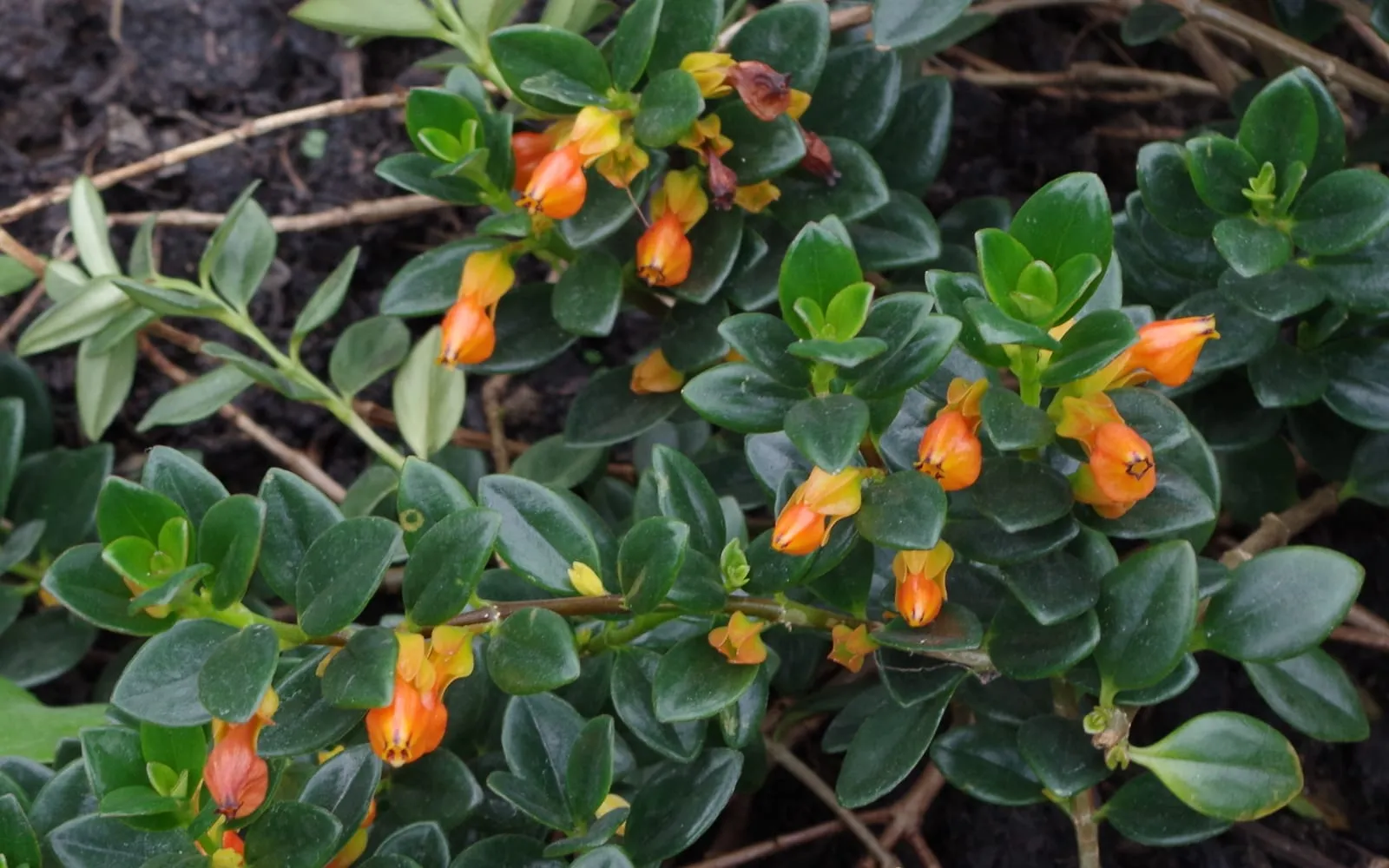
Goldfish plant is grown for its flowers, small, waxy, orange pouches with a pinched mouth that look like leaping goldfish. They appear along the trailing stems in numbers when the plant has enough light, hanging beneath the glossy foliage.
It is a trailing gesneriad from Brazil, related to the African violet and the miniature wax plant as a plant for a hanging pot, and it makes a neat cascade of small, thick, dark green leaves that look good even out of flower.
It has a reputation for being a little temperamental about flowering, but the requirements are straightforward. It needs bright light, steady but not heavy watering, and a slightly cooler, drier winter rest to set the flower buds. With those conditions, it blooms freely.
Appearance and character
Flowers are the main attraction, small, waxy, orange to red pouches, swollen and pinched at the mouth, borne along the stems in spring and summer and often on and off through the year. Their goldfish shape gives the plant its common name.
Leaves are small, thick, glossy and dark green, held in pairs along trailing, arching stems, and they make a dense, attractive cascade even when the plant is not in flower.
The habit is trailing and arching, the stems spilling over the edge of a pot to thirty to sixty centimetres, which suits it to a hanging container or a high shelf.
The plant is evergreen and bushy at the crown, branching freely, and pinching the stem tips keeps it full and encourages more flowering shoots.
Where it is from
Nematanthus gregarius comes from the coastal forests of Brazil, where it grows as a trailing epiphyte and scrambler in warm, humid, lightly shaded conditions, rooted in mossy pockets instead of deep soil. It is a plant of warmth and filtered light.
Give it warmth, moderate to high humidity, bright filtered light and an open, free-draining root zone. It dislikes cold and heavy, wet soil. A cooler, drier spell in winter mimics its natural rhythm and triggers flowering.
How it grows
It grows in flushes of trailing stems through the warm months and flowers mainly in spring and summer, though a settled plant can flower on and off for much of the year. It slows in the lower light of winter.
Pot it in a free-draining, humus-rich mix in a hanging pot or on a shelf, and keep the compost lightly moist in growth, letting the surface dry between waterings. Pinch the stem tips to keep it bushy and to encourage flowering shoots.
Give it bright, indirect light, warmth above about 13 deg C, and moderate humidity. Too little light gives lush growth and few flowers, while a slightly cooler, drier winter rest helps set buds for the next flush.
Take stem cuttings in spring or summer to make new plants, which root easily, and refresh an old, leggy plant by cutting it back and rooting the tips.
Through the seasons
Spring brings renewed growth and the main flush of flowers as light increases, the best time to prune, repot and resume feeding.
Summer is the main season of growth and flower, with orange blooms along the trailing stems. Keep it lightly moist, humid and fed.
Autumn growth slows as daylight shortens. Cut back the feed and water as the flushes of goldfish flowers finish.
Winter should be slightly cooler and drier, in good light, to help set next spring’s buds. Hold it above about 13 deg C and do not let it dry out hard.
Care difficulty
Moderate. Light and a cool winter break are the two points to get right. Given bright light, steady watering and warmth it grows and flowers well, and it is not fussy day to day. The usual disappointment is a plant that grows but will not flower, which almost always means too little light or no cooler, drier winter rest. Correct those conditions and flowering should improve.
Watering
Keep the compost lightly moist during active growth, watering once the surface has dried and pouring off what drains through. Unlike the thick-leaved hoyas, the goldfish plant has thinner leaves and does badly with drying out hard, so in winter ease back only a little for the cooler rest and never let it parch.
The plant dislikes both soggy roots and drying out completely, so aim for steady, moderate moisture. Empty any saucer after watering, since standing water rots the roots.
Warning signs, diseases and pests
Aphids gather on the soft new growth and flower buds, distorting them and leaving sticky honeydew. Wash them off or treat early, and encourage the natural predators that clear them.
Root rot follows cold, wet compost, showing as collapsing stems and a soft base. Reduce watering, improve the drainage and keep the plant warm.
Leaf drop usually means the plant is too cold, too dry or too wet. Check the temperature and the watering and steady them, and the plant should recover.
Growing environment
Bright, indirect light suits it, and a little gentle direct sun helps flowering, though harsh midday sun scorches the leaves. Too little light is the commonest reason it fails to flower.
Steady warmth and a moderately humid room suit it, above about 13 deg C and clear of cold draughts. A little extra moisture in the air suits it where the room is dry, though it is far less demanding for humidity than a calathea.
Give it a free-draining, humus-rich mix and a hanging pot where the stems can trail, and a cooler, brighter spot for its winter rest. Consistency of light and warmth improves flowering.
Feeding
Feed every two to three weeks through spring and summer with a high-potassium liquid feed, such as a tomato fertiliser diluted, to support flowering. A balanced feed is fine for foliage growth earlier in the season.
Taper the feed off through autumn and give none over the cool winter rest. Keep every dose to half strength, since this is a small plant with fine roots that are quick to scorch.
Troubleshooting
It grows well but will not flower. Usually too little light, or no cool winter break. Move it into brighter light, switch to a high-potassium feed such as diluted tomato food through summer, and give it a cooler, drier spell in good light over winter so it sets buds.
The leaves are dropping. Too cold, too dry or too wet. Check the temperature is above about 13 deg C and steady the watering, and the plant should settle.
The new growth is sticky and distorted. Aphids on the soft tips and buds. Wash them off or treat early, and clean up the sticky honeydew.
The stems are going soft at the base. Rot from cold, wet compost. Cut back watering, improve the drainage, keep it warm, and root healthy tip cuttings to start again if much has gone.
It has gone leggy and bare at the top. Age and low light. Cut it back in spring to encourage bushy new growth, and root the trimmed tips as cuttings to make fresh, full plants.
Goldfish Plant problem guides
Not sure what is wrong? See the common houseplant pests guide.