
Houseplant
Crystal Anthurium
Anthurium crystallinum
Also known as Velvet Anthurium
Practical guidance for growing crystal anthurium, Anthurium crystallinum, including velvet foliage, silver veining, humidity, chunky compost, watering, and mild toxicity.
At a glance
- Difficulty
- Difficult
- Water
- When the top few centimetres of mix dry out, checked by hand rather than by the calendar
- Light
- Bright indirect light; direct sun scorches the velvet leaves
- Temperature
- 18-27 deg C, never below 15 deg C
- Humidity
- 70% or higher; a cabinet or terrarium suits it better than open room air
- Hardiness
- USDA 11-12, RHS H1b, hardy to 15 C
- Type
- Evergreen epiphytic or terrestrial perennial, grown for foliage
- Height
- Leaves to 45-60 cm long
- Native to
- Central America, South America
A rainforest-floor aroid from Central and South America, growing in deep shade under a closed canopy where humidity barely drops. The zone range matters less than the humidity figure for a plant nobody grows outdoors in most climates; it stops growing below about 18 deg C and struggles for years in ordinary room air rather than briefly pausing, because dry air is a chronic stress rather than an occasional shock for this species. It has no frost tolerance at all.
Hardiness zones describe winter cold alone. Summer heat, humidity, rainfall and the length of the growing season decide as much, so treat the range as the outer limit rather than as a recommendation.
Harmful if eaten
- Do not eat
- Every part, the leaves and stalks most of all
- Harm from
- Eating it and handling it
- Affects
- People, cats and dogs
Anthurium crystallinum is grown for its foliage rather than its flowers, but it belongs to the same genus as Anthurium andraeanum, the flamingo flower the ASPCA lists specifically as toxic to cats and dogs, and every part of it contains the same insoluble calcium oxalate raphides. Chewing a leaf causes immediate oral irritation, drooling, and difficulty swallowing in a pet, and the same reaction in a person if plant material is chewed or swallowed. Sap can also irritate skin during repotting or trimming damaged leaves. No page specific to crystallinum exists on either the RHS or ASPCA sites, but the shared chemistry across the genus is well established, so the sensible approach is to treat it with the same caution as any other anthurium rather than assuming its ornamental foliage makes it any different.
Sources: ASPCA (Flamingo Flower, Anthurium andraeanum), RHS potentially harmful garden plants
About
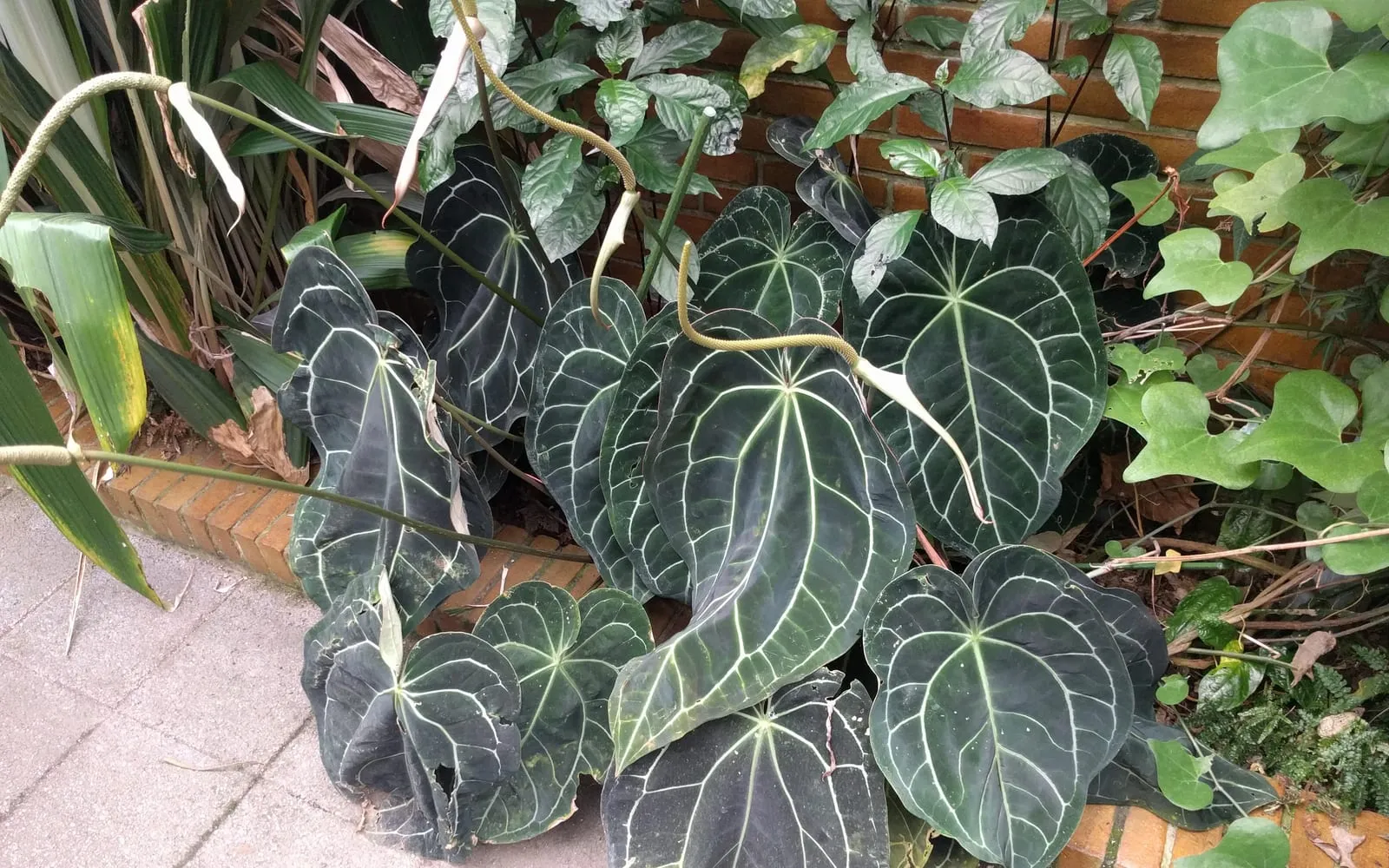
Crystal anthurium is grown for its leaves rather than for flowers. Broad, heart-shaped foliage in deep velvety green carries a network of pale silver veins that stand out sharply against the dark surface, an effect that gives the plant its name and its reputation as one of the more striking aroid foliage plants in cultivation.
It is also one of the more demanding anthuriums to keep looking good. The flowering species sold as gift plants tolerate an ordinary living room reasonably well. Crystal anthurium needs humidity closer to a greenhouse or a closed cabinet than to open room air, and its velvet leaves show every lapse in care more visibly than a glossy-leaved plant would.
Appearance and character
Leaves are large, heart-shaped and held on upright stalks, deep olive to near-black green with a soft, velvety texture that comes from a dense layer of fine surface cells rather than any waxy coating. A well-grown leaf can reach 30 to 45 cm long, occasionally more on a mature specimen.
The silver-white veining is the standout feature, a network of primary and secondary veins that catches the light and stands out clearly against the dark leaf surface, strongest and most contrasted on young, actively growing leaves and slightly duller as a leaf ages.
The flowers are inconspicuous by anthurium standards, a narrow green to purplish spathe wrapped tightly around a slender spadix, easy to miss entirely against the dramatic foliage. Most growers choose this species for its leaves.
New leaves emerge rolled and often flushed with a coppery or bronze tint before unfurling and deepening to their mature colour over a week or two.
Where it is from
Anthurium crystallinum is native to the understorey of tropical rainforest in Central and South America, growing on the forest floor or low on tree trunks in deep, constant shade beneath a closed canopy.
Light that reaches the forest floor in that habitat is dim and diffuse, a sharp contrast with the brighter conditions many other houseplant aroids tolerate, which is why direct sun scorches this species so readily. Humidity sits high and barely fluctuates through the year, since a closed canopy buffers the air beneath it from the drying effect of open sky.
Those two facts, low light tolerance paired with a demand for very high humidity, are the combination that makes this species harder than most anthuriums to grow well on an open windowsill.
How it grows
Pot it in a very open, chunky mix of orchid bark, perlite and a small amount of compost, avoiding anything close to ordinary potting soil, which holds far too much water around roots adapted to loose leaf litter and crevices in bark.
Provide humidity of 70% or more wherever possible. A closed cabinet, a large glass terrarium, or a naturally humid room such as a bathroom with good light all suit it better than an open living room, where humidity rarely climbs that high without deliberate effort.
Give it bright, indirect light rather than direct sun, which scorches the velvet leaf surface within hours in some cases. A spot back from an east or north-facing window, or filtered light from a sheer curtain, usually works well.
Repot only when clearly necessary, since the roots dislike frequent disturbance, moving up one pot size into fresh, equally open mix.
Propagate by division at repotting, separating a rooted offset from the main clump, since single-leaf cuttings root slowly and unreliably in this species compared with more forgiving houseplants.
Through the seasons
Spring brings the return of stronger growth. Resume monthly feeding and check whether the plant needs repotting into fresh, open mix.
Summer is the main growing season, with the fastest production of new leaves given enough warmth and humidity.
Autumn slows growth gradually. Reduce feeding towards the end of the season as light levels fall.
Winter is a quieter period. Water more sparingly, hold off on feeding, and pay close attention to humidity as heating dries the surrounding air.
Care difficulty
Difficult, mainly because of humidity. Most rooms in an ordinary home sit well below the level this species needs. Low humidity shows up gradually as smaller new leaves, duller veining and crisping edges rather than as a single dramatic symptom.
The velvet leaf surface adds a second layer of care most other houseplants do not need: it marks and holds water spots more readily than a glossy leaf, so watering from overhead or wiping the foliage with a wet cloth can leave lasting blemishes.
Watering
Water when the top few centimetres of mix have dried out, checking by hand rather than on a fixed schedule, since the interval shifts with temperature, humidity and how open the mix has stayed.
Water thoroughly until it runs from the drainage holes, then let the top of the mix dry again before the next watering. A mix that never dries even slightly at the surface is more likely to cause root rot than one allowed to cycle properly.
Water the compost directly rather than the leaves, since standing water on the velvet surface can leave permanent marks and encourages fungal spotting in still, humid air.
Warning signs, diseases and pests
Root rot follows a mix that stays too dense or too wet, showing as yellowing lower leaves and a plant that looks increasingly unwell despite damp compost. Repot into fresher, more open mix and trim away any soft, brown roots.
Mealybugs settle where the leaf stalks meet the base of the plant, showing as small white, cottony tufts tucked into the crevices. Remove them with a cotton bud dipped in surgical spirit.
Scale insects appear as small, flat brown discs on the undersides of older leaves, sapping the plant’s strength over time. Treat the same way as mealybug, or wipe the leaf undersides down with a damp cloth.
Leaf spot develops on velvet foliage kept wet in still, humid air, showing as dark, water-soaked patches that spread if conditions do not improve. Improve air circulation, avoid wetting the leaves when watering, and remove badly affected foliage.
Growing environment
Bright indirect light suits it best. Direct sun scorches the velvet leaf surface, while very deep shade slows growth and dulls the silver veining that makes the foliage distinctive.
Keep the room between 18 and 27 deg C. Growth stalls below about 18 deg C, and the plant has no cold tolerance at all.
Humidity of 70% or higher is close to essential. A closed cabinet or terrarium gives the most reliable results; open room air, even with a humidifier running, often struggles to hold this species at its best for long.
A very open mix of bark, perlite and a little compost, in a pot no larger than the roots need, keeps the base from staying too wet between waterings.
Feeding
Feed monthly from spring to early autumn with a balanced liquid houseplant feed, diluted to a quarter or half the strength stated on the label.
Stop feeding entirely over winter, when growth slows considerably and unused fertiliser accumulates as salts in a mix that is already delicate to manage.
Flush the pot with plain water every couple of months through the growing season to clear any salt build-up, which can scorch the fine root system this species relies on.
Troubleshooting
The leaf edges are browning and the veining looks dull. Low humidity, almost certainly. Move the plant into a more humid space, such as a bathroom or an enclosed cabinet, rather than relying on a room humidifier alone.
Water spots have left permanent marks on the leaves. The velvet surface holds moisture marks in a way glossy foliage does not. Water the compost rather than the leaves in future, and accept that an existing mark will not fade from that leaf.
Growth has almost stopped even in summer. Check both temperature and humidity together. This species tolerates a shortfall in one for a while, but a shortfall in both at once slows it dramatically.
New leaves are coming in smaller than the old ones. Usually a sign that light, humidity, or feeding has slipped somewhere. Review all three rather than assuming the plant has reached its mature size.
Is it the same plant as the flamingo-flower anthurium I already own? No. It is a different species within the same genus, grown for its velvet, silver-veined leaves rather than for a long-lasting coloured spathe, and it needs considerably more humidity to thrive.
Crystal Anthurium problem guides
Not sure what is wrong? See the common houseplant pests guide.