
Houseplant
Flame Violet
Episcia cupreata
Also known as Episcia, Carpet Plant
How to grow Episcia cupreata, the flame violet, with quilted coppery leaves and scarlet flowers. It spreads on runners like a strawberry.
At a glance
- Difficulty
- Moderate
- Water
- Keep lightly moist; never soggy or bone dry
- Light
- Bright indirect light
- Temperature
- Warm, 18 to 27 deg C; keep above 16 deg C
- Humidity
- High
- Hardiness
- USDA 11-12, RHS H1a, hardy to 16 C
- Type
- Evergreen creeping perennial
- Height
- 10 to 20 cm tall, spreading widely
- Native to
- Tropical South America
A tender creeper from the warm, humid rainforest floor of tropical South America, growing best where it stays warm and moist. It has no frost tolerance and drops leaves below about 16 deg C, so it is a plant for a warm room, a terrarium or a heated conservatory. Cool, dry air is the main problem.
Hardiness zones describe winter cold alone. Summer heat, humidity, rainfall and the length of the growing season decide as much, so treat the range as the outer limit rather than as a recommendation.
Not known to be toxic
The flame violet is a gesneriad, the same family as the African violet, and is not recorded as toxic to people or pets. A chewed leaf would be unlikely to cause more than a mild stomach upset. It is a safe plant for a home with cats, dogs or children, grown for its coppery leaves and bright flowers instead of for anything edible.
Sources: ASPCA toxic and non-toxic plants, RHS potentially harmful garden plants
About
Flame violet is grown for both its scarlet flowers and its coppery bronze and silver-green leaves. The leaves are thick, quilted and softly hairy, and they are as important as the flowers.
It creeps instead of climbs, sending out runners like a strawberry and rooting them where they touch the compost, so a single plant can fill a pot and then spill over the edge into a low, spreading mat. That habit suits a hanging pot or the front of a warm terrarium.
It is a gesneriad, a cousin of the African violet and the goldfish plant, and it shares their liking for warmth, humidity and gentle light. In those conditions it grows freely; in cold, dry air it declines fast.
Appearance and character
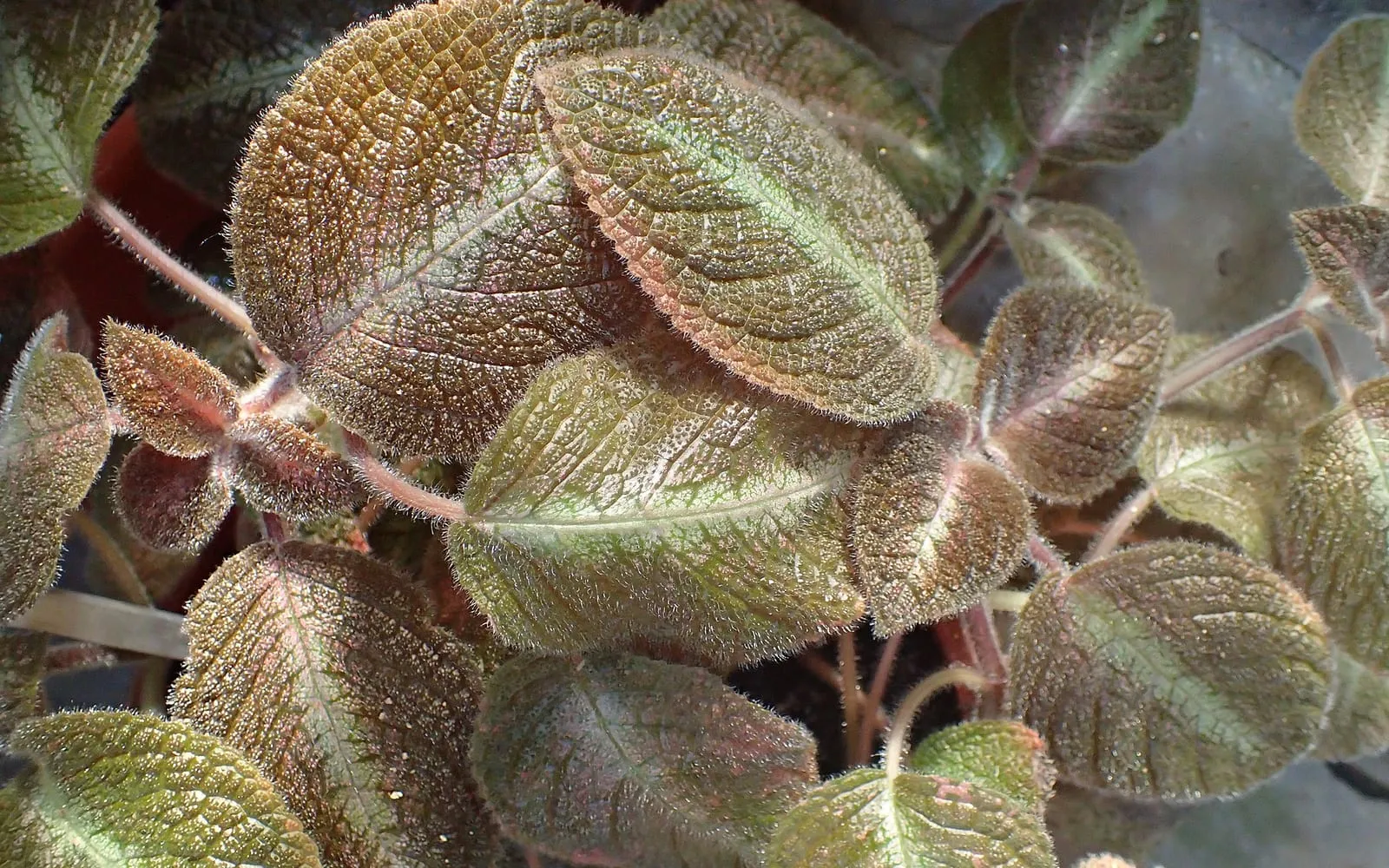
Leaves are oval and quilted with a soft, velvety pile, coloured in coppery bronze, chocolate and silver-green with paler veins. They sit in low rosettes along the creeping stems.
Flowers are small, tubular and flared, most often bright scarlet with a yellow eye, though named forms come in pink, orange and yellow. They appear among the leaves through the warm months.
The habit is low and spreading, only ten to twenty centimetres tall, extending by thin runners that root as they go, in the manner of a strawberry.
New plantlets form at the ends of those runners and can be pinned down to root or cut off and potted, which is the easiest way to make more.
Where it is from
Episcia cupreata comes from the warm, humid rainforests of tropical South America, creeping across the shaded forest floor in constant warmth and moisture. It is not adapted to cold or a dry season.
It needs steady warmth, high humidity and filtered light. Cold or dry air stalls growth and causes leaf drop, so grow it warm, moist and shaded, close to rainforest floor conditions.
How it grows
It grows fast in warmth and humidity, spreading by runners and flowering among the foliage, and slows or stops if the room turns cool. In a warm, humid spot it can stay active for much of the year.
Pot it in a light, free-draining, humus-rich mix in a shallow or hanging pot, and keep the compost lightly moist with tepid water. Cold water splashed on the hairy leaves leaves pale blotches, so water carefully at the compost or from below.
Keep it warm, above about 16 deg C, humid and out of draughts, in bright indirect light. A terrarium, a covered propagator or a warm, humid bathroom suits it far better than an open, dry room.
Pin down or detach the runner plantlets to make new plants, and pinch back a straggly plant to keep it full. It is easily refreshed this way when an old plant grows bare in the middle.
Through the seasons
Spring starts renewed growth and flowering as light and warmth increase. This is the time to repot, divide runners and resume feeding.
Summer is the main season of growth and flowering. Keep it warm, humid and lightly moist, and feed regularly.
Autumn growth slows as light falls. Ease off feeding and watering, and keep the warmth up as heating dries the air.
Winter is its rest period, when it is most vulnerable to cold. Keep it above about 16 deg C, humid, and only lightly moist.
Care difficulty
Moderate, and entirely about warmth and humidity. In a warm, humid, bright spot it grows and flowers freely and roots its runners around the pot. Cold and dry air stall growth and cause leaf drop, and cold water marks the foliage. Grow it in a terrarium or a warm, humid room and it is quick to fill out.
Watering
Keep the compost lightly moist at all times, watering with tepid water when the surface begins to dry, and never letting it either dry out hard or sit soggy. The plant needs even moisture instead of extremes.
Water at the compost or from below instead of over the leaves, since the hairy surface holds cold droplets that leave pale marks. Ease off a little in winter while growth slows, keeping it just moist.
Warning signs, diseases and pests
Aphids gather on the soft new growth and flower buds, distorting them and leaving sticky honeydew. Wash them off or treat early, and check the growing tips where they cluster.
Mealybugs hide among the leaves and along the runners as small white woolly tufts. Dab them off or treat with horticultural oil, searching where the runners join the crown.
Pale blotches on the leaves usually come from cold water splashed on the hairy surface instead of from disease. Water at the compost with tepid water, and new leaves should be unmarked.
Growing environment
Bright, indirect light suits it, bringing out the coppery leaf colour and the flowers. Direct sun scorches the soft leaves, and deep shade dulls the colour and stops the flowering.
Warmth and humidity matter most. Keep it above about 16 deg C in a humid spot, using a terrarium, a pebble tray or a group of plants, and keep it away from cold draughts.
Give it a light, free-draining, humus-rich mix in a shallow or hanging pot, and a warm, humid, bright position. A closed case or a warm bathroom is ideal.
Feeding
Feed every two to three weeks through spring and summer with a dilute balanced or flowering houseplant fertiliser, to support both the foliage and the flowers. Feed at half strength, since the fine roots are easily scorched.
Ease off in autumn and stop in winter while growth slows. Fresh compost supplies enough for the first few weeks after repotting.
Troubleshooting
It dropped its leaves and stopped growing. Almost always cold, or cold draughts. This plant stalls below about 16 deg C. Move it somewhere warmer and more humid and it should recover.
There are pale blotches on the leaves. Usually cold water splashed on the hairy surface. Water at the compost or from below with tepid water, and the new leaves will be unmarked.
It grows leaves but few flowers. Often too little light, too little warmth, or too much nitrogen. Give it brighter indirect light, keep it warm, and feed with a flowering instead of a high-nitrogen fertiliser.
It has gone bare in the middle. Age and legginess. Pin down or pot up the runner plantlets to make fresh plants, and pinch back the parent, or start again from the plantlets.
Is it safe around pets? Yes. As a gesneriad it is not recorded as toxic to cats or dogs, so it is a safe plant for a home with animals.
Flame Violet problem guides
Not sure what is wrong? See the common houseplant pests guide.