
Houseplant
Watch Chain
Crassula muscosa
Also known as Rat Tail Crassula, Zipper Plant, Lizard's Tail
How to grow watch chain, Crassula muscosa. Why its tightly stacked leaves look like a braided zip fastener, the unpleasant smell its small flowers give off, and why stretched, gappy growth from too little light cannot be reversed.
At a glance
- Difficulty
- Easy
- Water
- Only once the mix has dried out completely, reduced further in winter
- Light
- Bright light with a few hours of direct sun
- Temperature
- Above 5 deg C for reliable growth; no tolerance for hard frost
- Hardiness
- USDA 9b-11, RHS H2, hardy to -2 C
- Type
- Evergreen succulent subshrub
- Height
- 15-30 cm, further if left to trail
- Native to
- South Africa
A zone range built for brief, dry cold rather than a real winter. Plants from the drier parts of its South African range tolerate an unexpected light frost if the soil around the roots is dry, but sustained cold or wet ground kills it outright, so the zone number describes a narrow tolerance rather than a season it can live through outdoors anywhere but the mildest, driest climates.
Hardiness zones describe winter cold alone. Summer heat, humidity, rainfall and the length of the growing season decide as much, so treat the range as the outer limit rather than as a recommendation.
Harmful to cats and dogs if eaten
- Do not eat
- All parts
- Harm from
- Eating it
- Affects
- Cats and dogs
The ASPCA lists Crassula as a genus toxic to cats and dogs, and watch chain carries the same compounds as its better-known relative, the jade plant. A pet that chews on the stems can develop vomiting, depression or poor coordination, usually mild and resolving on its own, though a vet should see any animal that has eaten a substantial amount. It does not appear on the RHS list of plants harmful to people, and there is no record of it causing more than mild stomach upset if eaten by a child. The tightly packed leaves and low, sprawling habit put it within easy reach of a curious cat, which is the main practical risk.
Sources: ASPCA toxic and non-toxic plants, RHS potentially harmful garden plants
About
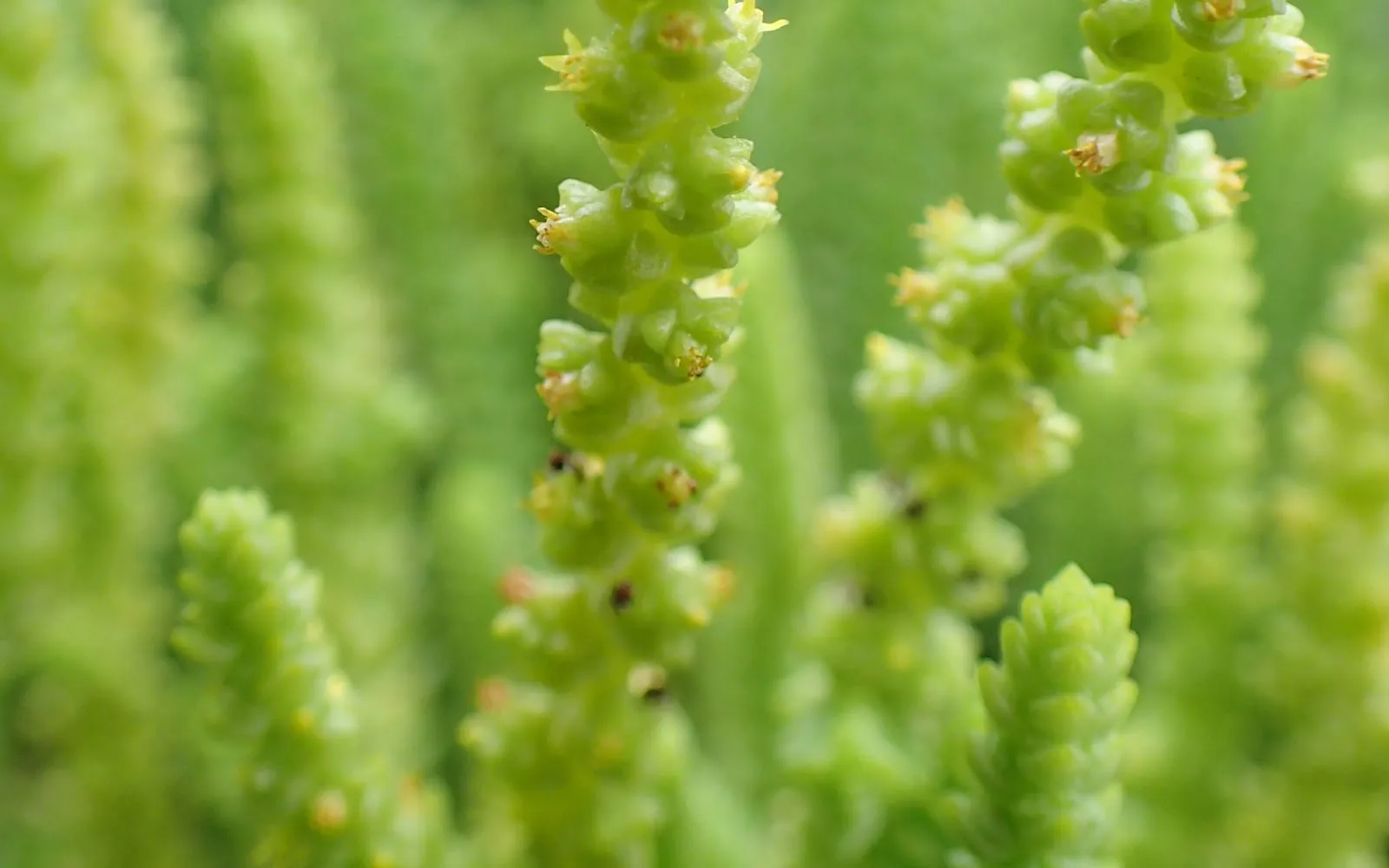
Watch chain grows its leaves in four tight ranks stacked one above the other along a thin stem, so closely spaced that each stem looks like a length of braided cord or a zip fastener rather than an ordinary leafy shoot. The stems start upright and flop outward with age and weight, building a low, tangled mound or a trailing curtain if grown in a hanging pot.
It needs very little. Full sun, a gritty mix that drains fast and a watering routine with long dry gaps between soakings cover most of what it needs, and it grows quickly for a succulent when those conditions are met. Know this before you buy one: the small flowers it produces have an unpleasant, faintly unpleasant smell some growers compare to cat urine, so a plant in flower is better kept on a windowsill you can open than on a desk you sit close to all day.
Appearance and character
Each leaf is small, triangular and pressed flat against the stem, and the four ranks spiral around it so tightly that individual leaves are hard to pick out from a short distance. The colour runs from bright green in shade to a purplish bronze where the plant gets strong sun, and a well-lit plant often shows both colours on the same stem as older growth colours up and new growth stays green.
Stems branch freely from the base and from points partway up older growth, building a dense, mounding clump within a year or two of a small starting cutting. Left unsupported, the weight of the stems eventually pulls them down and outward, so a mature plant reads as much as a trailing subject as an upright one.
Tiny star-shaped, yellow-green flowers appear in the leaf axils along the upper stems, usually in spring or summer on a well-grown plant. They are easy to miss visually, since they barely project past the leaves that surround them, and the smell is what most growers notice about them first.
Where it is from
Crassula muscosa grows across a wide stretch of South Africa, rooting into rocky crevices and shallow, stony soil on hillsides and in scrubby grassland rather than in deep garden soil. Rainfall across its range is seasonal and often light, and the plant survives long dry stretches by storing water in its leaves and stems the way most Crassula species do.
That rocky, exposed habitat explains why it needs so much light indoors. Wild plants grow with almost nothing shading them, and a pot kept too far from a window produces the loose, elongated growth that a plant getting enough sun never shows.
How it grows
Pot it in a gritty, fast-draining succulent or cactus mix, in a container only a little larger than the current root ball, since a bigger pot holds more moisture than the roots can use and invites rot.
Give it as much direct sun as a windowsill allows. A few hours of direct light a day keeps the stems compact and the colour rich; less than that and new growth stretches out with wider gaps between the leaf whorls, losing the tight, braided look that makes the plant recognisable.
Pinch or trim back leggy stems to encourage branching from lower down, which is the easiest way to keep an older plant dense rather than a single long, trailing rope. Cuttings root readily in the same gritty mix, left to callus for a day or two before being set into barely damp soil.
Repot only when the plant has clearly outgrown its container, typically every couple of years, since frequent repotting disturbs roots that would otherwise be left alone.
Through the seasons
Spring brings the start of active growth. Increase watering gradually and resume feeding once new growth is visible.
Summer is the main growing season, with steady watering, bright light and, on a mature plant, the small, strong-smelling flowers.
Autumn slows growth. Taper off watering and stop feeding as the light and temperature both drop.
Winter is a dry rest. Water only sparingly, enough to stop the stems shrivelling, and keep the plant well away from cold glass or a draughty windowsill.
Care difficulty
Easy, and one of the more forgiving succulents for a beginner once the basic pattern of bright light and infrequent watering is understood. It tolerates being forgotten for weeks at a time far better than it tolerates a well-meaning owner watering it on a fixed weekly schedule. The main skill is resisting the urge to water on a timetable rather than by checking the mix, since overwatering is by a wide margin the likeliest way to lose one.
Watering
Let the mix dry out completely before watering again, checking with a finger rather than guessing by the calendar, since the interval shifts with light, temperature and the size of the pot. When you do water, soak the mix thoroughly until water runs from the drainage holes, then let it drain fully and leave it alone until dry again.
Cut back hard in winter, watering only enough to keep the stems from visibly shrivelling. A dormant plant kept damp through a cold, low-light winter is far more likely to rot than one left almost dry.
Warning signs, diseases and pests
Mealybug hides among the tightly stacked leaves near the growing tips, where the dense growth gives it cover from a casual glance. Small white, cottony tufts are the giveaway. Treat with horticultural soap or wipe them away with a cotton bud dipped in alcohol, checking back over the following weeks since the packed foliage makes them easy to miss the first time.
Root rot follows a mix that stays wet, especially in winter, and shows as stems that turn soft, dark and mushy from the base upward. Unpot it, cut away any affected tissue, let the remainder dry for a day or two, and repot into fresh, dry mix.
Vine weevil grubs feed on the roots below the soil line, and the first sign is often a plant that suddenly wilts or topples despite a mix that looks fine on the surface. Check the roots for the pale, C-shaped grubs if a plant declines with no obvious cause above ground.
Etiolation shows as thin, widely spaced growth with long gaps between each whorl of leaves, the plant’s response to too little light. There is no way to compress growth that has already stretched, so cut the leggy stem back to a compact section and move the plant somewhere brighter to stop it happening again.
Growing environment
Bright light with several hours of direct sun a day suits it best. A south or west-facing windowsill in a temperate climate is close to ideal, and a plant that colours up bronze or purple at the tips is getting enough light rather than being stressed.
Average room warmth is fine year round, provided it stays above about 5 deg C. It has no meaningful frost tolerance and should come indoors or into a heated space well before the first cold nights of autumn if it has spent summer outside.
A gritty, mineral succulent mix, rather than ordinary potting compost, is the single biggest factor in keeping the roots healthy, since it drains fast enough that water does not linger around them after watering.
No particular humidity requirement applies. Ordinary indoor air, even in a centrally heated room in winter, causes it no trouble.
Feeding
Feed with a balanced houseplant fertiliser or a cactus and succulent feed, diluted to around half the manufacturer’s recommended strength, monthly through spring and summer.
Stop feeding entirely from autumn through winter, when growth has slowed and unused fertiliser only accumulates as salts in a mix that is already being watered far less often.
Troubleshooting
My plant smells unpleasant when it flowers. That is normal rather than a sign of a problem. The small yellow-green flowers produce a smell many people find unpleasant, and it fades once the flowers finish. Moving the plant to a well-ventilated spot while it blooms is the simplest fix.
The stems have gone thin and stretched out. Too little light. New growth spaces itself further apart when the plant is reaching for more sun, and once a stem has stretched it stays that way. Cut it back to a compact section and give the plant brighter light so new growth grows tight again.
A stem has gone soft and dark near the base. Root rot, almost always from a mix that has stayed wet too long. Unpot the plant, trim away any soft or discoloured tissue, let the roots dry out, and repot into fresh, gritty mix, then adjust how often you water.
Can I grow it outdoors in summer? Yes, in a bright, sheltered spot, provided you bring it back inside well before any risk of frost. It grows faster outdoors in strong summer light than most owners see from it indoors.
How do I take a cutting? Snip a healthy stem section, leave the cut end to callus over for a day or two in a dry spot out of direct sun, then set it into barely damp, gritty mix. Roots typically form within a few weeks with no covering or extra warmth needed.
Watch Chain problem guides
Not sure what is wrong? See the common houseplant pests guide.