
Houseplant
Cooper's Haworthia
Haworthia cooperi
Also known as Cooper's Ice Plant, Window Haworthia
How to grow Cooper's haworthia, Haworthia cooperi. Why its translucent leaf windows sit mostly buried among grass in the wild, and why it needs far more regular summer watering than a typical succulent.
At a glance
- Difficulty
- Easy
- Water
- Regularly through the growing season, cut back hard in winter
- Light
- Bright, indirect light; direct hot sun scorches the leaves
- Temperature
- Above 5 deg C for reliable growth
- Hardiness
- USDA 9b-11, RHS H2, hardy to -2 C
- Type
- Evergreen succulent perennial
- Height
- 5-8 cm tall, spreading wider as offsets form
- Native to
- South Africa
Grown mostly buried among grass tussocks and rocks in its native grassland, so the zone number describes a cold tolerance the plant rarely tests in the wild, sheltered as it is below ground level. What the zone leaves out is the seasonal rain pattern of its home range, summer storms followed by a markedly drier winter, which the watering routine below follows more closely than the temperature figures do.
Hardiness zones describe winter cold alone. Summer heat, humidity, rainfall and the length of the growing season decide as much, so treat the range as the outer limit rather than as a recommendation.
Not known to be toxic
Haworthia does not appear on the RHS list of potentially harmful garden plants, and the ASPCA lists the genus as non-toxic to cats and dogs. There is no documented case of it causing more than mild digestive upset if chewed, and that upset is more likely to come from the fibrous bulk of the leaf than from anything toxic in it. Its small size and low, ground-hugging rosette put it within easy reach of a curious cat or dog, but this is a genus you can grow without factoring pets or small children into the decision.
Sources: RHS potentially harmful garden plants, ASPCA toxic and non-toxic plants
About
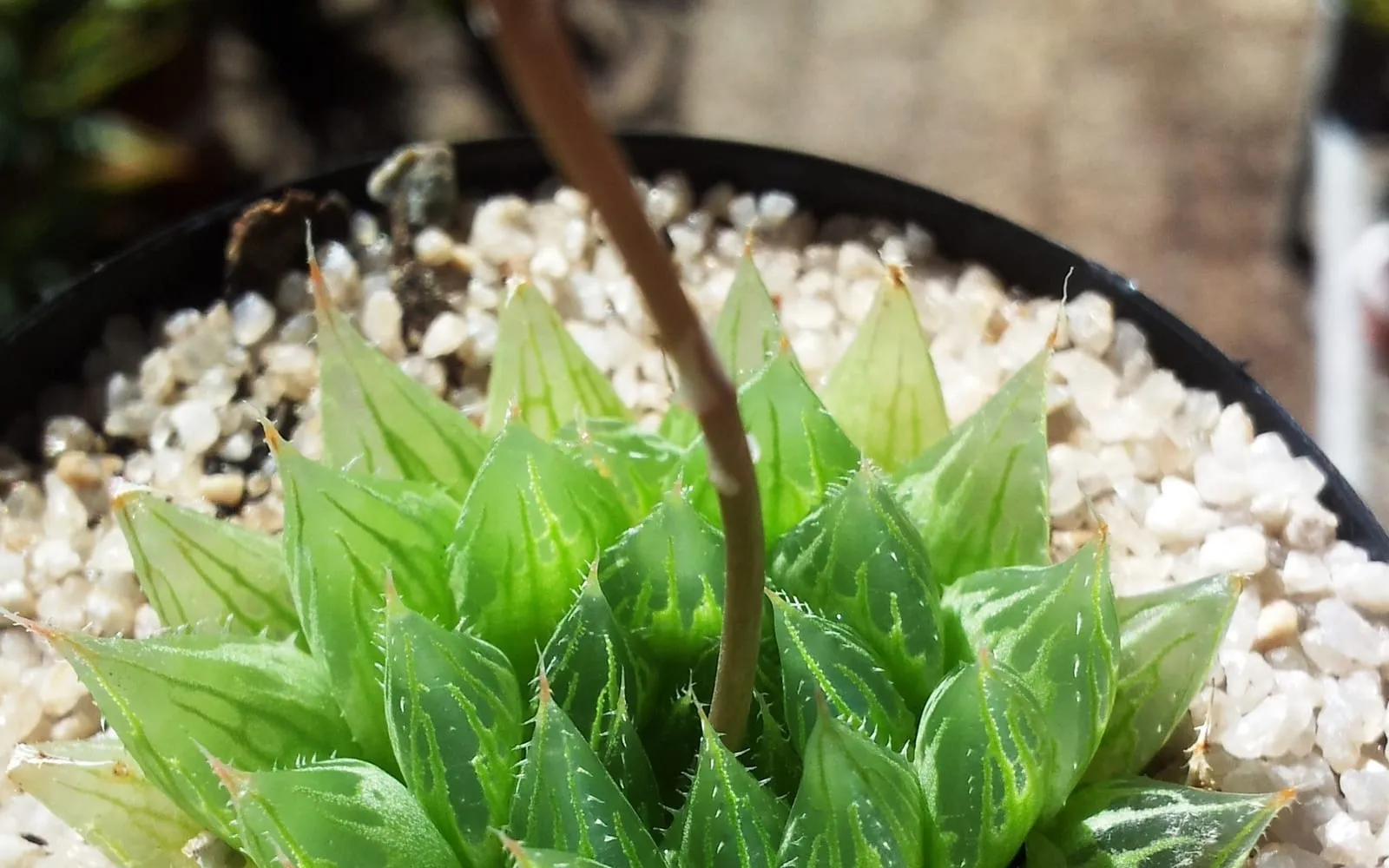
Cooper’s haworthia grows a small rosette of plump, rounded leaves, each one tipped with a soft, translucent window that allows light to pass through to the tissue beneath. In the wild much of the plant sits buried among grass and gravel with only those translucent tips exposed at soil level, a design that allows it to photosynthesise while staying largely hidden from both the sun and anything that might eat it.
Indoors it makes an easy, undemanding little succulent, offsetting freely into a tight cluster of rosettes within a pot far smaller than most houseplants need. It needs bright but indirect light rather than the full baking sun many other succulents want, which makes it one of the more forgiving choices for a windowsill that gets good light without much direct sun.
Appearance and character
Leaves are short, plump and rounded, often nearly spherical, in a soft blue-green that can take on red or purple tones under stronger light or cooler temperatures. Fine, pale lines run across the translucent leaf tip like a network of veins, catching light in a way few other succulents manage.
Rosettes stay compact and low, rarely rising more than a few centimetres above the soil, and readily produce offsets around the base, so a single plant becomes a dense little cluster of rosettes within a year or two of good growth.
Flowers are small and understated by comparison with the foliage, whitish, faintly veined and carried a few at a time on a thin, wiry stem that rises well clear of the rosette. They are pleasant rather than showy, and most growers value the plant for its leaves far more than for its bloom.
Where it is from
Haworthia cooperi grows in the Eastern Cape of South Africa, typically in semi-arid grassland where it roots into narrow gaps among rocks and grass tussocks. Much of each rosette sits at or below soil level in the wild, with only the translucent leaf tips exposed to the sun, an arrangement that shields the bulk of the plant from both intense light and grazing animals while still letting light reach its photosynthetic tissue through the windowed tips.
Rain in that region falls mostly in summer, with a markedly drier winter, and the plant’s growth follows that rhythm closely, active while summer rain and grass cover shade it, and much quieter through the colder, drier months that follow.
How it grows
Pot it in a free-draining succulent mix, in a shallow pot that suits its naturally low, ground-hugging rosette better than a deep one. A layer of fine grit or gravel around the base of the rosette echoes its wild habit and keeps the crown from sitting against wet soil.
Give it bright, indirect light rather than hours of direct sun. Strong midday sun through glass can scorch the soft, translucent leaf tips, showing as pale or brown patches that do not recover, where a spot with good but filtered light produces healthy, well-coloured growth without that risk.
Water more generously through the growing season than many other succulents, since it comes from a grassland habitat with a genuine summer rainy season rather than a true desert. Let the mix approach dryness between waterings rather than fully drying out for extended periods.
Offsets form readily around the base of a healthy rosette and can be gently separated once they have their own roots, or left in place to build a spreading clump. Repotting is rarely urgent, since the plant stays small and grows slowly even at its best.
Through the seasons
Spring brings the resumption of active growth. Increase watering gradually and begin feeding once new leaves are visible.
Summer is the main growing season, following the rain pattern of its native grassland. Water regularly and expect the best growth of the year.
Autumn slows growth as the season’s rains ease. Reduce watering and stop feeding as the weeks progress.
Winter is a quieter, drier rest. Water only sparingly, enough to stop the leaves visibly shrinking, and keep the plant away from cold, damp draughts.
Care difficulty
Easy, and one of the more beginner-friendly succulents on this site precisely because it tolerates a wider range of light than most, without needing the hours of direct sun a cactus or an aloe needs. The main things to get right are avoiding strong direct sun, which scorches the leaf tips, and giving it more regular water through summer than its succulent appearance suggests, since a grassland species dries out and struggles under the same sparse watering that suits a desert plant.
Watering
Water thoroughly through spring and summer, letting the mix approach dryness rather than fully drying out between waterings, closer to the routine a tropical houseplant gets than the long dry spells most other succulents on this site tolerate.
Cut back hard in autumn and winter, watering only occasionally and allowing the mix to dry out properly between each one, following the markedly drier winter of its native range.
Warning signs, diseases and pests
Mealybug tucks itself between the base of the leaves at the centre of the rosette, showing as small white, cottony tufts. Treat with horticultural soap or a cotton bud dipped in alcohol, checking carefully among the closely packed leaves.
Root rot follows a mix that stays wet for too long, particularly in winter, and shows as leaves that turn soft, translucent and discoloured rather than firm. Unpot it, cut away any affected roots, let the remainder dry, and repot into fresh mix.
Vine weevil grubs feed on the roots below the soil, and a rosette that wilts or loosens with no obvious cause above ground check for the pale, C-shaped grubs.
Spider mite becomes more likely in hot, dry indoor air, showing as fine speckling on the leaves and faint webbing in bad cases. Raising humidity slightly and wiping the leaves down periodically both help prevent it.
Growing environment
Bright, indirect light suits it best. An east-facing windowsill, or a spot a little back from a south or west-facing one, generally works better than hours of unfiltered direct sun, which the translucent leaf tips scorch under.
Average room warmth is fine through the year, provided it stays above about 5 deg C. It has limited frost tolerance and should be kept well away from cold glass in winter.
A free-draining succulent mix with some added grit suits it well, echoing the gritty, rocky soil it roots into in the wild.
Moderate humidity is fine, and it copes with ordinary indoor air as well as it copes with the more humid conditions among grass in its native range.
Feeding
Feed with a balanced houseplant fertiliser or a cactus and succulent feed, diluted to around half strength, monthly through spring and summer.
Stop feeding entirely from autumn through winter, when growth has slowed considerably and unused fertiliser only accumulates as salts in a mix that is being watered far less.
Troubleshooting
The leaf tips have gone brown and papery. Most likely scorch from direct sun through glass. The translucent tips are more sensitive to strong light than the rest of the leaf, and moving the plant to brighter but indirect light usually stops it happening to new growth, though the damaged tips will not recover.
The rosette looks shrivelled and deflated. Underwatering, most likely, particularly if this happened during the growing season rather than over winter. Water thoroughly and expect the leaves to plump back up within a few days.
A leaf has gone soft, translucent and discoloured. Root rot is the likely cause. Unpot the plant, check the roots, trim away anything soft or brown, let it dry out, and repot into fresh, free-draining mix.
It has produced lots of small offsets but stays quite small overall. That is normal growth for this species rather than a problem. It spreads by clustering into a mat of small rosettes rather than by any one rosette growing large, and a full, offsetting clump is a sign of good health.
Can I grow it under artificial light only? Yes, reasonably well. A bright, cool-toned grow light positioned close enough to give strong but indirect light suits it better than most succulents, since it naturally tolerates less intense light than a full-sun species would need.
Cooper's Haworthia problem guides
Not sure what is wrong? See the common houseplant pests guide.