
Houseplant
Lanceleaf Liveforever
Dudleya lanceolata
Also known as Dudleya lanceolata, Lance-leaved Dudleya
How to grow Dudleya lanceolata, the lanceleaf liveforever, a hill-slope succulent whose narrow green leaves shrivel back in summer drought.
At a glance
- Difficulty
- Moderate
- Water
- When the mix dries; more in cool winter growth, little in summer
- Light
- Bright light with some direct sun
- Temperature
- Cool to warm; keep above about 2 deg C
- Humidity
- Low
- Hardiness
- USDA 8-10, RHS H3, hardy to -4 C
- Type
- Evergreen to summer-deciduous rosette succulent, winter-growing
- Height
- Rosette 15 to 30 cm across; flower stalk taller
- Native to
- California, Baja California
A hill-slope rosette succulent from California and Baja California, growing on dry, rocky banks in a Mediterranean-type climate of wet winters and hot, rainless summers. It grows through the cool, wet winter and shrinks back through the dry summer, wanting bright light and very sharp drainage. It takes a light frost, is safest above about 2 deg C, and rots in warm, wet summer compost.
Hardiness zones describe winter cold alone. Summer heat, humidity, rainfall and the length of the growing season decide as much, so treat the range as the outer limit rather than as a recommendation.
Not known to be toxic
Dudleya, a Californian relative of the echeverias, is not listed as toxic by the ASPCA or the RHS, and the rosettes of its genus were traditionally eaten. A pet or child that bit a leaf would be unlikely to have more than a mild stomach upset.
Sources: ASPCA toxic and non-toxic plants, RHS potentially harmful garden plants
About
Lanceleaf liveforever is a plain green member of a genus better known for chalk-white rosettes. Its leaves are narrow, long and tapering, a fresh to grey-green, sometimes reddening in the sun, arranged in an open rosette on a short stem. It has little of the thick powdery coating found on the white dudleyas, so it is less fussy to handle.
It grows on dry, rocky hill slopes and banks through the coastal and inland ranges of California and Baja, in a Mediterranean-type climate of wet winters and long, hot, rainless summers. To survive that summer drought it does something unusual for a succulent grown indoors. It shrinks right back, its outer leaves drying and curling away to leave a tight, dormant core, then produces new leaves with the autumn rains. That summer die-back is normal, not a sign of failure.
Like the other Californian dudleyas it grows in the cool season and rests through the heat, needing bright light and very sharp drainage. Its orange-red flowers on tall stalks are a spring bonus. If you follow its calendar and keep it lean and dry through summer, it is a distinctive, tough little plant.
Appearance and character
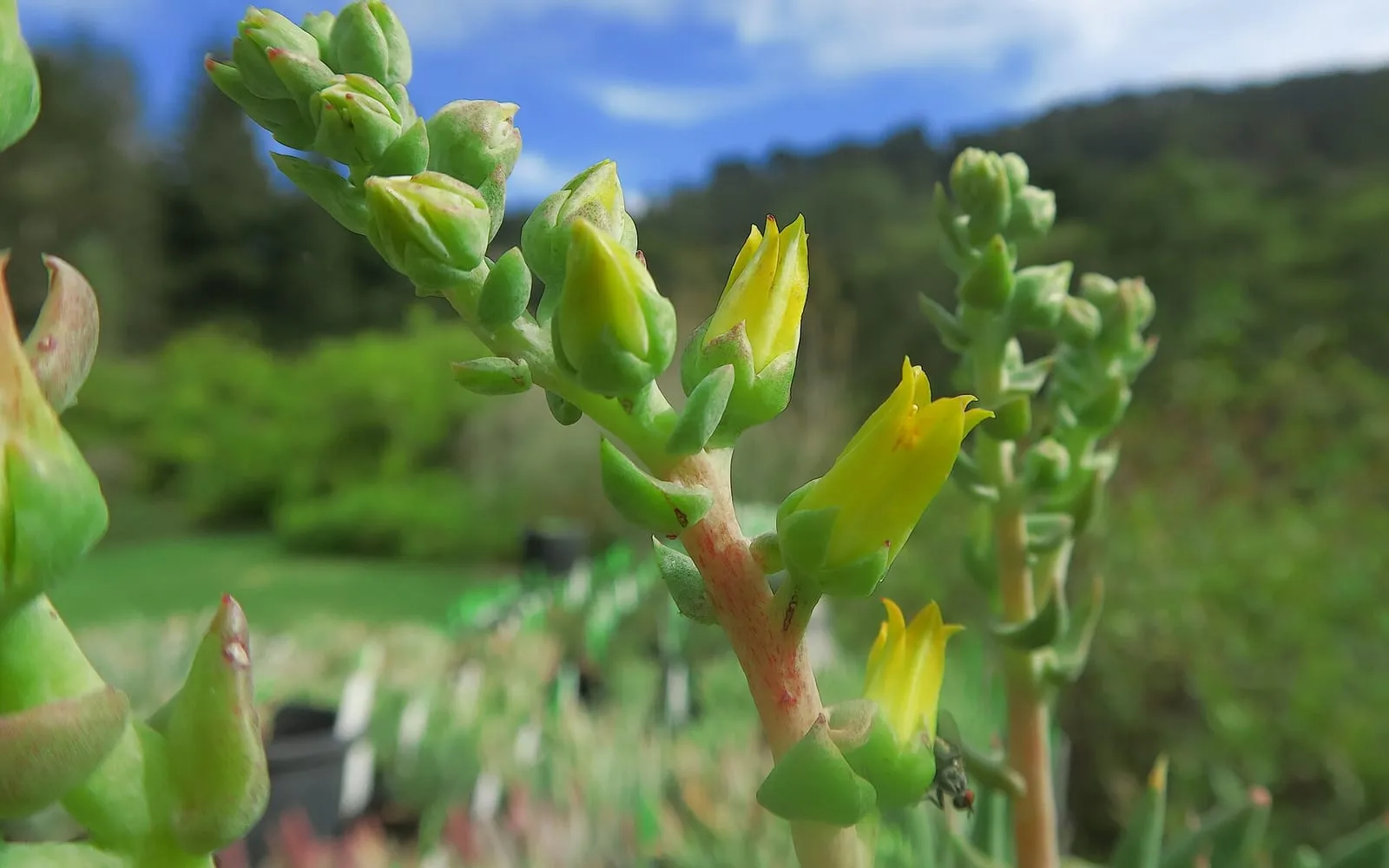
The leaves are narrow and lance-shaped, long and tapering to a point, a fresh green to grey-green that can flush red or orange in strong sun, held in a fairly open rosette.
It has only a thin waxy sheen instead of the thick chalk of the white dudleyas, so its handling is far less fussy, and it looks like a green rosette instead of a powdery one.
Through summer the outer leaves dry, curl and die back, leaving a small tight core of inner leaves, the plant’s way of surviving the rainless season. Fresh leaves grow again from that core in autumn.
Its flowers are the highlight, tubular and a warm orange to red, held on tall, arching reddish stalks in spring. They attract hummingbirds in the wild and add colour in cultivation.
Where it is from
Dudleya lanceolata grows on dry, rocky slopes, banks and canyon sides through California and into Baja California, in a Mediterranean-type climate of mild, wet winters and hot, dry, rainless summers. It roots in lean, stony ground and rock crevices.
That climate gives it a cool-season, summer-resting rhythm and its summer die-back. It needs bright light, very sharp drainage and cool, dry-side conditions, grows through the cool, moist season, and shrinks back through the summer heat, when warm, wet compost would rot it.
How it grows
It produces fresh leaves and grows through autumn, winter and spring on the cool-season rains, flowers in spring, and then dies back through the dry summer to a tight dormant core. The cycle of winter growth and summer die-back is the main thing to understand, and summer watering is the easiest way to rot it.
Grow it in a very free-draining, gritty, mineral mix in a pot to suit the rosette, and water when the mix has dried during the cool growing season. Cut watering right back as the leaves start to die down in summer, keeping it nearly dry through its rest.
Give it bright light with some direct sun, and keep it cool where you can, above about 2 deg C. Because it has little chalk, it tolerates handling and light overhead watering better than the white dudleyas, though sharp drainage still matters most.
Propagate from seed, or from offsets where the plant forms them, at the start of the growing season.
Through the seasons
Autumn ends the summer dormancy as the cool, moist weather returns. Fresh leaves grow from the core; start watering again as the mix dries.
Winter is the main growing season. Give bright light, water when the mix dries, and feed lightly, keeping it cool but sheltered from hard frost.
Spring continues growth and brings the orange-red flower stalks. Keep watering until the summer heat arrives.
Summer is dormancy. The outer leaves dry and curl back to a tight core; keep it nearly dry and cool where possible, and do not mistake the die-back for death.
Care difficulty
Moderate, and easier to handle than the chalky dudleyas since it has little farina to mark. The main thing to learn is its calendar: it grows in the cool months and dies back through summer, so it needs water in winter and near-drought in the heat. Watered hard in summer it rots; kept to its rhythm it is tough and reliable. Sharp drainage and cool, bright conditions are what it needs.
Watering
Water when the gritty mix has dried during the cool autumn-to-spring growing season, giving the rosette a good drink and letting it drain. It takes more water in cool growth than a desert succulent, but the mix must drain fast.
Cut watering right back as the outer leaves begin to die down in summer, keeping it nearly dry through its dormancy, since warm, wet compost in the heat is what rots it. Leaves drying and curling in summer are normal dormancy; a soft, discoloured crown at any time signals rot.
Warning signs, diseases and pests
Outer leaves drying, curling and dying back in summer are normal dormancy, not a problem; the plant produces fresh leaves again in autumn. A soft, discoloured, collapsing crown means rot.
Warm, wet compost in summer rots the roots and crown, the commonest cause of failure. Keep it nearly dry and cool through the heat, and water only in the cool season. Mealybugs and aphids gather in the rosette centre and can be washed or wiped out.
A loose, stretched rosette with pale, floppy leaves means too little light. Move it into brighter light with some direct sun to firm it up.
Growing environment
Bright light with some direct sun keeps the rosette firm and can flush the leaves red. In poor light it grows loose, pale and floppy. It needs bright light and cool air.
Cool to warm, dry conditions suit it, above about 2 deg C, matching its Mediterranean-type home. It takes a light frost, prefers low humidity and sharp drainage, and dislikes warm, stagnant summer wet.
Grow it in a very free-draining, gritty, mineral mix in a pot in bright light. Being nearly free of chalk, it is less demanding to handle than the white dudleyas, though it still needs its cool-season calendar respected.
Feeding
Feed lightly, a couple of times over the cool growing season, with a dilute, low-nitrogen feed. It needs little, and rich feeding produces soft growth.
Give nothing over the summer dormancy. Fresh gritty mix supports a repotted plant through its first season.
Troubleshooting
The outer leaves are drying and curling back in summer. Normal summer dormancy. The plant shrinks to a tight core to survive the dry heat and produces fresh leaves again in autumn. Keep it nearly dry and do not mistake it for death.
The crown has gone soft and discoloured. Rot, usually from watering through the summer rest. Keep it nearly dry and cool in the heat, water only in the cool season, and improve drainage.
When do I water it? Mainly in the cool autumn-to-spring growing season, when the mix has dried. Keep it nearly dry through the summer heat, which is its dormancy.
How is it different from the chalk dudleyas? It is plain green with narrow, tapering leaves and little chalk, and it dies back in summer, where the giant chalk dudleya is a solid white rosette. Its lack of chalk makes it far less fussy to handle.
Is it safe around pets? Yes. Dudleya is not listed as toxic, so it is safe with cats, dogs and children.
Lanceleaf Liveforever problem guides
Not sure what is wrong? See the common houseplant pests guide.