
Edible
Rose Apple
Syzygium jambos
Also known as Plum Rose, Malabar Plum
Practical guidance for growing rose apple, Syzygium jambos, including frost sensitivity, fruit fly hosting, fragrant fruit, pruning, humid soil, and container growing in cooler climates.
At a glance
- Difficulty
- Moderate
- Water
- Regular water, more often in containers or dry heat
- Light
- Full sun to light shade
- Temperature
- Frost-tender; damaged below about 0 C
- Humidity
- Prefers humid air; tolerates drier conditions once established
- Hardiness
- USDA 9b-11, RHS H1b-H2, hardy to -2 C
- Type
- Evergreen tropical tree
- Height
- 6-10 m in the ground; smaller and slower in a container
- Native to
- Southeast Asia
A mature tree tolerates a brief, light frost with damage limited to leaf tips, while a young plant is killed outright by the same cold. It needs a warm, humid climate with year-round rainfall or irrigation rather than a pronounced dry season, and fruits most reliably where summer heat is sustained rather than brief.
Hardiness zones describe winter cold alone. Summer heat, humidity, rainfall and the length of the growing season decide as much, so treat the range as the outer limit rather than as a recommendation.
Harmful if eaten
- Do not eat
- The seeds, and to a lesser degree the leaves, roots, stems and bark. The ripe flesh is edible.
- Harm from
- Eating it
- Affects
- People
The ripe fruit is widely eaten and the species is not listed as harmful by the RHS or the ASPCA. Its other parts are a different matter. The seeds are reported to be poisonous, and hydrocyanic acid together with the alkaloid jambosine has been recorded in the leaves, roots, stems and bark. The single large seed is hard and is spat out or discarded rather than chewed, which is the safe way to treat it. Enjoy the flesh freely, but keep the seed and foliage away from a child or pet likely to chew them.
Sources: RHS potentially harmful garden plants, Morton, Fruits of Warm Climates: Rose Apple, ASPCA toxic and non-toxic plants
About
Rose apple is grown for its crisp, fragrant fruit, which tastes faintly of rose water and gives the tree both its common name and its place in tropical fruit gardens across Southeast Asia and beyond. It forms a dense, evergreen tree with glossy leaves and a rounded crown, fruiting most heavily where summers are long, warm and reliably wet.
Outside the tropics it is grown in a large container and brought under cover for winter, since it tolerates no more than the lightest, briefest frost once mature and none at all while young.
Appearance and character
New growth flushes a striking pinkish-bronze before hardening to the glossy, dark green of mature leaves, which are long, narrow and pointed, held opposite each other along slender branches. The effect, especially on a young flush of growth, is showy enough that some gardens grow it for foliage alone.
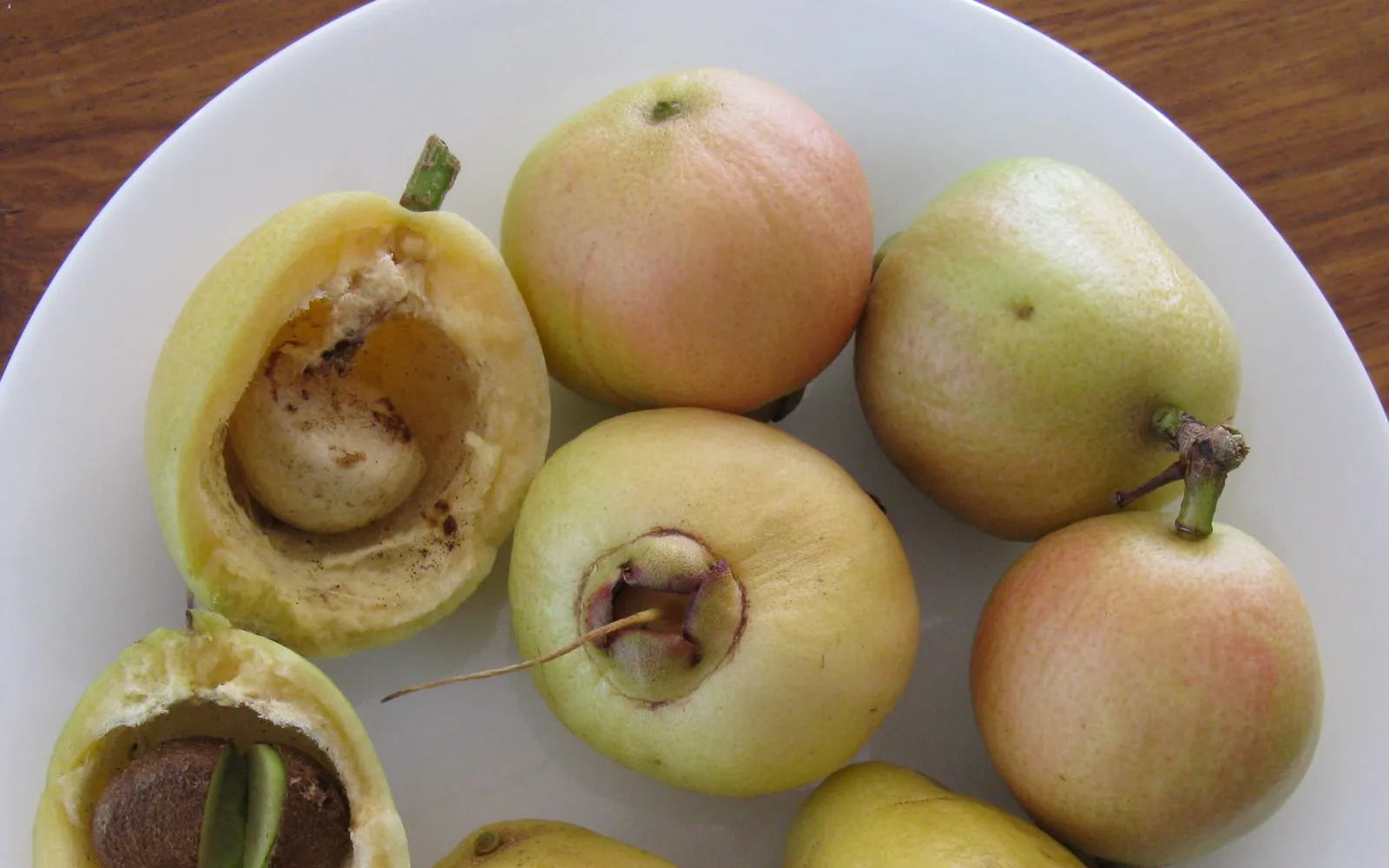
Flowers appear in loose clusters at the branch tips, greenish-white and dominated by a mass of long stamens rather than showy petals, giving each bloom a soft, fluffy look. They are followed by round to pear-shaped fruit, pale yellow to pink-blushed when ripe, with crisp, faintly sweet flesh loosely surrounding a single large, rattling seed.
A strong, unmistakable rose-like fragrance rises from ripe fruit and fills the air around a fruiting tree, giving the flesh its characteristic flavour, more aromatic than sweet.
Where it is from
Syzygium jambos is native to Southeast Asia, from India through Malaysia and Indonesia, where it grows along riverbanks and in the understorey of humid lowland forest.
Long cultivated for its fruit, it has naturalised across much of the tropics and subtropics, establishing readily wherever warmth, moisture and reasonable soil allow. In parts of the Caribbean and Hawaii, that ease of establishment has let it spread into disturbed forest, where it is treated as invasive. Check local guidance before planting it near wild land.
How it grows
Plant in moist, fertile, well-drained soil in full sun to light shade, with shelter from cold wind in any climate that sees occasional frost. It tolerates brief waterlogging better than most fruiting trees, reflecting a natural habitat close to rivers and swampy ground, though it grows best with good drainage rather than permanently wet soil.
Where winters bring more than the lightest frost, grow it in a large container, moving it under cover once temperatures threaten to drop near freezing and back outside once the weather warms. A containerised tree fruits less heavily than one in open ground but stays a manageable size far more easily.
Prune after fruiting to control size and keep the crown open, since a dense, unpruned tree produces plenty of foliage but suffers from poor air movement, encouraging both pests and fungal problems inside the canopy. Multiple stems from the base are normal; select and keep a few strong leaders for a more tree-like shape, or leave it multi-stemmed as a large shrub.
Propagate from seed, which germinates readily and stays true to type, or from semi-ripe cuttings taken in summer.
Through the seasons
Spring brings the main flush of new bronze-pink growth and, on established trees, the start of flowering.
Summer carries flowering through to fruit set, with ripening following through the warmer months depending on climate.
Autumn is harvest time in most growing regions, fruit picked as it colours and softens slightly, since it does not store well once picked.
Winter is a rest period. In frost-free climates the tree grows on quietly; where any frost threatens, this is when container-grown plants need to be under cover.
Care difficulty
Moderate, mainly because of climate. In a frost-free, humid climate a rose apple grows fast with minimal care, needing only routine watering, an occasional feed and pruning to keep the crown open.
Outside that climate, the plant becomes a container specimen requiring seasonal moving indoors and out, and its ultimate size in a pot stays smaller, with lighter fruiting, than a tree grown in open tropical ground.
Watering
Water regularly, especially through the first year or two while roots establish, letting the top few centimetres of soil dry slightly between waterings rather than keeping it constantly saturated.
Container-grown plants need more frequent watering than those in open ground, particularly in hot weather, since a pot dries out far faster than a bed of garden soil. Reduce watering in winter, especially for a plant moved under cover, where growth slows and the risk shifts toward overwatering rather than drought.
Warning signs, diseases and pests
Scale insects attach along stems and the undersides of leaves as small, immobile brown or grey bumps, weakening growth and excreting honeydew as they feed. Treat with horticultural oil, scraping off light infestations by hand where practical.
Sooty mould grows on the honeydew that scale and mealybug leave behind, coating leaves in a black, sooty film that blocks light rather than infecting the plant directly. Controlling the insects responsible clears the mould over time as it is no longer being fed.
Mealybug shows as small white, cottony masses in leaf axils and around new growth, sapping the plant in the same way as scale. Treat the same way, with horticultural oil or a strong jet of water for light cases.
Queensland fruit fly and related species use ripening rose apple fruit as a host in regions where they occur, laying eggs that hatch into larvae inside the fruit before it is picked. Removing and destroying fallen and infested fruit promptly, rather than leaving it to rot on the ground, is the most effective way to break the cycle.
Root rot follows soil that stays wet for extended periods, particularly in a container with poor drainage, showing as yellowing leaves and a general decline despite regular watering. Improve drainage and let the soil dry between waterings to recover a mildly affected plant.
Growing environment
Full sun produces the densest growth and heaviest fruiting; light shade is tolerated, particularly in hot climates, at some cost to fruit production.
Humid air suits it best, echoing its native forest understorey, though an established tree tolerates drier air reasonably well once its root system is developed.
Moist, fertile soil with good drainage is ideal. It tolerates occasional waterlogging better than most fruit trees but performs best without it, and soil that never drains at all eventually causes root problems regardless of how well the top growth is doing.
Feeding
Feed with a balanced fertiliser formulated for citrus or tropical fruit trees every six to eight weeks through the growing season, tapering off as growth slows in cooler or drier months.
A container-grown tree depends entirely on applied feed for its nutrients, since it has no reservoir of garden soil to draw on, so a consistent feeding schedule matters more for a potted specimen than for one in open ground.
Troubleshooting
The tree flowers but the fruit drops before ripening. Usually irregular watering, particularly a dry spell followed by heavy watering or rain, which stresses the developing fruit. Keep watering consistent through fruit development rather than letting the soil swing between dry and saturated.
My container-grown tree has never fruited. Most likely age, light or root space. A young tree, or one kept in a container too small for its size, often grows on for years before flowering; moving it into more light and a larger pot usually brings it into fruit within a season or two.
The leaves are covered in a black, sticky film. Sooty mould, growing on honeydew from scale insects or mealybug feeding somewhere on the plant. Find and treat the insects responsible and the mould will fade over the following weeks.
Can I grow this from a supermarket fruit’s seed? Yes. The large single seed inside a ripe rose apple germinates readily when sown fresh, and the resulting seedling grows true to type, though it will take several years to reach flowering size.
Is it safe to eat the fruit straight from the tree? Yes, the ripe flesh is a food crop eaten across the tropics, fresh or made into jelly and syrup. Discard the large central seed rather than eating it: seeds are reported to be poisonous, and the leaves, roots, stems and bark carry small amounts of hydrocyanic acid and the alkaloid jambosine.