
Outdoor plant
Tufted Hair-Grass
Deschampsia cespitosa
Also known as Tufted Hairgrass, Tussock Grass
How to grow tufted hair-grass, Deschampsia cespitosa. Why it tolerates full shade when most ornamental grasses need sun, combing out dead leaves rather than cutting the clump back, and the humid summer heat that stresses it far more than any frost.
At a glance
- Difficulty
- Easy
- Water
- Regular, keeping the soil consistently moist
- Light
- Full sun to full shade, unusually shade-tolerant for an ornamental grass
- Temperature
- Fully hardy
- Hardiness
- USDA 4-9, RHS H7, hardy to -30 C
- Type
- Cool-season, evergreen to semi-evergreen tussock-forming perennial grass
- Height
- 60-120 cm in flower
- Native to
- the temperate Northern Hemisphere
Winter cold is well within its range across most of the world it is sold in, and the climate factor that determines how well it performs is summer heat, not the winter minimum. As a cool-season grass it grows most strongly in spring and autumn and slows or struggles through a hot, humid summer, so it thrives in a maritime or continental climate with mild summers and disappoints in a climate where summer nights stay warm and humid for months at a time.
Hardiness zones describe winter cold alone. Summer heat, humidity, rainfall and the length of the growing season decide as much, so treat the range as the outer limit rather than as a recommendation.
Not known to be toxic
The plant itself carries no toxic compounds and appears on no reputable list of harmful garden plants, so grazing by pets or livestock on the leaves is not a poisoning concern. One genuine caveat is useful to know, and it concerns a fungus rather than the grass: like many grass species, this one can host ergot, a fungal infection of the developing seed head that replaces individual grains with dark, toxic bodies. Ergot itself is poisonous to livestock and people if eaten in quantity, which is why grazing animals are traditionally kept off infected pasture, but the risk sits entirely with the fungus and its rare infection of the seed heads rather than with tufted hair-grass as a species.
Sources: RHS potentially harmful garden plants, ASPCA toxic and non-toxic plants
About
Tufted hair-grass does two things most ornamental grasses will not. It tolerates real shade, and it tolerates wet, poor, acidic soil, which between them make it useful in exactly the awkward spots, a damp shaded border, the north side of a shrub, poor ground that nothing else has settled into, where a sun-loving grass would fail outright.
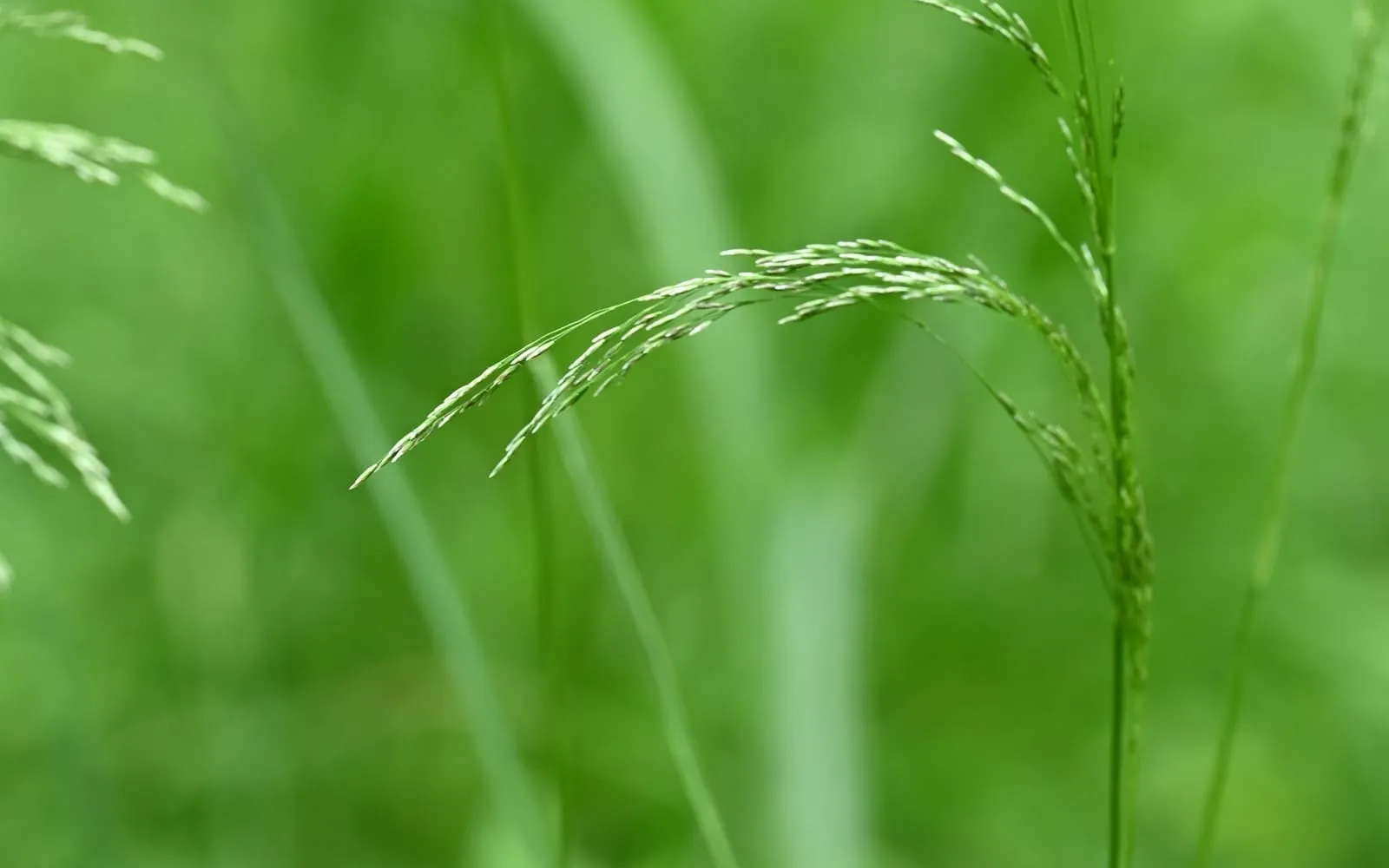
The plant forms a dense, fine-leaved tussock that stays green through much of winter, and from early summer it sends up a cloud of hair-fine flower stems well above the foliage, catching light in a way that reads as almost weightless from a distance despite covering a surprisingly wide area.
Appearance and character
The foliage forms a tight, arching tussock of narrow, dark green leaves, rough to the touch along their edges, staying evergreen or nearly so through a mild winter and only dying back hard in a severe one.
Flower panicles rise well above the foliage from early summer, fine and airy, in a purplish-green that gradually fades to a pale gold or silvery buff as the seed ripens through late summer and autumn. The sheer number of hair-thin stems in a single panicle is what gives the plant both its common name and its hazy, cloud-like appearance from a distance.
A single mature clump can spread its flower stems over a considerably wider area than the foliage tussock beneath them occupies, which is part of what makes this grass work well as a see-through screen planted among lower perennials rather than as a solid block on its own.
Where it is from
Deschampsia cespitosa has one of the widest natural distributions of any ornamental grass, occurring right across the temperate Northern Hemisphere, through damp meadows, open woodland, moorland and marshland in Europe, Asia and North America alike.
That range explains both its toughness and its particular preferences. It grows across such a broad span of cool, damp habitats that it has adapted to poor, acidic and waterlogged soils most plants avoid, and to the dappled or partial shade found at a woodland edge, a tolerance few other widely grown ornamental grasses share.
It also serves as a larval food plant for several butterfly and skipper species across its range, which is useful to know for anyone planting a wildlife-friendly border, since a grass many gardeners treat as purely decorative is, in this case, actively supporting insect life as well.
How it grows
Plant in spring or autumn into moisture-retentive soil, in a position ranging from full sun to full shade. Unlike most ornamental grasses, which need good light to perform, this one flowers reasonably well even in fairly deep shade, though a sunnier spot produces a fuller display of flower stems.
Choose damp, even boggy ground without hesitation. Poor, acidic or waterlogged soil that would stress many border plants suits this grass comfortably, reflecting the wet meadows and marshland it grows in naturally.
Divide a large clump every few years in spring if the centre begins to die out or if more plants are wanted, replanting divisions promptly so the roots do not dry out.
Comb out old, dead foliage by hand in late winter or early spring rather than cutting the whole clump down hard, since this species keeps enough green leaf through winter that a hard cutback removes healthy growth along with the dead.
Through the seasons
Winter keeps much of its foliage, especially in a mild climate, rather than dying back completely the way many ornamental grasses do.
Spring brings fresh growth and is the best time to comb out old foliage and to divide a congested clump.
Summer is the flowering season, with the airy panicles at their best from early to midsummer, though growth can slow in a prolonged hot, humid spell.
Autumn sees the flower stems fade to gold and silver, holding their shape into winter, while cooler weather often brings a fresh flush of leaf growth.
Care difficulty
Easy, and one of the more forgiving grasses for a difficult site. It needs almost nothing once established, tolerates poor and wet soil that would trouble many other plants, and copes with shade that would leave most ornamental grasses thin and reluctant to flower. The one climate it does not enjoy is a hot, humid summer, where growth can stall and the tussock can look tired until cooler autumn weather brings it back.
Watering
Water regularly, keeping the soil consistently moist rather than letting it dry out between waterings, which suits this grass far better than the drought tolerance many ornamental grasses are grown for.
Boggy or waterlogged ground causes no problems at all, and a planting at a pond margin or in a naturally damp part of the garden generally needs no supplementary watering beyond what the site already provides.
Prolonged dryness is the real risk. A clump left to dry out repeatedly through a hot summer thins and struggles far more than one kept consistently damp, even in poor soil otherwise.
Warning signs, diseases and pests
Ergot occasionally infects the flower spikes in a wet summer, replacing individual grains with small, dark, hard bodies that are toxic if eaten in quantity. It is uncommon in a garden setting and mainly a concern where grazing animals have access to infected seed heads; remove and destroy affected flower spikes if you spot them.
Rust shows as small orange pustules on the leaves, usually in humid conditions. It is largely cosmetic on an established plant; remove badly affected foliage and improve air movement around a crowded clump.
Leaf spot appears as small discoloured patches in warm, humid, still weather, and generally clears on its own once conditions dry out.
Vine weevil grubs can attack the roots of container-grown plants, causing a clump to decline despite apparently adequate watering. Check the roots of a struggling potted specimen for the characteristic white grubs.
Growing environment
Full sun to full shade all work, which is unusual among ornamental grasses and makes this one of the few reliable choices for a shaded border where you still need some grass structure.
Wet, poor or acidic soil is tolerated well, reflecting its origin in damp meadows and marshland, and it performs better in consistently moist ground than in anything approaching free-draining or dry soil.
Fully hardy to around minus 30 degrees C or lower, and the real limitation on where it thrives is a hot, humid summer rather than any winter cold.
Feeding
Feed lightly if at all. This species is adapted to poor, nutrient-thin soil in the wild, and a rich border or heavy feeding regime produces soft, lax growth rather than the tighter, more upright tussock it forms on leaner ground.
Where the soil is very poor, a single light application of a balanced general fertiliser in spring is enough.
Troubleshooting
Can I grow this in a shaded border? Yes, better than almost any other ornamental grass. It tolerates full shade and still produces a reasonable flower display, though a sunnier spot gives a fuller one.
My clump looked tired and thin through a hot summer. Likely heat stress rather than anything wrong with the plant. This is a cool-season grass that grows best in spring and autumn and can stall through a prolonged hot, humid spell, usually recovering as temperatures drop.
Should I cut the whole clump down in winter? No. Comb out dead foliage by hand in late winter or early spring instead, since a significant amount of leaf often stays green through a mild winter and a hard cutback removes it needlessly.
Dark, hard bodies have appeared in the flower spikes. Likely ergot, a fungal infection of the seed head. Remove and destroy affected spikes, particularly if grazing animals have access to the area.
Will it tolerate boggy, poorly drained ground? Yes, comfortably. It is one of the more reliable ornamental grasses for a consistently wet or poorly drained site that other grasses would struggle in.