
Outdoor plant
Fountain Grass
Cenchrus alopecuroides
Also known as Chinese Fountain Grass, Swamp Foxtail Grass
How to grow fountain grass, Cenchrus alopecuroides. Why it needs real summer heat rather than a mild winter to flower well, leaving the straw-coloured seed heads standing through winter, and the bristly plumes that can lodge in a dog's coat or ears.
At a glance
- Difficulty
- Easy
- Water
- Regularly while establishing; drought-tolerant once settled in
- Light
- Full sun
- Temperature
- Fully hardy, but needs a warm summer to flower at its best
- Hardiness
- USDA 5-9, RHS H6, hardy to -20 C
- Type
- Warm-season, clump-forming deciduous perennial grass
- Height
- 60-100 cm
- Native to
- eastern Asia
Winter cold rarely kills an established clump, and the zone number is not the useful limit here. This is a warm-season grass built around a photosynthetic pathway that needs real summer heat to grow and flower fully, so a cool, short summer produces a smaller plant with fewer or later flower spikes even in a garden well within its hardiness range. The best flowering happens where summers run long and warm.
Hardiness zones describe winter cold alone. Summer heat, humidity, rainfall and the length of the growing season decide as much, so treat the range as the outer limit rather than as a recommendation.
Not known to be toxic
Fountain grass carries no toxic compounds and appears on no reputable list of harmful plants. Grazing animals and pets that chew the leaves or seed heads get nothing worse than a mouthful of fibrous plant material. The main physical hazard is mechanical rather than chemical: the bristly seed heads can lodge in a dog's coat, paws or ears in late summer, in the same way any bristled grass seed can, and a persistently irritated ear or paw after a walk through a mature clump check rather than ignoring. That is a snagging risk shared with many ornamental and wild grasses, not a poisoning risk specific to this species.
Sources: RHS potentially harmful garden plants, ASPCA toxic and non-toxic plants
About
Fountain grass is grown for its late-summer flower spikes, soft bristled plumes that catch low light beautifully and arch outward from the clump the way water arches from a fountain, which is where the common name comes from. The mound of narrow leaves beneath them stays tidy through spring and summer before the whole plant fades to a warm buff colour that holds its shape well into winter.
Botanists moved this species out of the genus Pennisetum and into Cenchrus during a reclassification based on genetic study, so older books, plant labels and nursery catalogues often still call it Pennisetum alopecuroides. Both names refer to the same plant, so recognise either name when shopping for it.
Appearance and character
The clump forms a dense, arching mound of narrow, mid-green leaves, gradually widening from a tight base into a fountain-like spray as the season progresses.
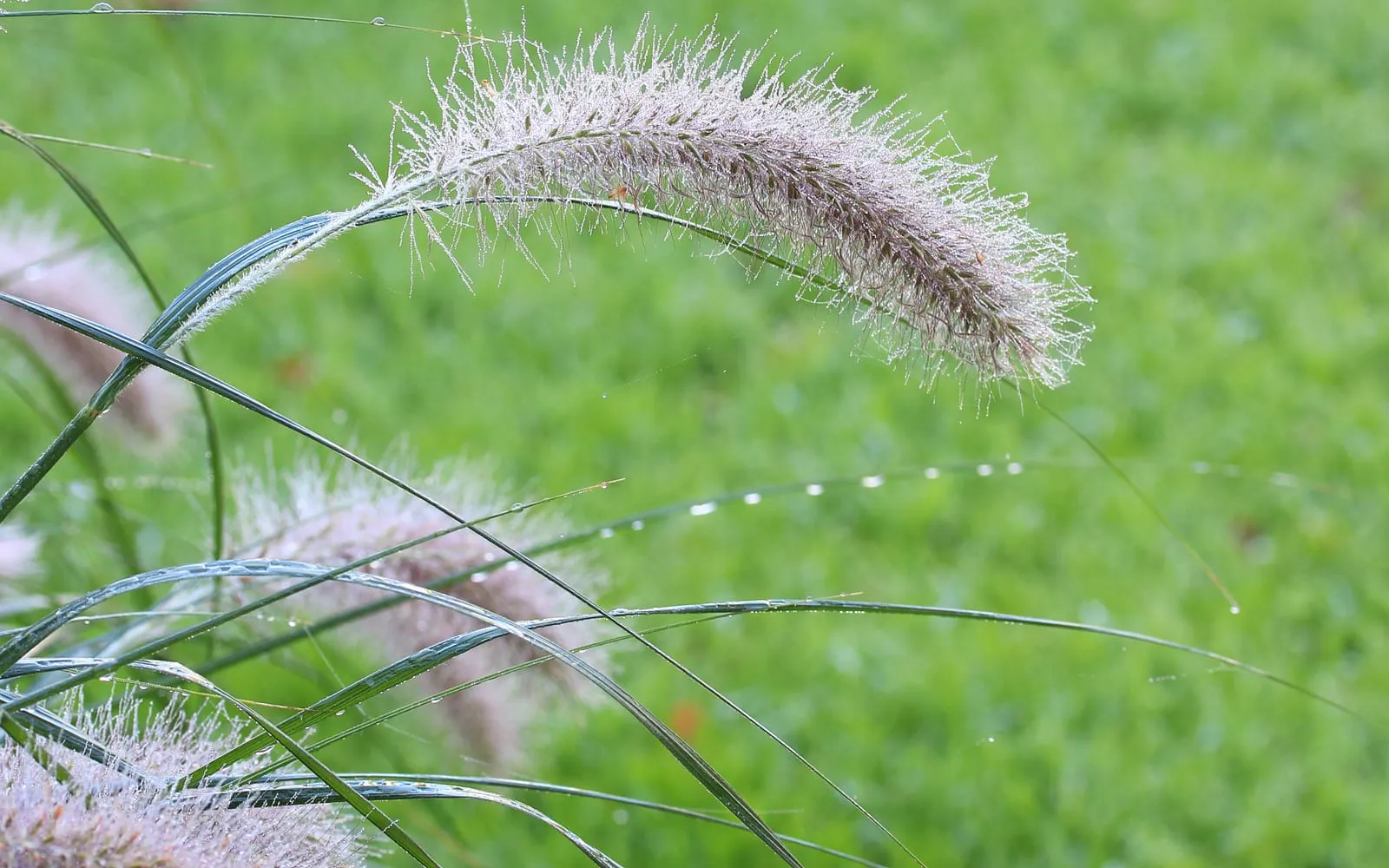
Flower spikes appear from late summer, bristled and bottlebrush-shaped, 10 to 15 cm long, in shades running from pale buff through pink-tinted to purplish-black depending on the cultivar. They stand well above the foliage on wiry stems and catch backlight strikingly in low autumn sun.
Once the flowers finish, the whole plant fades to a pale, straw-like colour and holds that structure through autumn and much of winter, rather than collapsing the way many perennials do once frost arrives.
Where it is from
Cenchrus alopecuroides is native across a wide swathe of eastern Asia, including China, Japan and Korea, growing on open grassland, riverbanks and disturbed ground in a climate with hot, humid summers and cold winters.
That combination, real summer heat paired with genuine winter cold, is what the plant is built around. It is a warm-season grass, meaning its main growth and flowering happen once temperatures climb well into summer, in contrast to the cool-season grasses that do most of their growing in spring and autumn instead.
Widely planted well beyond its native range as an ornamental, it has naturalised and become locally weedy in some warm climates through self-seeding, which is useful to know before planting it near a wild area or a neighbour’s garden in a region with long, hot summers.
How it grows
Plant in spring into free-draining soil in full sun, giving the clump room to reach its full spread, since a crowded planting loses the fountain shape that gives the plant its name.
Water regularly through the first growing season while the roots establish. Once settled, it tolerates real drought and needs no supplementary watering in an average summer.
Avoid rich, heavily improved soil or generous feeding, both of which push soft, floppy growth at the expense of a tight, well-shaped clump. This is a plant that performs better on ordinary or even poor ground than on a rich border soil.
Divide a congested clump in spring if it starts to die out in the centre, which happens occasionally after several years, lifting and splitting it into smaller pieces and replanting straight away.
Deadhead spent flower spikes before seed drops if self-seeding is a concern in a warm climate, otherwise leave them standing for winter interest and cut the whole clump down in late winter instead.
Through the seasons
Winter is a striking dormancy. Leave the straw-coloured foliage and seed heads standing for structure and winter interest rather than cutting back early.
Spring is the cutback, done before new growth starts, followed by fresh leaves emerging from the base.
Summer is the main growing period, with the clump filling out steadily as the weather warms.
Autumn brings the flower spikes into their fullest display, and the foliage begins its fade to buff as temperatures drop.
Care difficulty
Easy, and largely a matter of one seasonal job rather than ongoing attention. Cut the whole clump back hard in late winter, before new growth starts, and otherwise leave it alone through the year. It needs no staking, minimal watering once established, and little to no feeding, and its main vulnerability, a cool, short summer that produces a disappointing flower display, is a matter of climate rather than care.
Watering
Water regularly during the first growing season after planting, while the root system is still establishing itself in the surrounding soil.
Once established, an average summer’s rainfall is generally enough, and this grass tolerates real drought without significant harm, making it a reasonable choice for a low-water border.
Water during an extended dry spell if the foliage starts to look noticeably stressed, but avoid routine watering on a settled clump, which needs less than most border plants assume.
Warning signs, diseases and pests
Rust shows as small orange pustules on the leaf blades, usually in a wet or humid season. It rarely threatens the plant seriously but looks unsightly; cutting back affected foliage and improving air movement around a crowded clump helps.
Leaf spot appears as small discoloured patches on the leaves in warm, humid, still weather. It is largely cosmetic on an established plant and resolves on its own once conditions dry out.
Vine weevil grubs attack the roots of container-grown plants particularly, causing a clump to wilt and fail despite apparently normal watering. Check the roots of a declining potted specimen for the telltale C-shaped white grubs.
Slugs and snails can graze the soft new shoots as they emerge in spring, before the leaves toughen. Protect young growth if slugs are a known problem in the bed.
Growing environment
Full sun is essential for a strong flower display and a tight, upright habit. Shade produces a looser, less floriferous plant that flops rather than arches.
Free-draining soil suits it best, and it tolerates poor, sandy or stony ground well once established, needing rich soil far less than most border perennials.
Fully hardy to around minus 20 degrees C, though the real limiting factor for a strong display is summer warmth rather than winter cold, as noted above.
Feeding
Feed sparingly, and only where the soil is poor. A single application of a balanced general fertiliser in spring is usually plenty.
Avoid nitrogen-rich feeds altogether. They produce soft, floppy leaves that lose the tight, upright, fountain-like habit this grass is grown for, and they do nothing to improve flowering.
Troubleshooting
Why has my plant never produced the bottlebrush flower spikes I expected? Most likely a cool or short summer. This is a warm-season grass that needs real summer heat to flower fully, and a plant grown in a cooler climate may stay leafy without flowering much, or flower late and lightly.
Should I cut it back in autumn once it starts to fade? No. Leave the straw-coloured foliage and seed heads standing through winter for structure and interest, and cut the whole clump down in late winter instead, just before new growth starts.
Is Pennisetum alopecuroides the same plant as this? Yes. The species was reclassified into the genus Cenchrus, and both names refer to the same plant. Either name is safe to search for when buying it.
My dog keeps scratching at its ears after walking near this grass. Check for a lodged seed head. The bristled plumes can work into fur, paws and ears mechanically, in the same way many grass seed heads can, and persistent irritation needs a vet check rather than assuming it will work itself free.
Is it invasive? In a warm climate with a long growing season it can self-seed more than intended. Deadhead the flower spikes before they set seed if this is a concern near a wild area or a shared boundary.