
Outdoor plant
Big Bluestem
Andropogon gerardii
Also known as Turkeyfoot
Practical guidance for growing big bluestem, Andropogon gerardii, including its deep prairie roots, turkeyfoot seed heads, warm-season growth, drought tolerance, and non-toxic status.
At a glance
- Difficulty
- Easy
- Water
- Not needed once established, beyond ordinary rainfall
- Light
- Full sun
- Temperature
- Fully hardy in winter; needs real summer heat to grow tall and flower well
- Hardiness
- USDA 4-9, RHS H7, hardy to -30 C
- Type
- Warm-season perennial grass, dying back to the crown each winter
- Height
- 1.2-2.4 m in flower
- Native to
- central North America
Winter cold has never been the factor limiting where big bluestem grows. It uses a warm-season photosynthetic pathway that stays switched off until the soil warms well into the growing season and runs fastest in real summer heat, so a fully hardy plant in a cool, short-summer climate can stay noticeably shorter and flower only lightly, not because the winter troubled it but because the summer never got hot enough to drive full growth. Its native range experiences hot, humid summers and cold winters, and reproducing that heat matters more to a strong display than the zone number alone suggests.
Hardiness zones describe winter cold alone. Summer heat, humidity, rainfall and the length of the growing season decide as much, so treat the range as the outer limit rather than as a recommendation.
Not known to be toxic
Big bluestem carries no toxic compounds and is not listed as harmful by the RHS or the ASPCA. It was historically one of the most important forage grasses of the North American tallgrass prairie, grazed extensively by bison and, later, cattle, which is about as strong a practical demonstration of safety as a plant can have. A cat or dog that chews on a blade gets nothing worse than the mild stomach upset any tough, fibrous plant material can cause if eaten in quantity, and there is no reason to keep pets or children away from it on toxicity grounds.
Sources: ASPCA toxic and non-toxic plants, RHS potentially harmful garden plants
About
Big bluestem was the dominant grass of the North American tallgrass prairie before most of that landscape was ploughed for farmland, and its deep, extensive root system helped prairie soil become some of the most fertile farmland in the world. In the garden it brings that same toughness: a tall, upright bunchgrass that needs almost nothing once established and carries structure and colour from midsummer through winter.
Its common name and the alternative name turkeyfoot both come from the seed head, a cluster of two or three slender, finger-like branches that splay out from the top of each flowering stem in a shape close enough to a bird’s foot that the resemblance is hard to miss once it is pointed out.
Appearance and character
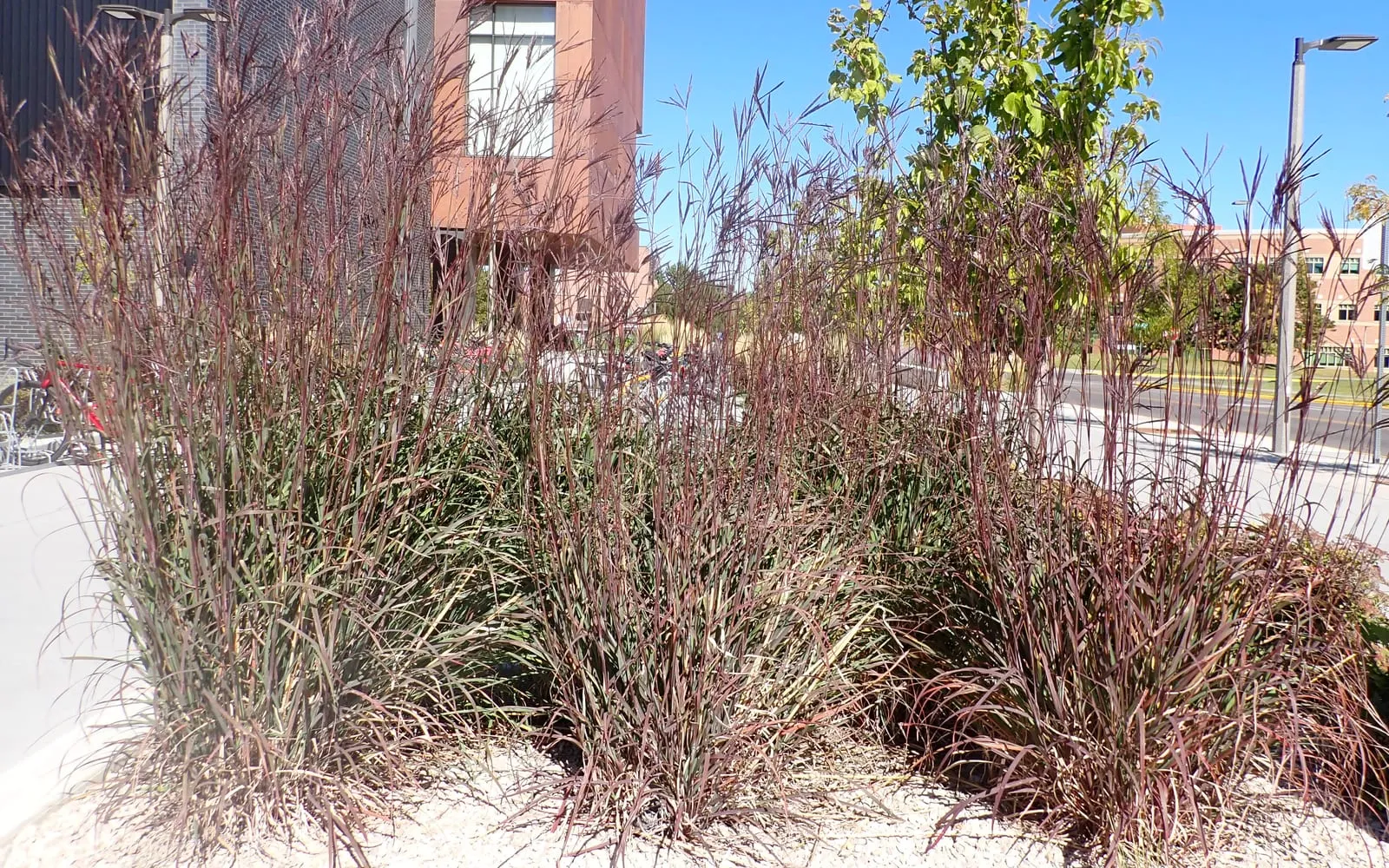
Foliage is blue-green through spring and summer, narrow and upright, forming a dense clump that thickens steadily as the plant matures. From late summer the colour shifts dramatically, turning shades of copper, bronze and deep mahogany-red that hold through autumn and stay standing, faded to tan, well into winter if the old growth is left uncut.
Flowering stems rise well above the foliage, carrying the distinctive turkeyfoot seed heads from late summer into autumn, silvery-purple when they first open and turning a soft golden brown as they mature and dry. The whole plant sways readily in wind rather than staying rigid, giving a border real movement through the second half of the growing season.
Height varies considerably with soil and moisture: a plant on poor, dry ground may stay under a metre and a half, while the same species on deep, fertile soil with reliable moisture can reach well over two metres by the time it flowers.
Where it is from
Andropogon gerardii is native across a wide swathe of central North America, from the tallgrass prairie of the Midwest United States and the Canadian prairies south into Texas and Mexico, historically forming vast, continuous stands alongside other tallgrass prairie species. Its deep root system, reaching three metres or more into the soil in the wild, is an adaptation to a climate of hot, often dry summers and cold winters, letting it draw on moisture and nutrients far below where most other plants can reach.
That root system also made it a key part of how prairie soil built up its legendary fertility over thousands of years, and the species remains central to prairie restoration projects across its native range today, alongside its use as an ornamental grass in gardens well beyond it.
How it grows
Plant divisions or container-grown plants in spring, once the soil has warmed, in full sun. It establishes slowly in its first year while its deep root system develops, then grows much more vigorously from its second season onward as that root system matures.
Choose a lean to moderately fertile spot rather than the richest border soil available, since excess fertility produces tall, floppy growth prone to lodging in wind and rain, in contrast to the upright, self- supporting habit it shows in poorer ground closer to its native conditions.
Leave the old foliage and seed heads standing through winter rather than cutting back in autumn, both for the colour and structure they provide and because the dead growth offers some protection to the crown through the coldest months. Cut the whole clump back hard to a few centimetres above ground in late winter, before new growth resumes, to keep it tidy and encourage strong new shoots.
Divide an established clump every four or five years if the centre starts to die out and flower less freely, lifting and splitting it in spring just as new growth begins.
Through the seasons
Spring is slow to start, since this is a warm-season grass that waits for the soil to warm properly before putting on real growth, often well behind cool-season grasses and perennials nearby.
Summer brings the most vigorous growth, especially in hot weather, with flowering stems extending through late summer and the turkeyfoot seed heads opening.
Autumn brings the strongest colour, as the blue-green summer foliage turns copper, bronze and mahogany-red, often the peak ornamental moment for the whole plant.
Winter leaves the faded, tan-coloured stems and seed heads standing if left uncut, providing structure and food for birds through the coldest months before being cut back in late winter.
Care difficulty
Easy, and remarkably tolerant of neglect once its root system is established. It needs no staking despite its height, no routine feeding, and no watering beyond an occasional deep soak during its first year or two. The one real requirement is patience: a newly planted specimen puts most of its early energy into roots rather than visible top growth, and a gardener expecting a tall, dramatic clump in its first season is often disappointed by what looks like a modest, slow start.
Watering
Water regularly through the first growing season while the deep root system that gives this grass its drought tolerance is still developing. After that, established plants rarely need supplemental watering beyond whatever rainfall the season provides, even through a fairly dry summer.
Avoid planting it in a spot that stays wet through winter, since this is a plant built for well-drained prairie soil rather than for boggy or waterlogged ground.
Warning signs, diseases and pests
Rust shows as small orange pustules on the leaf blades, most often in a humid summer, and rarely does more than mark the foliage cosmetically on an otherwise healthy plant.
Leaf spot appears occasionally as small discoloured patches on older leaves. It is generally minor. Remove badly-affected foliage if it bothers you.
Root rot can follow consistently wet, poorly drained soil, particularly heavy clay that holds water through winter. Improve drainage before replanting rather than replanting into the same wet spot, since this grass is otherwise remarkably free of serious problems.
Growing environment
Full sun is essential for strong, upright growth and good autumn colour; in shade, plants grow thin, floppy and pale, and rarely flower well.
Well-drained soil suits it across a wide range of fertility, from poor, sandy or gravelly ground to deep loam, and it is more prone to lodging in overly rich, moist soil than to struggling in lean ground.
It tolerates wind, heat and drought with ease once established, making it a reliable choice for an open, exposed prairie-style planting where more delicate perennials would need staking or shelter.
Feeding
Feeding is rarely necessary and often counterproductive. In reasonably fertile soil, this grass grows strongly without any additional fertiliser, and in rich soil it can grow too strongly, producing tall, weak stems that flop rather than stand upright through autumn and winter.
If growth looks poor in very lean soil, a single light application of a balanced feed in spring is enough; more than that risks trading the plant’s natural sturdiness for size.
Troubleshooting
My plant is still short after a couple of years. Check how hot your summers run. This is a warm-season grass that grows tallest where summer heat is reliable, and a cooler climate, even one well within its hardiness range, can keep it noticeably shorter and slower to establish than the same species in a hot continental summer.
The stems have flopped over. Soil that is too rich or too consistently moist is the usual cause, pushing soft growth beyond what the stems can support. Avoid feeding it in future seasons and consider dividing and replanting in leaner ground if the problem persists.
When should I cut it back? Leave the old growth standing through winter for its colour and structure, then cut the whole clump back to a few centimetres above ground in late winter, before new shoots emerge.
Can I use it in a wet part of the garden? Not ideally. It is adapted to well-drained prairie soil and is more likely to develop root rot in consistently wet ground than to thrive there, despite tolerating drought extremely well at the other extreme.
Is it safe for a garden with pets and children? Yes. It carries no toxic compounds and has a long history as grazed forage for livestock and wild grazing animals, so there is no toxicity concern with this species at all.