
Houseplant
Tiger Aloe
Gonialoe variegata
Also known as Partridge-breasted Aloe, Kanniedood Aloe
How to grow tiger aloe, Gonialoe variegata. Why it rots more easily than it scorches despite its tough desert look, and how growing beneath low shrubs in the wild shapes its need for some shade rather than full sun.
At a glance
- Difficulty
- Moderate
- Water
- Sparingly, only once the mix is fully dry and then some days more
- Light
- Bright light with some protection from the hottest midday sun
- Temperature
- Above 5 deg C for reliable growth
- Hardiness
- USDA 9-11, RHS H2, hardy to -4 C
- Type
- Evergreen succulent perennial
- Height
- 10-15 cm
- Native to
- South Africa, Namibia
Native to a semi-arid region straddling South Africa's winter and summer rainfall zones, so it takes a share of rain at different times of year depending on exactly where a wild population grows rather than following one clean season. The zone number says nothing about the partial shade of the low, woody shrubs it typically grows beneath in the wild, and a plant given full, unbroken sun in a hot summer climate can scorch even though the same sun exposure would suit most other succulents on this site well.
Hardiness zones describe winter cold alone. Summer heat, humidity, rainfall and the length of the growing season decide as much, so treat the range as the outer limit rather than as a recommendation.
Harmful to cats and dogs if eaten
- Do not eat
- The leaf sap
- Harm from
- Eating it and handling it
- Affects
- Cats and dogs
Formerly classified as Aloe variegata, and the ASPCA's Aloe entry covers it under that older name. Eating the leaves brings on vomiting, diarrhoea, lethargy or a change in urine colour in cats and dogs, generally mild but needing a vet's attention if a pet has eaten more than a small amount. Sap from a cut or damaged leaf can also irritate skin, so wear gloves when trimming a dead outer leaf away. It is not listed among the RHS potentially harmful garden plants, and there is no record of it posing a serious risk to people beyond mild skin irritation from handling damaged leaves.
Sources: ASPCA toxic and non-toxic plants, RHS potentially harmful garden plants
About
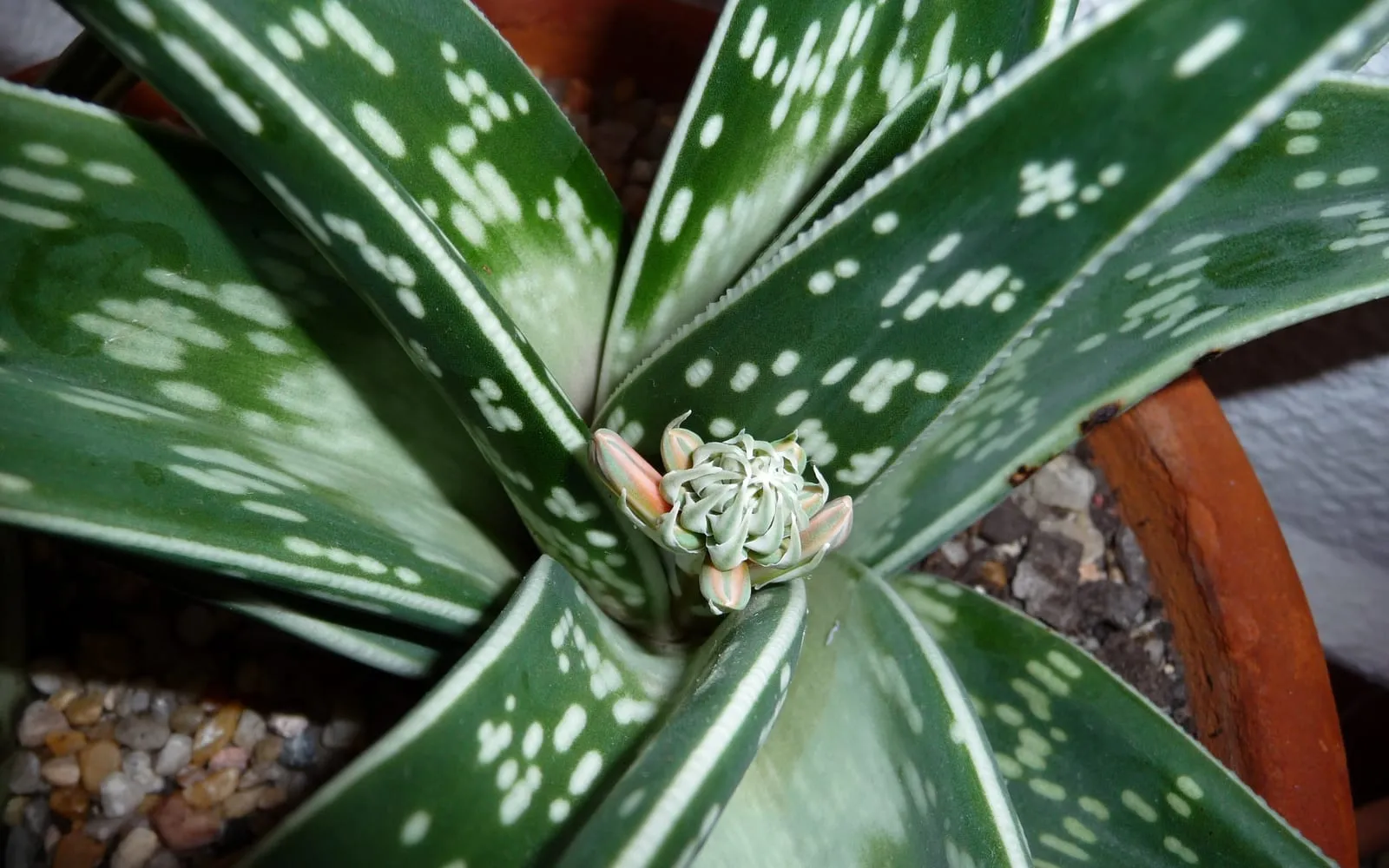
Tiger aloe is a small, compact succulent that grows no central stem at all, just a low rosette of thick, triangular leaves stacked in three distinct ranks that spiral tightly around each other. Each dark green leaf carries irregular white bands running across it, close enough to a tiger’s markings to have given the plant its common name, and the whole rosette rarely exceeds the size of a large fist.
It has a reputation among succulent growers as one of the easier aloes to kill through overwatering, despite looking as tough as any other. In the wild it grows tucked among low shrubs that shade it from the harshest midday sun and shed some rain away from its crown, and matching those conditions in a pot, rather than treating it like a full-sun desert succulent, is most of what keeps it healthy long term.
Appearance and character
Leaves are thick, firm and sharply triangular in cross-section, arranged in three vertical ranks so precisely spaced that the whole rosette reads almost as a piece of geometric sculpture rather than a plant. Dark green to purplish-green ground colour carries irregular, horizontal bands of white or pale grey across each leaf, no two leaves marked quite the same way.
The rosette stays low and close to the soil, rarely offsetting as freely as many other small succulents, so an established plant is more often seen singly or in a small handful of rosettes than in the dense mats other Gonialoe and Haworthia species form.
Flowers appear on a slender, branched stem that rises well clear of the foliage in spring, carrying loosely spaced, tubular blooms in salmon pink to coral. The contrast between the low, patterned rosette and the tall, airy flower stem is one of the more striking pairings among small succulents.
Where it is from
Gonialoe variegata grows across the semi-arid Karoo region of South Africa and into southern Namibia, an area where the boundary between winter and summer rainfall blurs, so different populations experience rain at different points in the year. It typically grows tucked beneath low, woody shrubs rather than in fully open ground, taking advantage of the shade and the slightly better moisture those nurse plants provide.
Carry that sheltered habit indoors. A species that shelters from the harshest sun in the wild does not necessarily want the most intense light a windowsill can offer, and bright, filtered light with only limited direct sun usually keeps it healthier and better coloured than full, unbroken exposure does.
How it grows
Pot it in a very free-draining, gritty succulent mix, in a shallow pot no larger than the rosette needs, since surplus soil around a small root system holds moisture for far longer than the plant can use it.
Give it bright light with some protection from the strongest midday sun, particularly in a hot summer climate, rather than treating it like a full-sun desert cactus. A little dappled shade through the hottest part of the day suits it better than constant direct exposure.
Water more sparingly than most other succulents on this site, letting the mix dry out and then leaving it dry for a few days longer before watering again. This species rots more readily than it scorches, and erring on the dry side costs it nothing.
Repot only when clearly necessary, since the roots dislike disturbance and the plant is slow enough growing that repotting rarely needs to happen more than every few years.
Through the seasons
Spring brings the flower spike on a mature plant, along with the start of the year’s main growth. Resume light feeding once new growth is visible.
Summer is a period of slow, steady growth. Water sparingly even at the height of summer heat, since this species does not reward generous watering the way many succulents do.
Autumn slows growth further. Reduce watering and stop feeding as the season progresses.
Winter is close to dormant. Water only very occasionally, enough to stop the leaves visibly softening, and keep the plant away from cold, damp air.
Care difficulty
Moderate, and the difficulty sits almost entirely in watering rather than in anything else about the plant. It looks as tough as any full-sun succulent but rots readily if treated like one, and the gap between what it appears to need and what it needs day to day is where most losses happen. Light and soil are comparatively easy to get right; watching the watering can and erring towards too little rather than too much is the skill this plant needs.
Watering
Water sparingly, and only once the mix has been fully dry for several days rather than watering the moment it feels dry to a fingertip. A light to moderate soak is enough. This is not a species that benefits from the thorough, run-off drenching recommended for most other succulents on this site.
Reduce watering further still through autumn and winter, when a wet mix at cooler temperatures is considerably more likely to cause root problems than it would during the height of summer growth.
Warning signs, diseases and pests
Mealybug hides between the leaf bases at the centre of the rosette, where new growth is softest, showing as small white, cottony tufts. Treat with horticultural soap or by dabbing directly with a cotton bud dipped in alcohol.
Scale insects sometimes appear on the older, outer leaves as small, flat, brownish bumps. Scrape them off and treat the same way as mealybug, checking back over the following weeks.
Root rot from a mix that stays wet is by far the biggest risk to this species, showing as a rosette that softens, discolours or pulls away from its roots with surprisingly little warning. Unpot it at the first sign, cut away any soft or brown tissue, let the remainder dry for several days, and repot into fresh, very free-draining mix.
Vine weevil grubs feed on the roots underground, and a rosette that suddenly wilts or loosens in its pot despite dry-looking soil on top is likely to have pale, C-shaped grubs in the root ball.
Growing environment
Bright light with some protection from the strongest midday sun suits it best, particularly through a hot summer. An east-facing windowsill, or a south or west-facing one screened by a sheer curtain, generally works better than full unfiltered sun all day.
Average room warmth is fine through the year, provided it stays above about 5 deg C, and it has only limited frost tolerance even once established outdoors in a mild climate.
A very free-draining, gritty mix is essential given how readily this species rots. Ordinary succulent compost straight from a bag often still holds too much water for it without extra grit worked in.
No particular humidity is needed, and it copes as well with dry, centrally heated indoor air as it does in a drier climate outdoors.
Feeding
Feed sparingly with a balanced houseplant fertiliser or a cactus and succulent feed, diluted to around half strength, a few times through spring and summer rather than on a strict monthly schedule.
Stop feeding entirely from autumn through winter, when the plant is barely growing and any unused fertiliser only builds up as salts in a mix that is already being watered very little.
Troubleshooting
A rosette has gone soft and mushy. Root rot, almost certainly from overwatering, which is the leading cause of loss in this species. Unpot it, cut away all soft or discoloured tissue, let the remainder dry out fully, and repot into fresh, very free-draining mix, then water considerably less often than before.
The leaves have lost their patterning and look pale. Too little light, most likely. Move it somewhere brighter, though still with some protection from the harshest midday sun, and expect new growth to come in with clearer, sharper banding.
A leaf tip has gone brown and dry. Usually old age or a brief dry spell rather than a cause for concern. A single dry, browning outer leaf on an otherwise healthy rosette can be trimmed away without treating the rest of the plant.
It has never flowered. Age is the likeliest reason. A young rosette generally needs a few years of steady growth before it reaches flowering size, and consistent light and a settled position help it get there sooner.
Can I grow it outdoors year round? Only in a properly mild, dry climate with minimal winter rain, since the combination of cold and wet soil is far more dangerous to it than cold alone. Most gardens do better growing it in a pot that can be moved somewhere sheltered and dry over winter.
Tiger Aloe problem guides
Not sure what is wrong? See the common houseplant pests guide.