
Houseplant
Butter Tree
Tylecodon paniculatus
Also known as Botterboom, Tylecodon paniculatus
How to grow Tylecodon paniculatus, the butter tree or botterboom, a caudiciform succulent with a swollen yellow trunk and a summer-deciduous habit.
At a glance
- Difficulty
- Moderate
- Water
- Only in the cool growing season, when the mix is dry; none in summer dormancy
- Light
- Full sun to bright light
- Temperature
- Warm; keep above about 7 deg C
- Humidity
- Low
- Hardiness
- USDA 9-11, RHS H2, hardy to 5 C
- Type
- Deciduous caudiciform succulent, winter-growing
- Height
- Up to 2 m outdoors; smaller in a pot
- Native to
- South Africa, Namibia
A caudiciform succulent from the dry Karoo of South Africa, storing water in a swollen, yellow-barked trunk. It grows through the cool, wet winter and drops its leaves to rest through the hot, dry summer, needing full sun and very sharp drainage. It has little frost tolerance, is safest above about 5 deg C, and rots if watered during its summer dormancy.
Hardiness zones describe winter cold alone. Summer heat, humidity, rainfall and the length of the growing season decide as much, so treat the range as the outer limit rather than as a recommendation.
Toxic if eaten
- Do not eat
- All parts, especially the leaves, which contain cardiac glycosides
- Harm from
- Eating it
- Affects
- People, cats and dogs
The butter tree is poisonous. Its leaves contain bufadienolides, heart-active cardiac glycosides, and in its native range it causes a serious wasting and paralytic disease in livestock that eat it, known as krimpsiekte, the same kind of poisoning caused by its relative Cotyledon. The ASPCA lists Kalanchoe as toxic to cats and dogs on the same grounds, but does not list this species itself. A pet or child that ate the leaves could suffer vomiting, a disturbed heartbeat and weakness, and the effect on the heart is the serious risk. Keep it well out of reach of animals and small children, wash your hands after handling it, and seek medical or veterinary advice if any quantity is eaten.
Sources: ASPCA toxic and non-toxic plants, RHS potentially harmful garden plants, North Carolina Extension plant toxicity database
About
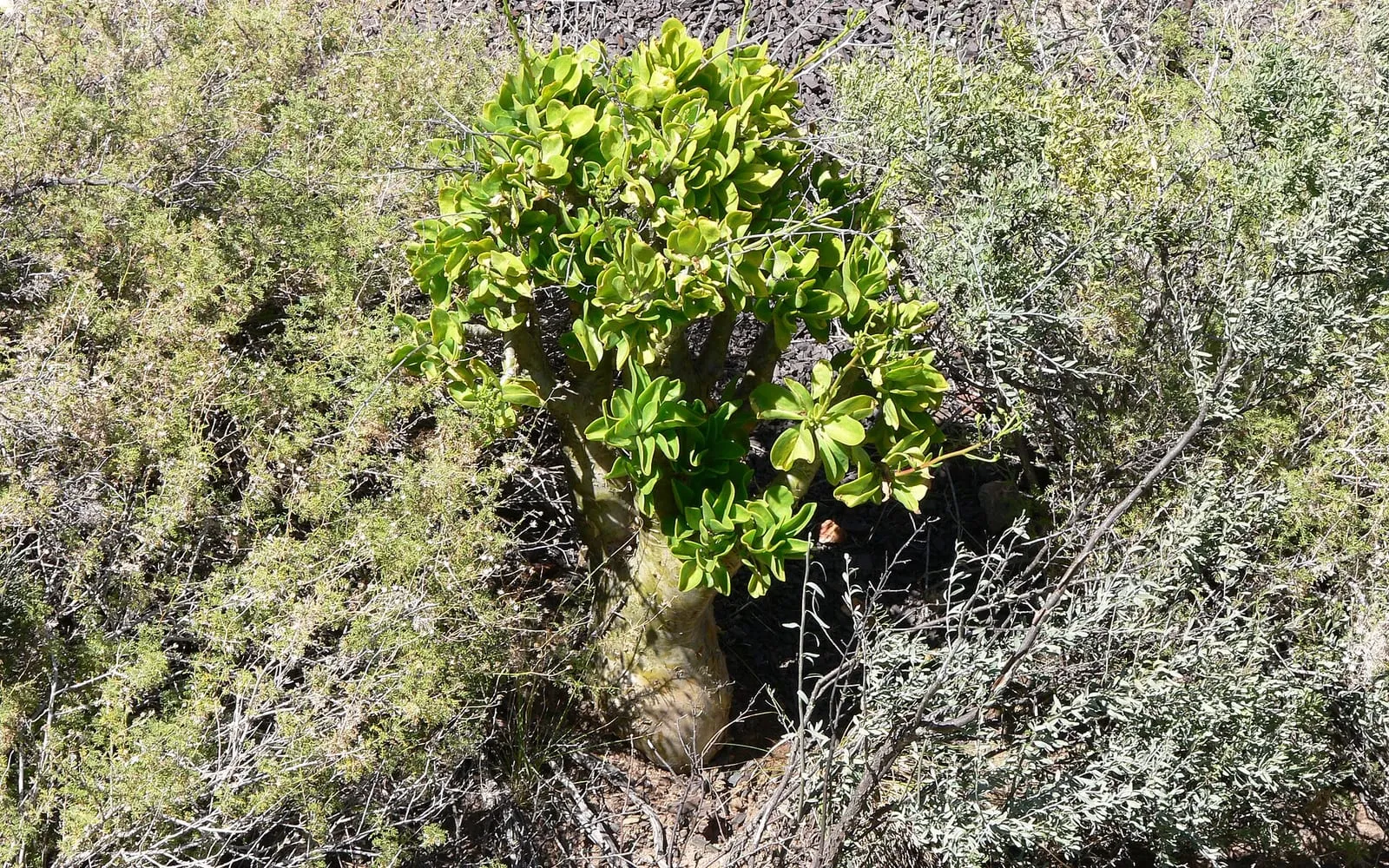
Butter tree is grown for its trunk. It swells into a stout, water-storing caudex, greenish-yellow and clothed in thin, papery, peeling bark that looks yellow in strong sun, which is what gives it the Afrikaans name botterboom, butter tree. From that fat trunk it branches into a small tree, and in summer, while leafless, it produces branched heads of red to orange tubular flowers.
It follows a winter-growing calendar. Coming from the winter-rainfall Karoo of South Africa, it grows and holds its leaves through the cool, wet winter, then drops them and rests, leafless, through the hot, dry summer. That summer leaf drop is normal, not a sign of trouble, and watering the plant while it rests can rot it.
It is a distinctive caudiciform for a collector, needing full sun, very sharp drainage and watering matched to its cycle. It is also poisonous, with the same heart-active compounds as its relative Cotyledon, so it belongs out of reach of pets and children. Grown to its calendar and handled with care, it is a long-lived plant.
Appearance and character
The trunk is a swollen, water-storing caudex, greenish-yellow and covered in thin, papery bark that peels and turns yellow in sun, the plant’s defining feature.
From it the plant branches into a small tree, bearing at the branch tips a crown of soft, fleshy, finger-like to oval green leaves through the cool season.
It is deciduous by drought, holding its leaves in winter and shedding them in summer, so for much of the warm season it stands as a bare, yellow-trunked skeleton.
Its flowers are branched heads of showy red to orange tubular blooms, borne in summer on the leafless plant, a bright display above the bare trunk.
Where it is from
Tylecodon paniculatus grows in the dry Karoo and Namaqualand of South Africa, in winter-rainfall country, storing water in its swollen trunk against the long, hot, dry summer. It is adapted to strong sun, drought and a marked wet and dry season.
Give it full sun, very sharp drainage, and water only in the cool growing season. Keep it bone-dry and leafless through the summer heat. Watering it in summer rots the trunk, and it has little frost tolerance.
How it grows
Its year runs opposite to most houseplants. It leafs out and grows through the cool, wet autumn and winter, flowers in summer while leafless, and rests dry through the summer heat. Watering depends on that cycle.
Grow it in a very free-draining, gritty, mineral mix in a pot to suit its trunk, and water in the cool growing season when the mix is dry, giving it a good drink then. Stop watering as it drops its leaves for summer, and keep it bone-dry through its rest.
Give it full sun to keep the trunk firm and yellow and the growth compact, and warmth above about 7 deg C. Do not mistake the summer leaf drop for death; the bare trunk is only resting.
Propagation is from seed, or from stem cuttings taken in the growing season, though the swollen trunk develops best from seed. Handle it with clean hands because of the toxic sap.
Through the seasons
Autumn ends the summer dormancy as the weather cools. The plant leafs out and resumes growth; start watering again when the mix is dry.
Winter is the main growing season, when it has its leaves. Give full sun, water when the mix dries, and feed lightly, keeping it above about 7 deg C.
Spring continues growth as the leaves begin to fade towards summer dormancy. Ease off watering as they drop.
Summer is dormancy. The plant stands leafless and, on a mature specimen, flowers. Give no water at all, since watering the resting trunk rots it.
Care difficulty
Moderate, and mostly a matter of respecting its reversed calendar. The plant is tough and long-lived, but it must be watered only in the cool growing season and kept bone-dry, leafless, through the summer heat. Water it in summer and the trunk rots. Its toxicity also calls for careful siting and handling.
Watering
Water in the cool growing season, autumn through spring, when the gritty mix has dried, giving the plant a good drink while it is in leaf and growing. Let the mix dry between waterings even then.
Give no water through the summer dormancy, when the plant is leafless and resting, since watering the swollen trunk in the summer heat rots it. As the leaves drop in late spring, stop watering; resume only when it leafs out again in autumn.
Warning signs, diseases and pests
A soft, discoloured, collapsing trunk is rot, almost always from watering during the summer dormancy or from wet, cold conditions. Keep it bone-dry through summer, water only in the cool growing season, and grow it in very sharp drainage.
Leaf drop in summer is normal dormancy, not a problem; the plant leafs out again in autumn. Mealybugs lodge at the leaf bases and on the trunk and can be treated with dilute alcohol, keeping the toxic sap off your hands.
Growing environment
Full sun keeps the trunk firm and yellow and the growth compact. In poor light it grows soft and etiolated and the trunk swells less. It needs as much direct light as you can give it.
Warmth above about 7 deg C and dry, airy conditions suit it, with its water confined to the cool growing season. It has little frost tolerance and dislikes summer wet above all.
Grow it in a very free-draining, gritty, mineral mix in a pot in full sun, and site it out of reach of pets and children given its toxicity.
Feeding
Feed lightly, once or twice in the cool growing season, with a dilute, low-nitrogen feed. It needs little, and rich feeding forces soft growth and a weaker trunk.
Give nothing through the summer dormancy. Fresh gritty mix supplies a repotted plant through its first growing season.
Troubleshooting
The trunk has gone soft and discoloured. Rot, almost always from watering during the summer dormancy. Keep it bone-dry through summer, water only in the cool growing season, and grow it in very sharp drainage. A soft trunk is usually beyond saving.
It has dropped all its leaves in summer. This is normal summer dormancy. The plant rests leafless through the heat and leafs out again in autumn. Do not water it while bare.
When do I water it? In the cool growing season, autumn through spring, when the mix is dry and the plant is in leaf. Give none at all through the summer, which is its rest.
Is it safe around pets and children? No. It is poisonous, carrying heart-active compounds like its relative Cotyledon, so keep it well out of reach and wash your hands after handling it.
Why is the trunk yellow and peeling? That is the plant’s natural greenish-yellow, papery, peeling bark, which gives it the name butter tree. It is healthy, not a fault.
Butter Tree problem guides
Not sure what is wrong? See the common houseplant pests guide.