
Houseplant
String of Tears
Curio herreanus
Also known as String of Beads, String of Watermelons, Gooseberry Plant, Curio herreianus, Senecio herreianus
How to grow Curio herreanus, the string of tears or string of beads, with plump windowed beads on trailing stems, and how to water it without rot.
At a glance
- Difficulty
- Moderate
- Water
- Once the mix has dried right through
- Light
- Bright indirect light to some direct sun
- Temperature
- Warm; keep above about 7 deg C
- Humidity
- Low; dislikes damp, stagnant air
- Hardiness
- USDA 10-11, RHS H2, hardy to 7 C
- Type
- Evergreen trailing succulent
- Height
- Stems trail to 60 cm or more
- Native to
- Namibia, South Africa
A trailing succulent from the dry, rocky country of Namibia and South Africa, where it roots in the shade of larger plants and stores water in bead-like leaves. It needs strong light, sharp drainage and long dry spells, has no frost tolerance, and is safest above about 7 deg C. A wet, airless pot is what kills it.
Hardiness zones describe winter cold alone. Summer heat, humidity, rainfall and the length of the growing season decide as much, so treat the range as the outer limit rather than as a recommendation.
Harmful if eaten
- Do not eat
- The sap and leaves
- Harm from
- Eating it and handling it
- Affects
- People, cats and dogs
Like its relative the string of pearls, this plant carries an irritant sap. The ASPCA lists string of pearls (Curio rowleyanus) as toxic to cats and dogs, and this close cousin is treated the same way. Chewed leaves can bring drooling, vomiting and a sore mouth in a pet, and the sap may irritate skin, so wear gloves when taking cuttings. It is not highly poisonous, but a trailing plant dangling within a cat's reach is worth hanging out of the way.
Sources: ASPCA toxic and non-toxic plants, RHS potentially harmful garden plants
About
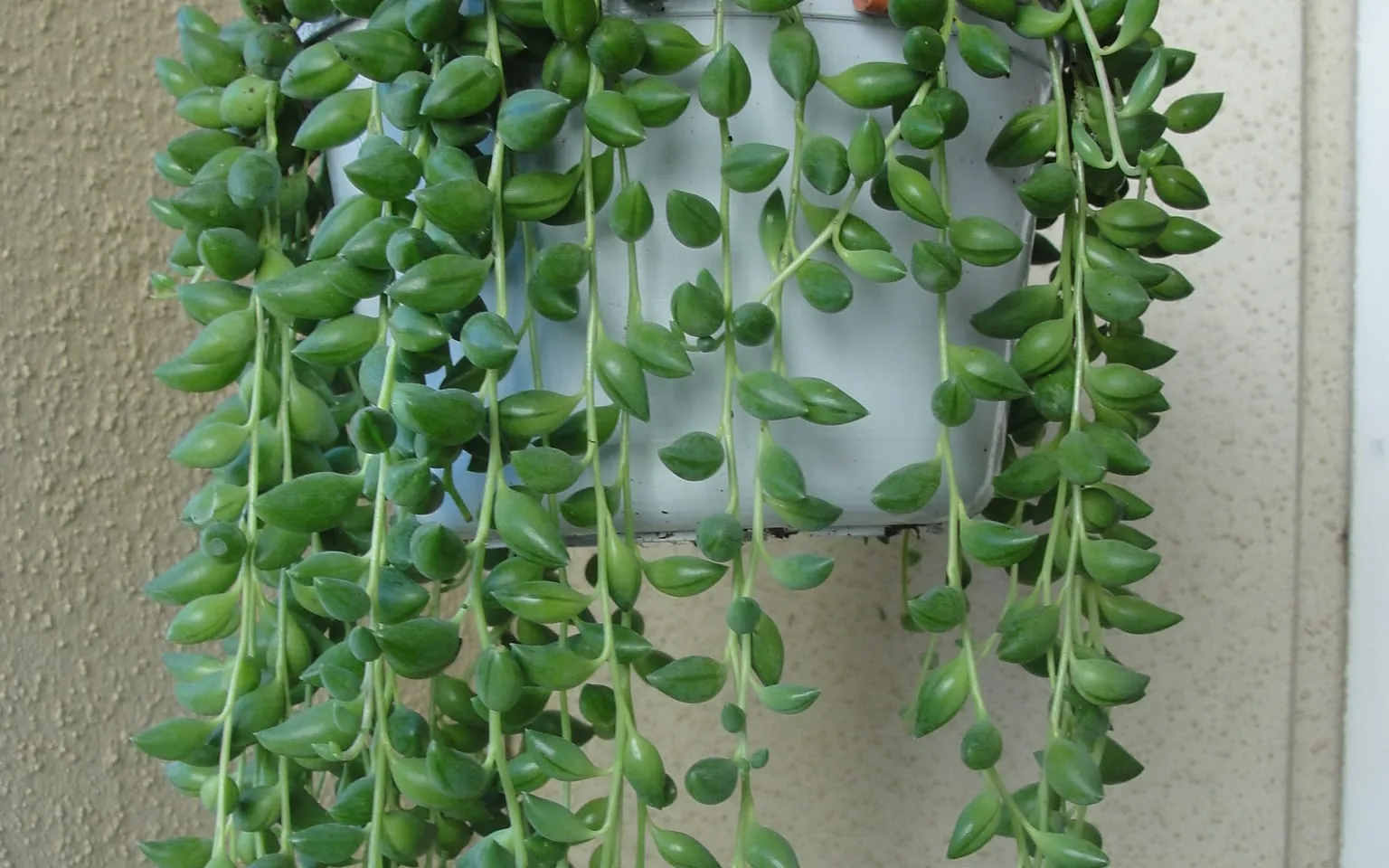
String of tears hangs slim stems set with plump, teardrop beads, each a soft grey-green with a darker translucent stripe down one side, a window that lets light into the leaf. Left to trail from a high pot or shelf it makes a trailing curtain of green beads.
It is the fuller-leaved relative of string of pearls. Where the pearls are round and pea-like, these beads are longer and more tapered, and the plant is a shade tougher and less prone to sulking, though the two are grown in exactly the same dry, bright way.
Its home is the arid ground of Namibia and South Africa, where it scrambles in the light shade of rocks and shrubs. That upbringing sets its needs: strong light, gritty soil and a long drink only when the pot has gone bone dry.
Appearance and character
The beads are the main feature, oval to tear-shaped, grey-green and swollen with stored water, each marked with a clear stripe. That stripe is the leaf window that funnels light to the tissue inside.
The stems are slim, purple-tinged and trailing, hanging well over the pot rim and rooting where they touch damp soil, which is how the plant spreads in the wild.
It grows in cooler spells and rests through the hottest, driest part of the year, the reverse of many houseplants, though indoors it mostly grows whenever it is warm and bright.
Flowers are small, off-white brush-like tufts with a faint cinnamon scent, appearing on a happy plant but secondary to the beaded stems.
Where it is from
Curio herreanus grows in the dry, rocky scrub of Namibia and South Africa, trailing over stones and threading through the shade of larger plants, storing water against long droughts in its bead leaves.
Those conditions explain its care. It needs bright light and sharp drainage, tolerates dry air and long dry spells, and cannot stand a wet, stagnant pot. The leaf windows are its adaptation to strong sun, letting it photosynthesise while exposing little surface to drying air.
How it grows
It grows steadily in warmth and bright light, lengthening its trailing stems, and slows when kept too dark or too cold. Given a bright spot the beads stay firm and closely set instead of sparse.
Grow it in a very free-draining, gritty cactus mix in a pot with good drainage, ideally a hanging one so the stems can fall. Water only when the mix has dried right through, then soak and drain it fully.
Give it the brightest indirect light or a little gentle direct sun, warmth above about 7 deg C, and airy, dry conditions. Stagnant damp is the enemy, so a spot with some air movement suits it.
Propagation is simple: lay a stem on gritty mix and it roots at the beads within weeks, or pot up several cuttings together for a fuller plant.
Through the seasons
Spring brings active growth as light returns; resume watering and take cuttings to bulk out the pot.
Summer is the main growing time in a bright spot. Water when the mix dries fully and give a little dilute feed.
Autumn slows growth; ease back the watering as light fades.
Winter is a near-dry rest. Keep it bright, cool but frost-free, and water only enough to stop the beads shrivelling.
Care difficulty
Moderate, and a touch more forgiving than string of pearls, but the same rule governs it. It dies from overwatering, not neglect. Firm, plump beads on trailing stems mean it is happy; shrivelled beads mean thirst, and yellowing, mushy stems mean rot. Keep it bright, gritty and mostly dry and it is easy.
Watering
Wait until the gritty mix has dried out completely, then water it thoroughly and let every drop drain away. The beads hold plenty of water, so the plant copes far better with being left dry than with sitting wet.
Cut right back in winter to the barest sips, just enough to keep the beads from puckering. Beads that shrivel plump up again after a drink; stems that go soft, yellow and translucent have rotted and should be cut away, with healthy lengths saved as cuttings.
Warning signs, diseases and pests
Wet compost rots the stems and roots, the commonest way to lose this plant. Yellowing, mushy, see-through stems are the sign. Let it dry, cut out the rot, and restart from firm cuttings.
Mealybugs hide among the beads and in the leaf axils as white fluff. Dab them off with a cotton bud dipped in dilute alcohol and check regularly, since the crowded beads give them cover.
Shrivelled, wrinkled beads mean the plant has been dry too long. A good soak restores them. If the beads stay sparse and the stems stretch, the light is too weak.
Growing environment
Bright indirect light, with a little gentle direct sun, keeps the stems full and the beads firm. In poor light the stems grow thin and the beads spread out along bare lengths.
Warmth above about 7 deg C suits it, and it needs dry instead of humid air, disliking the stagnant damp that rots it. A little air movement helps keep it sound.
Hang it in a gritty, free-draining mix where the stems can trail and catch the light, well away from cold draughts and out of a pet’s reach.
Feeding
Feed lightly, a couple of times over spring and summer, with a dilute cactus feed. It needs little, and rich feeding forces soft, rot-prone growth.
Give nothing over winter. Fresh gritty mix carries a repotted plant through its first weeks without extra feed.
Troubleshooting
The stems are going soft, yellow and see-through. Rot from too much water. Let the pot dry, cut out every mushy part, and start again from firm cuttings.
The beads have shrivelled. Thirst, most likely, after too long dry. Soak the pot and they plump up. If they stay sparse and the stems stretch, add light.
How is it different from string of pearls? The beads here are longer and teardrop-shaped with a clear window stripe, where string of pearls carries round, pea-like ones. Both are grown the same dry, bright way.
Is it safe around pets? No. Like string of pearls it has an irritant sap that can upset a cat or dog that chews it, so hang it out of reach and wear gloves when taking cuttings.
The beads are spread far apart on bare stems. Too little light. Move it somewhere brighter and new growth comes back dense and beaded.
String of Tears problem guides
Not sure what is wrong? See the common houseplant pests guide.