
Houseplant
Candelabra Tree
Euphorbia ingens
Also known as Euphorbia ingens, Common Tree Euphorbia, Naboom
How to grow Euphorbia ingens, the candelabra tree, a giant African euphorbia with four-angled branches and dangerously caustic sap.
At a glance
- Difficulty
- Easy
- Water
- Once the mix has dried right through
- Light
- Bright light to full sun
- Temperature
- Warm; keep above about 10 deg C
- Humidity
- Low
- Hardiness
- USDA 10-11, RHS H1c, hardy to 8 C
- Type
- Evergreen succulent tree
- Height
- Up to 10 m outdoors; a slow column indoors
- Native to
- Southern Africa
A large succulent tree from the hot bushveld of southern Africa, where it becomes a landmark of the savanna with its rounded crown of green columns. It needs bright light or full sun, sharp drainage and warmth, has no frost tolerance and slows below about 10 deg C. Heat and drought suit it; cold, wet ground rots it.
Hardiness zones describe winter cold alone. Summer heat, humidity, rainfall and the length of the growing season decide as much, so treat the range as the outer limit rather than as a recommendation.
Poisonous if eaten
- Do not eat
- The copious milky white sap in every part
- Harm from
- Handling it, sap in the eyes and eating it
- Affects
- People, cats and dogs
The candelabra tree has one of the most dangerous saps of any plant grown indoors. Cut or broken, it bleeds copious milky white latex that is violently caustic: on skin it causes burning and blistering, in the eyes it causes severe pain, swelling and a serious risk of permanent blindness, and swallowed it burns the mouth and gut. Even the vapour from a freshly cut branch can irritate eyes and airways. Wear gloves and eye protection whenever you cut or repot it, keep the sap away from your face, wash off any splash at once, and keep the plant well away from pets and children. If sap reaches the eyes, rinse with plenty of water and seek medical help immediately.
Sources: ASPCA toxic and non-toxic plants, RHS potentially harmful garden plants, North Carolina Extension plant toxicity database
About
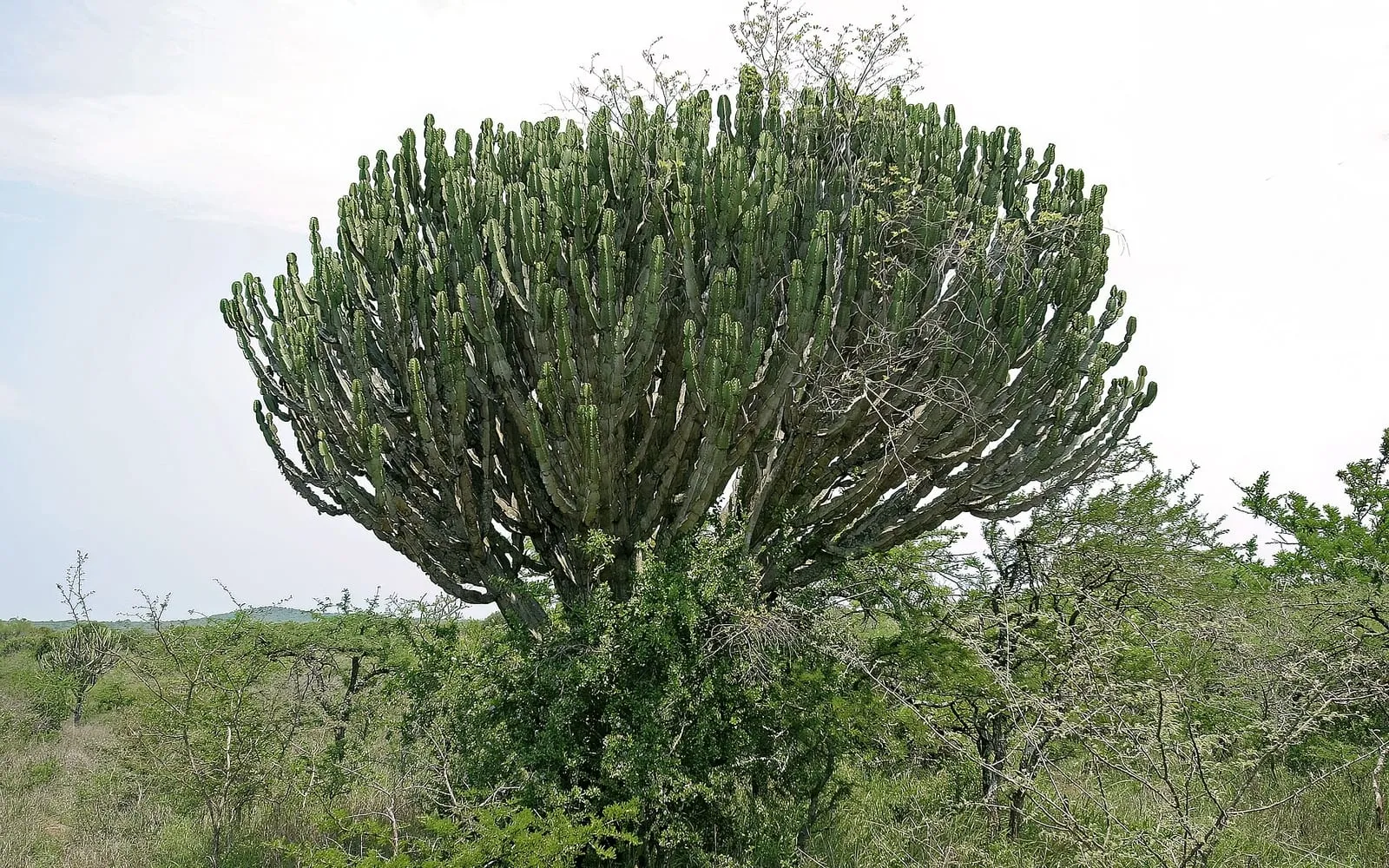
Candelabra tree is one of the large trees of the African savanna, grown indoors as a young, slow plant. In the bushveld it becomes a massive succulent tree up to ten metres tall, with a single trunk carrying a dense, rounded crown of upright, four-angled green branches that curve up like the arms of a candelabra. A potted specimen is a single stout green column that branches only slowly, so it serves for years as an architectural houseplant before it outgrows a room.
It is a tree spurge, not a cactus, and it has the spurge family’s milky sap in a dangerous form. Cut it and it bleeds copious milky latex that is among the most dangerously caustic saps of any cultivated plant, able to blind if it reaches the eyes. This is a plant to admire and to handle rarely, always with gloves and eye protection.
It comes from the hot, dry bushveld and needs bright light or full sun, gritty soil and long dry spells. Given warmth and sharp drainage it is easy and slow-growing, and its main hazard is its sap rather than its care.
Appearance and character
The branches are upright and four-angled, a fresh to deep green, with slightly winged ridges edged by pairs of small spines, and they curve upward from the trunk to build the rounded, candelabra-like crown.
Indoors a young plant is a single stout green column, ribbed and angled, that thickens and branches only slowly, so it holds a neat architectural shape for years.
The green branches do the plant’s photosynthesis, since like other tree euphorbias it has no significant leaves, only tiny ones that soon fall.
Its flowers are small and yellow-green, borne along the ridges of mature branches, unshowy beside the sculptural green columns that are the main attraction.
Where it is from
Euphorbia ingens grows across the hot, dry bushveld and savanna of southern Africa, on rocky slopes and open ground in strong sun, becoming a landmark tree of the open ground. It is built for heat, drought and lean soil.
Give it bright light or full sun, sharp drainage and long dry spells. It tolerates great heat, and cannot survive cold, wet ground or frost. Its copious caustic latex deters browsing animals, and is the reason it must be handled with such care.
How it grows
It grows slowly indoors, thickening and lengthening its green column and branching only with age and size, and rests over winter. Warmth and strong light keep it firm and upright; cold and damp rot it, and poor light makes it soft and floppy.
Grow it in a very free-draining, gritty cactus mix in a stout, heavy pot, since a tall column becomes top-heavy, and water only when the mix has dried right through. Being slow, it needs infrequent watering and rarely needs potting on.
Give it bright light or full sun, warmth above about 10 deg C, and dry conditions. Whenever you cut, prune or repot it, wear gloves and eye protection and keep the sap away from your face, since it is severely caustic.
Propagate from branch cuttings, wearing full protection. Cut a branch, rinse or blot the flowing latex, and let the cutting callus over for a week or more before setting it into gritty mix.
Through the seasons
Spring starts slow growth as light and warmth return. Resume watering, repot if needed, and take cuttings, wearing gloves and eye protection.
Summer is the main growing season. Give strong light or full sun, water only when the mix has dried right out, and add a little dilute feed.
Autumn slows growth as light fades. Reduce watering.
Winter holds it in a near-dry rest, kept above about 10 deg C. Give barely any water; the thick columns rot at the base in cold, wet compost at this time.
Care difficulty
Easy and slow-growing, so long as it is kept warm, bright and dry. It is a tough, drought-hardy plant that needs little beyond sun and sharp drainage, and it rots only in cold, wet compost. The real difficulty is safety, since its sap is severely caustic and its eventual size is large. Handle it rarely and always with gloves and eye protection, and it is otherwise undemanding.
Watering
Let the gritty mix dry out to the bottom, then soak it through and let it drain away fully. The thick green columns store water, so the plant tolerates long drought far better than damp compost and needs watering only now and then.
Water almost not at all over winter, when cold, wet compost rots it. Branches that pucker are thirsty; a soft, discoloured, collapsing base is rot. Cut it out with full protection and keep sound pieces as cuttings.
Warning signs, diseases and pests
A soft, discoloured, collapsing base or branch is rot, from cold, wet compost. Cut back to firm tissue wearing gloves and eye protection, dry the healthy pieces, and restart in fresh gritty mix, watering more sparingly.
Mealybugs hide in the ridges and branch joints as white fluff; treat them with dilute alcohol on a cotton bud, taking great care to keep sap off your hands and out of your eyes while you work.
Soft, floppy, pale growth that cannot hold itself up means too little light. Move it into bright light or full sun to firm up the column.
Growing environment
Bright light or full sun keeps the branches firm, green and upright. In poor light the growth is soft, pale and floppy. It needs as much light as you can give it.
Warmth above about 10 deg C and dry conditions suit it, matching its hot bushveld habitat. It needs low humidity and has no frost tolerance.
Grow it in a gritty, free-draining mix in a stout, heavy, stable pot in bright light or full sun, and site it well out of reach of pets and children, and away from where anyone might brush against or knock it, because of its sap.
Feeding
Feed only once or twice over spring and summer with a dilute, low-nitrogen cactus feed. It needs little, and rich feeding forces soft, weak growth.
Give none over winter. A slow grower can live off a fresh gritty mix for a long time after potting, so it rarely needs more.
Troubleshooting
The base or a branch has gone soft and discoloured. Rot from cold, wet compost. Cut back to firm tissue in gloves and eye protection, let the healthy pieces callus, and start them again in fresh gritty mix. Water more sparingly from then on.
The growth is soft, pale and floppy. Too little light. Move it into bright light or full sun to firm up the column.
How dangerous is the sap really? Severely so. The copious milky latex is violently caustic, burning skin, harming the gut if swallowed, and risking permanent blindness in the eyes; even its vapour can irritate. Always wear gloves and eye protection, and if sap reaches the eyes, rinse with plenty of water and seek medical help at once.
Is it a cactus? No. It is a succulent tree spurge that resembles a cactus. The copious milky sap, which no cactus has, gives it away.
Will it outgrow my room? Eventually, since it becomes a large tree. Indoors it is slow and can serve for years as a column before it needs moving outdoors in a warm climate or passing on.
Candelabra Tree problem guides
Not sure what is wrong? See the common houseplant pests guide.