
Edible
Tarragon
Artemisia dracunculus
Also known as French tarragon, Estragon, Dragon's wort
How to grow tarragon, Artemisia dracunculus. Why French tarragon must be bought as a plant, telling it from Russian, and overwintering it in a wet climate.
At a glance
- Difficulty
- Moderate
- Water
- Sparingly, since it is drought tolerant and rots in wet ground
- Light
- Full sun, in a sheltered position
- Temperature
- Hardy to around -10 deg C, and it rots in cold wet winter soil
- Hardiness
- USDA 5-9, RHS H5, hardy to -12 C
- Type
- Herbaceous perennial, short lived and dying back each winter
- Height
- 60-90 cm
- Native to
- Central Asia and southern Russia, with French tarragon a sterile selection
- Best month
- July in the Northern Hemisphere, January in the Southern Hemisphere
Buy a plant rather than a packet. French tarragon almost never sets viable seed, so anything sold as tarragon seed is the Russian sort, which is hardier, coarser and close to flavourless. French tarragon also rots in cold wet winter soil, so it wants drainage or a pot, and lifting it under cover is common practice at the cold end of its range.
Hardiness zones describe winter cold alone. Summer heat, humidity, rainfall and the length of the growing season decide as much, so treat the range as the outer limit rather than as a recommendation.
Every month named in this guide is for the temperate Northern Hemisphere. If you garden in the Southern Hemisphere, shift each one by six months, so July becomes January. Closer to the equator the wet and dry seasons matter more than the calendar, and the shift stops being a useful guide.
Edible, with limits
- Safe to eat
- The leaves and shoots in culinary quantities
- Do not eat
- The essential oil in concentrated form
- Harm from
- Eating it
- Affects
- People
Tarragon is a culinary herb and is safe in the quantities used in cooking. It is not listed by the RHS as a potentially harmful garden plant, and the ASPCA does not list Artemisia dracunculus as toxic to cats and dogs, though the wider genus Artemisia includes wormwood and mugwort, some of which are listed. The compound to know is estragole, also called methyl chavicol, which gives tarragon much of its aniseed character and which is also present in basil and fennel. Estragole is genotoxic and carcinogenic in animal studies at high doses, and European food safety assessments have advised against concentrated essential oil preparations while regarding culinary use of the herb as acceptable. The practical position is that using tarragon in cooking is fine and taking tarragon essential oil internally is not. Pregnant women are generally advised to avoid concentrated tarragon preparations for the same reason, and culinary quantities are not the concern.
Sources: RHS potentially harmful garden plants, ASPCA toxic and non-toxic plants
About
If you buy tarragon seed you will get the wrong plant, every time.
French tarragon is a sterile clone. It does not set viable seed and it can only be propagated by division or cuttings, which means it is sold as a plant and never as a packet. Anything on a seed rack labelled tarragon is Russian tarragon, a different form of the same species that is taller, coarser, hardier, more vigorous and almost tasteless.
The difference in the kitchen is not subtle. French tarragon has an intense sweet aniseed flavour that carries a bearnaise sauce, a roast chicken and the classic fines herbes mixture. Russian tarragon tastes of very little and is sometimes described as grassy.
Buy a named French tarragon plant from a herb nursery, taste a leaf before you buy if you can, and propagate from it by division.
The other thing to know is that it dislikes a wet winter more than the cold alone would suggest. It is hardy to around -10 deg C and it rots in cold wet soil, so sharp drainage and a dry winter position matter more than fleece.
It is also short lived. Three or four years is typical before a plant loses vigour, so divide it regularly and keep a spare.
Appearance and character
A herbaceous perennial reaching 60 to 90 cm, forming a loose upright clump that dies back to the ground each winter.
Stems are slender, wiry, branching and slightly woody at the base.
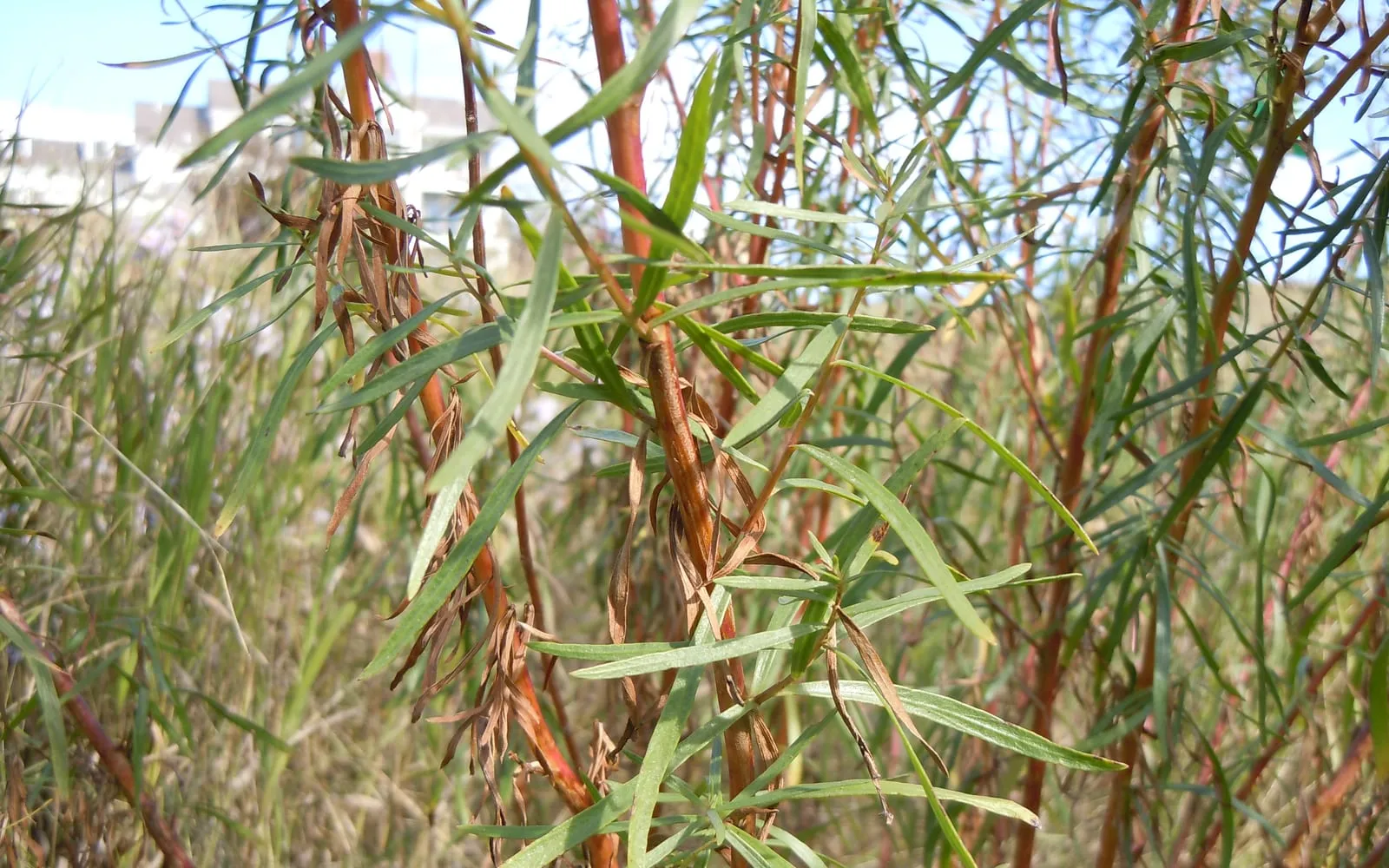
Leaves are narrow and strap-shaped, 3 to 8 cm long, smooth, glossy and undivided, in a deep green, held alternately.
The smooth undivided leaf distinguishes tarragon from most other artemisias, which have finely dissected grey foliage.
Crushed leaves smell strongly of aniseed, from estragole and related compounds.
French tarragon rarely flowers outside its warmest range, and when it does the flowers are small, greenish-yellow and sterile.
Russian tarragon is taller, up to 1.2 m, coarser, with slightly broader and duller leaves, flowers and sets viable seed, and has little flavour.
The root system spreads by short rhizomes and the clump expands slowly outwards.
Mexican tarragon, Tagetes lucida, is an unrelated plant used as a substitute in hot climates and is a marigold rather than an artemisia.
Where it is from
Central Asia and southern Russia, growing on dry steppe and stony ground, which explains the requirement for sharp drainage and dislike of wet.
French tarragon is a sterile clone selected somewhere in Europe, probably in the middle ages, and propagated vegetatively ever since. Every French tarragon plant is a division of the same original.
The species name and the common name both refer to dragons. Dracunculus means little dragon, and the usual explanation is the coiled serpentine appearance of the roots, along with a medieval belief that it cured snake bite.
Tarragon reached western Europe by the middle ages and became central to French cooking, where it is one of the four fines herbes along with parsley, chives and chervil.
It is the defining flavour of bearnaise sauce and tarragon vinegar, and it has a particular affinity with chicken, eggs and fish.
It is in Asteraceae alongside wormwood, mugwort and southernwood, and it is the only member of the genus grown as a culinary herb.
Russian tarragon is the fertile form of the same species and is the one that grows wild across the natural range.
How it grows
Buy a plant, never seed. Seed is always Russian tarragon. Buy French tarragon from a herb nursery and taste a leaf before you buy where possible, since mislabelling is common.
Plant in spring, once the soil has warmed, in full sun in a sheltered position.
Sharp drainage is the requirement. Light, poor, gritty soil suits it, and it rots in heavy wet ground.
Improve heavy soil with plenty of grit, plant on a slight ridge, or grow it in a container.
Space plants 45 cm apart.
Water sparingly. Tarragon is drought tolerant and overwatering is a common way to lose it.
Do not feed. Rich soil gives lush growth with a weaker flavour.
Cut the stems back to 5 cm in late autumn once the foliage dies down, and mulch over the crown with grit, bark or straw for winter protection.
Lift a plant and overwinter it in a pot in a cold frame or an unheated greenhouse in a cold wet garden, which is the reliable answer where winter losses are a problem.
Grow it in a container of gritty compost and move it under cover from November to March, which solves the winter wet entirely.
Divide every three or four years in spring, since the plant loses vigour. Lift the clump, split it into pieces with roots and shoots attached, and replant the outer sections.
Take softwood cuttings in early summer as an alternative, which root readily.
Keep a spare plant. Tarragon is short lived and losing your only plant to a wet winter is common.
Harvest through the summer, picking young shoots and leaves from June onwards.
Cut the plant back by a third in midsummer to encourage fresh growth.
Use it fresh where you can. Tarragon dries poorly and loses much of its character, and freezing chopped leaves in ice cubes or steeping them in vinegar preserves the flavour far better.
Through the seasons
Winter it is dormant, and the risk is the crown rotting in wet soil rather than freezing. Mulch or bring it under cover.
Spring shoots come through in April, which is dividing season and when slugs are a problem.
Summer is the harvest, from June onwards, with a midsummer cut back to encourage fresh growth.
Autumn the foliage dies down and the stems are cut back and mulched over.
Care difficulty
Moderate. Growing it is easy and keeping it alive through the winter and buying the right plant are the hard parts.
The buying problem is entirely avoidable once you know that seed is always Russian tarragon.
The winter problem is drainage. Tarragon in a sharply drained sunny spot or a pot under cover comes through, and tarragon in heavy wet clay does not.
The short life is inherent, and dividing every three or four years and keeping a spare plant deals with it.
There are almost no pests, and rust is the only common disease.
Watering
Water sparingly. Tarragon is drought tolerant and far more plants are lost to overwatering and wet soil than to drought.
Water in dry spells during the growing season and let the soil dry between waterings.
Water container plants sparingly and let the compost dry out substantially between waterings.
Reduce watering sharply from autumn and keep the plant dry through the winter.
Never let it stand in water. Remove saucers from pots in winter.
Warning signs, diseases and pests
A plant that fails to reappear in spring is the commonest tarragon loss, and it is nearly always crown rot from cold wet winter soil rather than frost. Improve drainage, mulch the crown with grit, or overwinter it in a pot under cover.
Tall coarse vigorous growth with little flavour is Russian tarragon, which is what grows from seed. Buy a French tarragon plant instead.
Growth becoming thin and weak after three or four years is normal ageing. Divide the plant in spring and replant the outer sections.
Orange-brown pustules on the leaves and stems is tarragon rust. Remove and destroy affected growth, improve air movement, and cut the plant back.
Yellowing lower leaves with soft growth is overwatering or soil that is too rich.
Shoots eaten off at ground level in spring is slugs and snails.
Weak flavour on a plant that is otherwise healthy is usually rich soil, too much feeding or too much shade.
Powdery white coating in a dry summer is powdery mildew, which is uncommon.
Growing environment
Full sun in a sheltered position. It flowers and flavours poorly in shade.
Poor, light, sharply drained soil. Add grit to heavy ground or grow it in a container.
Hardy to around -10 deg C, and the winter risk is wet at the crown rather than cold.
Allow 45 cm per plant.
It suits a herb bed, a raised bed, a gravel garden, a sunny border edge or a container.
Grow it in a pot of gritty compost and move it under cover from November to March in a cold wet garden, which is the most reliable way to keep it going.
Grow it with the Mediterranean herbs that want the same treatment. Thyme, rosemary, sage, oregano and lavender all share the sun and drainage requirements, and all of them dislike the rich moist conditions that suit mint and parsley.
Keep a spare plant or a rooted cutting somewhere separate, since losing a single plant over winter is common.
Its wildlife value is limited, since French tarragon rarely flowers at all.
Feeding
None needed, and feeding reduces the flavour.
Tarragon produces its best aromatic oils on poor light soil, and rich ground gives lush growth with a weaker taste.
Do not add manure or compost to the planting position, and use grit instead where the soil needs improving.
Feed container plants very lightly with a balanced liquid feed once or twice in summer, since pot compost runs out, and no more than that.
Avoid high-nitrogen feeds entirely.
Troubleshooting
Why can I not buy tarragon seed? You can, and it will always be Russian tarragon. French tarragon is a sterile clone that sets no viable seed and is propagated only by division and cuttings, so it is sold as a plant.
How do I tell French from Russian tarragon? Taste a leaf. French tarragon has an intense sweet aniseed flavour, and Russian tastes of very little. Russian is also taller, coarser and more vigorous, and it flowers and sets seed.
It did not come back in spring. Crown rot from cold wet winter soil, which is the commonest way tarragon is lost. Improve drainage with grit, mulch the crown, or lift it into a pot and overwinter it under cover.
Should I feed it? No. Rich soil and fertiliser both reduce the flavour. Poor light gritty ground gives the best-tasting leaves.
How often should I divide it? Every three or four years in spring. Tarragon is short lived and loses vigour, and dividing keeps it going.
Does it dry well? Poorly. Tarragon loses most of its character on drying. Freeze chopped leaves in ice cubes, or steep them in white wine vinegar, which preserves the flavour far better.
Can I grow it in a pot? Yes, and it is the safest way to keep it in a cold wet garden. Use gritty compost, water sparingly, and move the pot under cover from November to March.
The leaves have orange spots. Tarragon rust. Remove and destroy the affected growth, improve air movement and cut the plant back.
Should I worry about estragole? Not for culinary use. The concern applies to concentrated tarragon essential oil taken internally rather than to the herb used in cooking.