
Houseplant
Succulent Bush Senecio
Senecio barbertonicus
Also known as Lemon Bean Bush, Senecio barbertonicus, Curio barbertonicus
How to grow Senecio barbertonicus, the succulent bush senecio or lemon bean bush. Its finger-like leaves, its scented winter flowers, and why it is toxic.
At a glance
- Difficulty
- Easy
- Water
- Once the mix has dried through
- Light
- Full sun to bright light
- Temperature
- Warm; keep above about 5 deg C
- Humidity
- Low
- Hardiness
- USDA 9-11, RHS H2, hardy to 3 C
- Type
- Evergreen succulent shrub
- Height
- 1 to 2 m
- Native to
- Southern Africa
A shrubby succulent from the dry bushveld of southern Africa, storing water in finger-like leaves on woody stems. It needs full sun, sharp drainage and long dry spells, has little frost tolerance and is safest above about 3 deg C. It flowers in winter, withstands heat and drought, and rots in cold, wet compost.
Hardiness zones describe winter cold alone. Summer heat, humidity, rainfall and the length of the growing season decide as much, so treat the range as the outer limit rather than as a recommendation.
Harmful if eaten
- Do not eat
- The leaves and sap
- Harm from
- Eating it
- Affects
- People, cats and dogs
This is a Senecio, a genus that includes many plants with an irritant, mildly toxic sap, and its close relatives such as string of pearls are listed by the ASPCA as toxic to cats and dogs. Treat it the same way: a pet or child that chews the leaves may drool, retch or have a sore mouth and stomach. Some senecios also contain compounds that harm the liver over time if eaten. Keep it away from pets that chew, and wash the sap off skin.
Sources: ASPCA toxic and non-toxic plants, RHS potentially harmful garden plants
About
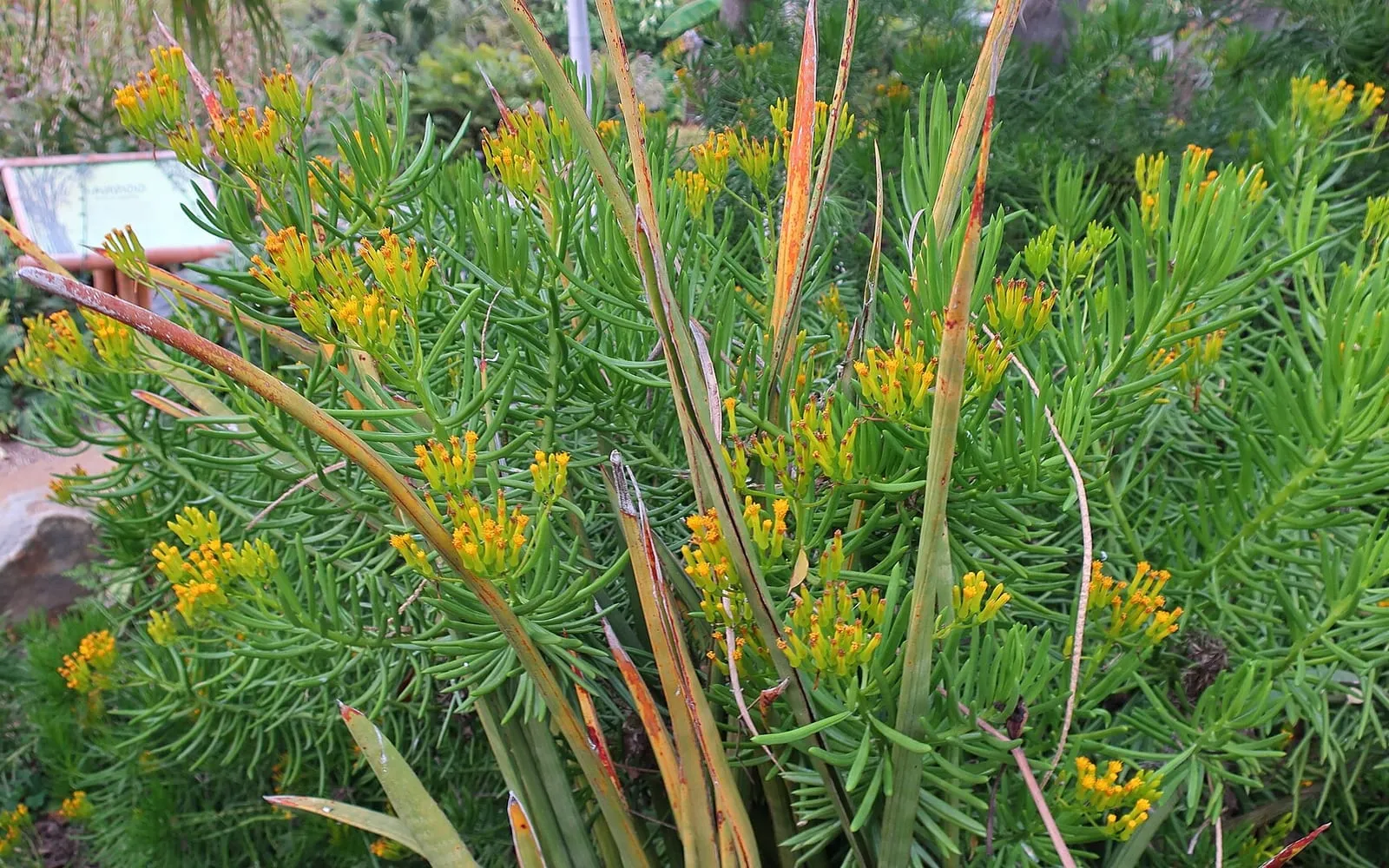
Succulent bush senecio is an upright shrubby succulent with woody stems and slim, finger-like, cylindrical green leaves that stand out all around. A mature plant forms a dense, rounded bush a metre or two high, covered in fleshy green leaves. In winter it carries clusters of small, bright yellow, sweetly scented flowers, which is where its other name, lemon bean bush, comes from.
It is a drought-hardy shrub of the dry southern African bushveld, at home in strong, unbroken sun, stony ground and long rainless spells. Fast-growing and easy, it makes a strong structural succulent for a sunny sill, a conservatory or, in a frost-free climate, a garden, and it takes hard pruning to keep it shapely.
It belongs to the senecios, the same group as the trailing string of pearls and string of tears, and shares their mildly toxic, irritant sap, so it is one to keep from chewing pets. Grow it sunny, lean and dry, and it usually flowers in winter.
Appearance and character
The leaves are slim, cylindrical and finger-like, a fresh green, standing out all around the woody stems, so the plant looks like a dense, bristling bush of soft green fingers.
The stems are upright and branching, turning woody with age, and build into a rounded shrub one to two metres tall, faster and more shrubby than most succulents.
It takes hard pruning well, which keeps it dense and shapely and provides cuttings, and it roots readily from those cuttings.
Its flowers are clusters of small, bright yellow, sweetly scented blooms at the shoot tips in winter, a welcome show when little else is out.
Where it is from
Senecio barbertonicus grows in the dry bushveld and rocky slopes of southern Africa, in strong sun and low rainfall, storing water in its finger-like leaves against drought. It is a plant of heat and aridity.
Those origins govern its needs. It thrives on strong, direct sunshine, compost that empties fast and long stretches without water. It tolerates heat and drought, while a cold, wet root run is the one thing that rots it. Its irritant, mildly toxic sap is the senecio family trait, and the reason to keep it from pets that chew.
How it grows
It grows fast for a succulent through the warm months, branching and bushing out, flowers in winter, and slows in the coldest, darkest weeks. Full sun keeps it dense and firm; poor light makes it leggy and sparse.
Pot it in a very open, gritty succulent compost in a container to match its size, and water only once that compost has dried right out. The finger-like leaves hold their own reserve, so it needs watering only now and then, though its quick pace means it drinks a little more than a slow succulent in summer.
Give it full sun, warmth above about 3 deg C, and dry conditions, and prune it back in spring to keep it bushy. Move a plant that has summered outdoors back in before frost.
Propagation is very easy. Stem cuttings, dried for a day or two, root readily in gritty mix.
Through the seasons
Spring sets off rapid growth as the light and warmth build. Prune to shape, begin watering again, and take cuttings.
Summer carries the bulk of the growth. Give water once the compost has dried out, add a little dilute feed, and hold it in full sun.
Autumn slows growth and sets the flower buds. Ease off watering.
Winter brings the scented yellow flowers. Keep it bright, cool but frost-free, and water sparingly, since cold, wet compost rots it now.
Care difficulty
Easy, fast and forgiving, given full sun and sharp drainage. It grows quickly, prunes hard, roots readily and flowers in winter with little help. Its one weakness is cold, wet compost, which rots it, so keep it dry in winter. Its mildly toxic sap is the main reason for care, calling for it to be kept from chewing pets.
Watering
Once the gritty compost has dried right out, drench it and let the surplus run away. The finger-like leaves store water, so the plant tolerates drought, though its fast growth means it takes a little more in summer than a slow succulent.
Water sparingly over winter, when cold, wet compost is the main danger, even as it flowers. Leaves that shrivel are thirsty; a soft, discoloured base points to rot from overwatering.
Warning signs, diseases and pests
Cold, wet compost rots the roots, the commonest way to lose it, shown by softening, discoloured stems at the base. Improve drainage, water sparingly, and keep it warmer and drier.
Mealybugs and aphids gather on the soft shoots and flowers and can be wiped off with dilute alcohol or treated with oil. Take care to keep the irritant sap off skin while working on it.
Leggy, sparse, stretched growth means too little light. Move it into full sun and prune it back to force dense new growth.
Growing environment
Full sun keeps the bush dense, firm and free-flowering. In poor light it grows leggy, sparse and soft. It needs as much direct light as you can give it.
Warmth above about 3 deg C and dry conditions suit it, matching its bushveld home. It needs low humidity and dislikes cold, wet, stagnant compost.
Set it in a gritty, sharply draining succulent compost in a sunny position, or outdoors in a warm, frost-free climate, and keep it clear of pets that chew.
Feeding
Feed only once or twice over spring and summer with a dilute, low-nitrogen cactus feed. It needs little, and rich feeding forces soft, leggy growth.
Give nothing over winter. Fresh gritty mix supports a newly potted or pruned plant through its first weeks.
Troubleshooting
It has grown leggy and sparse. Too little light. Move it into full sun and prune it back hard to force dense new growth, rooting the trimmings as cuttings.
The base has gone soft and discoloured. Root rot from cold, wet compost. Improve drainage, water sparingly, keep it warmer and drier, and root a healthy cutting if the base is lost.
When does it flower? In winter, with clusters of small, scented yellow blooms, which is unusual and welcome timing among houseplants.
Is it safe around pets? No. As a Senecio it has an irritant, mildly toxic sap, like its relatives the ASPCA lists as toxic to pets, so keep it from chewing animals and wash the sap off skin.
How is it different from string of pearls? This is an upright, bushy shrub with finger-like leaves, where string of pearls is a trailer with round beads. Both are senecios with a toxic sap.
Succulent Bush Senecio problem guides
Not sure what is wrong? See the common houseplant pests guide.