
Houseplant
String of Bananas
Senecio radicans
Also known as Fishhooks senecio
How to grow string of bananas as a hanging houseplant. Its curved, banana-shaped leaves, fast trailing growth, and why it is easily confused with string of pearls.
At a glance
- Difficulty
- Easy
- Water
- Water when the compost has dried out completely
- Light
- Bright light, some direct sun
- Temperature
- 10-27 deg C, avoid below 5 deg C
- Hardiness
- USDA 9-11, RHS H1c, hardy to 5 C
- Type
- Evergreen perennial trailing succulent
- Height
- Trails 60-90 cm or more
- Native to
- South Africa
Tender to frost and grown as a houseplant across almost the entire temperate world. It grows fastest with strong light and a real dry spell between waterings, and struggles more with consistently damp compost or low light than with any particular temperature within its normal indoor range.
Hardiness zones describe winter cold alone. Summer heat, humidity, rainfall and the length of the growing season decide as much, so treat the range as the outer limit rather than as a recommendation.
Harmful to cats and dogs if eaten
- Do not eat
- The whole plant
- Harm from
- Eating it
- Affects
- Cats and dogs
Like several other Senecio species, string of bananas contains compounds that can cause vomiting and digestive upset if eaten in quantity by cats or dogs, and the ASPCA lists related Senecio species as toxic to pets on this basis. No toxicity to people is documented. Serious poisoning is uncommon, since the plant is not especially palatable, but it is worth keeping out of reach of a chewing pet regardless.
Source: ASPCA
About
String of bananas is a fast-growing, trailing succulent named for its small, curved, banana-shaped leaves that line long stems cascading over the edge of a hanging pot or shelf. It is frequently confused with the related and similarly named string of pearls, which has small round leaves rather than curved banana-shaped ones, and the two are often sold alongside each other, occasionally even mislabelled, though they are distinct species with slightly different growing habits.
Compared with string of pearls, this species tends to grow faster and tolerate a slightly wider range of conditions, which has made it a popular, relatively forgiving choice for a hanging display even among growers who have struggled with its more delicate relative.
Appearance and character
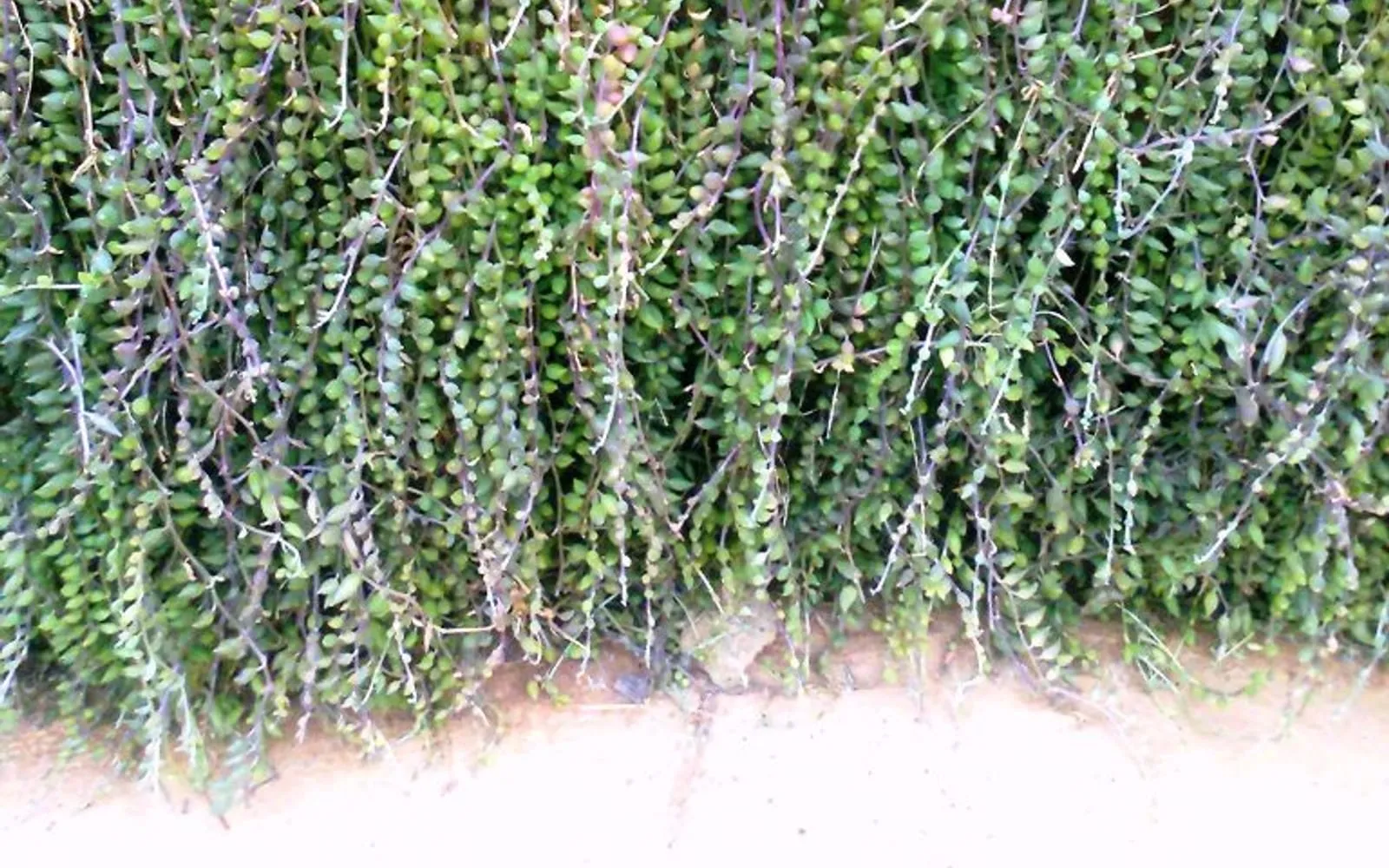
Long, trailing stems carry small, plump, curved leaves shaped distinctly like tiny bananas, spaced fairly closely along the stem’s length. A well-grown, mature plant produces a dense curtain of trailing growth that can reach a metre or more given time, strong light and consistent, if not frequent, watering.
Small, white, slightly fragrant flowers occasionally appear along the stems, resembling tiny brushes rather than typical daisy-like Senecio flowers, though flowering is a fairly minor feature compared with the foliage this plant is grown for.
Where it is from
Rocky slopes and scrub in South Africa, where it trails and scrambles over rocks and other vegetation in bright light with reasonably sharp drainage.
That scrambling, rock-trailing origin suits its cultivation as a hanging or trailing houseplant well, and its tolerance of a range of light conditions, though it performs best in strong light, reflects a species adapted to varied positions among rocks and other plants rather than one narrow, precise habitat niche.
How it grows
Stems extend continuously from their tips, trailing downward or sideways as they lengthen, and root readily wherever a stem touches soil, which is both how the plant spreads in a large container and the standard way to propagate new plants from stem cuttings. Growth is relatively fast for a succulent, particularly in strong light through the warmer months.
Older growth toward the centre or base of a hanging pot can thin out or lose leaves over time even while the newer, outer growth continues trailing vigorously, a normal pattern that many growers address by taking fresh cuttings and starting a new, fuller pot every few years rather than trying to rejuvenate the original plant indefinitely.
Through the seasons
Spring growth picks up as light levels increase, with new trailing growth extending from stem tips.
Summer is the main growing season, with the fastest trailing growth given strong light and regular watering.
Autumn growth slows gradually as light levels drop.
Winter water more sparingly, allowing the compost to stay dry for longer between waterings, and keep the plant in the brightest available spot given generally lower indoor light.
Care difficulty
Easy. This is one of the more forgiving trailing succulents, tolerating a reasonably wide range of light and a certain amount of inconsistency in watering better than some of its more delicate relatives.
Watering
Water only once the compost has dried out completely, soaking thoroughly and allowing all excess to drain away. This species is more tolerant of occasional underwatering than of consistently damp compost, which quickly leads to rot in the fleshy, water-storing leaves.
Warning signs, diseases and pests
Mealybug can settle among the densely packed leaves along the stems, where it is easily overlooked, and is treated with careful manual removal or a horticultural soap for persistent infestations. Root rot from overwatering is the more serious risk, showing as leaves that turn translucent, soften and drop, often starting with the oldest growth nearest the pot.
Shrivelled, wrinkled leaves indicate the plant has gone too long without water and is drawing on its stored reserves; a thorough soak usually plumps the leaves back up within a day or two, though severely shrivelled older growth may not fully recover.
Growing environment
Bright light with some direct sun supports the fastest, most densely leaved trailing growth; in lower light the stems stretch with wider gaps between leaves and grow noticeably more sparsely. Sharply free-draining succulent or cactus compost is essential, and a hanging container or a raised position that lets the trailing stems hang freely shows the plant’s growth habit to best effect.
Feeding
A low-nitrogen cactus or succulent fertiliser, applied once or twice during the growing season, supports steady trailing growth. Avoid heavy or frequent feeding, which can produce soft, weak stems more prone to snapping or rot.
Troubleshooting
Leaves have turned translucent, soft and are dropping. Suspect root rot from overwatering. Allow the compost to dry out fully, check the roots, and repot into fresh, sharply draining compost if rot is confirmed.
Leaves look shrivelled and wrinkled. The plant has gone too long without water. Soak thoroughly and expect the leaves to plump back up over the following days.
Growth is sparse with wide gaps between leaves along the stem. Usually too little light. Move the plant to a brighter spot; new growth will be denser and more compact.
Older growth near the pot has thinned or died back while the trailing ends remain healthy. This is a normal pattern in a mature plant. Take fresh stem cuttings and start a new, fuller planting rather than trying to restore the original base growth.
You are trying to encourage denser, fuller trailing growth. Pinch out the growing tips of a few stems occasionally to encourage branching lower down, and make sure the plant is getting strong enough light, since sparse, open growth is more often a light problem than anything else with this species. A generous, even soak followed by a proper dry spell also tends to produce fuller growth than frequent light watering, mirroring the boom-and-bust rainfall pattern the species is adapted to in the wild rather than the steady, gentle moisture many ordinary houseplants prefer instead of that feast-and-famine rhythm.
String of Bananas problem guides
Not sure what is wrong? See the common houseplant pests guide.