
Houseplant
Common Groundsel
Senecio vulgaris
Also known as Senecio vulgaris, Old-man-in-the-Spring
Senecio vulgaris, common groundsel, is a fast weed with rayless yellow flower heads. It is toxic, so learn to recognise and control it.
At a glance
- Difficulty
- Easy
- Water
- Rarely needed; thrives on ordinary moisture
- Light
- Full sun to part shade
- Temperature
- Hardy annual; grows in cool and mild conditions
- Humidity
- Average
- Hardiness
- USDA 3-10, RHS H5, hardy to -15 C
- Type
- Fast-growing annual
- Height
- 15 to 45 cm
- Native to
- Europe, Western Asia
A fast annual weed native to Europe and western Asia and now found almost worldwide, growing in gardens, arable land and any disturbed ground. It germinates and flowers in cool as well as mild conditions, often several generations in a year, and it tolerates a wide range of soils and temperatures. It is one of the commonest and most persistent garden weeds.
Hardiness zones describe winter cold alone. Summer heat, humidity, rainfall and the length of the growing season decide as much, so treat the range as the outer limit rather than as a recommendation.
Toxic if eaten
- Do not eat
- All parts, which contain pyrrolizidine alkaloids
- Harm from
- Eating it
- Affects
- People, cats, dogs and horses
Common groundsel contains pyrrolizidine alkaloids that cause cumulative, irreversible liver damage when eaten, even in small amounts over time. It poisons grazing livestock, especially horses and cattle, and is harmful to people and pets if eaten, or if it contaminates hay, salad leaves or grain. The ASPCA lists Senecio among the plants toxic to cats and dogs. Do not eat it or feed it to animals, keep it out of forage and salad crops, wear gloves when weeding it out, and wash your hands afterwards.
Sources: ASPCA toxic and non-toxic plants, RHS potentially harmful garden plants, North Carolina Extension plant toxicity database
About
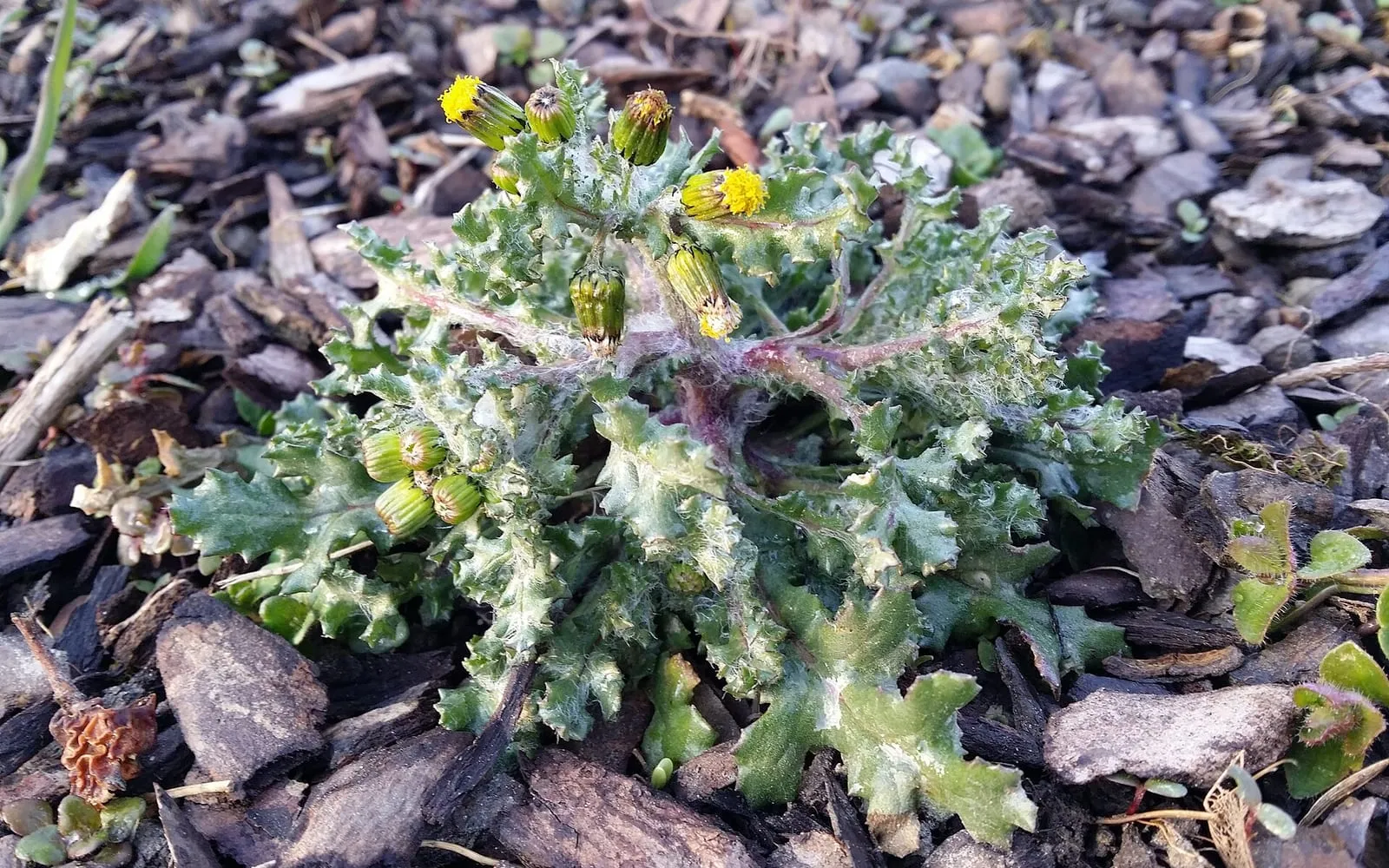
Common groundsel is one of the most familiar weeds in the world, a small, fast annual that springs up in any patch of bare or disturbed ground. It has soft, irregularly lobed leaves and clusters of small, yellow, rayless flower heads that never fully open, followed at once by fluffy white seed clocks, so a plant is flowering and seeding almost as soon as it appears. It is grown by nobody on purpose and known to everyone who gardens.
It succeeds because it is fast. It germinates in cool weather as well as warm, goes from seedling to seed in a matter of weeks, and can produce several generations in a single year, so it is always present in the garden. It thrives on fertile, disturbed soil in sun or part shade and needs nothing, which is exactly why it is such a persistent weed of borders, vegetable plots and pots.
It is also toxic. Like other members of its group it contains pyrrolizidine alkaloids that cause cumulative liver damage. That makes it dangerous to livestock, harmful to people and pets, and a problem where it contaminates salad leaves, grain or hay. Recognise it and remove it promptly, before it seeds, and keep it well away from food and forage.
Appearance and character
The leaves are soft, irregularly and deeply lobed, a fresh green, clasping the branching stems, giving young plants a slightly ragged, fleshy look.
The flower heads are small, yellow and rayless, cylindrical and never fully opening, borne in loose clusters at the stem tips, and quickly turning to fluffy white seed clocks.
The plant is a small, upright, branching annual, fifteen to forty-five centimetres high, growing fast from seed and dying after seeding.
It sets great quantities of light, wind-borne seed and germinates almost year-round, which is how it is always present in cultivated ground.
Where it is from
Senecio vulgaris is native to Europe and western Asia and has spread almost worldwide, growing in gardens, arable fields, waste ground and any disturbed, fertile soil, in sun or part shade. It is a weed of cultivation instead of of wild habitats.
That weedy nature explains both its ease and its problem. It grows in almost any soil and a wide range of temperatures, germinating and flowering in cool as well as mild conditions, and producing several generations a year. Its speed and heavy seeding make it one of the most persistent garden weeds.
How it grows
It grows fast from seed at almost any time of year, flowering within weeks and setting seed at once, then dying, with fresh generations following in quick succession. It thrives on fertile, disturbed ground and needs no help.
There is no reason to grow it deliberately; control is the aim. Hoe or hand-pull seedlings while young, before they flower and seed, wearing gloves, and remove them entirely, since even pulled plants can ripen seed if left lying.
Never let it seed in a vegetable plot or near grazing, and do not compost the flowering or seeding tops in a way that spreads the seed. Regular, prompt weeding while plants are small is the only effective control.
Propagation is by seed, which it produces in enormous quantity. The aim is to prevent seeding, not to raise more plants.
Through the seasons
Spring produces a flush of fast-growing seedlings. Hoe or hand-pull them while young, before they flower.
Summer brings flowers and seed in quick succession. Keep on top of it, removing plants before the seed clocks form.
Autumn fresh generations germinate in the cooling, moist weather. Continue weeding it out.
Winter it germinates and even flowers in mild spells, so it is rarely absent. Clear it whenever it appears.
Care difficulty
Common groundsel is easy to grow and entirely a weed to control instead of cultivate. It thrives on disturbed, fertile ground and seeds prolifically, so the challenge is keeping on top of it. Its toxicity, from pyrrolizidine alkaloids, makes it important to keep out of food and forage and to handle with gloves. Prompt, regular removal of young plants is the only effective control.
Watering
It needs no watering, thriving on ordinary garden moisture and fertile, disturbed soil. Watering only encourages it.
Its ability to grow and seed in a wide range of conditions, wet or dry, cool or warm, is part of what makes it so persistent.
Warning signs, diseases and pests
Prolific self-seeding and year-round germination are the real problems, not a disease. Remove young plants before they flower and seed, and never let the wind-borne seed spread into crops or grazing.
In crowded, damp conditions it can carry rust and mildew, and aphids and leaf miners feed on it, but these rarely limit such a vigorous weed. It can also harbour pests and diseases that spread to crops, another reason to clear it.
Plants left lying after weeding can still ripen and shed seed, so remove them entirely instead of leaving them on the soil.
Growing environment
Full sun to part shade and fertile, disturbed soil suit it, matching the cultivated ground it colonises. It grows in almost any soil and a wide range of temperatures.
It is a hardy annual, germinating and flowering in cool as well as mild conditions, so it is present almost year-round. It needs no special environment, which helps explain why it is so widespread.
There is no reason to provide it a growing spot; instead, keep cultivated ground weeded and mulched to suppress its seedlings.
Feeding
Feed nothing. It thrives on fertile ground already, and feeding only encourages it.
Mulching bare soil and keeping it covered is one of the best ways to suppress it, because the seed needs bare, fertile ground to germinate.
Troubleshooting
It keeps coming back. This is its nature as a fast, prolific annual weed that seeds and germinates almost year-round. Hoe or pull seedlings while young and before they flower, and mulch bare soil to suppress them.
Is it safe to compost? Not the flowering or seeding tops, which can spread seed. Remove whole plants before they seed, and dispose of seeding material so it cannot spread.
Is it safe around pets and livestock? No. It is toxic through cumulative liver damage, dangerous to horses, cattle and pets and harmful to people, so keep it out of grazing, forage and salad crops.
Can I eat it? No. Despite being a soft green weed, it contains liver-damaging pyrrolizidine alkaloids and must not be eaten or fed to animals.
How do I tell it from a garden plant? Look for small, rayless yellow flower heads that never fully open, quickly turning to fluffy seed clocks, and soft, irregularly lobed leaves.
Common Groundsel problem guides
Not sure what is wrong? See the common houseplant pests guide.