
Houseplant
Giant Candelabra Tree
Euphorbia cooperi
Also known as Euphorbia cooperi, Bushveld Candelabra Euphorbia, Transvaal Candelabra Tree
How to grow Euphorbia cooperi, the giant candelabra, a bushveld euphorbia with segmented branches and exceptionally dangerous sap.
At a glance
- Difficulty
- Easy
- Water
- Once the mix has dried right through
- Light
- Bright light to full sun
- Temperature
- Warm; keep above about 10 deg C
- Humidity
- Low
- Hardiness
- USDA 10-11, RHS H1c, hardy to 8 C
- Type
- Evergreen succulent tree
- Height
- Up to 7 m outdoors; a slow column indoors
- Native to
- Southern Africa
A candelabra-shaped succulent tree from the hot bushveld of southern Africa, its branches pinched into stacked heart-shaped segments. It needs bright light or full sun, sharp drainage and warmth, has no frost tolerance and slows below about 10 deg C. It thrives on heat and drought and rots in cold, wet ground.
Hardiness zones describe winter cold alone. Summer heat, humidity, rainfall and the length of the growing season decide as much, so treat the range as the outer limit rather than as a recommendation.
Poisonous if eaten
- Do not eat
- The copious milky white sap in every part
- Harm from
- Handling it, sap in the eyes and eating it
- Affects
- People, cats and dogs
Euphorbia cooperi has a fearsome reputation, with among the most dangerous sap of any tree euphorbia. Cut or damaged, it releases copious milky latex that is violently caustic. It blisters skin, burns the mouth and gut if swallowed, and can cause severe, lasting eye damage or blindness. The sap is so irritant that even its vapour and windblown droplets can inflame eyes and airways, and it was used traditionally as an arrow and fish poison. Wear gloves and eye protection whenever you go near it with a blade, keep well clear of your face, wash off any splash at once, and keep the plant away from pets and children. If sap reaches the eyes, rinse copiously and seek medical help immediately.
Sources: ASPCA toxic and non-toxic plants, RHS potentially harmful garden plants, North Carolina Extension plant toxicity database
About
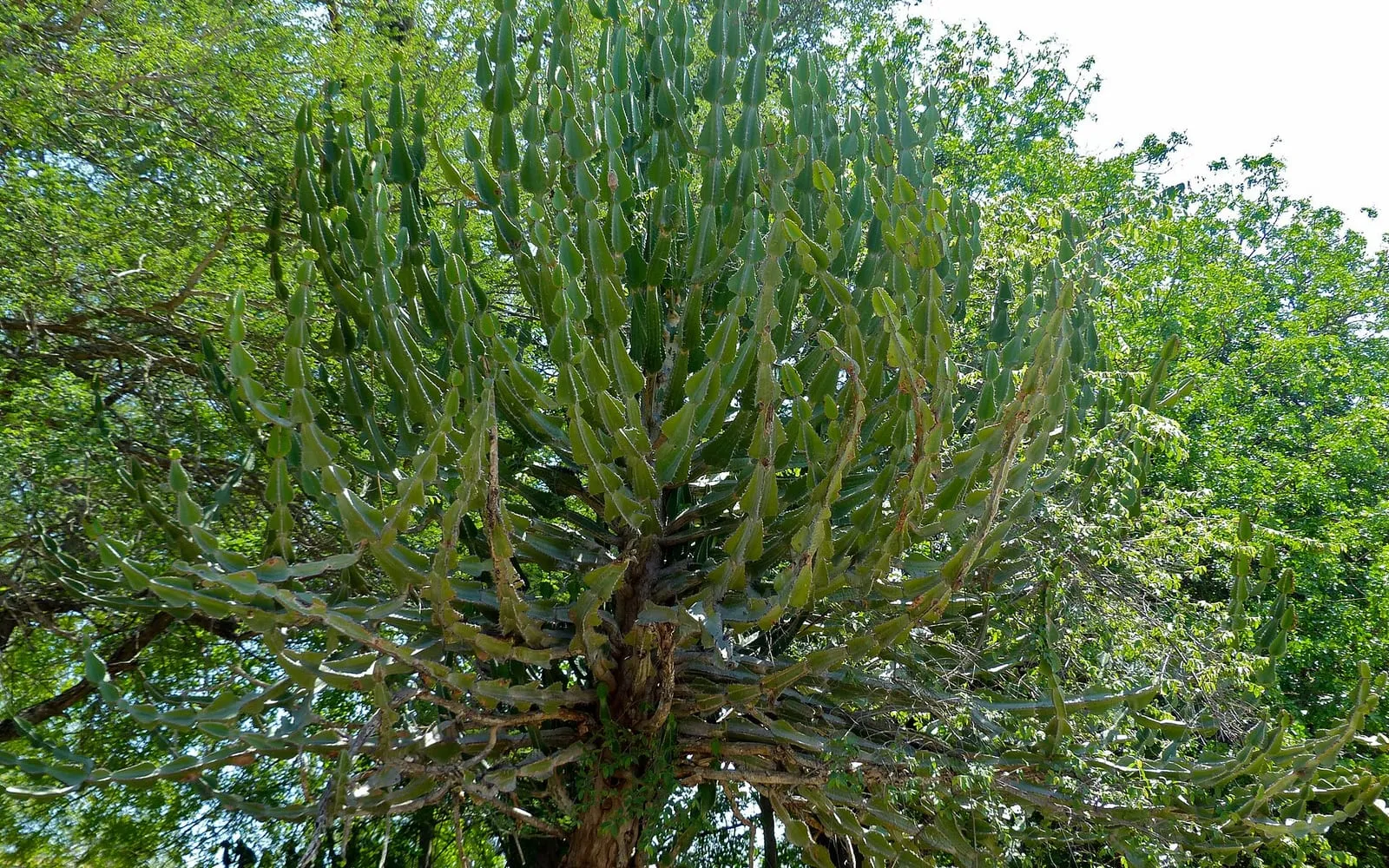
The branches are the easiest way to recognise this euphorbia. At regular intervals they are pinched inward, so each green arm looks like a column of stacked hearts or diamonds. Those tiered, waisted branches rise from a single trunk into the shape of a many-armed candlestick, and in the southern African bushveld the plant grows into a small tree. On a windowsill it is grown as a young, slow green column that shows the beaded outline from the start.
Its sap is dangerous even by tree spurge standards. The milky latex that pours from any wound is so corrosive that people once used it on arrows and to stun fish, and a splash in the eye can cause blindness. Even the fumes can sting. Do not keep it without understanding that risk, and do not prune it bare-handed.
It comes from the same hot, dry bushveld as the smoother-limbed candelabra tree, and the care is the same for both. Give it strong light or open sun, a gritty mix that drains in seconds, and long gaps between waterings. In warm, dry conditions, it is slow and undemanding. The main difficulty is handling the sap safely.
Appearance and character
A green arm of this plant is made of heart-shaped segments, each pinched away from the next, with paired short spines along the ridges. It does not have the smooth columns of most tree euphorbias. That beaded, constricted profile separates it at a glance from the unbroken columns of other tree euphorbias.
The arms climb in tiers from a central trunk to make the candelabra crown, and even a small pot plant already shows that segmented, tiered shape.
There are no leaves to speak of. The green segments do all the plant’s feeding through photosynthesis, the few true leaves being minute and short-lived.
When it flowers, the blooms are small and yellow-green, set along the ridges of the segments. Most growers value the plant for the tiered, beaded arms rather than the flowers.
Where it is from
Euphorbia cooperi belongs to the hot, dry bushveld and rocky hill country of southern Africa, standing in strong sun on lean, stony ground where it grows into a candelabra tree of the savanna. Heat, drought and impoverished soil are its everyday conditions.
Its care follows from that habitat. Give it full sun or bright light, drainage that lets water pass at once, and long dry stretches. It tolerates fierce heat. It cannot survive a cold, sodden root zone or any frost. The extremely caustic latex deters browsing animals and is the reason growers need to handle it so carefully.
How it grows
Indoors the plant grows slowly, adding new segments to its green column and usually branching only after it has some age and height. It almost stops through winter. Give it warmth and strong light and the column stays firm and upright. Leave it cold and wet and it rots; leave it in dim light and it turns soft and floppy.
A gritty, fast-draining cactus compost in a heavy, low pot keeps a tall column from tipping. Let that compost dry out entirely before you wet it again. Because it grows so slowly it drinks seldom and seldom needs a larger pot.
Position it in full sun or the brightest light you have, hold the room above about 10 deg C, and keep the air dry. Any time a blade goes near it, for a cutting, a trim or a repot, put on gloves and eye protection first and keep your face well back, because this is about the most dangerous sap you will meet on a houseplant.
To propagate it, take a segment or branch under full protection, rinse or blot away the flowing latex, stand the cutting aside to callus for a week or more, and then set it in gritty compost to root.
Through the seasons
Spring brings slow growth as the light improves. Water it again, move it up a pot if it is straining its container, and take any cuttings now, gloved and goggled.
Summer is its working season. Soak it once the compost has dried right through, offer a weak feed, and stand it in full sun or bright light.
Autumn slows it as the light fails. Taper the watering off.
Winter is a near-dry pause, held above about 10 deg C. Water it hardly at all, since a cold, wet pot now is what rots it.
Care difficulty
Growing it is simple; living safely alongside it is the harder part. It is drought-resistant, slow and happy with sun and sharp drainage, and cold, wet compost is the main thing that rots it. The sap is more corrosive than in almost any related houseplant, and the plant can eventually become tree-sized. Keep handling to a minimum, always wear gloves and eye protection, and it needs little else.
Watering
Let the gritty compost dry out from top to bottom, then give it a thorough soak and let the surplus drain clear. The fat green segments store water, so it can go a long while dry and prefers that to lingering wet. Water only occasionally.
Through winter give it next to nothing, since cold, wet compost is the main danger at that season. Segments that pucker want a drink; a base or arm gone soft and discoloured is rotting, and must be cut out under full protection, with the sound pieces saved to root.
Warning signs, diseases and pests
Soft, discoloured, slumping tissue at the base or in an arm is rot brought on by a cold, wet pot. Wearing gloves and eye protection, cut back to firm green, dry the good pieces off, and begin again in fresh gritty compost. Water more cautiously after that.
Mealybugs hide in the pinched waists between segments, where their white fluff is easily missed. Deal with them using dilute alcohol on a cotton bud, and keep the sap off your skin and away from your eyes throughout.
Growth that turns soft, pale and unable to hold itself upright is short of light. Shift the plant into full sun or bright light and the column firms up again.
Growing environment
It needs strong light. Full sun or the brightest position keeps the segmented arms firm, green and upright, while shade leaves them soft, pale and floppy. There is no such thing as too much light for it.
Warm, dry conditions above about 10 deg C match the bushveld it came from. Keep the humidity low, and keep it away from any frost, which it cannot survive.
Pot it in gritty, fast-draining compost in a heavy, low, stable container, in full sun or bright light, and place it well beyond the reach of pets and children, and clear of anywhere someone might brush against or knock it, because the sap is exceptionally dangerous.
Feeding
A weak, low-nitrogen cactus feed once or twice across spring and summer is the most it needs. Fed richly it only softens and weakens its growth.
Give it nothing through winter. After repotting, the fresh gritty compost supplies it for a long stretch, given how slowly it grows.
Troubleshooting
A base or arm has turned soft and discoloured. Rot from a cold, wet pot. Under gloves and eye protection, cut back to firm green, dry the sound pieces, and root them in fresh gritty compost. Water more sparingly from then on.
The growth is soft, pale and flopping. Too little light. Move it into full sun or bright light to firm the segmented column back up.
How dangerous is the sap? More dangerous than most houseplant sap. This corrosive milky latex was used to poison arrows and stun fish; it blisters skin, harms the gut if swallowed, can blind, and even its vapour stings. Always wear gloves and eye protection, and if it reaches your eyes, rinse with plenty of water and get medical help at once.
How is it different from the common candelabra tree? Its arms are pinched into stacked heart-shaped segments, whereas the candelabra tree carries smoother, unbroken columns. Both are southern African tree euphorbias with dangerous sap and need the same care.
Is it safe around pets and children? No. Its exceptionally corrosive sap means it must be kept well out of reach and handled only with gloves and eye protection.
Giant Candelabra Tree problem guides
Not sure what is wrong? See the common houseplant pests guide.