
Houseplant
Silver Torch Cactus
Cleistocactus strausii
Also known as Silver Torch, Wooly Torch
How to grow silver torch cactus, Cleistocactus strausii. Its high-altitude Andean origin gives it a cold tolerance rare among cacti, strong sun keeps the spines dense rather than sparse, and a tall column can topple without a heavier pot.
At a glance
- Difficulty
- Easy
- Water
- Moderately in summer once the mix has dried out, minimal in winter
- Light
- Full sun
- Temperature
- Above 2 deg C for reliable growth; tolerates brief cold better than most cacti
- Hardiness
- USDA 9-11, RHS H2, hardy to -7 C
- Type
- Evergreen succulent cactus, slow-growing but long-lived
- Height
- 1-3 m over many years indoors and out
- Native to
- Bolivia, Argentina
Native to high-altitude Andean slopes rather than a lowland desert, so the plant tolerates a colder night than most cacti and takes strong ultraviolet light without protection. The zone number only partly captures that origin, since the more important detail is the cold, dry nights of a mountain climate rather than any single minimum temperature figure, and a plant kept warm and humid year-round grows softer and less densely spined than one given a proper cool, dry winter.
Hardiness zones describe winter cold alone. Summer heat, humidity, rainfall and the length of the growing season decide as much, so treat the range as the outer limit rather than as a recommendation.
Not known to be toxic
Cleistocactus is not listed as toxic by the ASPCA and does not appear on the RHS list of potentially harmful garden plants, and no part of the plant is documented as poisonous to people, cats, dogs or horses. As with any densely spined cactus, the hazard is mechanical rather than chemical: the fine white spines that give the plant its silvery colour are sharp enough to cause painful puncture wounds and can be surprisingly hard to remove from skin or fur once lodged. Keep a mature column somewhere a pet or child cannot brush against it by accident.
Sources: ASPCA toxic and non-toxic plants, RHS potentially harmful garden plants
About
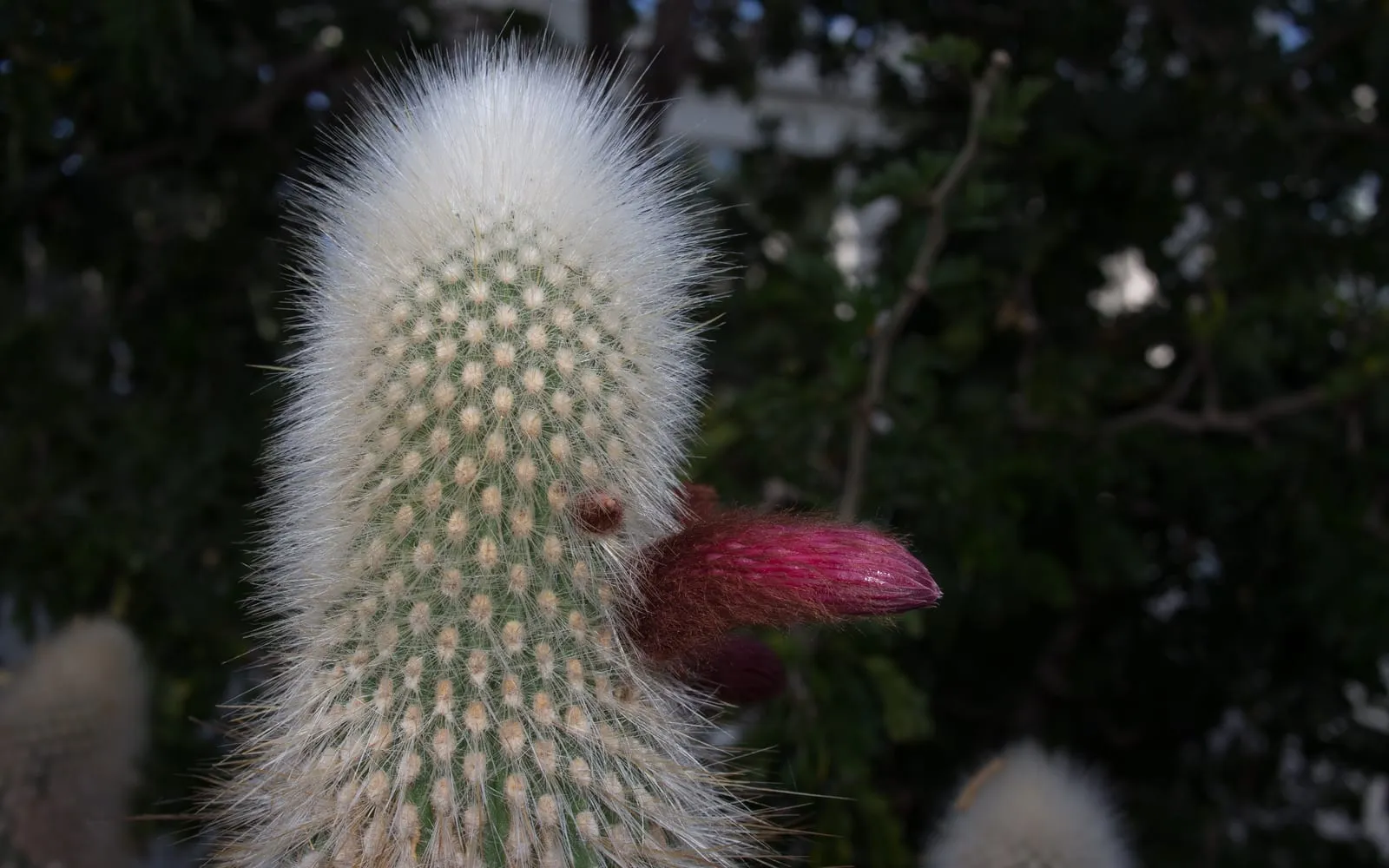
Silver torch cactus grows as an upright column, densely covered in fine white spines and hairs that give the whole plant a silvery, almost frosted sheen from a distance. A single stem grows slowly but steadily upward for years, and older plants send up further columns from the base, gradually building a clustered stand rather than staying a lone spire.
It comes from considerably higher, colder ground than most cacti grown indoors, high on the Andean slopes of Bolivia and Argentina, and carries a cold tolerance to match that few other columnar cacti on this site can claim. That same high-altitude origin explains why it colours best and grows most densely spined under strong, unfiltered light rather than the softer conditions many houseplants prefer.
Appearance and character
Each column is narrow and strongly ribbed, typically 6 to 10 cm across, and covered from base to growing tip in a dense mat of short white hairs studding fine, needle-like spines along every rib. The effect is a uniform, silvery-white surface that shows almost none of the green stem tissue beneath it.
Growth is upright and fairly slow, gaining perhaps 15 to 30 cm of height in a good year once established, and a mature plant eventually branches from the base into a cluster of columns of varying heights rather than staying a single stem.
Flowers, when they appear on a sufficiently mature column, emerge laterally from part way up the stem rather than from the growing tip, tubular and a deep red to magenta, opening for only a day or two at a time. Plants grown indoors often take many years to reach flowering size, and some never do, since the columns need to be considerably taller and older than most houseplant specimens.
Where it is from
Cleistocactus strausii grows on rocky, high-altitude slopes in the Andes of Bolivia and adjoining parts of Argentina, typically at elevations well above where most cultivated cacti originate. That altitude brings intense ultraviolet light during the day and distinctly cold nights, even though daytime temperatures can be warm, a combination quite different from the lowland desert climate many cacti come from.
The dense covering of white hairs and spines is thought to help protect the plant from that intense high-altitude sun as well as from the cold, insulating the stem tissue in a way a bare-skinned cactus cannot manage. That same origin is why this species tolerates a colder night than most other cacti grown as houseplants, provided the soil around its roots stays dry through the cold.
How it grows
Pot it in a very free-draining, gritty cactus mix, in a pot only a little larger than the current root ball, since a column that is top-heavy for its pot is also more easily knocked over as it grows taller.
Give it full sun. Strong, close to unfiltered light produces the densest spine covering and the brightest silvery colour, where a plant grown in weaker light stays greener and more sparsely covered, losing much of what makes the species distinctive.
Water moderately through summer once the mix has dried out, then reduce sharply through the cooler months, allowing the plant a proper cool, dry winter rest that echoes the cold nights of its native altitude. This rest also helps keep growth compact and well spined rather than soft and etiolated.
Repotting is rarely urgent, needed only once a column has clearly outgrown its pot, and a tall, top-heavy plant benefits from a heavier pot or added grit at the base to keep it from toppling as it grows.
Through the seasons
Spring brings the resumption of steady growth as light and warmth increase. Begin light feeding once new growth is visible at the tip of each column.
Summer is the main growing season. Water moderately once the mix has dried out, and expect the fastest growth of the year on an established plant.
Autumn slows growth as light and temperature fall. Reduce watering and stop feeding as the weeks progress.
Winter is a cool, dry rest that this species tolerates comfortably. Water minimally, if at all, and let the temperature drop rather than keeping it artificially warm.
Care difficulty
Easy, and one of the more cold-tolerant cacti available, which makes it more forgiving than many others of a cool room or an unheated conservatory in winter. The main risk, as with most cacti, is overwatering rather than underwatering, and a plant given full sun and allowed a genuine dry winter rest needs very little else beyond that to grow well for years.
Watering
Water moderately through summer, letting the mix dry out completely between waterings and then soaking it thoroughly when you do water, rather than watering little and often.
Cut back hard through autumn and winter, watering minimally or not at all, since this species’ cold tolerance depends on the soil around its roots staying dry. A wet mix at low temperature is far more dangerous to it than the cold alone.
Warning signs, diseases and pests
Mealybug hides within the dense covering of spines and hairs, where it is hard to spot until numbers have built up. Small white, cottony tufts nestled among the spines are the giveaway, and treatment with horticultural soap needs care to reach the pest without damaging the delicate spine covering.
Scale insects settle along the ribs beneath the spines, appearing as small, flat, brownish bumps once the spine covering is parted to look. Treat the same way as mealybug.
Root rot follows a mix that stays wet, particularly through the cool winter rest, and shows as a base that softens, discolours or develops a sunken, water-soaked patch. Cut away affected tissue with a clean blade, let the wound dry and callus, and repot into fresh, very free-draining mix.
Spider mite becomes more likely in hot, dry indoor air, showing as fine, dry discolouration on the stem surface visible where the spine covering is thinner. Increasing air movement helps prevent it building up.
Growing environment
Full sun suits it best, and this is a species that rarely gets too much light indoors. A south-facing window with several hours of unobstructed direct sun each day gives the densest spine cover and the brightest colour.
Average room warmth is fine through the growing season, and it tolerates a cool room or conservatory down to close to freezing in winter, considerably better than most cacti on this site, provided the soil stays dry through that cold spell.
A very free-draining, mineral cactus mix is essential, since the cold tolerance this species carries only holds where the roots are not sitting in damp soil at the same time.
No particular humidity is required, and dry indoor air causes it no trouble at all.
Feeding
Feed sparingly with a dedicated cactus fertiliser, low in nitrogen, a few times through spring and summer, since heavy feeding encourages soft growth with a thinner spine covering rather than the dense, tightly packed spines the plant is grown for.
Stop feeding entirely from autumn through winter, when growth has slowed to a near halt and unused fertiliser only builds up as salts in a mix that is being watered very little or not at all.
Troubleshooting
A column has gone soft or discoloured near the base. Root rot, almost always from overwatering, particularly through a cool winter. Cut away the affected tissue with a clean blade, let the wound dry and callus for several days, and repot into fresh, very free-draining mix.
The spines look sparse or the stem looks greener than expected. Usually too little light. This species produces its densest, whitest spine covering under strong, direct sun, and a plant kept too far from a window grows greener, more sparsely covered stems by comparison.
It has never flowered. Almost certainly age and height. Flowering generally needs a considerably taller, more mature column than most indoor-grown plants have reached, so a young or short specimen is unlikely to bloom regardless of otherwise good care.
A tall column has started leaning or toppled over. A top-heavy plant in too small or light a pot is the likely cause. Repot into a heavier container with plenty of grit worked into the base, and stake the column temporarily if needed while new roots establish in the larger pot.
Can I leave it outdoors year round in a mild climate? Yes, in a climate with dry winters and only occasional light frost, where it copes considerably better than most cacti thanks to its high-altitude origins. A wet winter climate is more of a risk to it than a cold, dry one.
Silver Torch Cactus problem guides
Not sure what is wrong? See the common houseplant pests guide.