
Edible
Clove
Syzygium aromaticum
Also known as Cloves, Laung, Clove tree
How to grow clove, Syzygium aromaticum. The unopened flower bud that becomes the spice, the Dutch monopoly on the Moluccas, and the real danger of clove oil.
At a glance
- Difficulty
- Difficult
- Water
- Two or three times a week, keeping it evenly damp
- Light
- Bright light with shade from the hottest sun
- Temperature
- Damaged below 15 deg C and killed below about 10 deg C
- Humidity
- Very high. It is an equatorial island tree
- Hardiness
- USDA 10-12, RHS H1b, hardy to 15 C
- Type
- Tender evergreen tree
- Height
- Up to 12 m wild, 1-2 m in a pot
- Native to
- the Moluccas
- Best month
- June and July in the Northern Hemisphere, December and January in the Southern Hemisphere
The wet volcanic islands of the Moluccas, on deep soil with rain through the year. It is intolerant of drought, wind and cold alike, and trees take six to eight years to flower.
Hardiness zones describe winter cold alone. Summer heat, humidity, rainfall and the length of the growing season decide as much, so treat the range as the outer limit rather than as a recommendation.
Every month named in this guide is for the temperate Northern Hemisphere. If you garden in the Southern Hemisphere, shift each one by six months, so June becomes December. Closer to the equator the wet and dry seasons matter more than the calendar, and the shift stops being a useful guide.
Skin irritant
- Safe to eat
- The dried flower buds, as a spice
- Do not eat
- The essential oil, which does real harm in quantity
- Harm from
- Eating it and handling it
- Affects
- People, cats and dogs
Cloves as a spice are safe and eaten worldwide. Clove oil is a different matter and deserves a clear warning. It is around 80 per cent eugenol, and swallowing even small volumes has caused serious liver damage and central nervous system effects in young children, with several documented cases following accidental ingestion of a few millilitres. Keep clove oil where children cannot reach it. On skin it is a strong irritant undiluted, and its traditional use for toothache damages gum tissue if repeated. The ASPCA and veterinary poison sources treat concentrated clove oil as toxic to cats and dogs, and cats in particular lack the liver enzymes to process phenolic compounds. The spice in a stew is not a concern. The bottle in the bathroom cabinet is.
Sources: RHS potentially harmful garden plants, ASPCA toxic and non-toxic plants
About
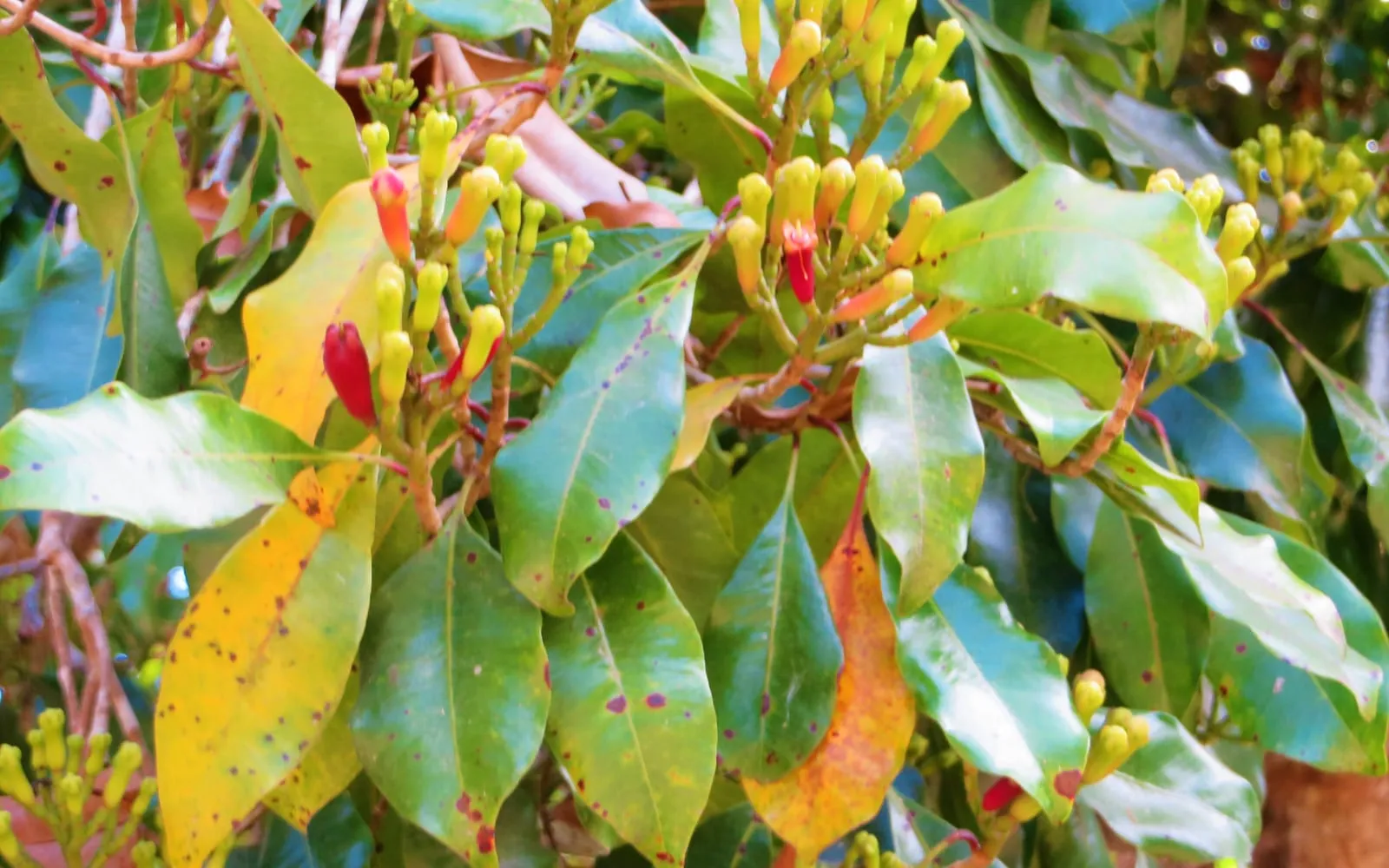
A clove is an unopened flower bud. The tree produces clusters of buds that turn from green to a bright pink-red as they mature, and they are picked at exactly that point, before any flower opens, and dried until they go hard and brown. The knob at the top is the unopened petals and the shaft is the calyx.
The spice was worth killing for. Cloves grew only on five small islands in the Moluccas, the Dutch East India Company enforced that monopoly in the seventeenth century by destroying trees elsewhere, and it lasted until a French official, Pierre Poivre, smuggled seedlings out in the 1770s.
Most of the world crop now goes into cigarettes. Indonesian kretek cigarettes contain clove, and Indonesia consumes the majority of global production for that purpose rather than for food.
Appearance and character
A dense conical evergreen tree, up to 12 m in the tropics and generally 1 to 2 m in a pot.
Leaves are the immediate attraction. Oval to lance-shaped, 8 to 12 cm, thick and glossy, and flushing bright pink or copper-red when young before hardening to dark green.
Leaves are dotted with oil glands, visible when held to the light, and they smell strongly of clove when crushed.
Flowers form in clusters at the shoot tips. The unopened buds are green, turning pink-red as they mature, and it is at that point that they are picked.
Opened flowers are small, pale and short-lived, with a mass of stamens.
Fruit is a fleshy purple berry, called a mother of clove, which is rarely used.
The whole tree is aromatic and a healthy plant scents a greenhouse.
Where it is from
Clove is native to five small islands in the north Moluccas of Indonesia, chiefly Ternate, Tidore, Moti, Makian and Bacan, and to nowhere else.
That extreme restriction shaped four centuries of European history. Portugal reached the islands in 1512, the Dutch East India Company displaced them, and from 1652 the Company enforced a monopoly by cutting down clove trees on every island but Ambon, executing people for growing them elsewhere.
Pierre Poivre, a French administrator on Mauritius, broke it. He obtained seedlings in the 1770s and established the tree in Mauritius and Reunion, and from there it spread to Zanzibar and Madagascar.
Zanzibar became the dominant producer in the nineteenth century, and the clove plantations there were worked by enslaved people, which is part of the same history.
Indonesia is the largest producer now and also the largest consumer, because kretek cigarettes take the bulk of the crop. Madagascar and Tanzania supply most of the culinary trade.
How it grows
Grow from fresh seed. Clove seed loses viability within a week or two of the fruit ripening and dried cloves from a jar are dead, so viable seed is hard to obtain outside the tropics.
Sow fresh seed at 25 to 30 deg C in free-draining compost. Germination takes two to six weeks.
Pot into rich free-draining slightly acid compost.
Grow it under glass at a minimum of 15 deg C, which is higher than most of the tropical plants here.
Keep the humidity very high. This is an equatorial island tree from a place with no dry season, and it minds dry air more than most.
Give bright light with shade from the hottest sun.
Water regularly and keep the compost evenly damp year round, without waterlogging it.
Feed with a balanced feed containing iron.
Growth is very slow. A tree takes six years to flower in the tropics and far longer in a pot, and a temperate plant is grown for its foliage.
Through the seasons
Winter is survival under glass above 15 deg C with high humidity. This is the hardest season and where most plants are lost.
Spring brings new growth, often in a bright pink flush. Repot and start feeding.
Early summer is the main growing period.
Midsummer is peak growth, and the tree makes most of its wood now.
Late summer is the point to stop feeding.
Autumn is when to reduce watering slightly, though the plant should never be allowed to dry out.
Care difficulty
Difficult, and this is the hardest plant in this wave to keep alive outside the tropics.
Its minimum temperature is higher than the others at 15 deg C, and it suffers below that rather than merely stopping.
Humidity is a genuine requirement rather than a preference. Clove comes from equatorial islands with no dry season and it declines steadily in dry heated air.
Seed is hard to obtain. Viable seed lasts a week or two after the fruit ripens, and nothing dried will grow.
Growth is very slow. Six years to flower in ideal tropical conditions gives a sense of the timescale.
The realistic ambition is a beautiful foliage plant. New growth flushes bright pink and the whole plant smells of clove, which is reason enough.
Watering
Keep the compost evenly damp throughout the year. This plant does not have a dry season and does not want one.
Water two or three times a week, letting the pot drain fully each time.
Never let it stand in water or dry out completely. Both cause a check it recovers from slowly.
Use tepid water and rainwater in a hard water area.
Keep the humidity very high with misting, damp gravel and grouped planting. A humidity of 70 per cent or more suits it.
Reduce watering slightly in winter without letting it dry.
Warning signs, diseases and pests
Leaf drop and general decline mean cold, dry air or both. Below 15 deg C the plant suffers.
Brown leaf edges mean dry air.
Yellowing between the veins is iron shortage in a pot.
Scale insects sit as brown limpets on the stems with sticky honeydew below.
Spider mite produces fine stippling and webbing in dry heated air.
Mealybug hides in the leaf axils.
Root rot from wet cold compost blackens the base.
Very slow growth is normal and not a sign of a problem.
Growing environment
A heated greenhouse or conservatory with high humidity. No outdoor option anywhere outside the tropics.
Minimum 15 deg C, and 22 to 28 deg C for good growth.
Very high humidity, higher than most tropical plants require.
Bright light with shade from the hottest midday sun.
Rich, free-draining, slightly acid compost.
pH from 5.5 to 6.5.
A humid greenhouse with other tropical plants suits it better than a dry conservatory, because grouped planting raises the humidity.
Feeding
Feed a balanced liquid feed fortnightly from May to August, containing iron.
Sequestered iron applied separately corrects yellowing between the veins.
Stop feeding from September and give nothing through winter.
Repot into fresh compost every second spring.
An ericaceous feed suits it, since it prefers slightly acid conditions.
Troubleshooting
What part of the plant is a clove? An unopened flower bud, picked when it has turned from green to pink-red, then dried until hard and brown. The knob is the unopened petals and the shaft is the calyx.
Can I grow it from cloves in a jar? No. They are dried buds and they are dead. You need fresh seed from a ripe fruit, which lasts a week or two.
Is clove oil dangerous? Concentrated clove oil is hazardous. Swallowing a few millilitres has caused serious liver damage in young children, and several cases are documented. Keep it out of reach. It also irritates skin undiluted and damages gum tissue with repeated use for toothache.
It keeps dropping leaves. Cold or dry air, and usually both. Clove needs 15 deg C minimum and high humidity, and it minds a dry winter more than the other tropical plants here.
It has never flowered. A clove tree takes six years to flower in the tropics. In a pot it may never do so. Grow it for the foliage.
Why is the new growth pink? Normal and one of the plant’s best features. New leaves flush bright pink or copper before hardening to dark green.
Are cloves toxic to pets? The spice in food is not a concern. Concentrated clove oil is, particularly for cats, which lack the liver enzymes to process phenolic compounds.